Brand · American bootmaker est. 1901

Chippewa

Work and recreation boots from Chippewa Falls — the maker that put Vibram soles on American feet first.

Chippewa
Re-checked daily
Founded in 1901 in Chippewa Falls, Wisconsin, Chippewa Boots — first the Chippewa Shoe Manufacturing Company — has built men's work and recreational boots for more than a century, taking its name from the local Indian tribe of the region.

Production began at an early factory on River Street, and Chippewa was the first to produce US-manufactured boots with Italian-made original Vibram soles. It is credited with inventing the Engineer style work boot in the 1930s, when New Deal programs put a generation of workers in need of dependable footwear.

The boots have a long service record. Chippewa supplied military footwear in both World Wars — cold-weather boots for the US Army's elite 10th Mountain Division in WWII, with heel grooves cut for ski bindings — and later developed the high-altitude flight boot worn by CIA pilots of the U-2 spy plane.
The Chippewa pieces worth knowing

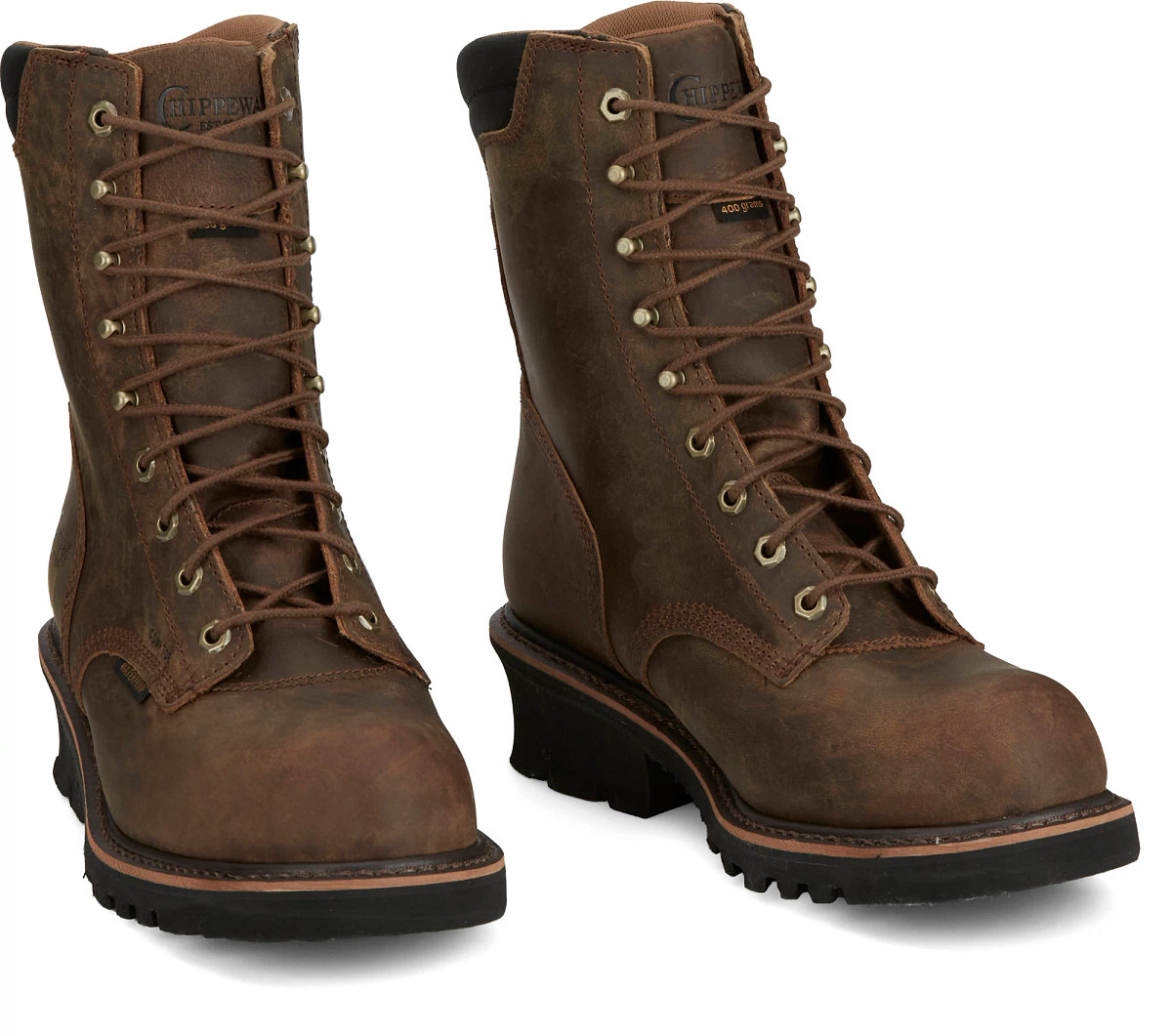
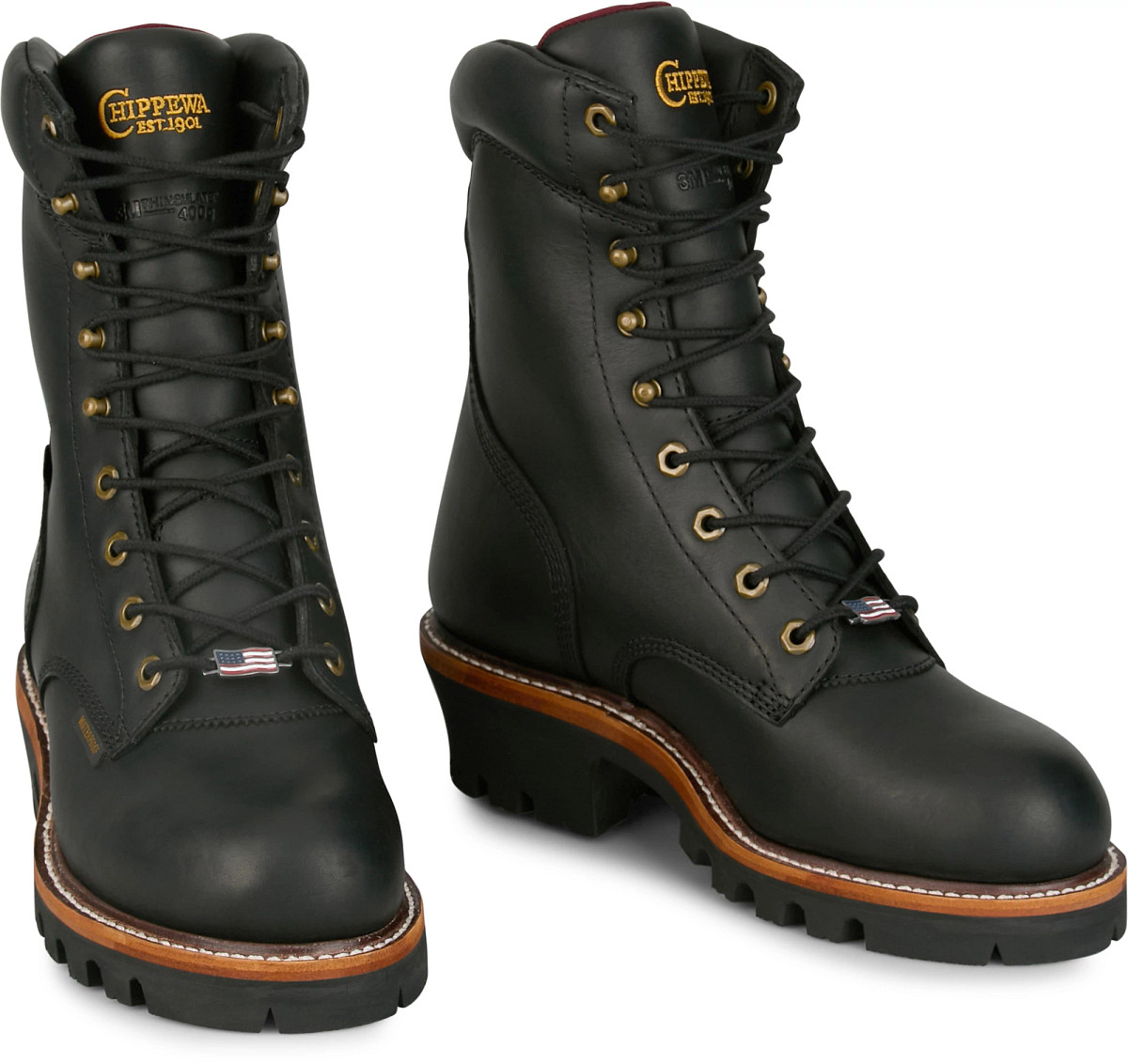
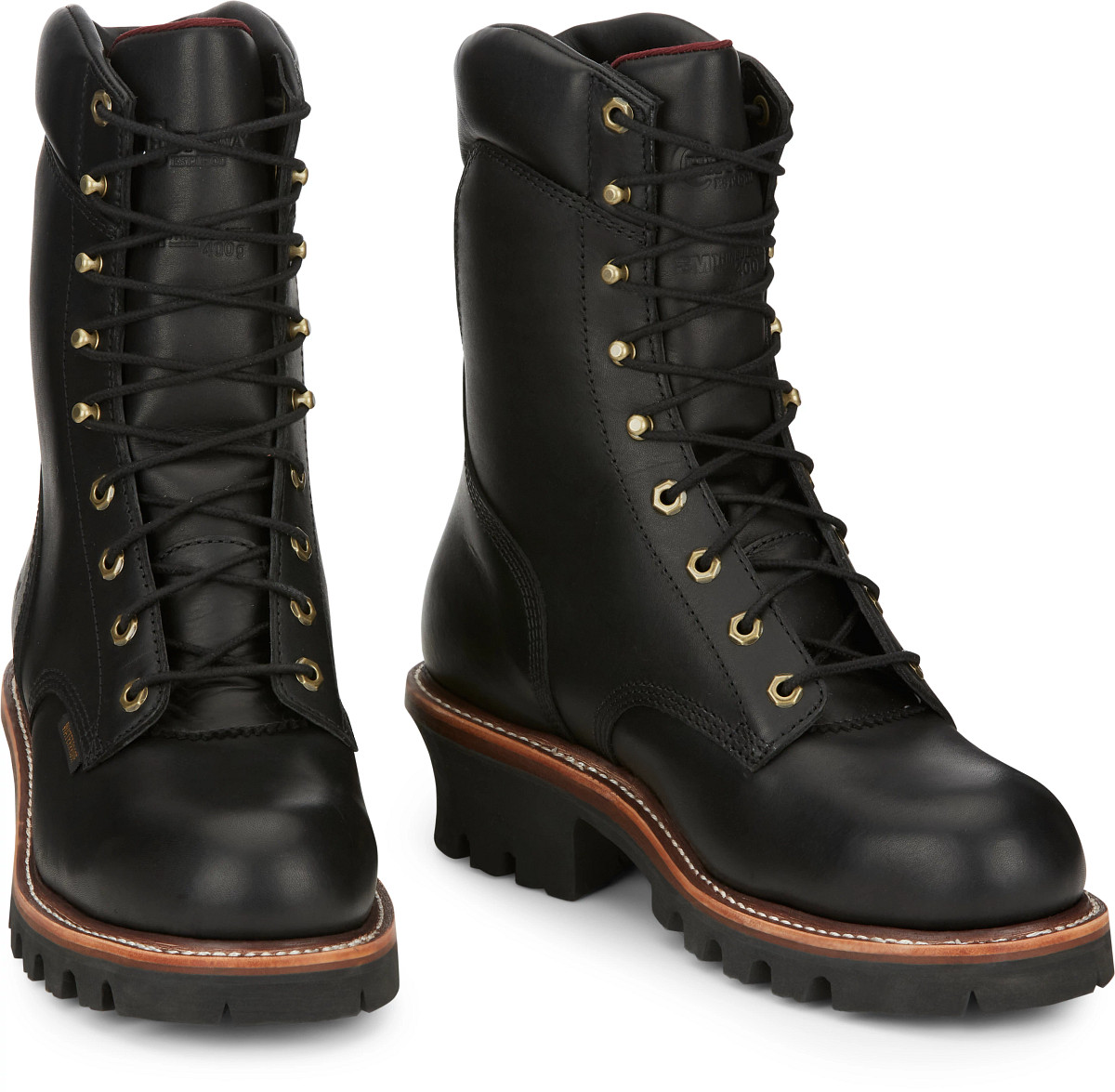
Super Logger 9" Waterproof Insulated Steel Toe
Super Logger
Super Logger 9" Waterproof Insulated Steel Toe
Chippewa's heavy-duty logger language in its most protective form: black waterproof leather, insulation, steel toe and a high-traction Vibram outsole.
$399.95 at CHIPPEWA
Super Dna 9" Waterproof Steel Toe Insulated Logger
Super DNA
Super Dna 9" Waterproof Steel Toe Insulated Logger
A premium insulated steel-toe logger that carries Chippewa's long work-boot DNA into a black, high-traction build.
$319.95 at CHIPPEWA
Paladin 8" Waterproof Steel Toe Logger
Paladin Logger
Paladin 8" Waterproof Steel Toe Logger
A Bay Apache logger with steel-toe protection, waterproof construction and the raised-heel profile that makes Chippewa loggers instantly recognizable.
$304.95 at CHIPPEWA
Thunderstruck 9" Waterproof Nano Comp Toe Logger
Thunderstruck
Thunderstruck 9" Waterproof Nano Comp Toe Logger
A lighter-protection logger: the same wet-terrain stance, updated with a nano composite toe and comfort insert.
$309.95 at CHIPPEWA
Valdor 8" Waterproof Comp Toe Insulated Logger
Valdor Logger
Valdor 8" Waterproof Comp Toe Insulated Logger
A compact insulated logger with composite-toe protection and an all-terrain tread idea drawn from work-truck traction.
$224.95 at CHIPPEWA
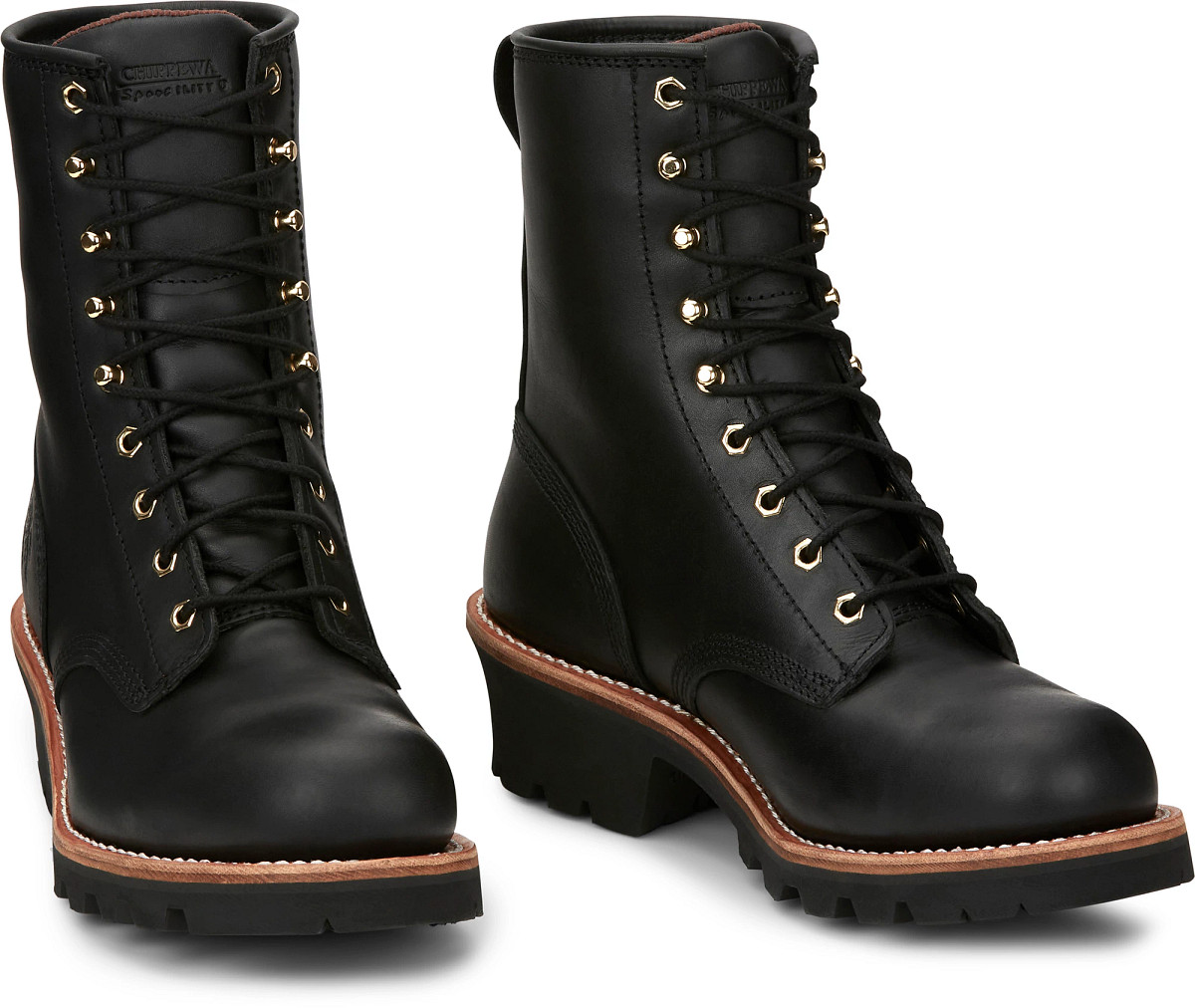
Baldor 8" Steel Toe Logger
Black Logger
Baldor 8" Steel Toe Logger
A classic black steel-toe logger built around full-grain leather, welt construction and a high-grip Vibram 360 outsole.
$274.95 at CHIPPEWA
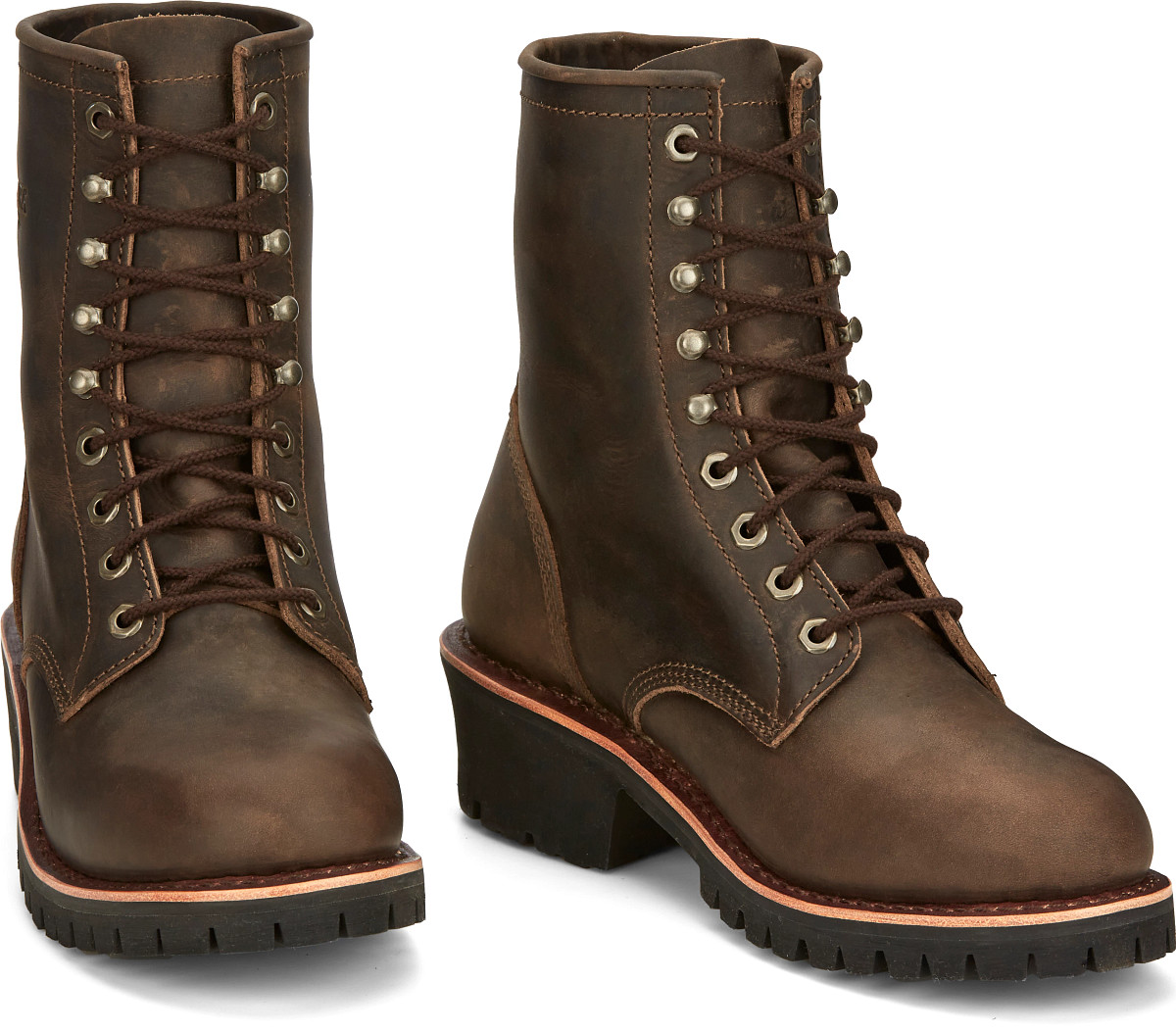
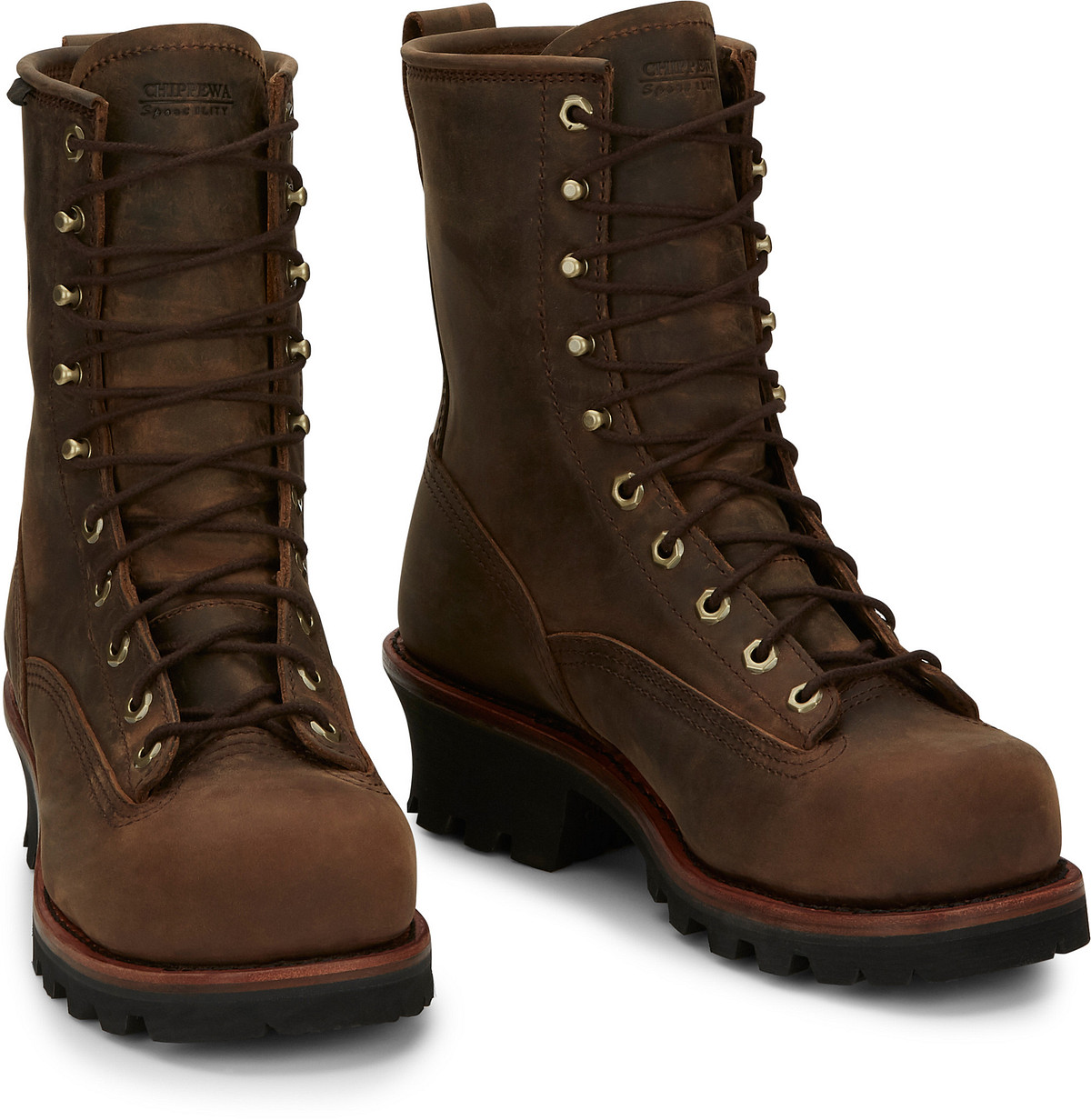
Classic 2.0 8" Logger
Classic 2.0
Classic 2.0 8" Logger
The archive-minded logger: a brown unlined leather boot brought back with modern work-boot safety and a Vibram lug sole.
$149.99 at CHIPPEWA
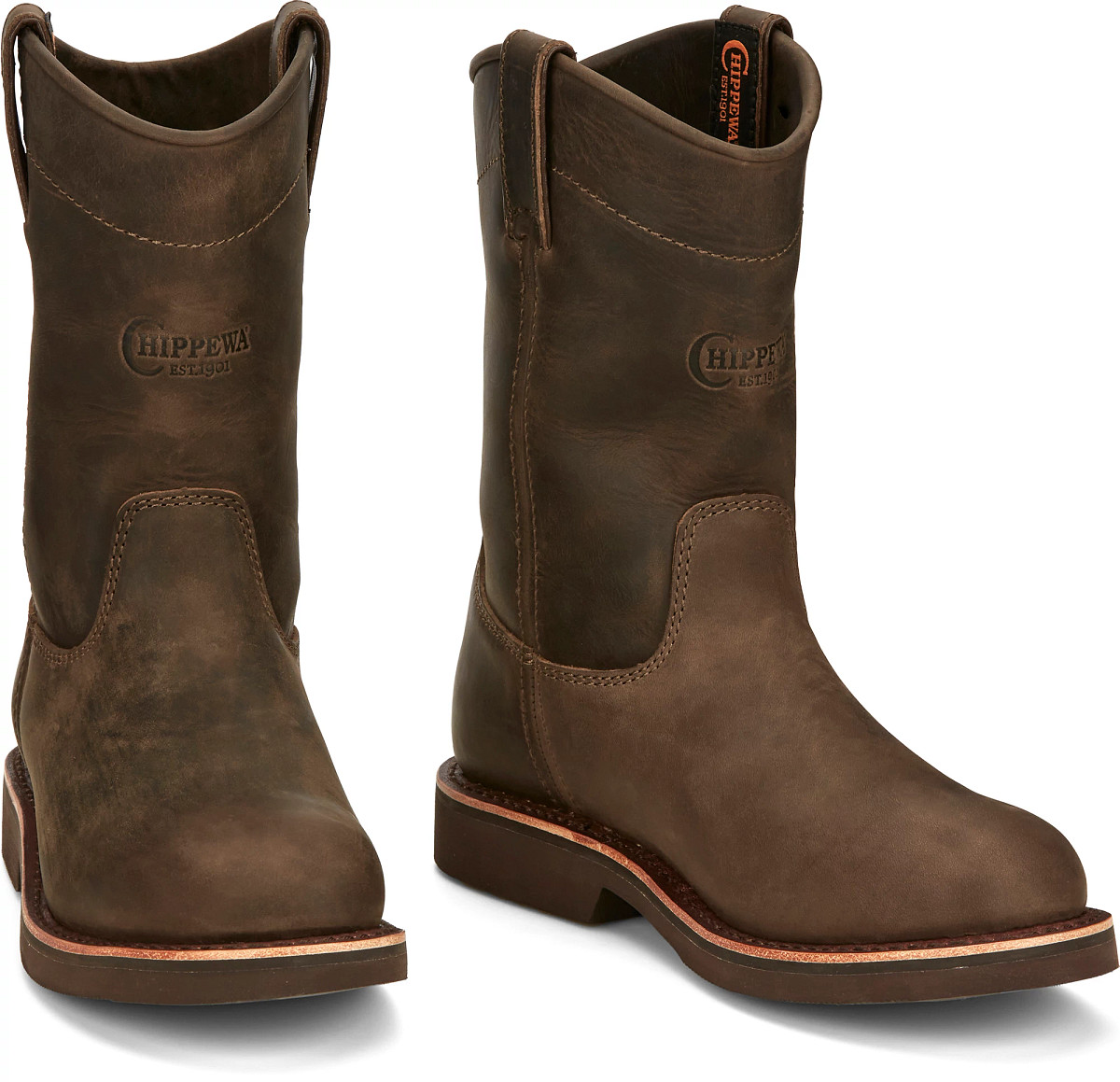
Classic 2.0 10" Pull On
Pull-On Classic
Classic 2.0 10" Pull On
Chippewa's pull-on work-boot archetype: unlined leather, square work-boot ease and a Vibram outsole under a timeless brown shaft.
$244.95 at CHIPPEWA
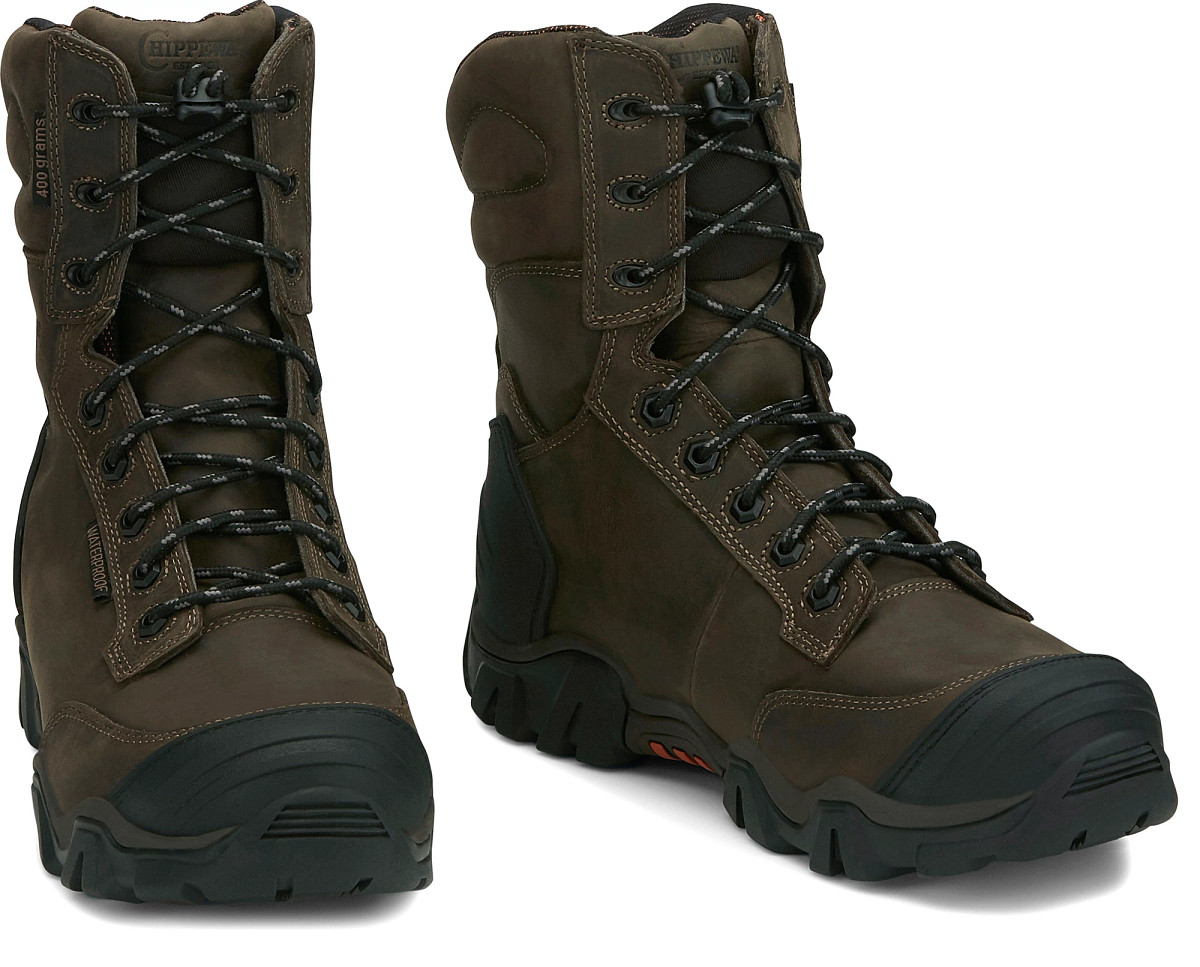
Cross Terrain 8" Waterproof Insulated Nano Comp Toe Hiker
Cross Terrain
Cross Terrain 8" Waterproof Insulated Nano Comp Toe Hiker
Chippewa's outdoor-work hiker: waterproof, insulated and built with a protective nano composite toe for wet mixed terrain.
$149.99 at CHIPPEWA
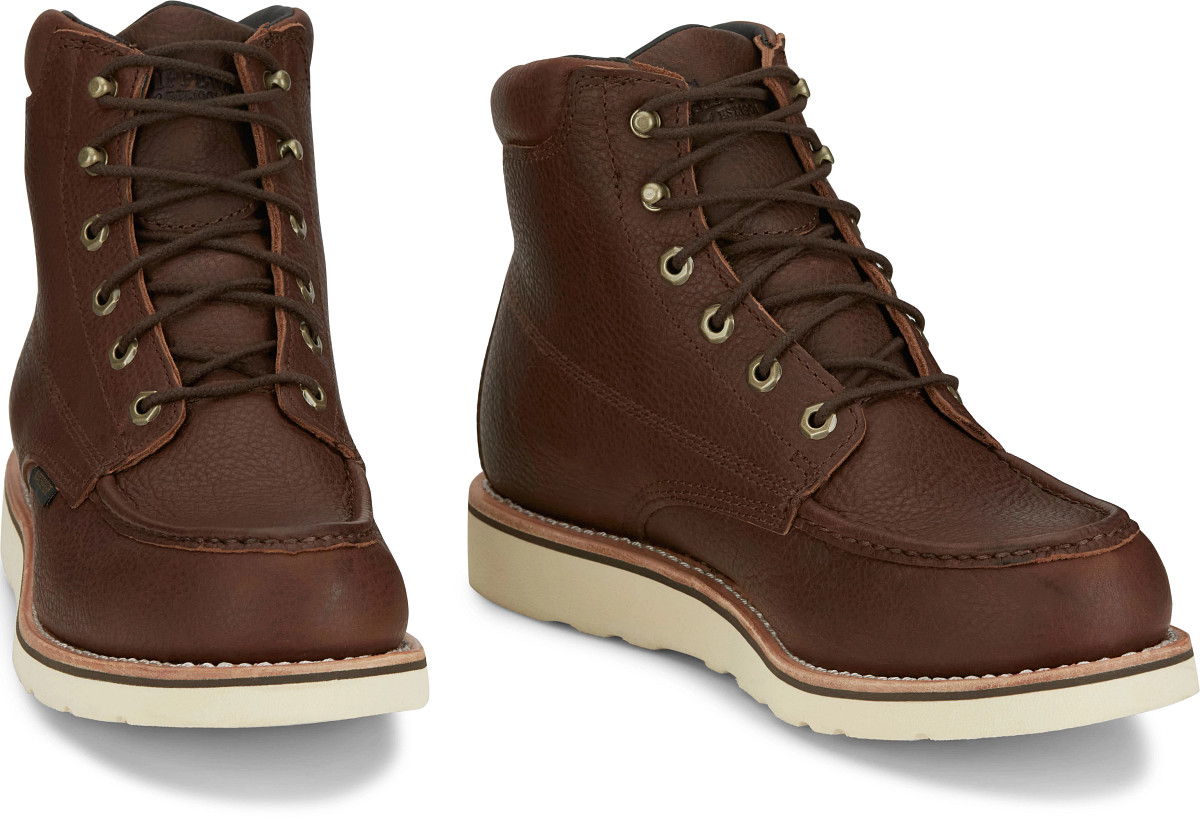
Edge Walker 6" Waterproof Lace Up Wedge
Moc-Toe Wedge
Edge Walker 6" Waterproof Lace Up Wedge
The Chippewa moc-toe wedge boot: a softer work silhouette with waterproof leather, white Vibram Christy sole and day-long comfort intent.
$244.95 at CHIPPEWA
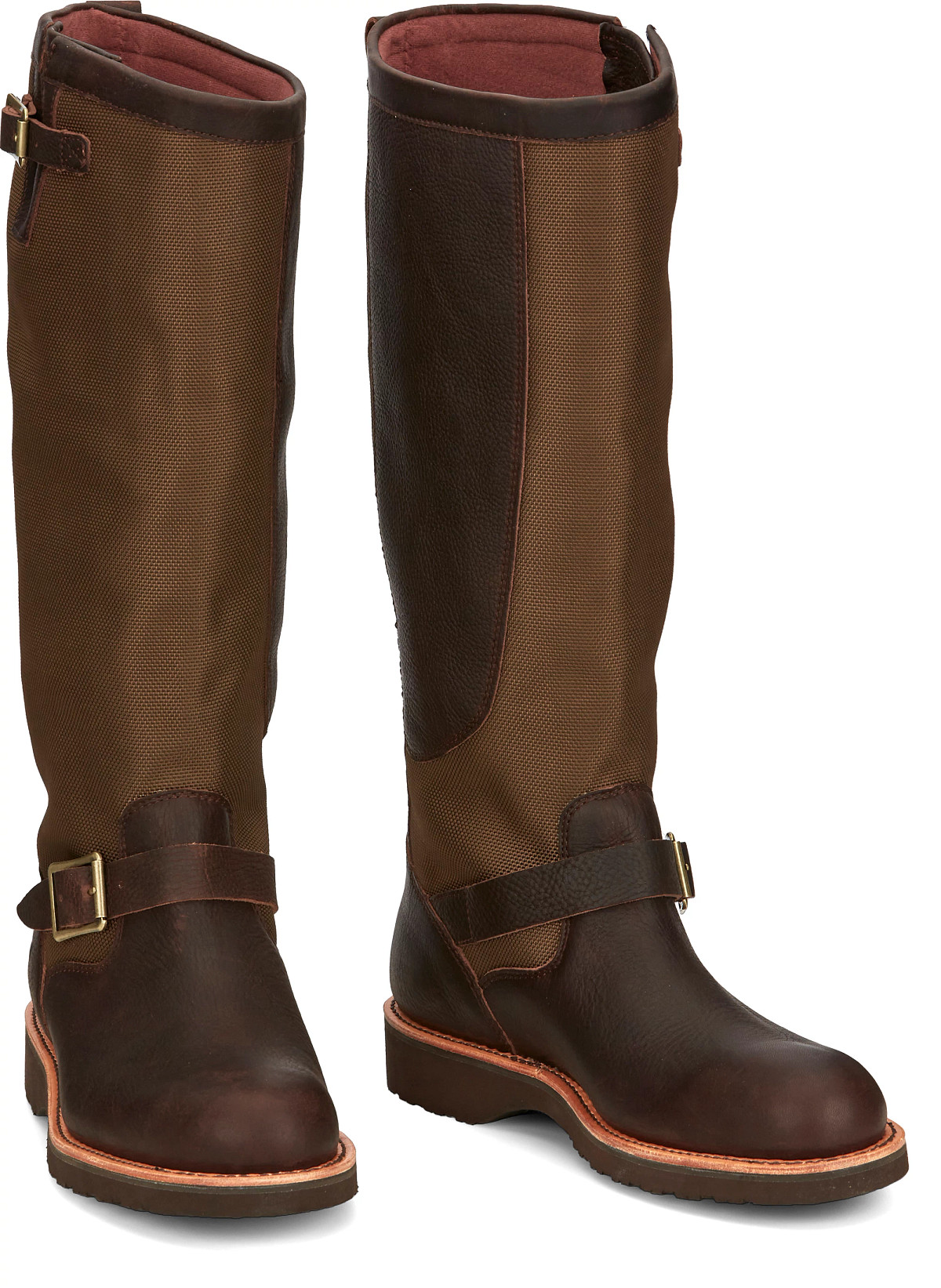
Brome 17" Waterproof Snake Boots
Snake Boot
Brome 17" Waterproof Snake Boots
A tall waterproof snake boot that shows Chippewa's outdoor-protection side: leather, Vipercloth and a 17-inch shaft built for rough country.
$439.95 at CHIPPEWA

Chippewa shopping FAQ

Are Chippewa boots worth it?+

For a heritage American work boot at a relatively accessible price, many owners say yes. Chippewa has been building work and logger boots since 1901 and carries real history in the category. The honest note from long-time wearers is that quality can vary by model and the occasional stitch may run slightly off, so choosing the right style — and ideally a USA-made line — matters more than the badge alone.

How do Chippewa boots compare to Red Wing?+

Both are storied American boot makers with higher-end USA-made lines and more affordable imported ranges, so compare like for like. Enthusiasts often rate Red Wing's construction a notch above and flag that Chippewa can occasionally show uneven stitching, but many still consider Chippewa fine boots at a friendlier price. If outright finish is your priority, weigh Red Wing; if value in a true heritage boot is the goal, Chippewa makes a strong case.

What is Chippewa best known for?+

Rugged American work and recreational boots — principally men's — with the Engineer boot as a signature. Chippewa is actually credited with inventing the Engineer style in the 1930s, developed to outfit workers on Depression-era programmes like the CCC and WPA. That blend of work heritage and a genuinely original design is the heart of the brand's reputation.

Which Chippewa boot should I buy first?+

If you want the most iconic piece of the brand's story, start with the Engineer boot — the style Chippewa is credited with inventing. If you need something for daily wear or the trail, a classic work or logger boot is the other natural entry point. Either way you are buying into a line that has been refined since 1901.

Are Chippewa boots made in the USA?+

Chippewa is an American manufacturer founded in Chippewa Falls, Wisconsin, and it has USA-made boots as well as more affordable imported ranges — a distinction worth checking on the specific pair you want. The brand also holds a notable manufacturing first: it was the first to produce US-made boots with Italian-made original Vibram soles.

When and where was Chippewa founded, and what does the name mean?+

Chippewa was founded in 1901 in Chippewa Falls, Wisconsin, originally as the Chippewa Shoe Manufacturing Company, beginning production at an early factory on River Street. The name is taken from the local Indian tribe in the region where the company was founded, tying the brand directly to its Wisconsin home.

Does Chippewa have real military and aviation heritage?+

Genuinely, yes. Chippewa supplied boots to the military in the First World War, and during the Second World War it crafted cold-weather footwear for the US Army's elite 10th Mountain Division — its Arctic Boots, with heel grooves for ski bindings, honour those soldiers. In the Cold War it even developed the high-altitude flight boot worn by CIA pilots of the U-2 spy plane.
Who owns Chippewa now?+

Chippewa was acquired by Justin Brands in 1984, which was in turn bought by Berkshire Hathaway in August 2000. That puts it in a family of American boot names that also includes Justin Boots, Justin Original Workboots, Nocona Boots and Tony Lama Boots — so it sits within a well-established US footwear group.

What is the Engineer boot, and why does it matter to Chippewa?+

The Engineer boot is the pull-on, strap-fastened work boot Chippewa is credited with inventing in the 1930s. It was created to give workers on Depression-era CCC and WPA programmes durable, protective footwear, and it became a lasting American style well beyond the worksite. For Chippewa it is the design that most defines the brand's place in boot history.

How do I care for Chippewa leather boots so they last?+

Treat the leather like an investment: clean off dirt, let them dry naturally away from direct heat, and condition the leather periodically to keep it supple and water-resistant. Because Chippewa builds boots in the goodyear-welt-and-Vibram heritage tradition — it pioneered US-made boots with Italian Vibram soles — many models can be resoled, so a worn-out sole need not mean a new pair.