Price and exact size
The best time to buy designer shoes on sale, and when waiting backfires
Watch June-August and late December-February for the broad seasonal windows. Buy sooner when the exact size, width, heel, and color leave no good substitute.
 By Elise Laurent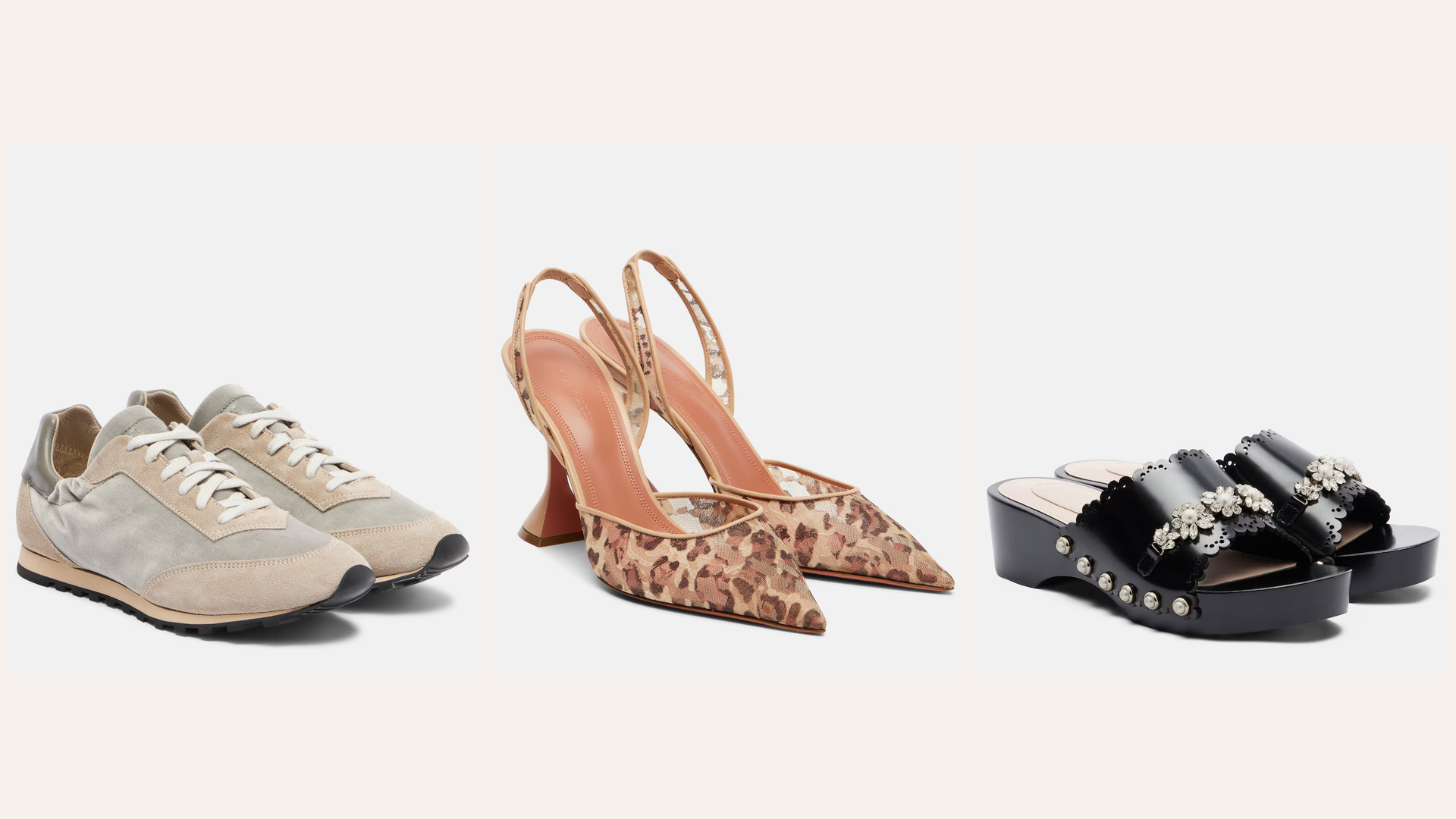
Designer shoe sales create two different clocks. The first is seasonal: retailers move spring/summer stock into markdown around June and fall/winter stock around late December. The second is personal: the exact EU or US size, width, color, heel height, and material can disappear before a later reduction.
There is no sourced universal sellout rate for a women's EU 38, a half size, or any other variant. That means a useful sale calendar cannot promise that waiting will work. It can show when reductions tend to gather and which live signals make another round of waiting too risky.
The designer shoe sale calendar
FashionUnited places spring mid-season sale activity in March-April, summer sales from June into July-August, fall mid-season activity in September-October, and winter sales from December into January-February across the United States and much of the Global North.
According to data from the Central Bureau of Statistics cited by FashionUnited, shoes share the January and July-August low-price seasons found across clothing categories. Henk Hofstede, sector banker at Dutch bank ABN Amro, explains that discounting helps retailers clear inventory and fund incoming purchases. The calendar gives the search windows; it does not decide the exact shoe.
Selective mid-season promotions. Verify brand exclusions and the original price.
June tends to be the earlier-choice window. July-August is the deeper-wait window.
Chosen fall shoes may enter promotion while new-season styles remain full price.
Late December balances choice and price. January-February asks for more flexibility.
At the July 14 snapshot, Mytheresa's live sale hub listed 7,580 shoes and paired category-level filters with item-level size and Final Sale labels. The count is a changing inventory signal, not a promise that any exact size will survive to a later markdown.
What the current sale feed reveals
On July 14, Mytheresa's exact shoe pages displayed the original price, reduced price, percentage, EU sizes, material details, and Final Sale label. These three listings show why discount percentage cannot be separated from the exact variant and policy.
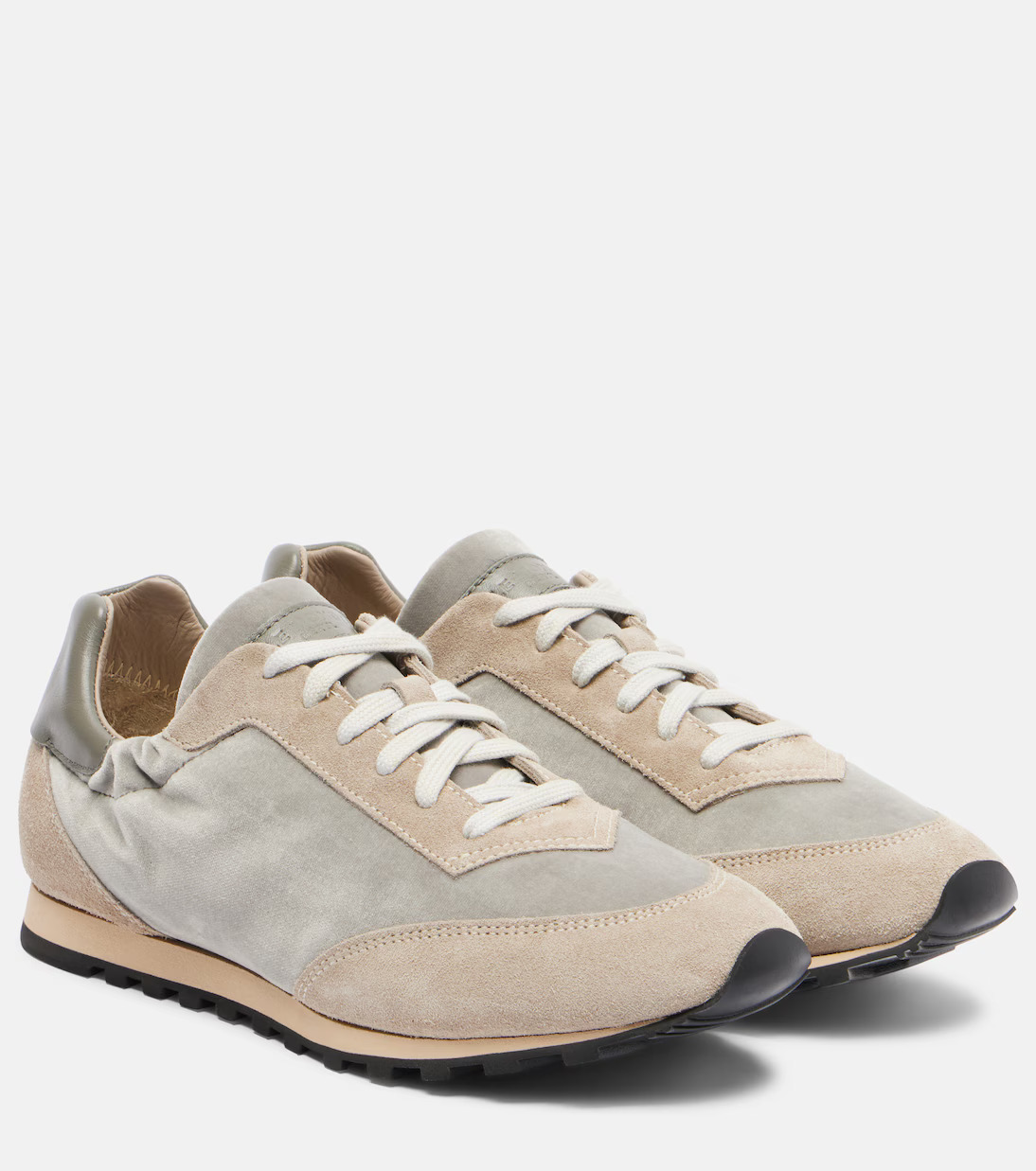
Le Monde Béryl Slim Runner Velvet and Suede Sneakers
$705 to $564 · 20% off
The true-to-size listing showed EU 36, 37, 37.5, 38, 39, 40, 41, and 42, with most marked low stock. The sneakers have velvet and suede uppers, shearling linings, rubber soles, and a Final Sale label.
Check the exact sneakerAmina Muaddi Holli 95 Leopard-Print Slingback Pumps
$965 to $675 · 30% off
The true-to-size page showed EU 35-41 in selected low-stock sizes. A 95-millimeter flared heel, fabric upper, leather trim, pointed toe, and Final Sale status define the decision more precisely than “pump on sale.”
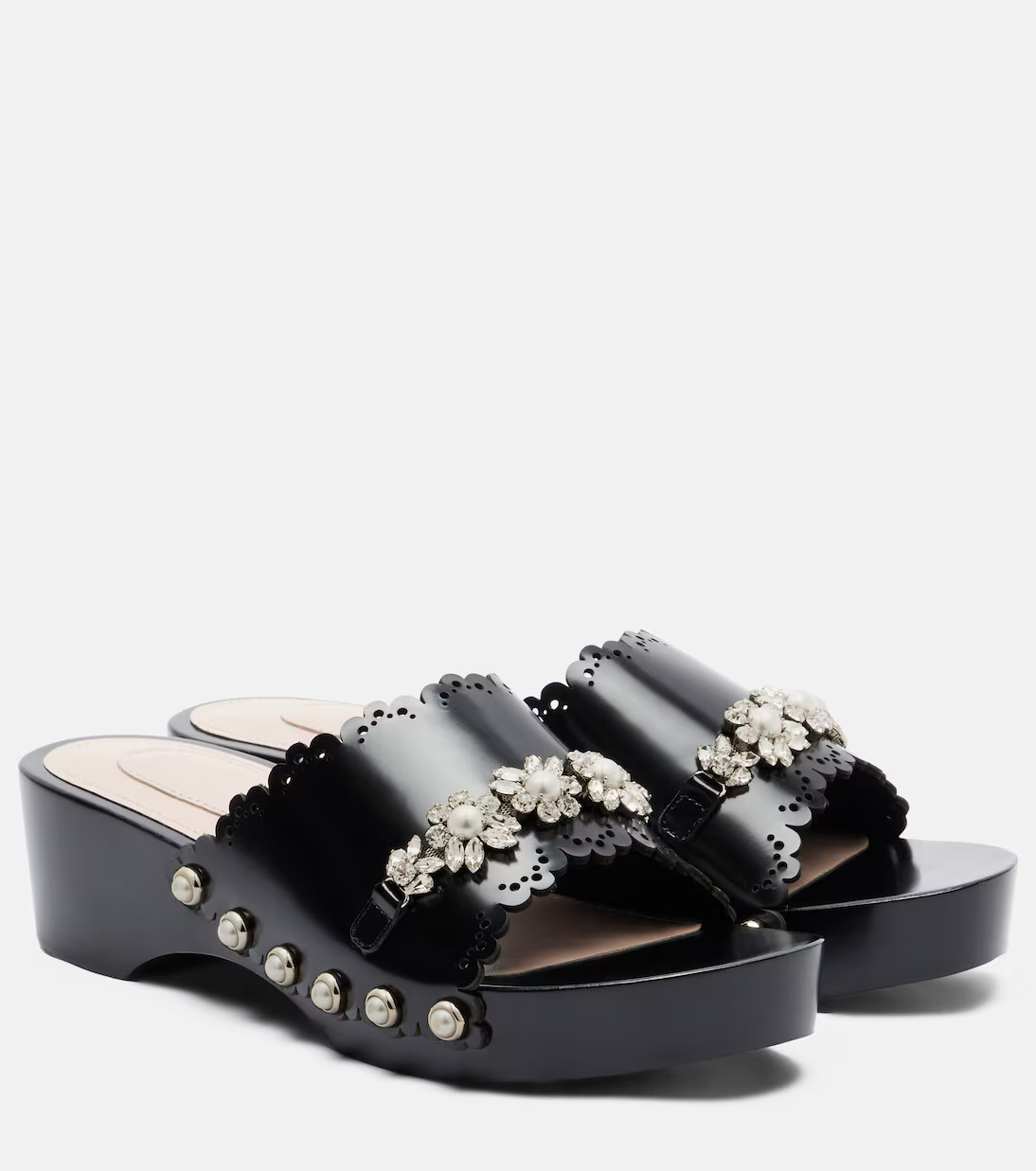
Check the exact slingbackSimone Rocha Embellished Leather Clogs
$925 to $555 · 40% off
The calf-leather clogs have laser-cut detailing, crystal embellishments, leather linings and insoles, and rubber soles. EU 36 and 37 were low stock, EU 39 and 40 were last pieces, and the item was Final Sale.
Check the exact clog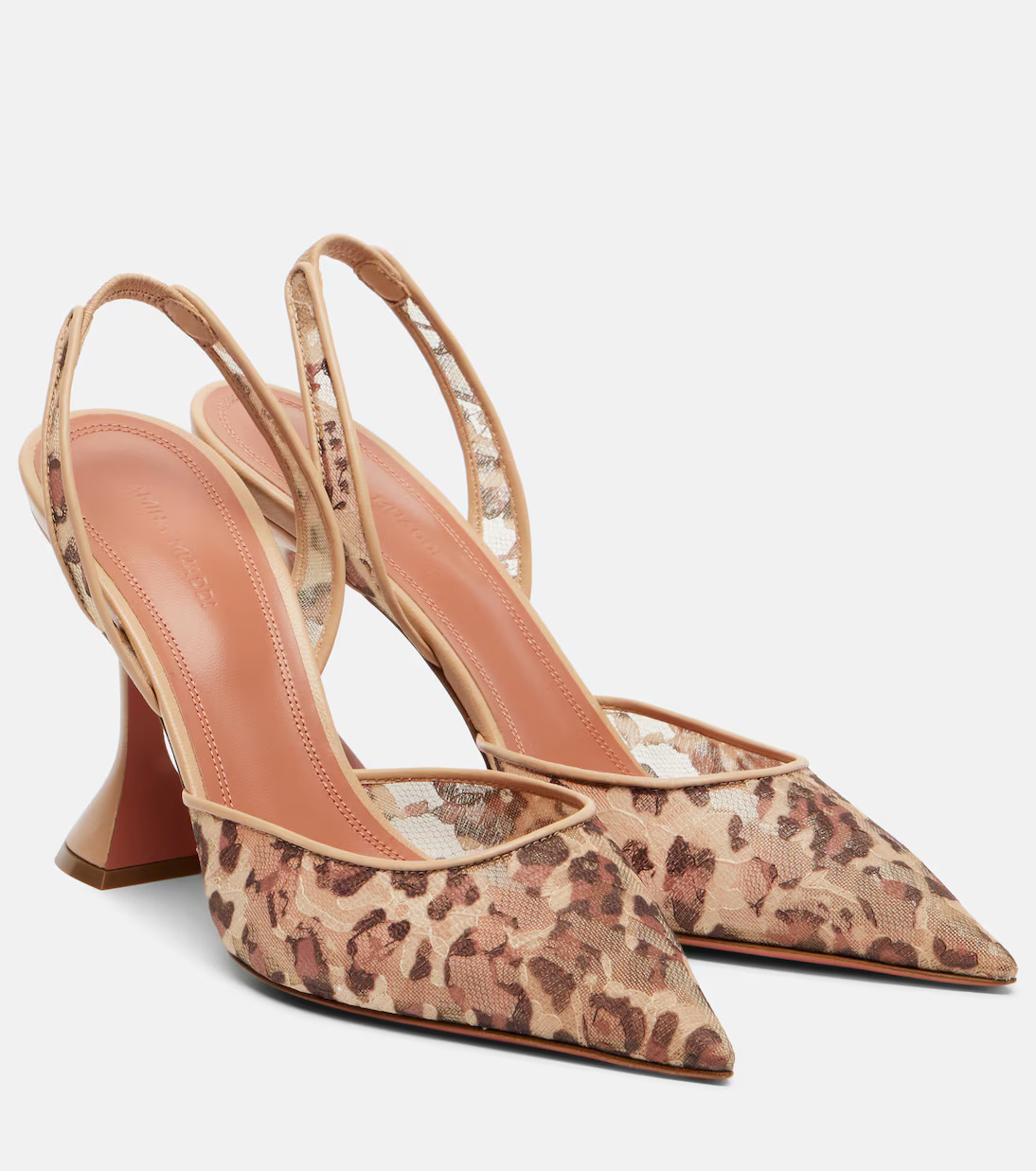
At the July 14 snapshot, Le Monde Béryl was $564 from $705 (20% off), Amina Muaddi was $675 from $965 (30% off), and Simone Rocha was $555 from $925 (40% off). All three were Final Sale. The largest markdown also had last-piece sizes, while the broad sneaker run still carried repeated low-stock labels.
The material labels need the same discipline. The Le Monde Béryl page says suede, but does not identify it as a suede split. The other listings specify leather trim, calf leather, or glossed leather; none of those descriptions establishes nappa. Keeping the retailer's exact terms prevents a material comparison from becoming more specific than its sources.
Five inventory signals to watch
When waiting backfires
Waiting backfires when the sale target is defined too narrowly for the remaining inventory. An exact half size, a fixed heel height, or a hard-to-substitute color can make the first markdown the rational buy point. A deeper future discount has no value if only the wrong variant remains.
It also backfires when a returnable listing becomes Final Sale. NET-A-PORTER states that products marked Final Sale cannot be returned or exchanged, while its standard return deadline is 28 days from receipt. Mytheresa applies the same no-return, no-exchange rule to marked Final Sale products. Fit uncertainty belongs in the decision before checkout, not after a lower percentage appears.
When another markdown may be worth the risk
Wait when the shoe category is broad and substitutions are genuine. If several leather sneakers in two neutral colors and multiple brands would work, a July or January search can tolerate stock loss. The buyer must also be willing to end with no purchase.
A second reason to wait is a soft deadline. A shoe needed “sometime in the coming season” gives the search room to compare June with July or late December with January. A shoe required for a ceremony does not. The latest safe order date should include delivery, evaluation, and any permitted return or exchange.

Build an alert that protects size and returns
- Save the full product name and URL. Search-result titles can change, while a direct destination keeps the target identifiable. A Bottega Veneta Sofia glossed-leather ankle boot and a generic “black boot” are not the same alert.
- Record the native size. Keep EU, US, UK, width, and half-size information exactly as the retailer presents it.
- Capture the price pair. Save original price, current price, percentage, and date. A promotional banner alone is not enough.
- Write the construction brief. Include upper material, lining if listed, sole, heel height, toe shape, closure, and color.
- Read item-level return language. Standard Mytheresa exchanges can run 30 days, including reduced items, but Final Sale remains an exclusion.
- Preserve condition. Saks requires eligible returns within 30 days of delivery and expects items unworn, unaltered, with tags, applicable packaging, and proof.
- Set a stop date. If the target has not reached the budget before the event or travel deadline, choose a documented substitute or stop the search.
A decision timeline by shopper priority
| Priority | Best watch period | Buy signal | Main risk |
|---|---|---|---|
| Exact size and style | New-season through first markdown | Budget met while exact variant remains | Losing the only acceptable size |
| Balanced price and choice | June or late December | First reduction with returnable stock | Assuming every sale item can return |
| Deep discount | July-August or January-February | Several substitutes remain | Thin assortment and Final Sale |
| Uncertain sizing | Any returnable window | Clear policy and enough evaluation time | Buying an unfamiliar size without recourse |
| New-season target | July-September | Price baseline and first acceptable promotion | Confusing current-season stock with clearance |
The bottom-line shoe window
For maximum selection, watch the first markdown in June or late December. For a broader, flexible search, push into July-August or January-February. For a new-season target, start the exact-product tracker when fall deliveries arrive from July through September.
Waiting is rational only while at least one acceptable size, construction, color, and return condition remains. Once the exact variant becomes scarce or Final Sale makes sizing risk unacceptable, a later markdown is no longer the main decision.
ChicAire editors independently research and select products. If you buy through our links, we may earn a commission.