Sensory Seas Couture
Marine ecology, neural drawing, and celebrity-scale spectacle in one line.
Story & heritage
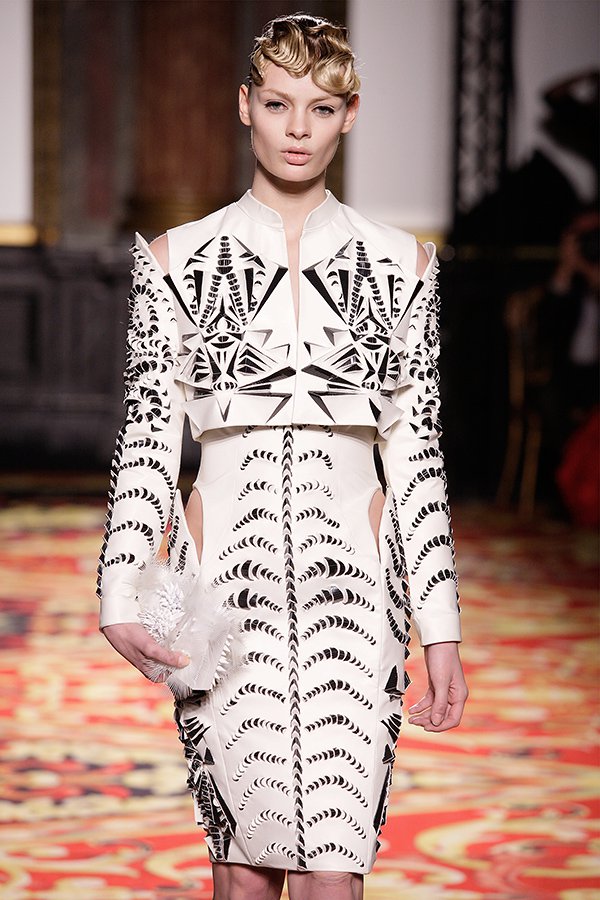
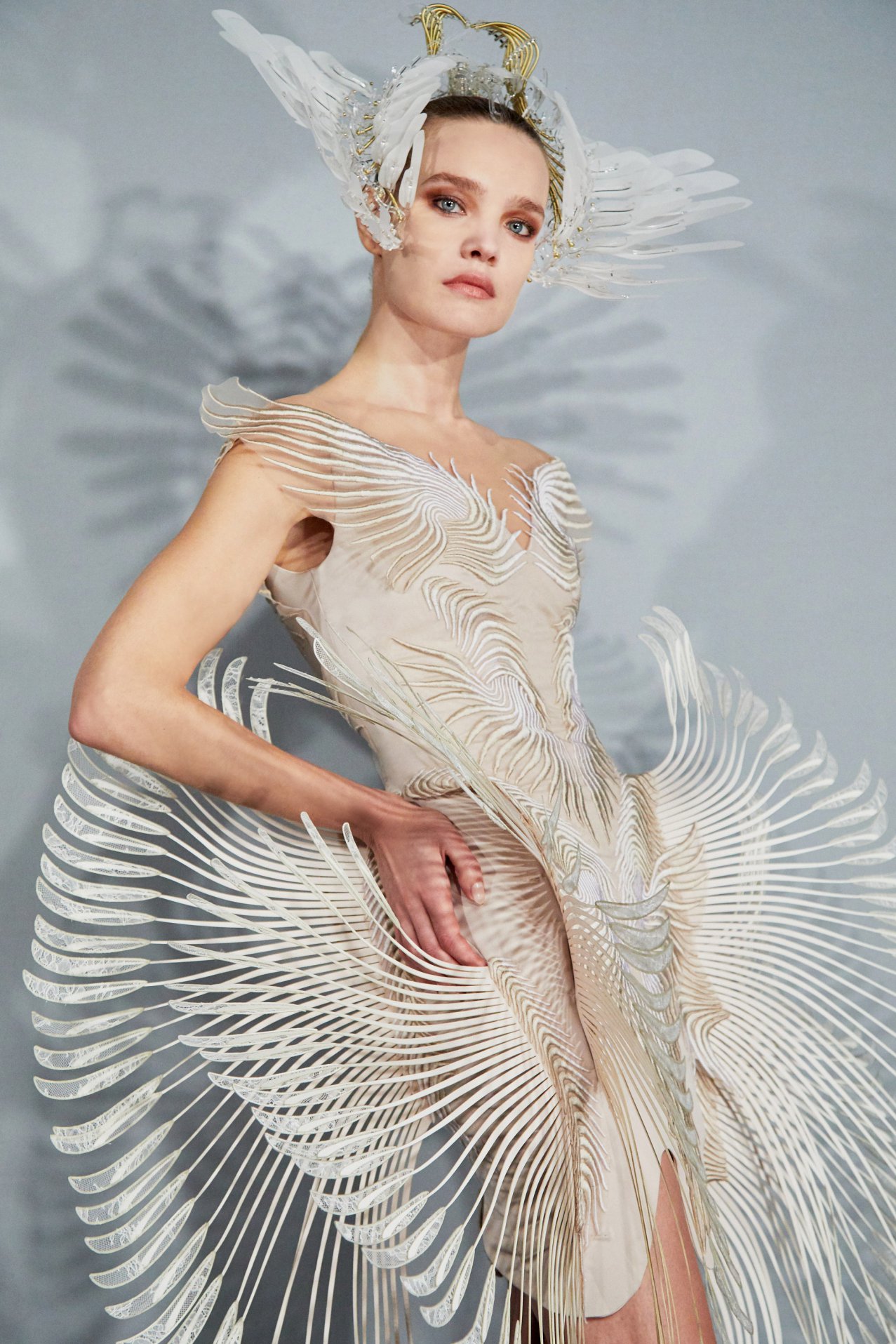
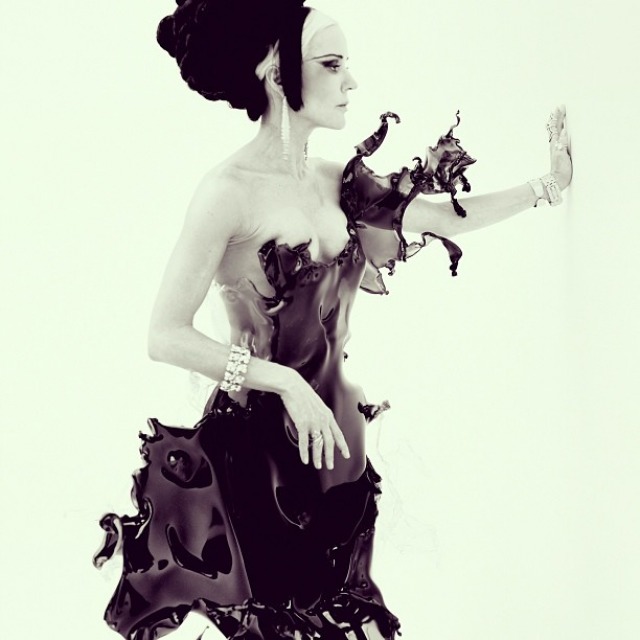
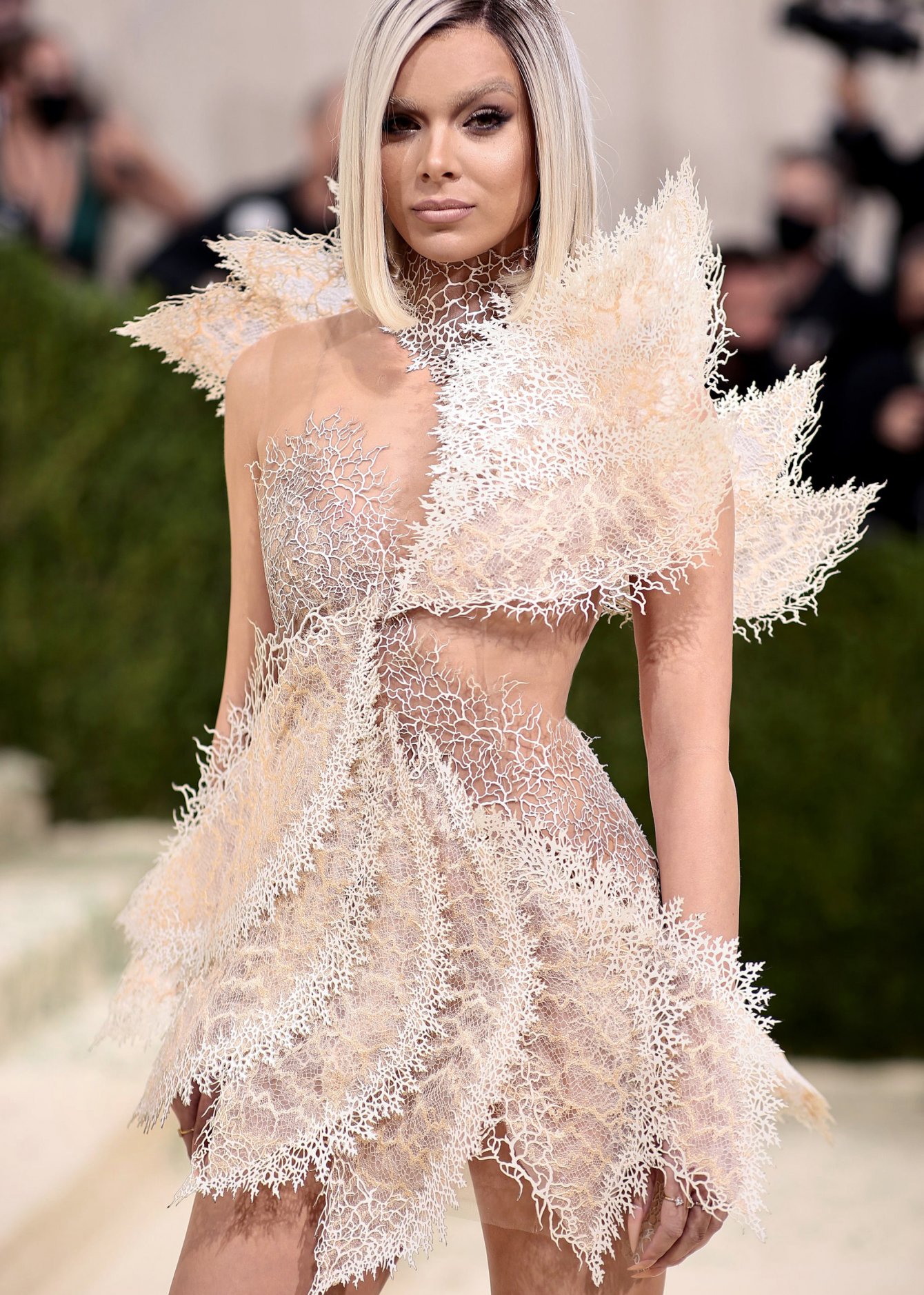
The official Sensory Seas page says the collection draws from the sensory processes of the human body and the fibrous marine ecology of the oceans. It names Spanish neuroanatomist Ramón y Cajal as an early inspiration, linking anatomical drawing to underwater life and turning both into a couture vocabulary of tendrils, filaments, and suspended motion.
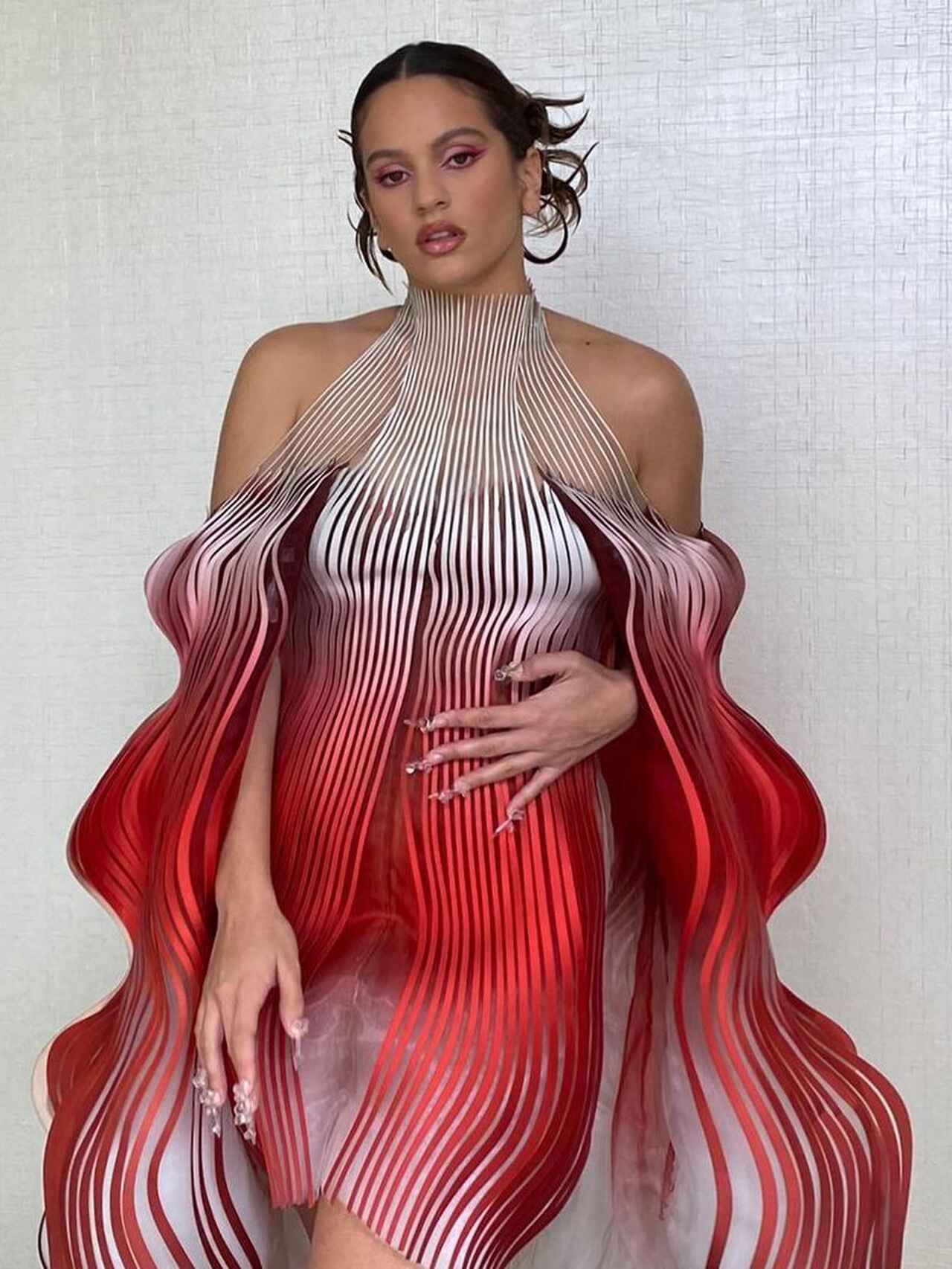
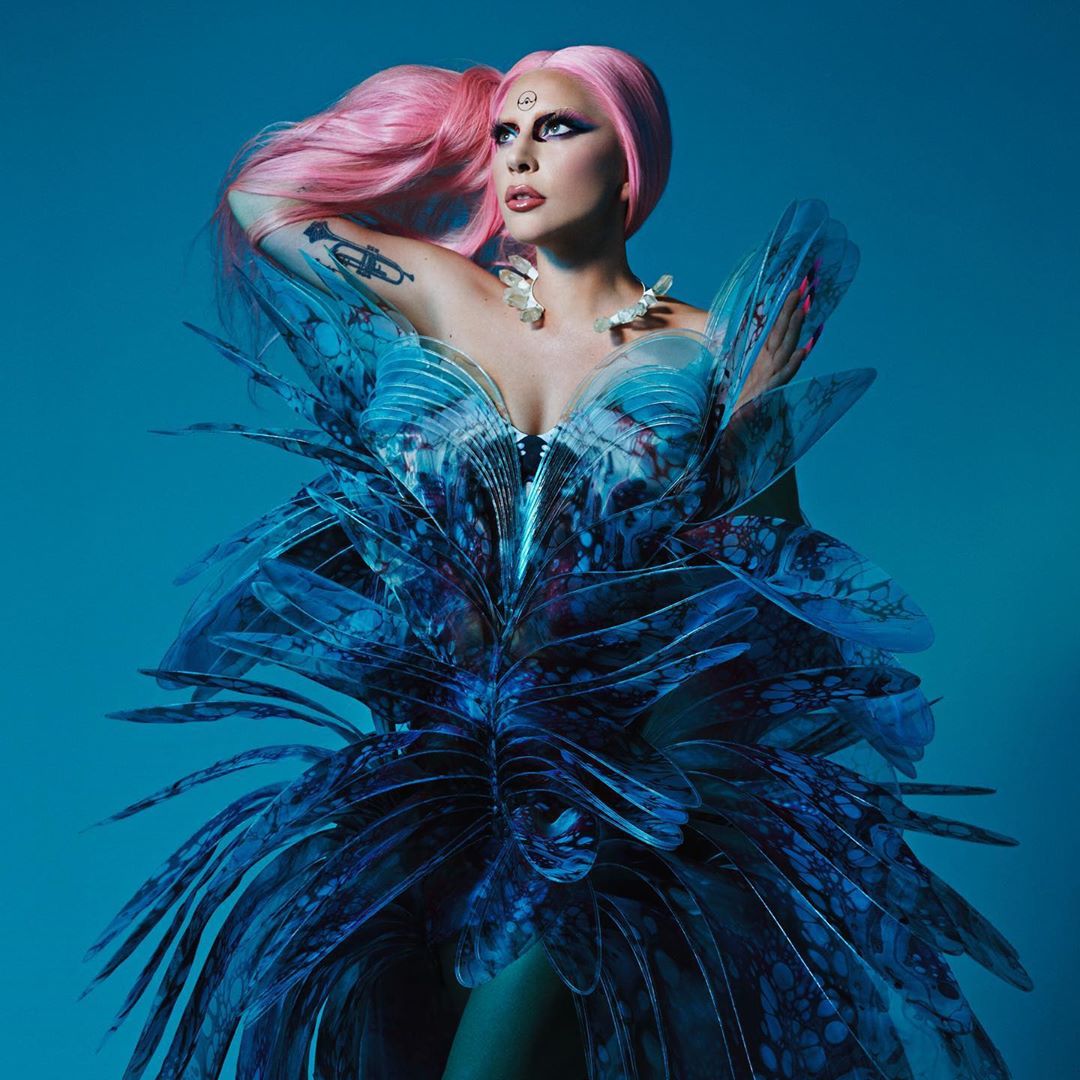
Few van Herpen lines crossed into mainstream image culture as decisively as Sensory Seas. Musicians, actors, and magazine editors repeatedly returned to it, making the family one of the house's clearest bridges between couture runway experiment and broad cultural visibility.
Materials & craft
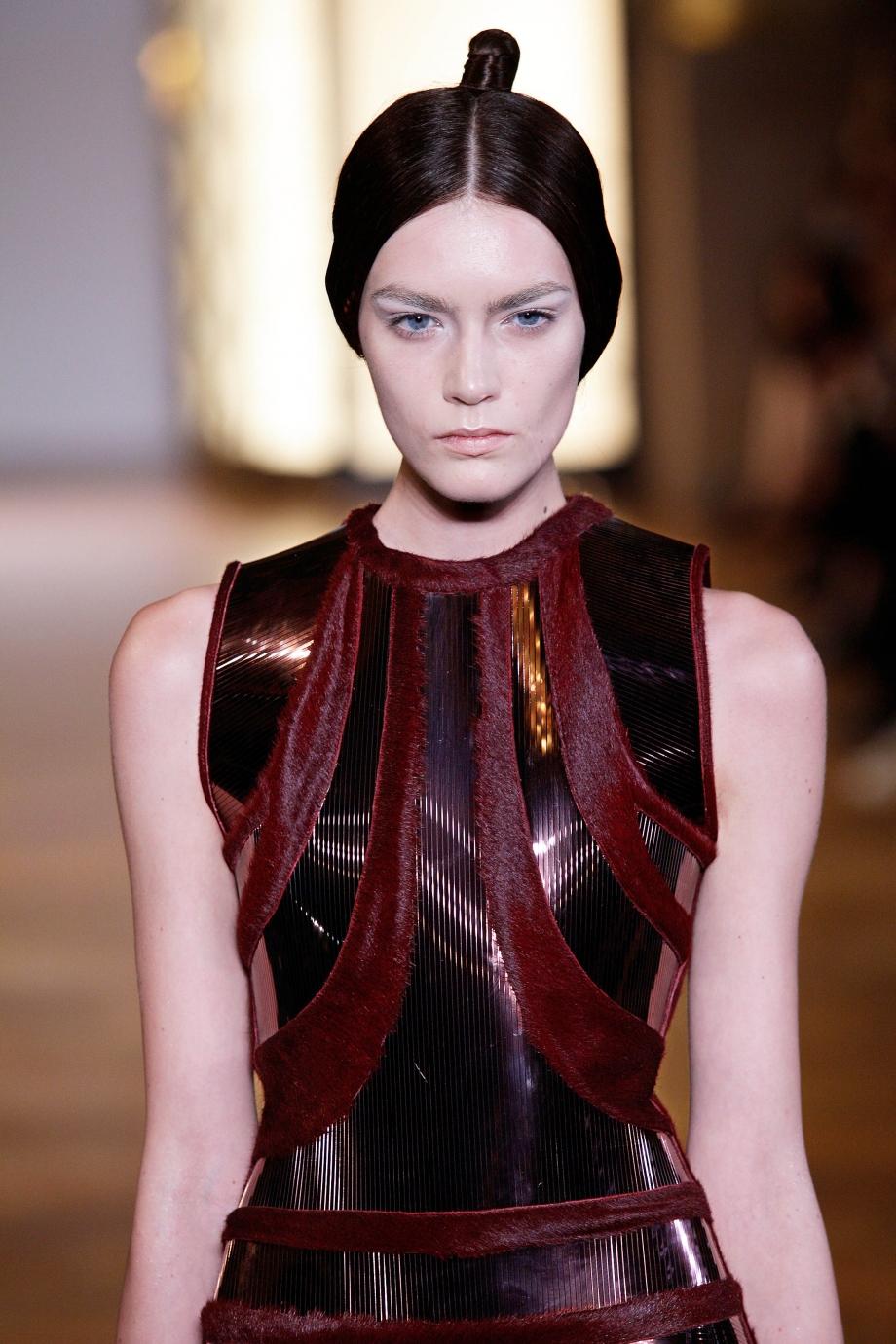
Sensory Seas relies on layered, filament-like construction that behaves almost like a second reef around the body. Across official runway and muse imagery, the family is defined by asymmetric fins, aqueous striping, and fluid surfaces that appear to float free from the base silhouette while still maintaining couture precision.
How to choose & style
Sensory Seas thrives in motion and under dramatic light. It suits editorial or red-carpet situations where the body can stay relatively clean and vertical, letting the marine framing create the atmosphere on its own.