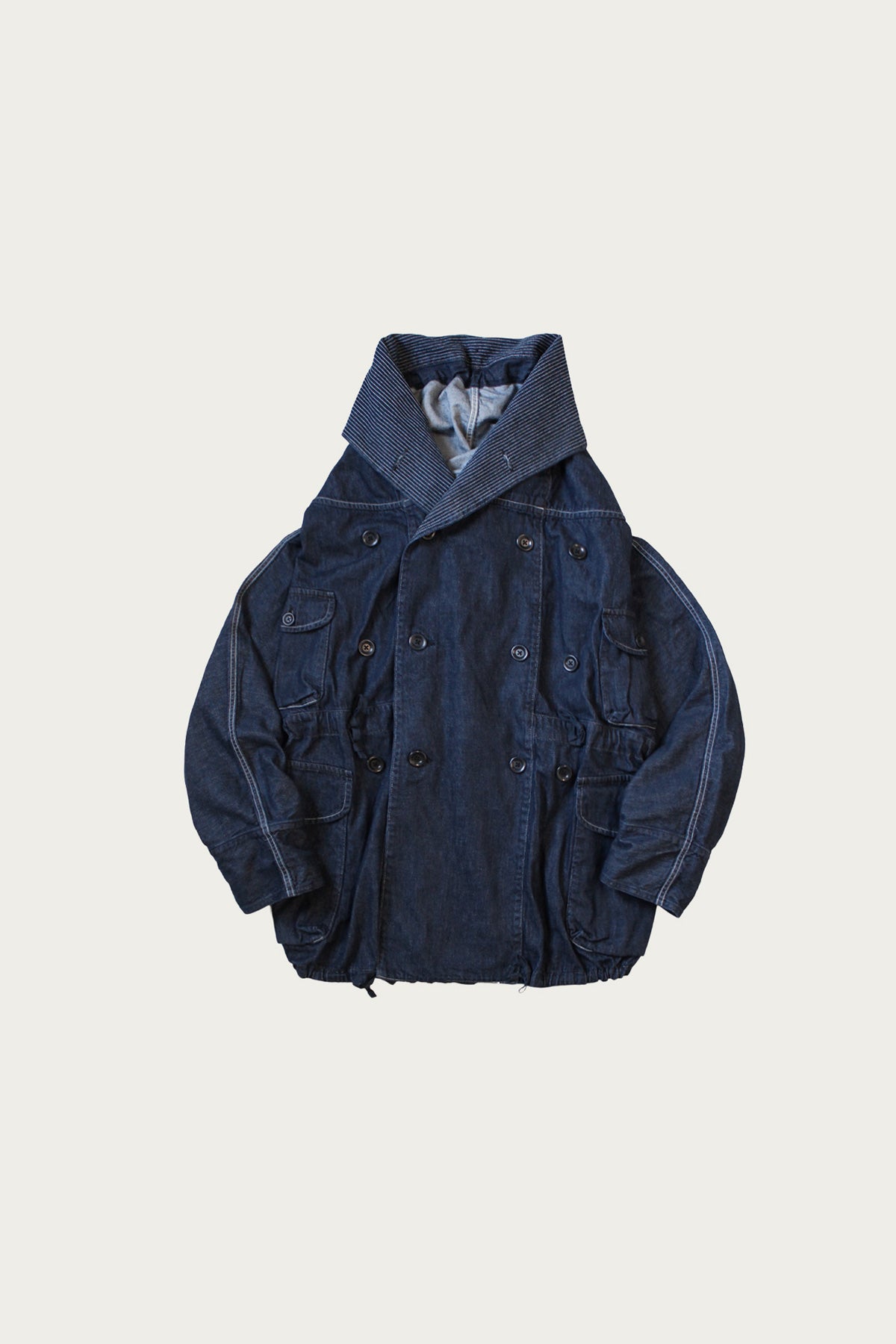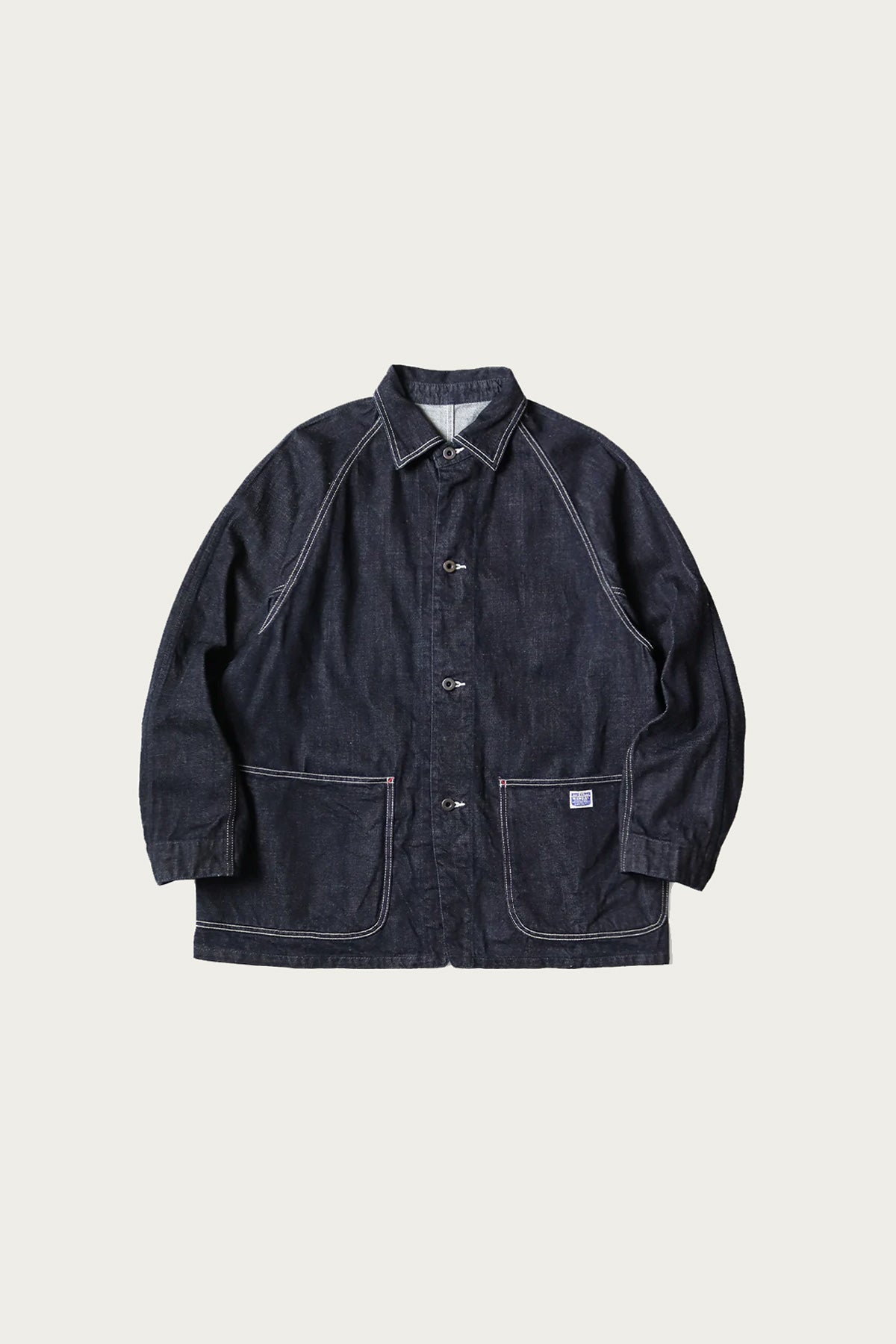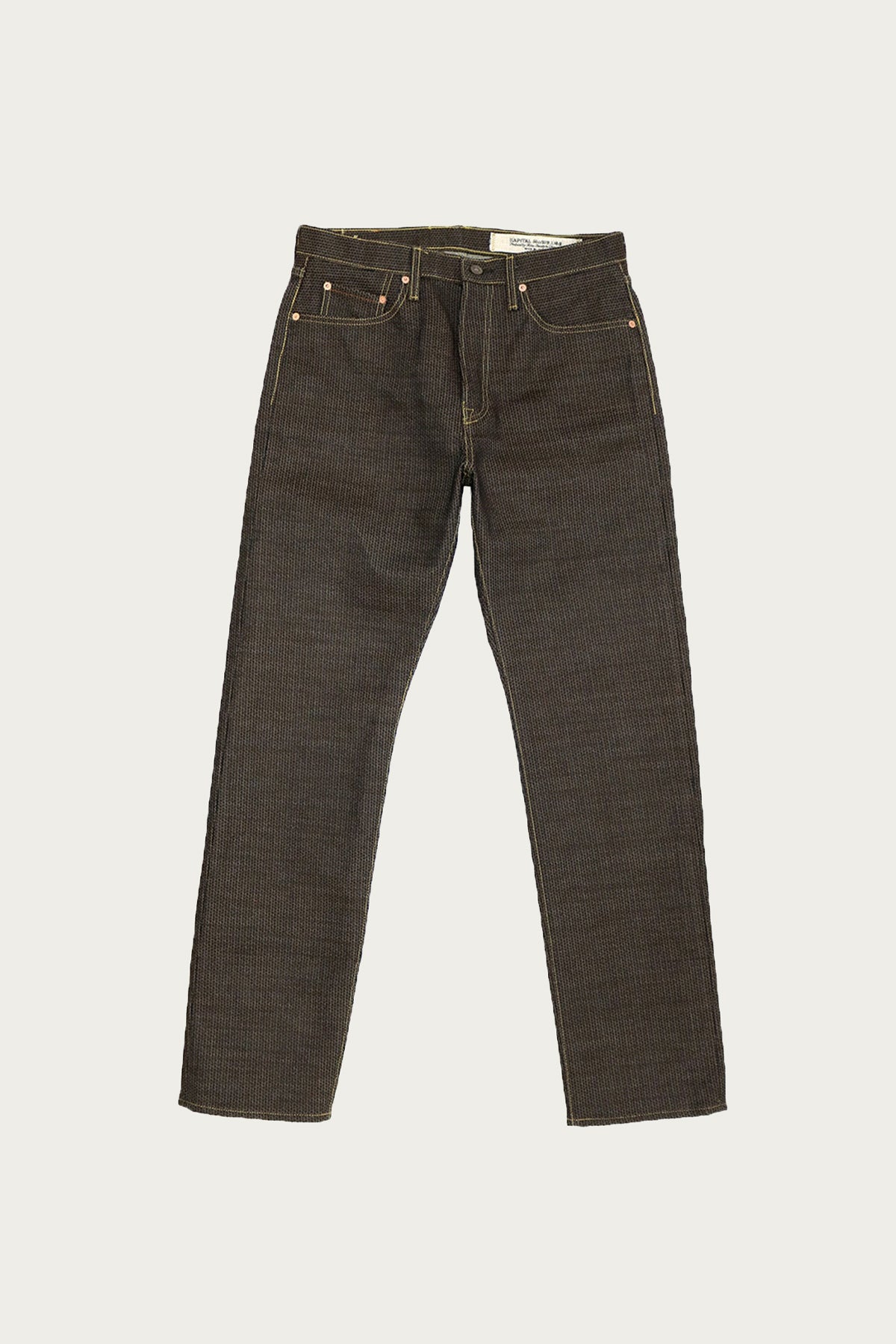
Century Denim
Kapital’s denim thesis statement: sashiko, dye chemistry, and a cult silhouette vocabulary in one fabric family.
Prices are a snapshot from when this page was built — confirm on the retailer's site.
Story & heritage
Century Denim is the fabric line most closely tied to KAPITAL’s identity. Canoe Club’s long-form overview traces it to 2012, when KAPITAL fused Japanese sashiko traditions with vintage American denim hardware and fits, turning a niche denim experiment into the line collectors most readily associate with the brand.
The family expanded into multiple numbered dye programs rather than a single wash. That allowed Century Denim to become less one product than a recurring KAPITAL language: jeans, jackets and bags all using the same heavily worked cloth and slow-fade logic.
Materials & craft
Canoe Club notes that Century Denim is produced across four specialist factories — spinning, dyeing, weaving and finishing — with the warp, weft and sashiko threads all handled separately before weaving. The texture comes from the raised sashiko grid, while individual dye programs change the base cloth: No.1.2.3 mixes American, Japanese and natural indigo; No.5 pairs kakishibu persimmon dye with indigo sashiko; No.7 uses sumi dye; No.9 adds mud-dyeing from Amami Oshima traditions.
How to choose & style
The strongest Century pieces are the ones that let the fabric do the talking. Straight or lightly tapered jeans work best with quiet knits, washed sweats, or a simple work jacket; the numbered browns and charcoals already read like a finished outfit. If you want the full KAPITAL effect, pair Century Denim with another folk-textile accessory rather than another loud print.