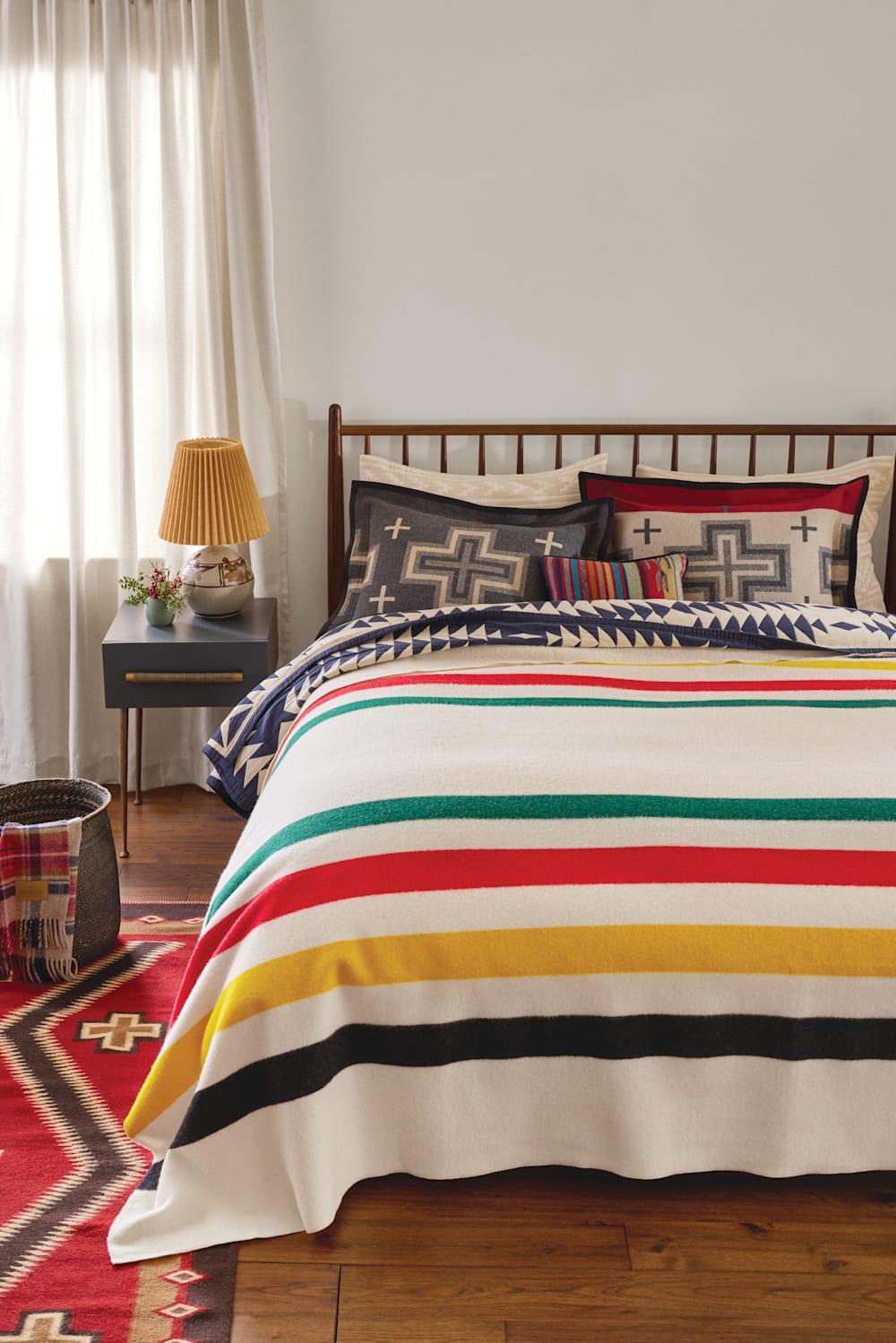
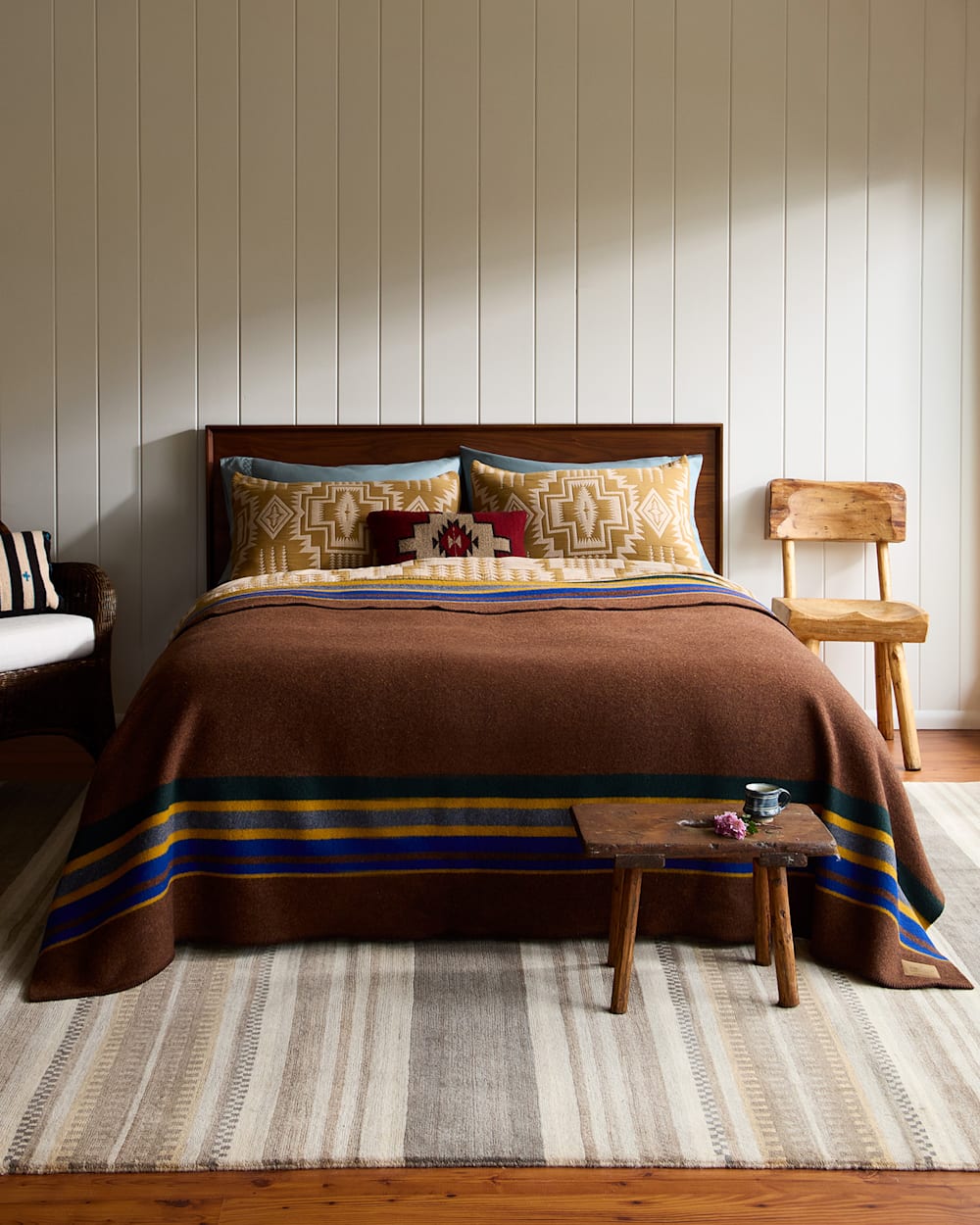
Are Pendleton wool blankets worth it?+
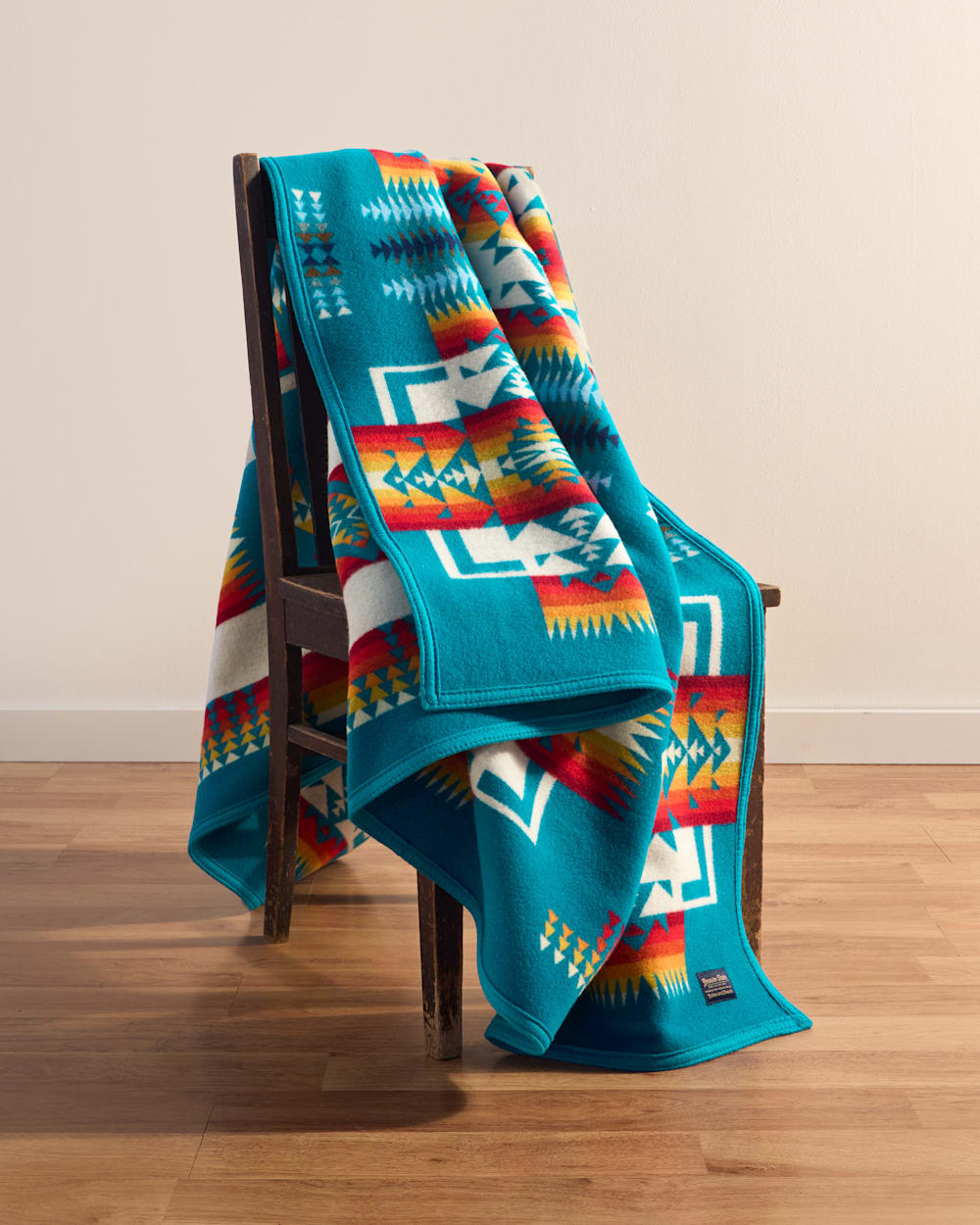
If you want a blanket that lasts decades rather than seasons, a Pendleton is one of the safest buys in the category. Owners routinely describe them as heirlooms passed down through families, and the warmth and weight feel unmistakably substantial. The trade-off is care — wool absorbs odours and debris and needs respectful cleaning — but treated well, it earns its place for a lifetime.
Why are Pendleton blankets so expensive?+
The price reflects pure wool, generations-deep supplier relationships and the fact that the jacquard blankets are still woven on the company's own American looms rather than outsourced. Pendleton's jacquard patterns are genuinely complex weaves, and many designs carry meaning drawn from Native American history rather than being decorative print. You are paying for durability and a real manufacturing heritage, not a logo.
What is Pendleton best known for?+
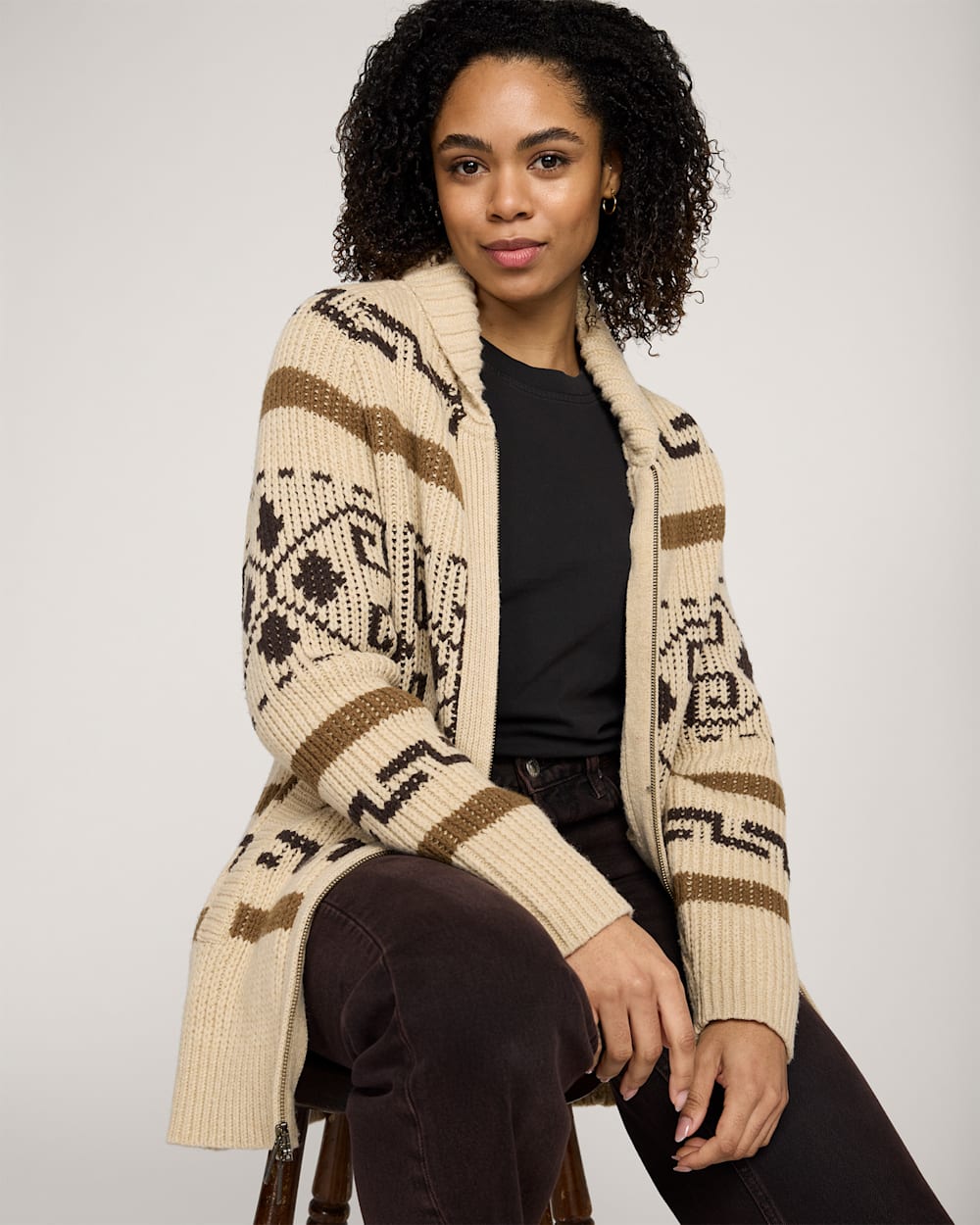
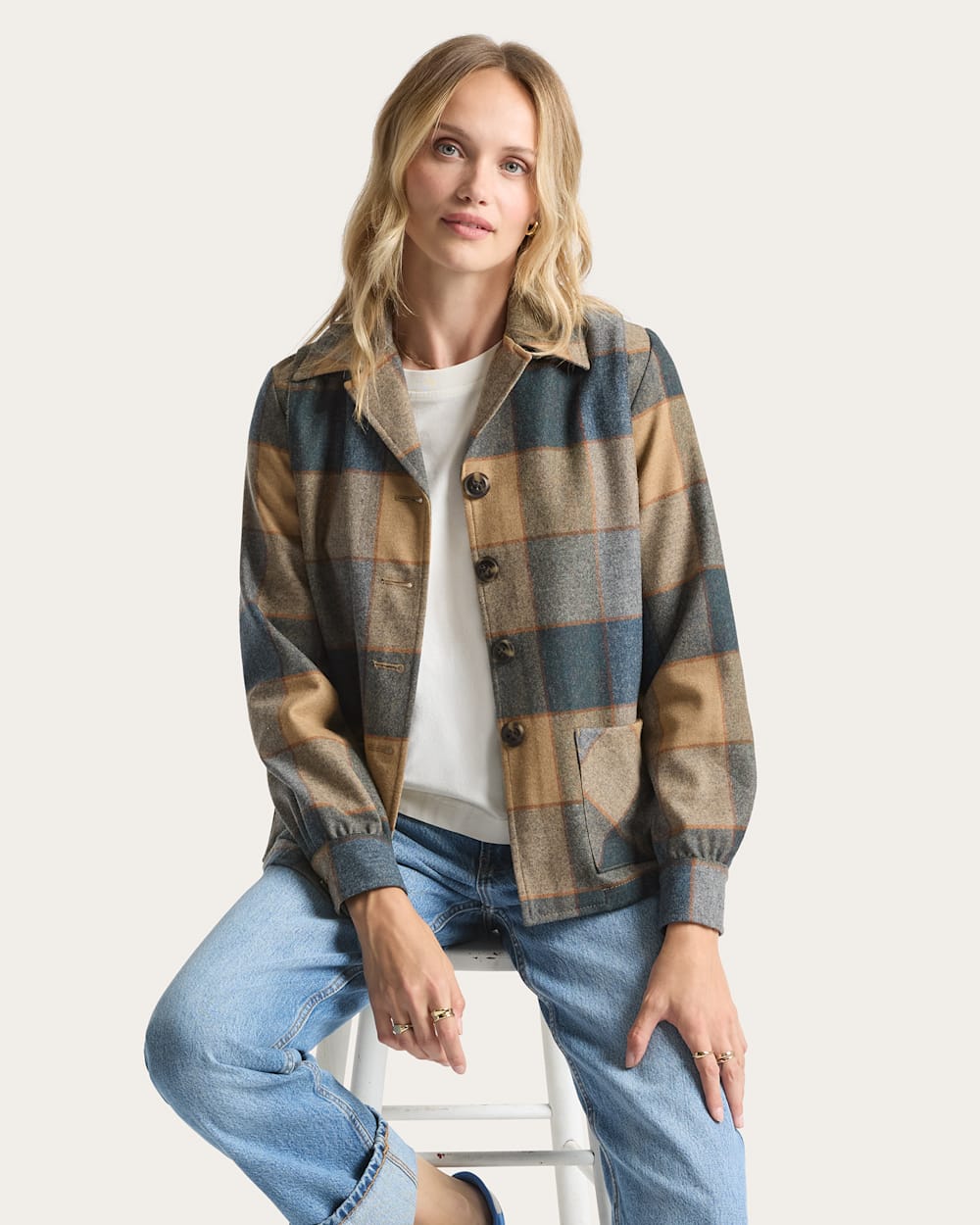
Pendleton is an American textile company known above all for its woolen blankets and clothing. The blankets are the cornerstone — the company began making Native American trade blankets in the 1890s and never stopped — while the wool shirts became a second signature decades later. If you are buying your first piece, a jacquard blanket is the most iconic choice.
Where are Pendleton blankets made?+
Pendleton Woolen Mills is an American company headquartered in Portland, Oregon, with weaving rooted in the Pacific Northwest. It was incorporated in 1909 in Pendleton, Oregon, the town that gave the company its name, before the headquarters moved to Portland in 1919. That Oregon mill heritage is a big part of why the blankets carry the reputation they do.
What is the story behind Pendleton's Native American trade blankets?+
By the late 1890s the mill was making geometric-patterned robes for Native American men and fringed shawls for women, originally for the Umatilla, Cayuse, Nez Perce and Walla Walla tribes of the area. To expand to the Navajo, Hopi and Zuni peoples of the Southwest, the company enlisted designer Joe Rawnsley, who visited tribes to learn their customs and colour preferences. The blankets became not just apparel but standards for trading and ceremonial use.
How did the Pendleton wool shirt become so famous?+
Before Pendleton, woolen shirts were dull-coloured work shirts. One of the Bishop sons, C.M. Bishop, launched men's woolen sport shirts in bright colours and bold patterns, with full production beginning in 1924. The shirt's fame jumped in 1961 when a young band called the Pendletones — who later renamed themselves The Beach Boys — took their name from the classic Pendleton plaid, making it a youth-culture staple.
Who founded Pendleton Woolen Mills?+
The company was reopened and incorporated in 1909 by the Bishop family, whose textile expertise came through Fannie Kay Bishop. Fannie was the daughter of Thomas Lister Kay, an English-born weaver who had founded the Thomas Kay Woolen Mill in Salem, Oregon, and she passed that knowledge to her three sons, who ran the business. It has remained a family-rooted, privately held company ever since.
What does the colour of a Pendleton label mean?+
Pendleton labels have evolved over time, and one useful tell is colour: blue labels signify men's garments and white labels indicate women's apparel. A label showing the Woolmark symbol dates the piece from 1964 or later. These details are handy if you are buying vintage Pendleton and want to date or identify a garment.
What's the difference between Pendleton's wool and non-wool lines?+
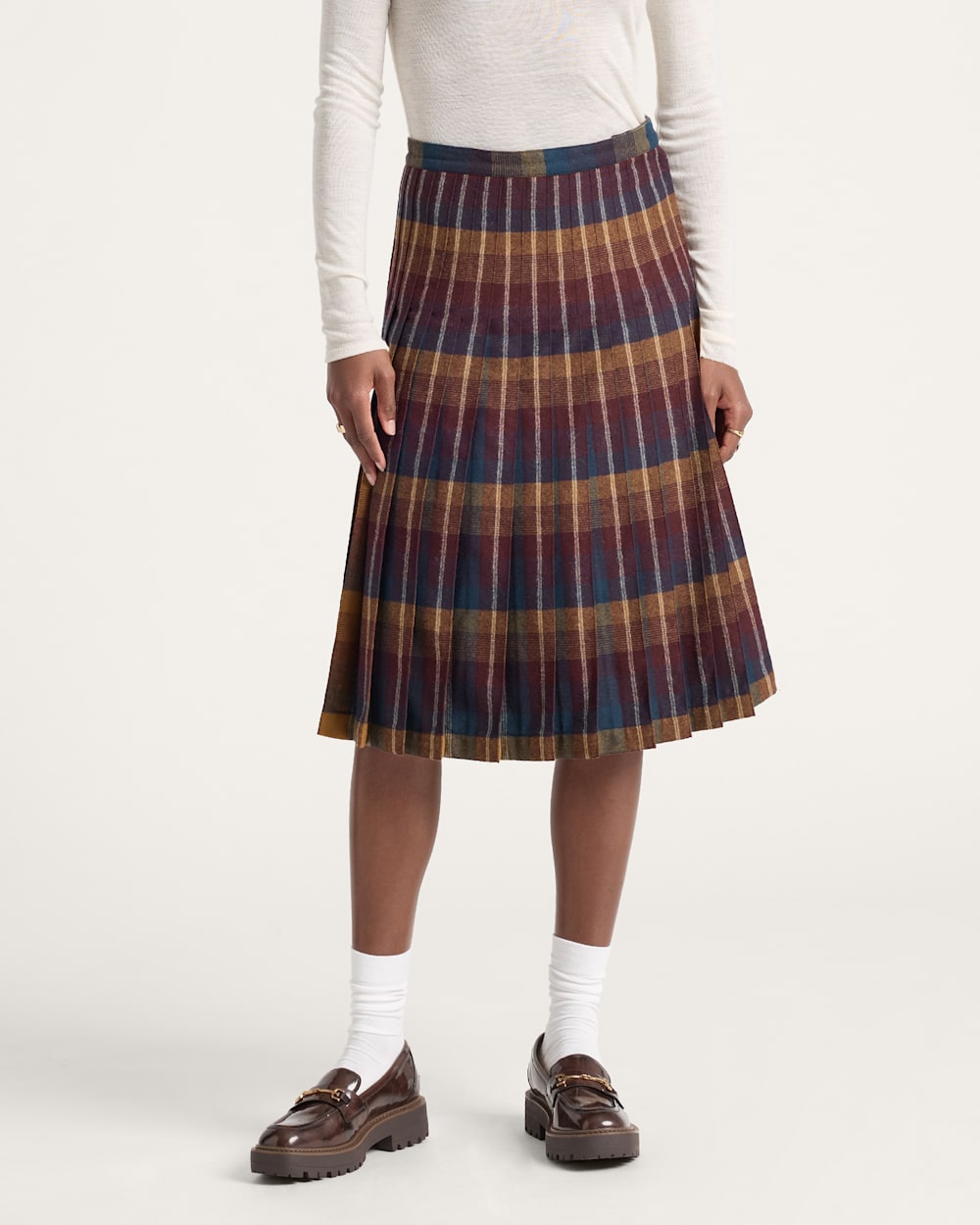
Pendleton built its name on pure wool — blankets, shirts and sportswear — but in 1972 it introduced non-wool garments so customers could keep the classic Pendleton look in lighter clothing for spring and summer. So the wool pieces are the heritage core for warmth and longevity, while the non-wool line answers year-round, lighter-weight wear. Both carry the same design sensibility.
How do I care for a Pendleton wool blanket?+
Treat it like the long-term investment it is. Wool absorbs water quickly, clings to debris and holds onto odours such as campfire smoke, so keep it off damp ground and follow the specific care instructions rather than tossing it in a hot wash. Cared for properly, a Pendleton blanket can stay in beautiful condition for generations.
Where should I buy Pendleton to be sure it's genuine?+
For new pieces, buy from Pendleton's own retail stores or authorised stockists so you know the wool and weave are the real thing. The company sells across the United States and also in Europe, Australia, Canada and Japan. For vintage hunting, lean on the label cues — the blue or white label colour and the Woolmark dating — to confirm what you are looking at.