Is a Rubinacci suit worth the money?+
For people who care about Neapolitan tailoring, the usual verdict is yes, with a caveat. The value is in longevity and versatility: a soft, unstructured Rubinacci jacket can move from a meeting to an evening out, so it earns its keep over years. The caveat is taste, since if you prefer the sharp, structured lines of Savile Row, Rubinacci's deliberately relaxed silhouette may feel too soft for you.
What makes Rubinacci's soft shoulder different from other Neapolitan tailors?+
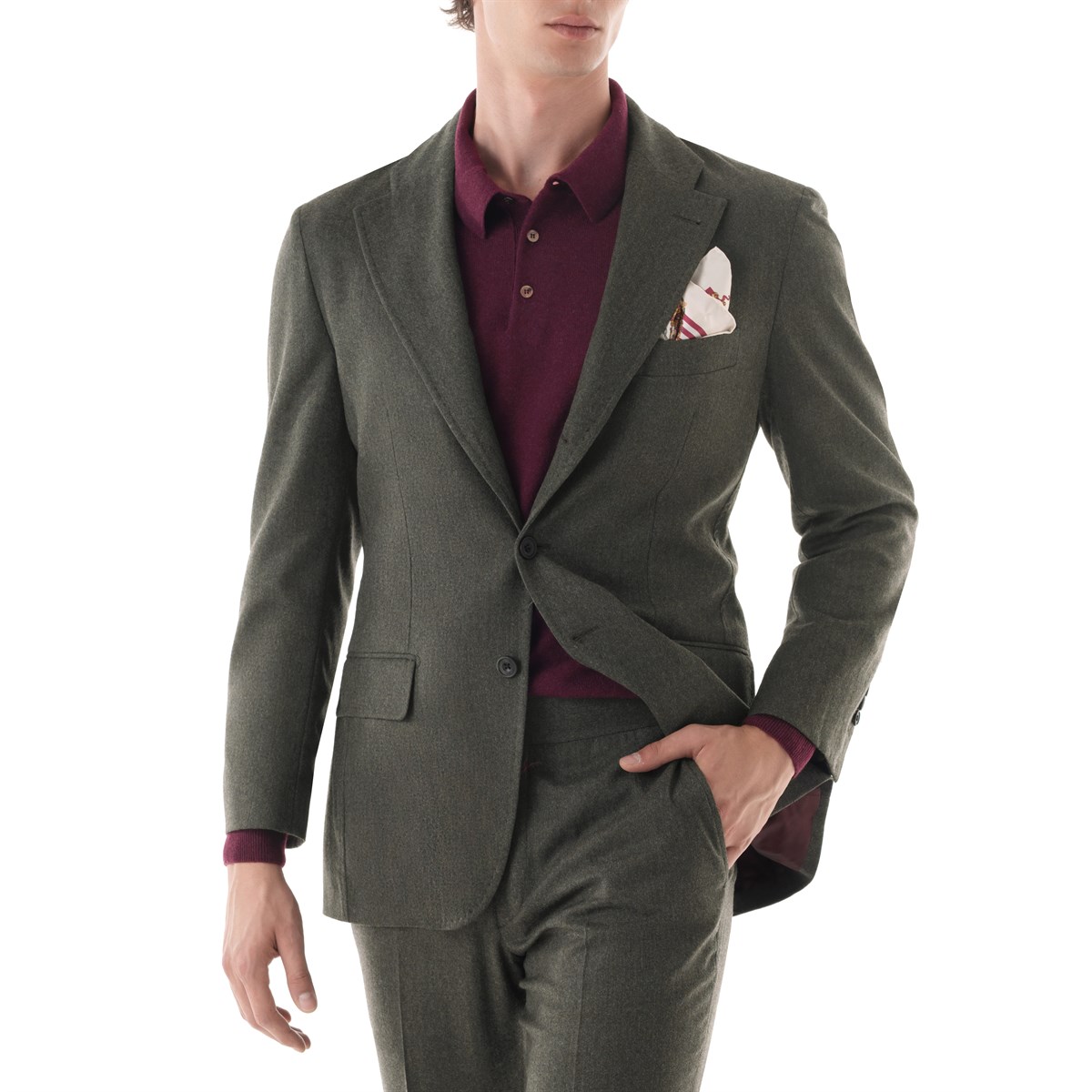
Rubinacci sits at the rounded, softest end of the Neapolitan spectrum. The house was a pioneer of the deconstructed jacket, stripping out the stiff canvas and heavy padding of English tailoring to leave a shoulder and chest that follow the body with a cardigan-like ease. That gentle, lightly built shoulder is the signature people come to Rubinacci for.
How does Rubinacci compare to Kiton and Cesare Attolini?+
All three are pillars of Neapolitan tailoring, but they land in different places on the structure scale. Rubinacci is the rounded, soft, relaxed extreme, while Attolini reads as cleaner and more disciplined through the chest and shoulder. Kiton tends to fall somewhere in between. The choice usually comes down to how soft and unstructured you want your jacket to feel.
Who founded Rubinacci and when?+
Rubinacci was established in Naples, Italy in 1932 by Gennaro Rubinacci, who originally ran the business under the name London House at 25 Via Gaetano Filangieri. His idea was to make unstructured, unlined jackets meant to be worn outside the office, which became the foundation of the house's relaxed Neapolitan style.
Why is the house called Rubinacci when it started as London House?+
The name change came with the second generation. Gennaro's son Mariano took control in 1961, and in 1963 the business was renamed Rubinacci, though the firm kept the original initials in its logo as a nod to the London House years. So the name on the door today reflects the family, while the logo still carries the brand's origin.
Who runs Rubinacci today?+
The house is now in its third generation. As of 2018, Luca Rubinacci, the grandson of founder Gennaro, serves as creative director and has driven the development of the firm's ready-to-wear collection, broadening the house beyond its bespoke roots while keeping its Neapolitan character.
Does Rubinacci only do bespoke, or can I buy ready-to-wear?+
Both. Rubinacci's heritage is bespoke and made-to-order tailoring, but it also offers ready-to-wear men's suits, and the ready-to-wear collection has been expanded under Luca Rubinacci. So you can engage the house at the full bespoke level or step in through its off-the-peg offerings.
Where can I find Rubinacci, and is it only in Naples?+
It started in Naples, but the house has grown beyond it. After establishing itself on Via Gaetano Filangieri, Rubinacci opened a branch in Milan in 1989 and a London location in 2005, so the family's Neapolitan tailoring is available in more than one city.
What kind of customer has Rubinacci dressed over the years?+
From early on it drew a cultured Italian clientele. Notable early clients included the filmmaker Vittorio De Sica and the journalist Curzio Malaparte, which speaks to the house's standing in mid-century Neapolitan life. That heritage of dressing creative and literary figures is part of the brand's identity.
Is Rubinacci recognized as part of fashion history?+
Yes, well beyond the fitting room. Mariano Rubinacci founded a museum of Neapolitan tailoring in Naples featuring garments from the 1930s onward, items from the collection have been loaned to the Fashion Institute of Technology in New York, and the museum staged an exhibition at the Victoria and Albert Museum in 2014. That institutional attention underscores the house's role in the story of tailoring.
Will a Rubinacci jacket suit me if I like a sharp, structured look?+
Possibly not, and it is worth being honest about that before you commit. Rubinacci's whole point is a soft, rounded, lightly built silhouette with cardigan-like comfort. If your taste runs to the crisp, padded, architectural lines of Savile Row, you may find the house's relaxed shoulder underwhelming, and one of the more structured Neapolitan makers might suit you better.