Fall 2026 · Runway to real life
How to Wear Fall 2026’s Color Blocking With Just Two Pieces
Keep two saturated fields, give one more area, and let ordinary silhouettes do the work.
 By Sabine Keller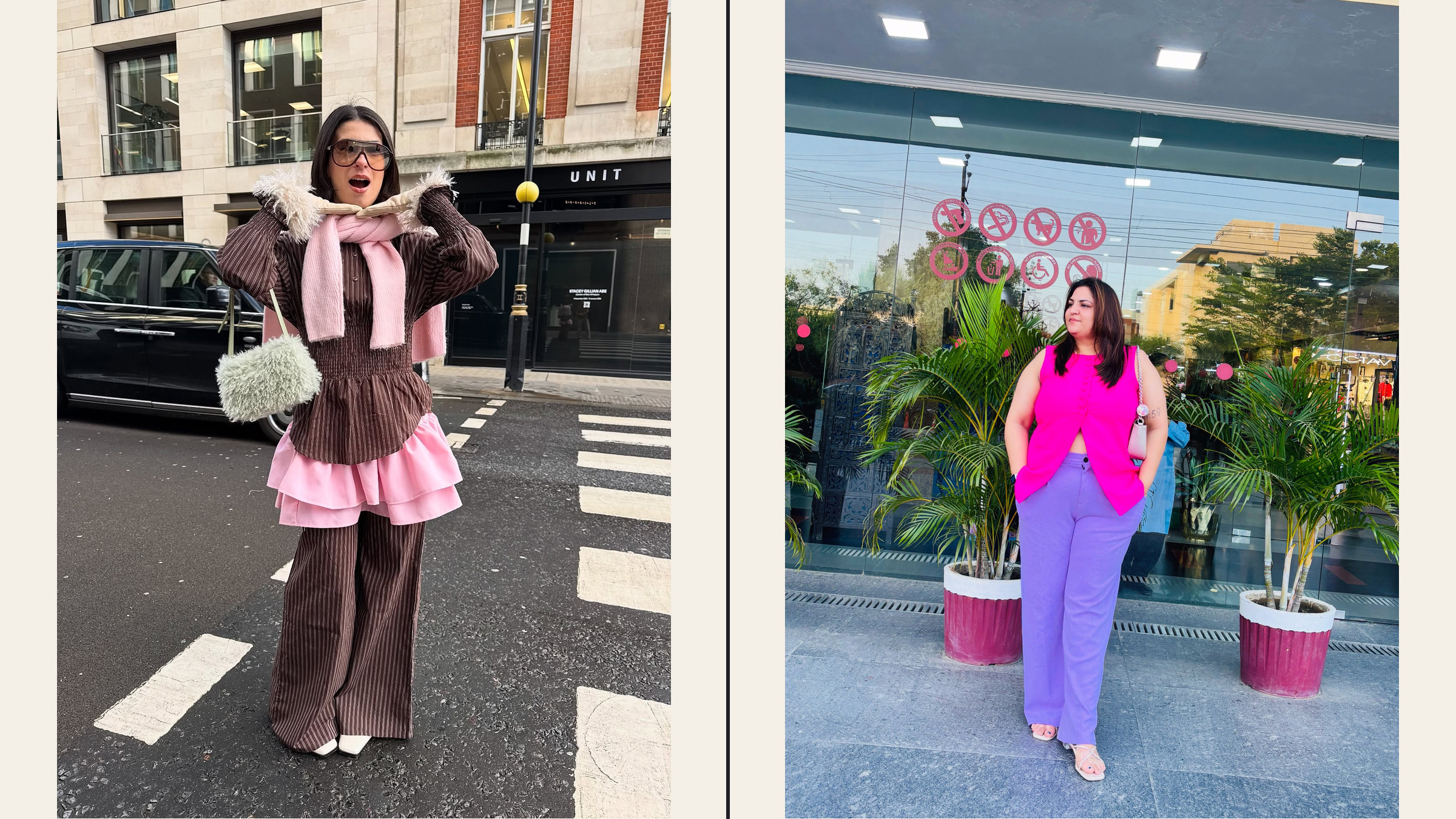
The easiest version of Fall 2026 color blocking is not a rainbow. It is one large solid, one smaller solid, and a clear edge between them.
1. The Fall 2026 signal moved from Lii to Celine
Laird Borrelli-Persson’s March 18, 2026 Vogue report traced color blocking from Lii in New York to Celine in Paris and Jessie Buckley’s two-tone Chanel Oscars gown off-runway.
Lucy Maguire, features director at Vogue Business, reported the February 9 forecast. Karis Munday, retail analyst at Edited (officially EDITED), named purple-red and green-yellow combinations. The forecast supplies context, not proof.
According to data reported by Vogue Business, EDITED recorded European plum arrivals up 175% year over year. Frida Tordhag, analyst at Heuritech, forecast U.S. carmine-red visibility up 9% and European purple-red visibility up 18% from Fall 2025 to Fall 2026.
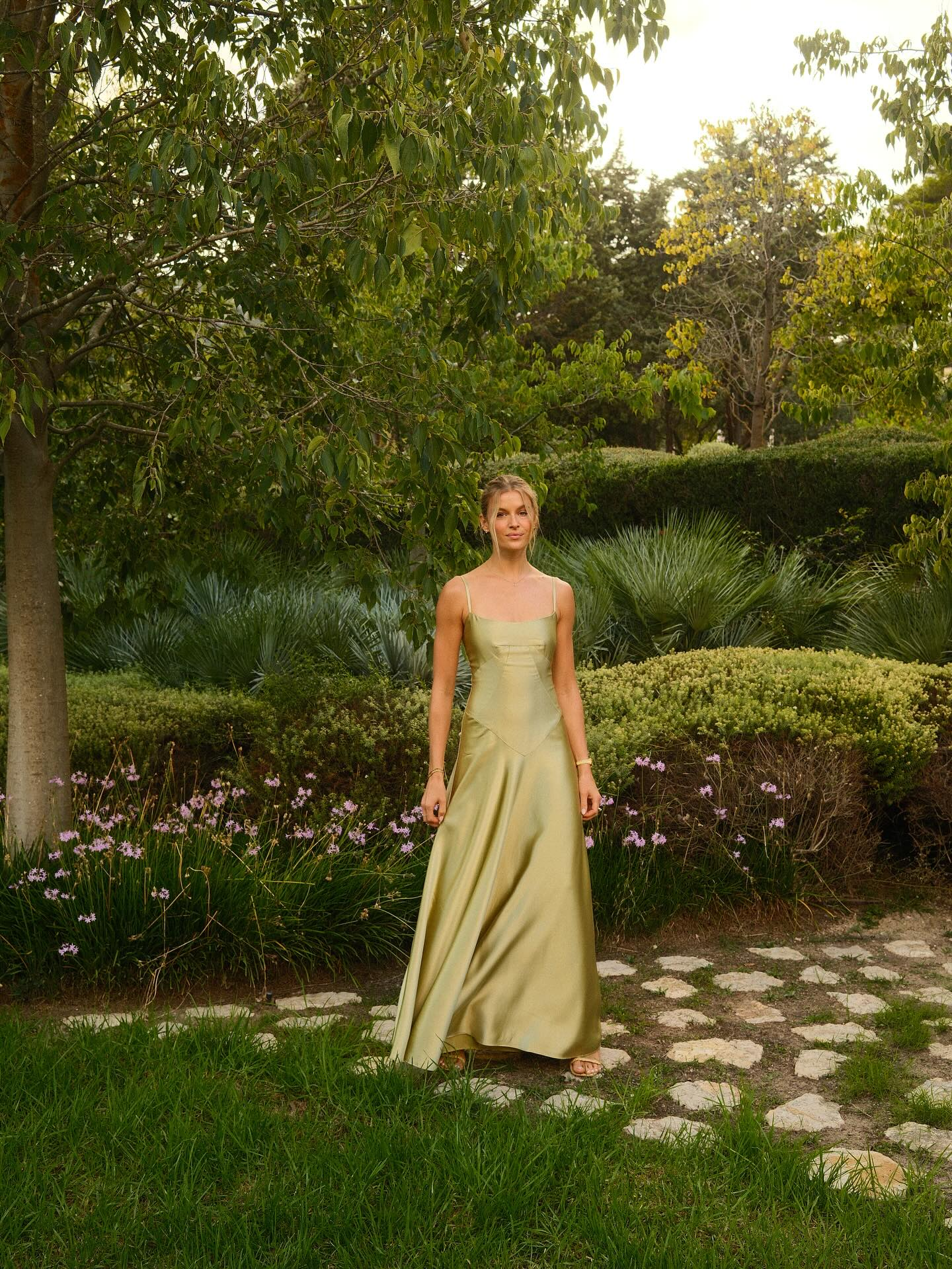
Jessie Buckley wore a light-pink skirt with a lipstick-red Chanel shawl at the 2026 Academy Awards, as documented by the Associated Press.
Laird Borrelli-Persson’s Vogue synthesis identified the runway signal from Lii in New York to Celine in Paris, after the major Fall 2026 collections had shown.
Arrival data and visibility forecasts do not prove sales or durability; the March runway record supports the finished season.
2. Four design codes define the runway version
Vogue described Lii’s structured fabric as cut flat and extended at seams for dimension. Daily clothes need only preserve the readable color boundary.
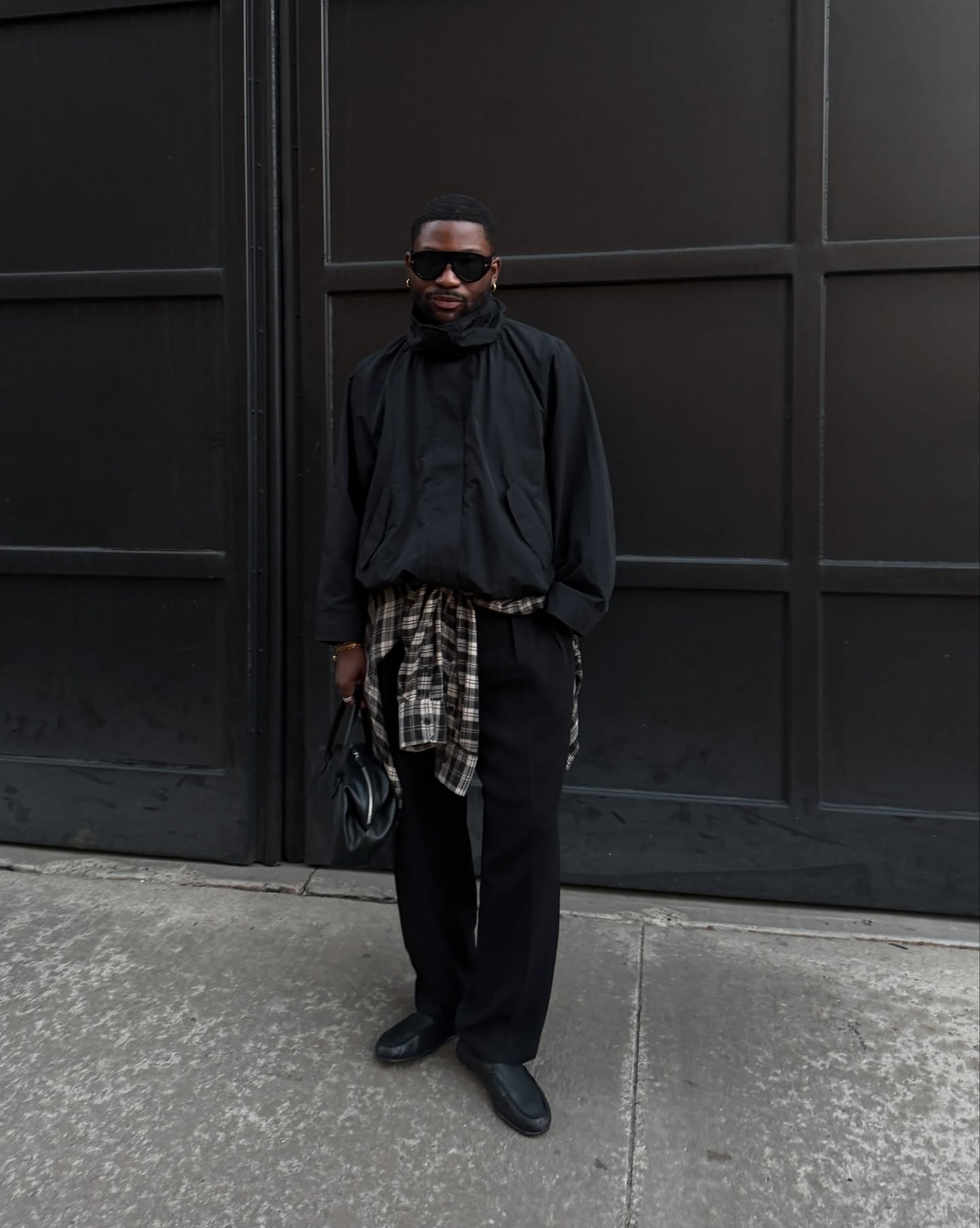
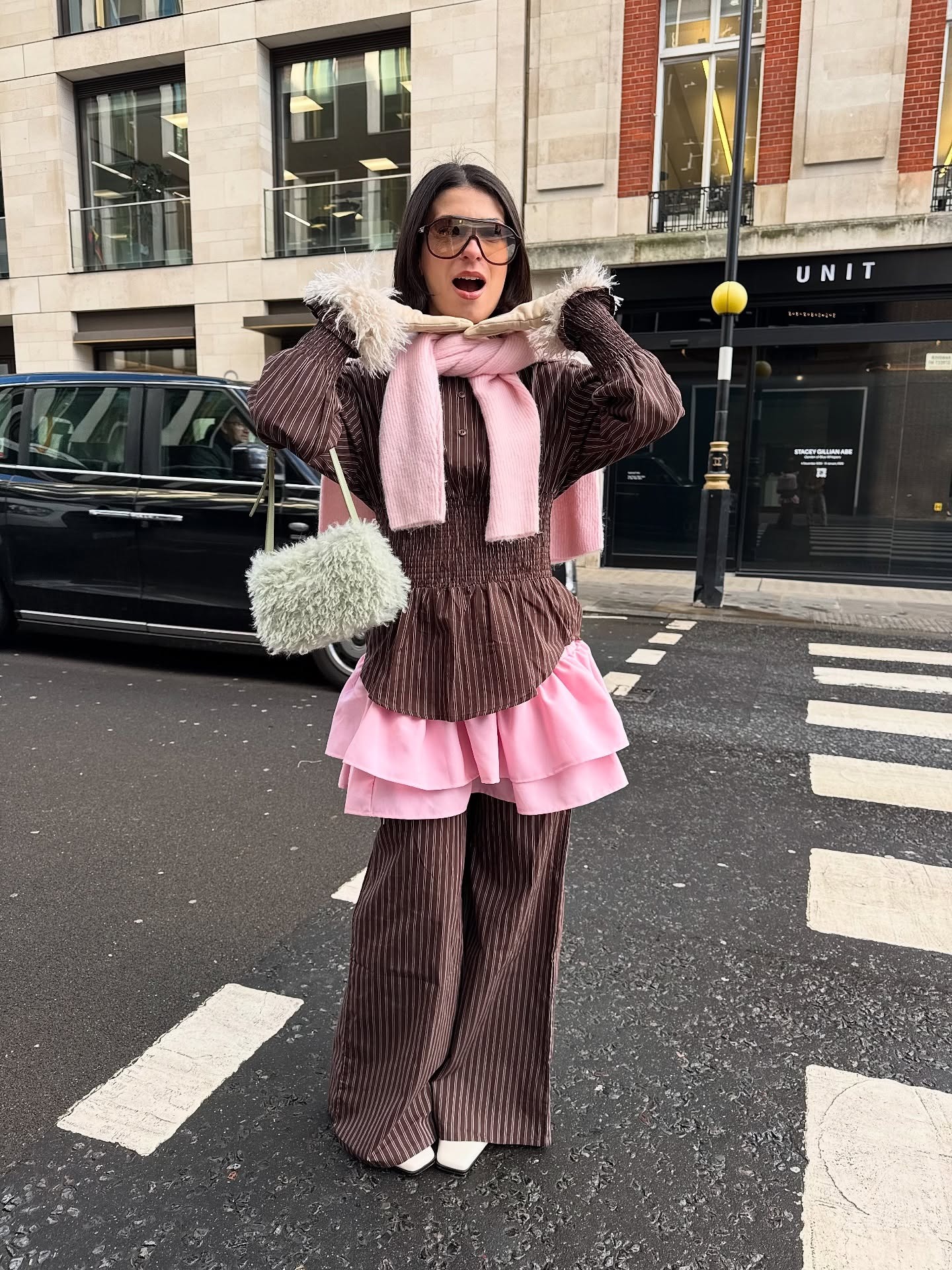
A purple coat over red knit makes the coat lead; a green shirt with yellow skirt divides at the waist; an open red coat frames a pink dress vertically.
3. Preserve the hierarchy, not the runway volume
Choose two solids. Give the lead more visible area; crop, cover, or limit the second to the upper or lower third.
Hold silhouette constant while comparing surface. Matte cotton poplin, denim, twill, wool, and suede can mute a boundary; silk, satin, velvet, leather, and sateen can sharpen it under direct light. Fluid viscose, rayon, jersey, or chiffon can blur the edge; polyester and nylon depend on weave. Test both pieces together.
Color theory is not a guarantee. Compare both pieces in daylight and destination light; dye depth, surface, and area alter the result.
4. Four two-piece formulas make the signal wearable
Purple leads, red interrupts
Purple coat + red crew-neck knit.
Dark trousers recede; an open coat reveals a narrow red column.
Green leads, yellow anchors
Green overshirt + yellow midi skirt.
Use a clean waist; tan or black footwear recedes.
Blue leads, brown grounds
Cobalt shirt + chocolate trouser.
Let trousers own the vertical; repeat brown or navy in the shoe.
Pink leads, red frames
Pink dress + red coat.
An open coat frames pink; indoors, the dress works alone.
These are examples, not body or complexion rules. Vogue Business documented the market pairings; the Associated Press documented Chanel’s pink-red example.
Three current pieces that isolate the color decision
Market check, not a three-item shopping list: compare one plain candidate with a second color already owned.
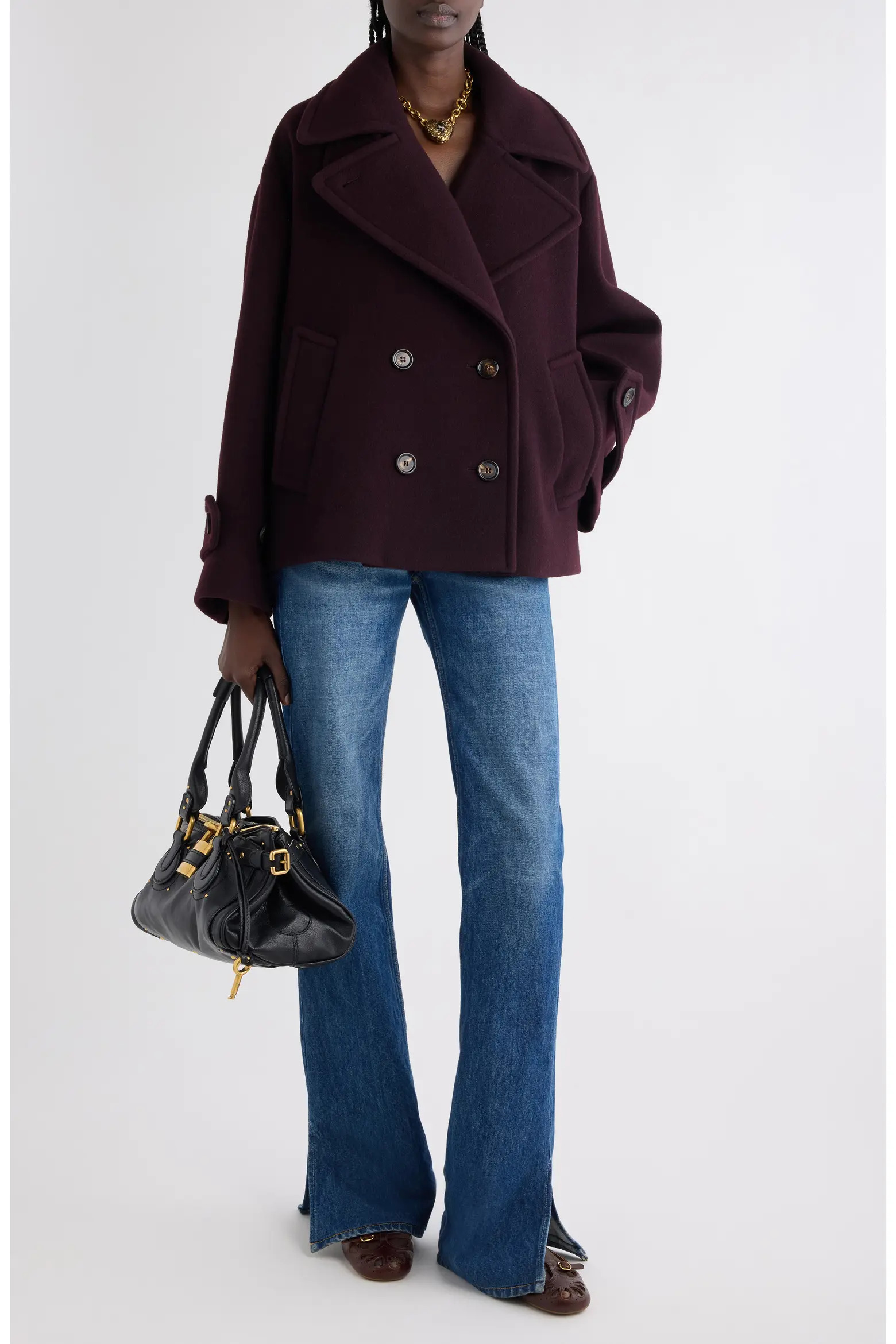
Chloé Iconic Soft Wool Blend Coat
$2,890 at Nordstrom on July 15, 2026
Deep purple; 80% virgin wool and 20% nylon. The dropped shoulder, double-breasted closure, wide notch lapels, and welt pockets make this the dominant block.
Shop at NordstromPetal & Pup Abner Crewneck Cardigan
$66.75 sale · $89 previous at Nordstrom
Red; 50% viscose, 28% polyester, and 22% nylon. A crew neck, button front, long sleeves, and patch pockets keep the smaller block recognizable.
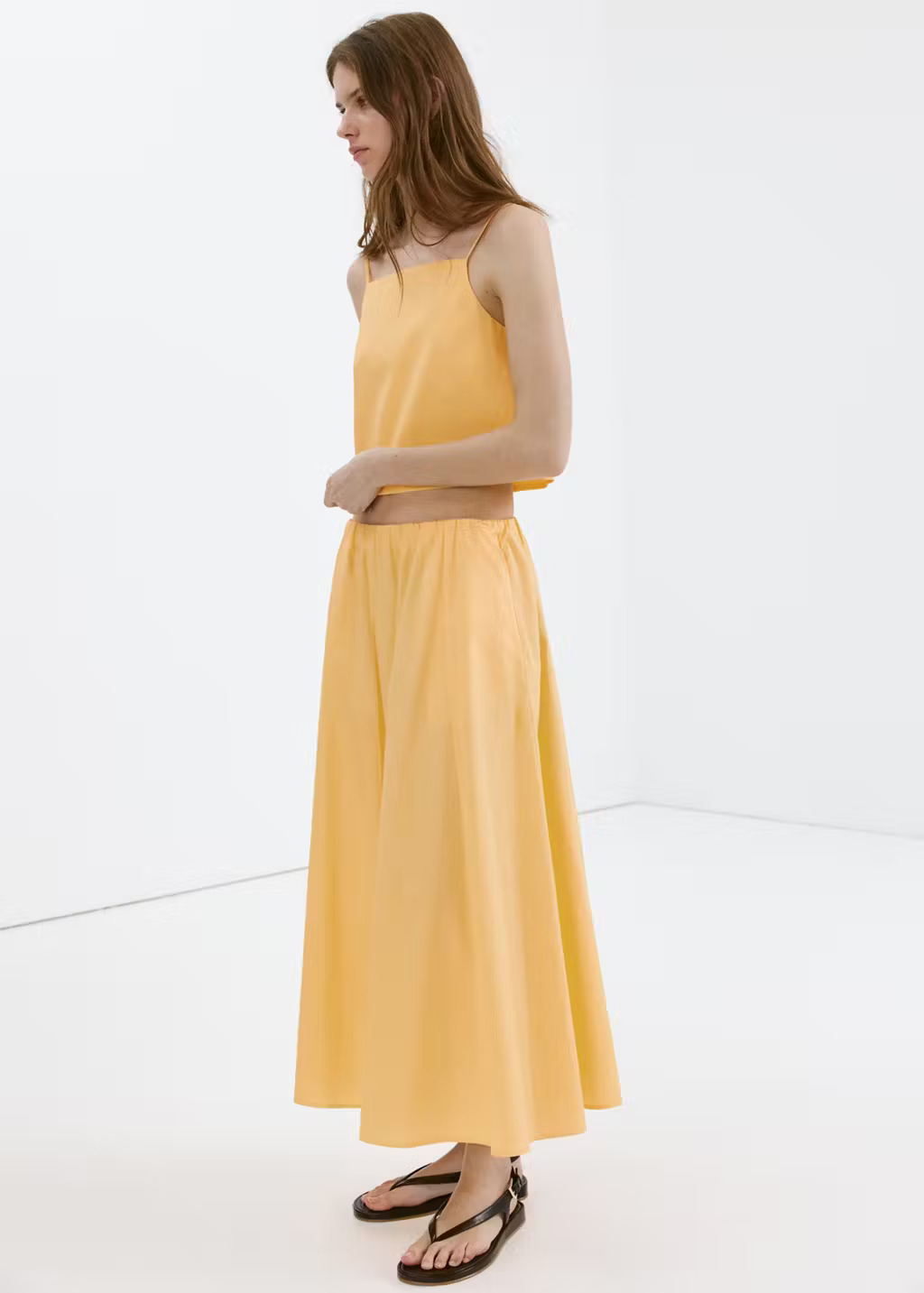
Shop at NordstromMango Flared Cotton Skirt
$69.99 at Mango on July 15, 2026
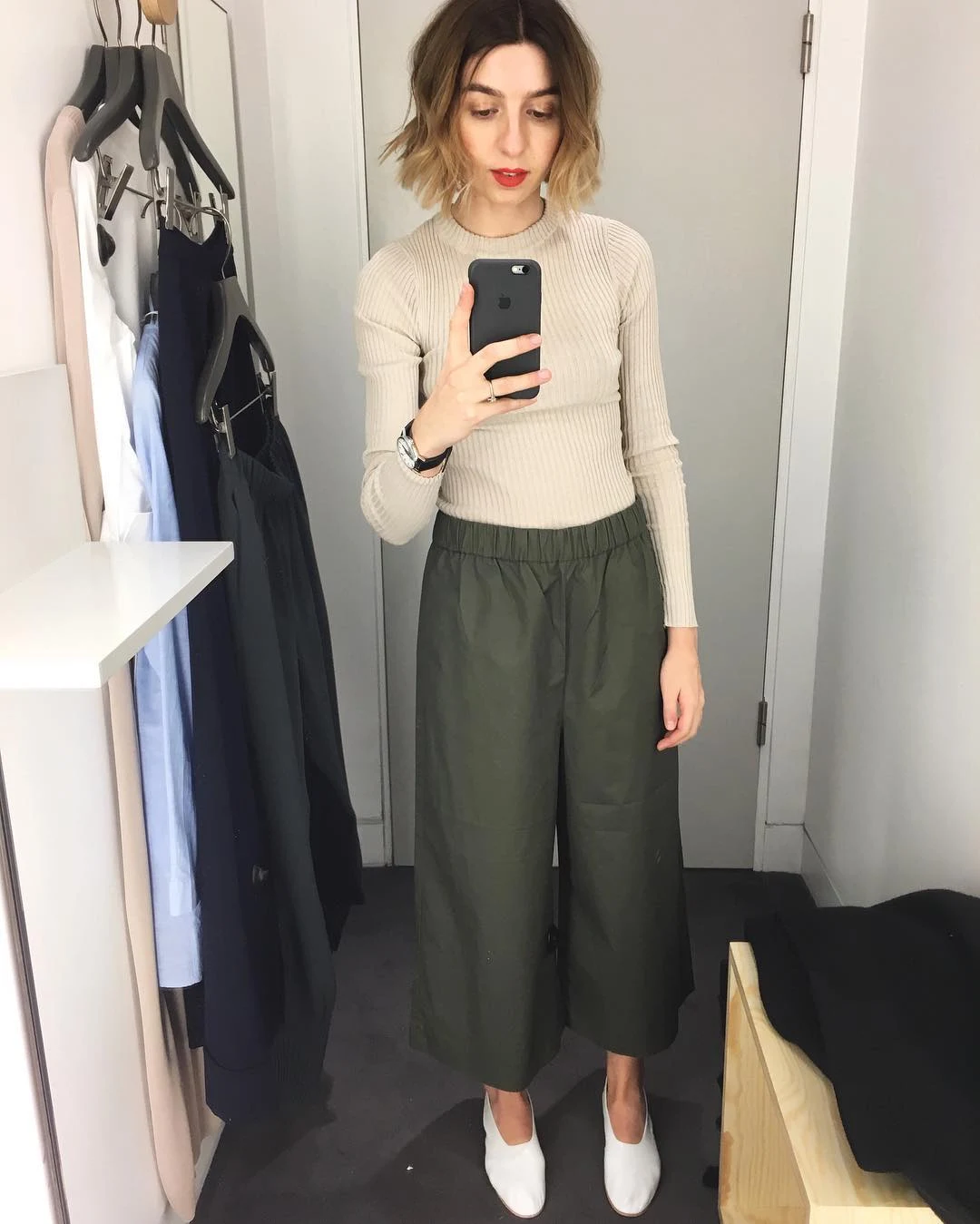
Pastel yellow and 100% cotton, with a midi A-line shape, mid-rise elastic waistband, and no closure. It can anchor a longer green shirt without adding print.
Shop at Mango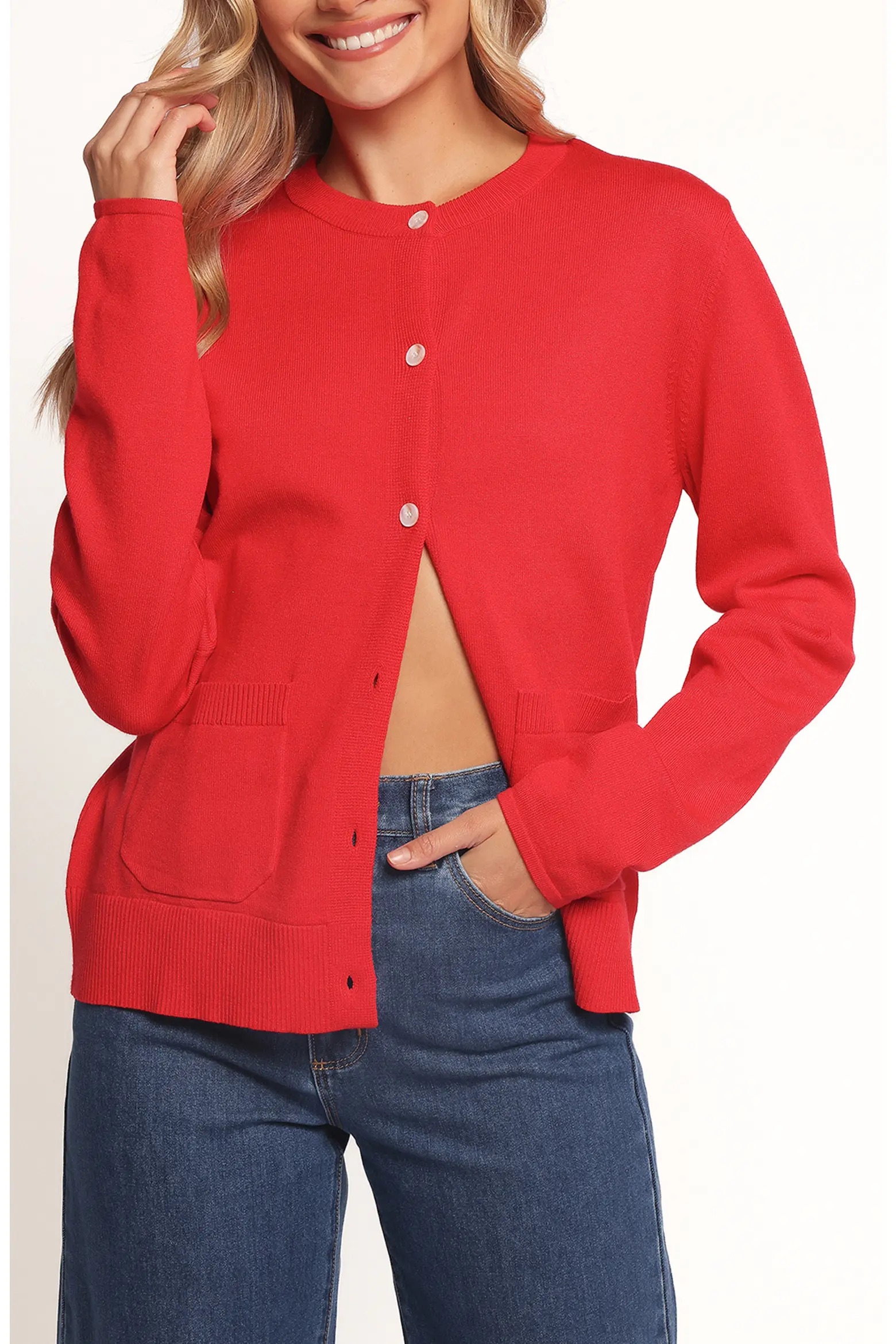
Prices reflect Nordstrom and Mango pages checked July 15, 2026; stock, colors, promotions, and prices can change. The Chloé coat demonstrates color area, not value.
5. Shop the closet before buying another color
Sort solids by function: outer layer, top, dress, skirt, or trouser. Pair two categories; familiar silhouettes isolate the color experiment.
Choose the lead
Use the larger coat, dress, or trouser as the dominant field.
Inspect the edge
Check the hem, waistband, vent, dart, or shirt placket where colors meet.
Compare the surface
Matte wool, twill, and poplin mute contrast; sateen, jacquard, and grosgrain details can intensify it.
Use an owned or secondhand support. In a neutral closet, let a scarf form the smaller block; keep other accessories neutral or within the lead color.
Kim Cupido, content manager at WGSN, told Vogue Business that shoppers wanted restylable pieces. Buy only if each color also works alone with denim, navy, brown, cream, or black.
6. The catch is maintenance, not courage
Skip the full version for one-piece dressing, uniform-level neutrality, or low-maintenance laundry. Use a scarf, bag, or removable knit. A floor-length leather trench is not climate-neutral advice.
The pairing lasts only when both pieces have independent jobs beyond the trend.
7. The bottom-line translation
Use two blocks, not many accents. Give one piece more area, make the boundary obvious, and let shoes and bags recede. If the outfit still feels noisy, cover more of the supporting color before changing the palette.
Fall 2026 supplies permission to combine stronger shades. The closet decides which two deserve the space.
Caveat: this is research-based styling analysis, not personal wear testing. Runway, red-carpet, and product photographs do not establish fit, mobility, comfort, care performance, or suitability for an individual setting. Our editorial team selects products independently; ChicAire may earn a commission.