Are Festina watches good quality, or just a fashion brand?+
Festina sits in an interesting middle ground. It carries a genuine Swiss watchmaking origin, having been founded in La Chaux-de-Fonds in 1902, but today most Festina-branded pieces are accessibly priced quartz watches built for everyday wear rather than collector horology. Enthusiasts tend to value them for reliable, well-finished sports styling at a friendly price, and the group reserves its true Swiss-made movements for its higher tiers.
Is a Festina watch worth it for the money?+
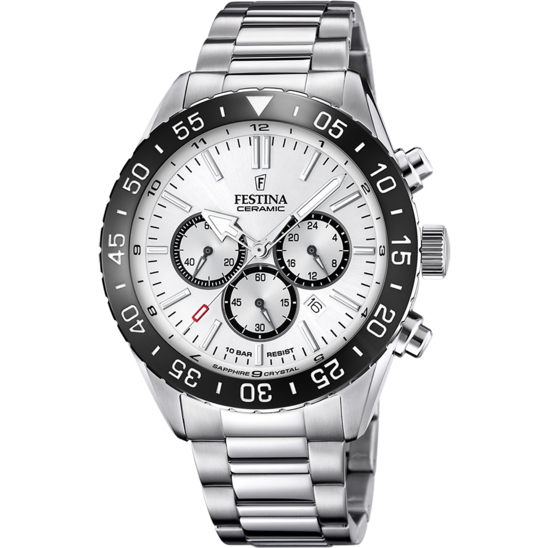
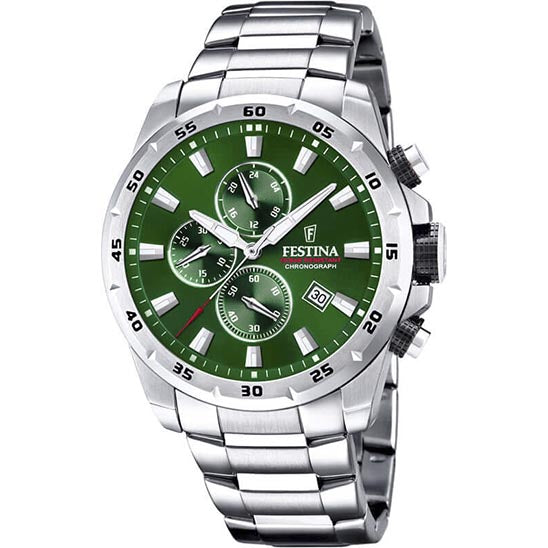
If you want a chunky, sporty quartz watch with real European heritage behind the name, Festina offers a lot of design for the price. The brand has worn its Tour de France timekeeping legacy well, so its chronographs feel purposeful rather than generic. Just go in knowing it competes in the affordable-quartz space, not the luxury Swiss-mechanical one.
How does Festina compare to Seiko and Citizen?+
All three deliver dependable timekeeping at approachable prices, but they come from different worlds: Festina is European with Swiss roots and a Spanish home, while Seiko and Citizen are Japanese and especially admired for their in-house movement engineering. Many buyers choose Festina for its bolder, sportier European styling and its cycling heritage, and reach for the Japanese names when in-house movements top their priority list.
Which Festina watch should I buy first?+
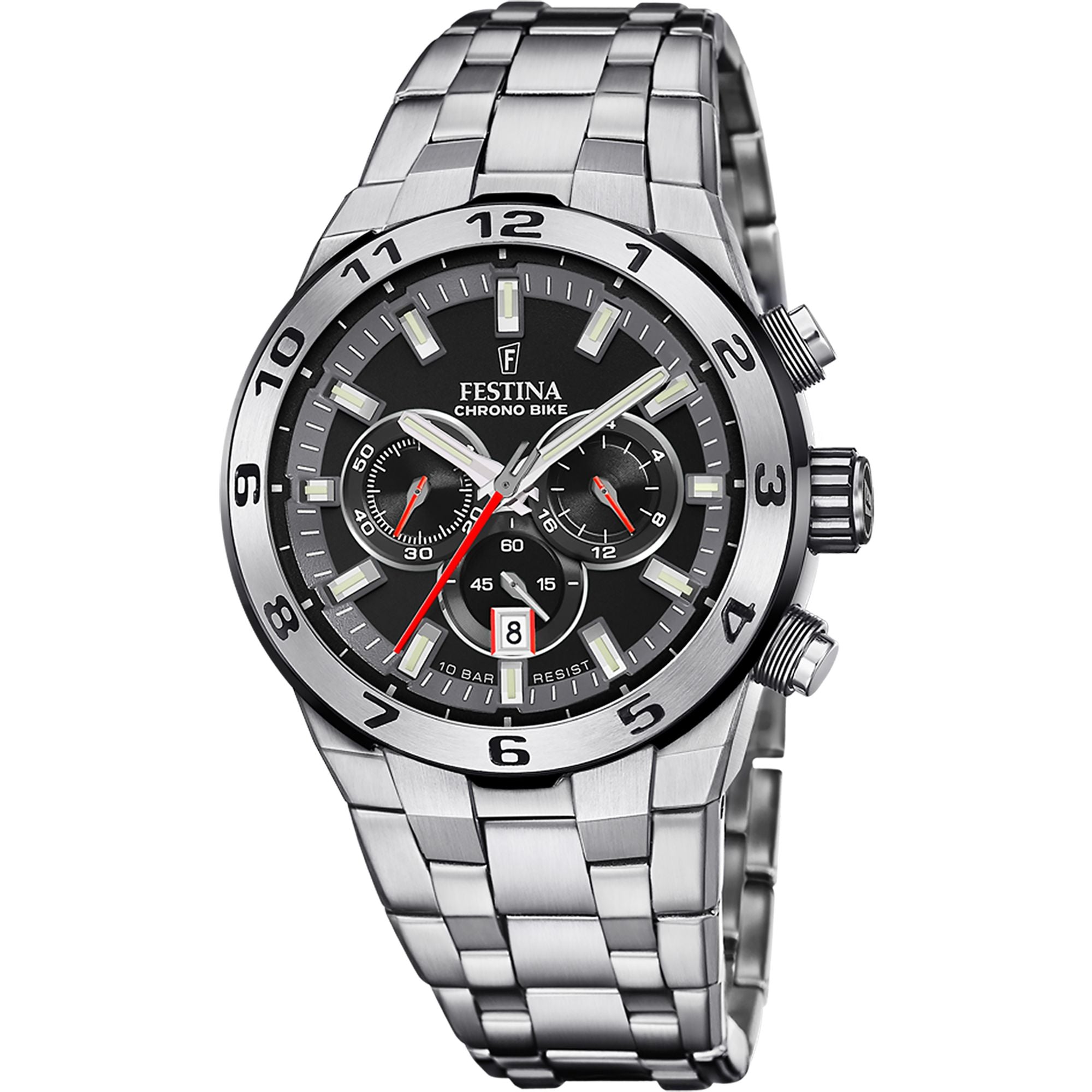
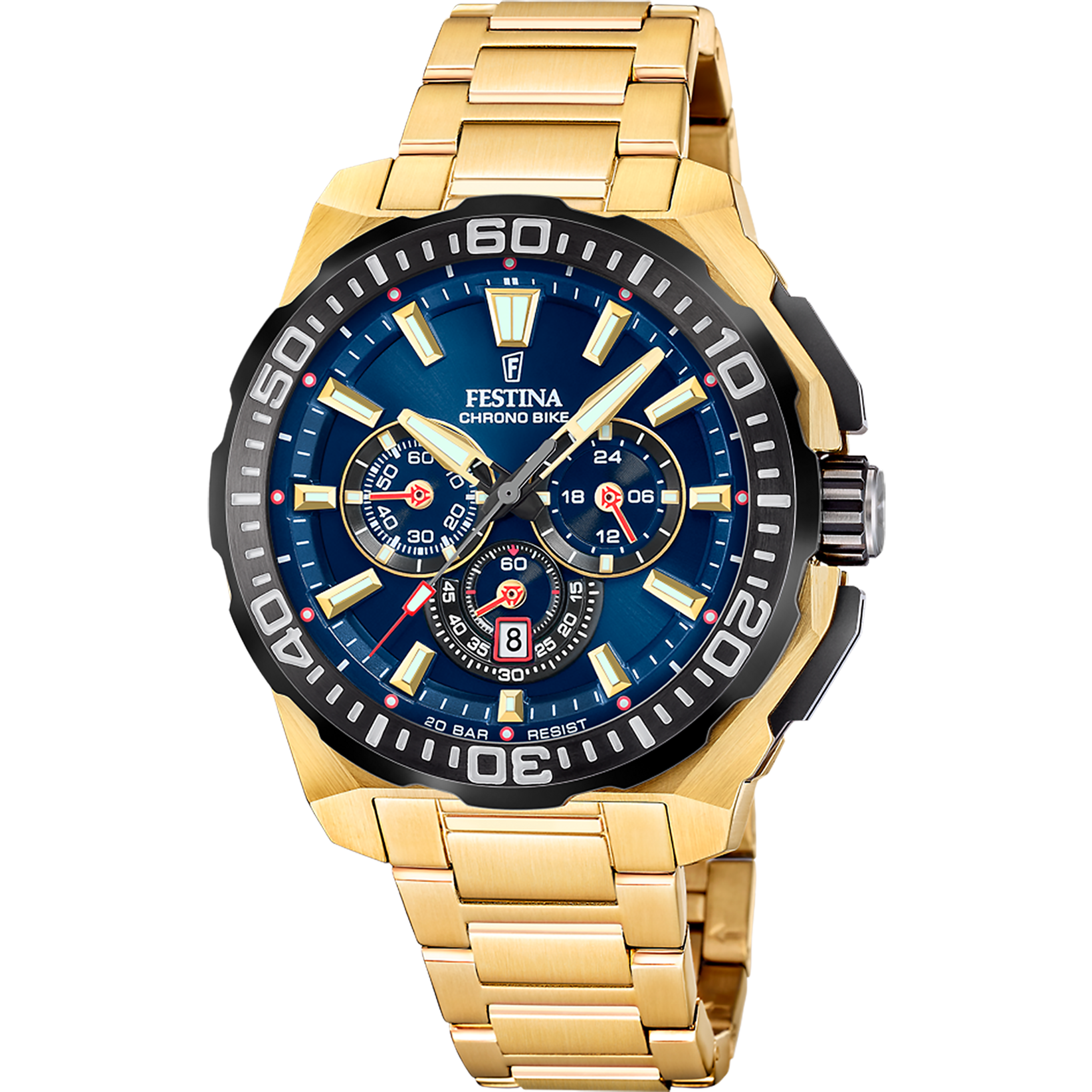
A great entry point is the cycling-themed Chrono Bike line tied to Festina's Tour de France timekeeping history, which leans into the brand's most distinctive story. If you prefer something more classic, the group's everyday chronographs and three-hand dress pieces are versatile daily wearers. Choose based on whether you want Festina's signature sporty identity or a quieter everyday watch.
Why is Festina so associated with cycling and the Tour de France?+
From 1992 to 2016, Festina served as the official timekeeper of the Tour de France, which tied the brand tightly to the sport. It also timed other major races such as the Tour of Spain and the Tour of Britain. That long sponsorship is why so many of its sportier watches carry cycling-inspired details.
When and where was Festina founded?+
Festina was created in 1902 by the Stüdi family in La Chaux-de-Fonds, Switzerland, a historic heart of Swiss watchmaking. During World War II the business relocated to Barcelona, Spain, and in 1984 Spanish businessman Miguel Rodríguez acquired the brand and its rights. That history explains its Swiss origins and Spanish home today.
What does the name Festina mean?+
The name comes from the Latin phrase Festina lente, meaning roughly "make haste, slowly." According to the Roman historian Suetonius, the saying was attributed to Augustus Caesar, who was known for his prudence. It is a fitting motto for a watch brand: do the job well rather than rushing it.
Who owns Festina now, and is it part of a bigger group?+
Festina is the cornerstone of the Festina Group, formed after Miguel Rodríguez acquired the brand in the 1980s. The group owns several watch labels including Lotus, Calypso, Jaguar and Candino, plus luxury names like Perrelet and L.Leroy, and jewellery lines under Lotus. Its headquarters are in Madrid, with production centred in Switzerland and Spain.
Are any Festina Group watches genuinely Swiss made?+
Yes. While many Festina-branded pieces are positioned at commercial prices, the group's brands Jaguar, Candino and Perrelet are Swiss made. Perrelet in particular is a luxury house, originally founded in 1777 by watchmaker Abraham-Louis Perrelet, that Festina acquired in 2004. So the group spans everyday quartz right up to genuine Swiss luxury.
Has Festina worked with any well-known faces?+
Yes. In 2016, actor Gerard Butler became a worldwide ambassador for the brand, with campaigns positioning Festina more firmly in the lifestyle category. Before that, much of the brand's public identity came from its decades of cycling timekeeping rather than celebrity faces.
How do I take care of a Festina sports watch?+
Treat it like any quartz sports watch: keep the case and bracelet wiped clean, have the battery swapped promptly when it stops so leaks do not damage the movement, and check the water-resistance rating before swimming or showering. For metal bracelets, an occasional clean of the links keeps them looking sharp. With basic care, Festina's quartz pieces tend to be long-lived, dependable companions.