Is the Jaeger-LeCoultre Reverso worth it?+
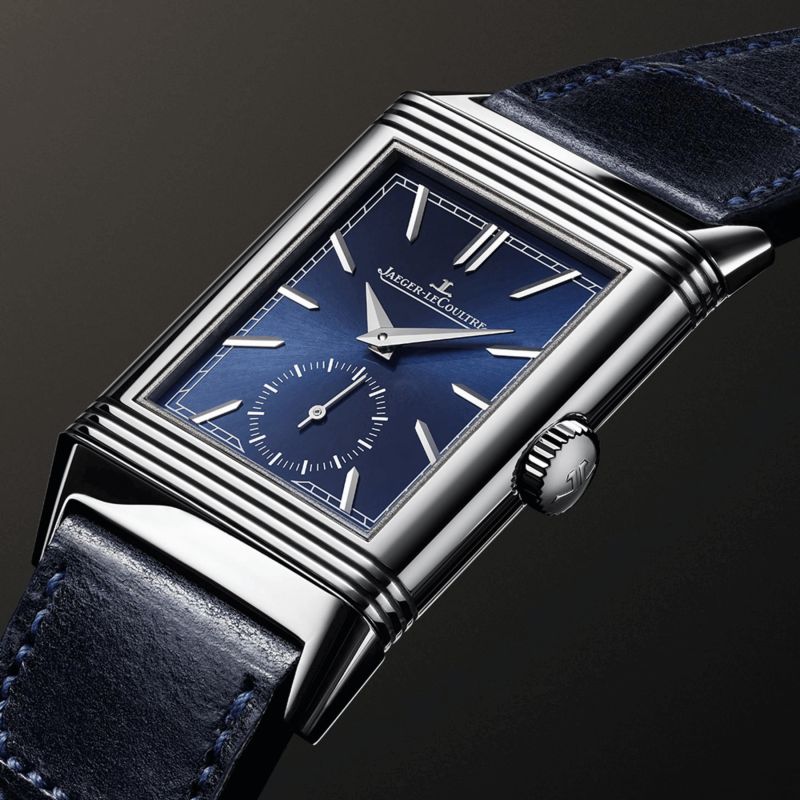
Among enthusiasts the Reverso is a perennial favourite, prized for its in-house construction and quietly stable standing rather than hype-driven swings. Its swivelling case is a genuine design icon, so you are buying horological history as much as a watch. Because it is rectangular, it suits some wrists better than others, so trying sizes on first is the standard advice.
Why is Jaeger-LeCoultre called the watchmaker's watchmaker?+
The nickname reflects its standing inside the trade. Jaeger-LeCoultre is a true manufacture with hundreds of inventions, patents and more than a thousand movements to its name, and from 1902 for some thirty years it produced most of the movement blanks for Patek Philippe of Geneva. When the great houses leaned on its calibres, the title stuck.
How does Jaeger-LeCoultre compare to Rolex and Patek Philippe?+
Each occupies its own corner of luxury. Founded in 1833, Jaeger-LeCoultre predates Rolex by decades and is regarded as a top-tier Richemont brand celebrated for technical depth, from the Atmos to the Reverso. Collectors often frame it as a connoisseur's choice that signals deep watchmaking knowledge rather than the broad status of a Rolex or the rarefied prestige of a Patek.
What is the story behind the Reverso?+
The Reverso was created in 1931 as a watch tough enough for polo. A group of players asked watch dealer Cesar de Trey for a timepiece that could survive the rigours of the game, and French engineer Rene-Alfred Chauvot designed a reversible case that swivels to protect the fragile dial and glass. Its name comes from the Latin for I turn around, and the design is considered an Art Deco classic.
What is the Atmos clock and why is it special?+
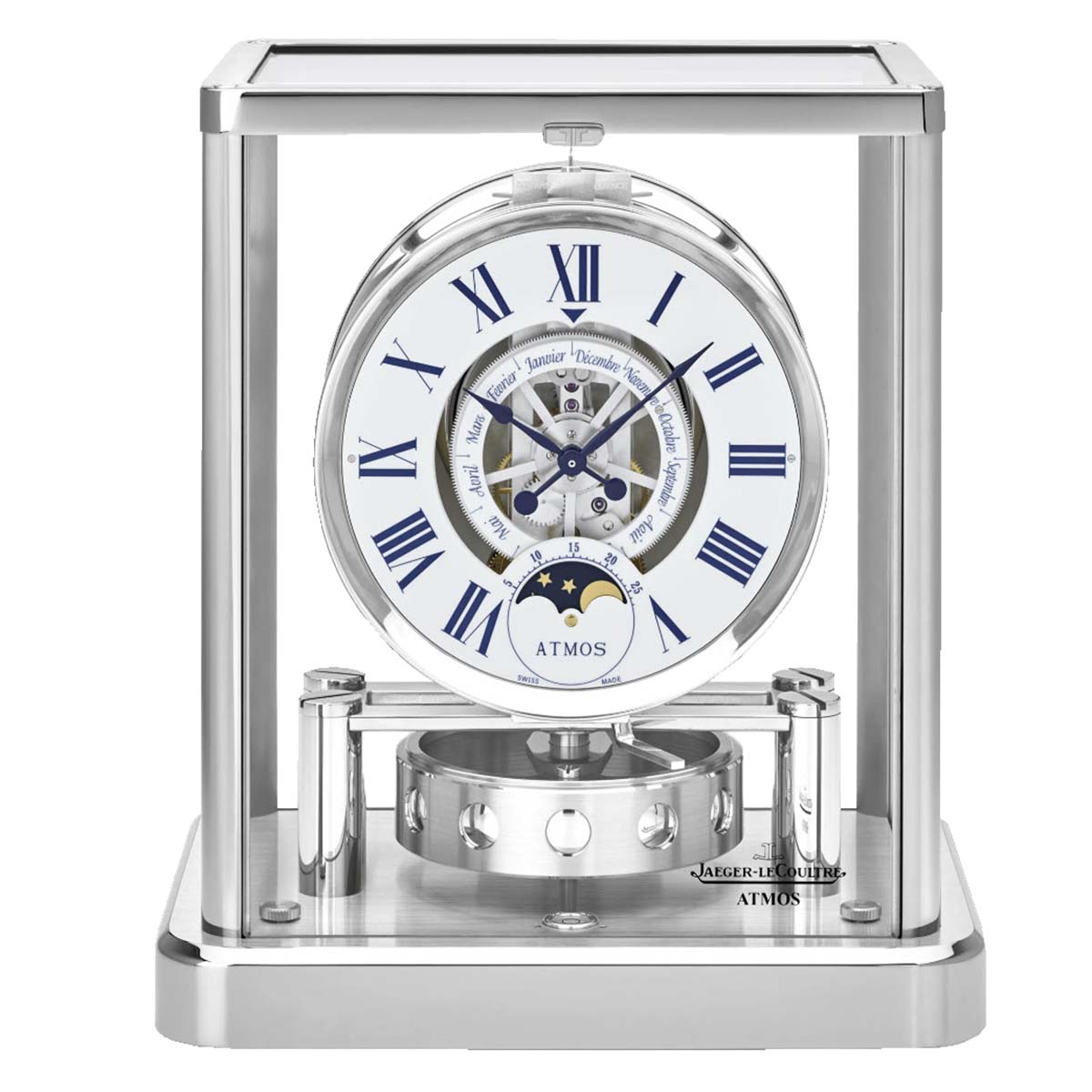
The Atmos is a clock of near-perpetual movement that needs no winding and almost no energy. It draws power from tiny temperature and pressure changes in the air; a single 1C fluctuation stores enough energy for two days, and its moon-phase model drifts by only one day every 3,821 years. Since 1950 it has been the Swiss government's official gift to important guests.
Who founded Jaeger-LeCoultre and when?+
It was founded by Antoine LeCoultre in 1833, in Le Sentier in Switzerland's Vallee de Joux, where the factory still stands. After inventing a machine to cut watch pinions from steel, he set up a small workshop and went on to create high-precision instruments. The name Jaeger-LeCoultre arrived later, in 1937, after a long collaboration with Parisian watchmaker Edmond Jaeger.
Where does the Jaeger half of the name come from?+
In 1903, Paris-based watchmaker Edmond Jaeger challenged Swiss makers to produce the ultra-thin movements he had invented, and Jacques-David LeCoultre took up the task. That partnership produced ultra-thin pocket watches, including the world's thinnest in 1907 with the Calibre 145. The collaboration led the company to be officially renamed Jaeger-LeCoultre in 1937.
What is the Calibre 101 and why does it matter?+
Created in 1929, the Calibre 101 is the world's smallest mechanical movement, with original parts weighing around a single gram. Its prestige is hard to overstate: in 1953, Elizabeth II wore a Jaeger-LeCoultre Calibre 101 wristwatch for her coronation. It is a benchmark of the brand's mastery of miniaturisation.
Does Jaeger-LeCoultre make its own movements?+
Yes, and that is central to its reputation. In 1866 Antoine and his son Elie established the Vallee de Joux's first full-fledged manufactory, pooling expertise under one roof, and the firm has since produced over 1,200 different calibres and registered around 400 patents. Few brands can claim that depth of in-house movement-making.
Who owns Jaeger-LeCoultre today?+
Since 2000, Jaeger-LeCoultre has been a fully owned subsidiary of the Swiss luxury group Richemont, where it is considered a top-tier brand. It remains based in Le Sentier, the village its founding family helped establish. That stable ownership sits behind its continued investment in haute horlogerie.
What does it mean that Jaeger-LeCoultre makes grandes complications?+
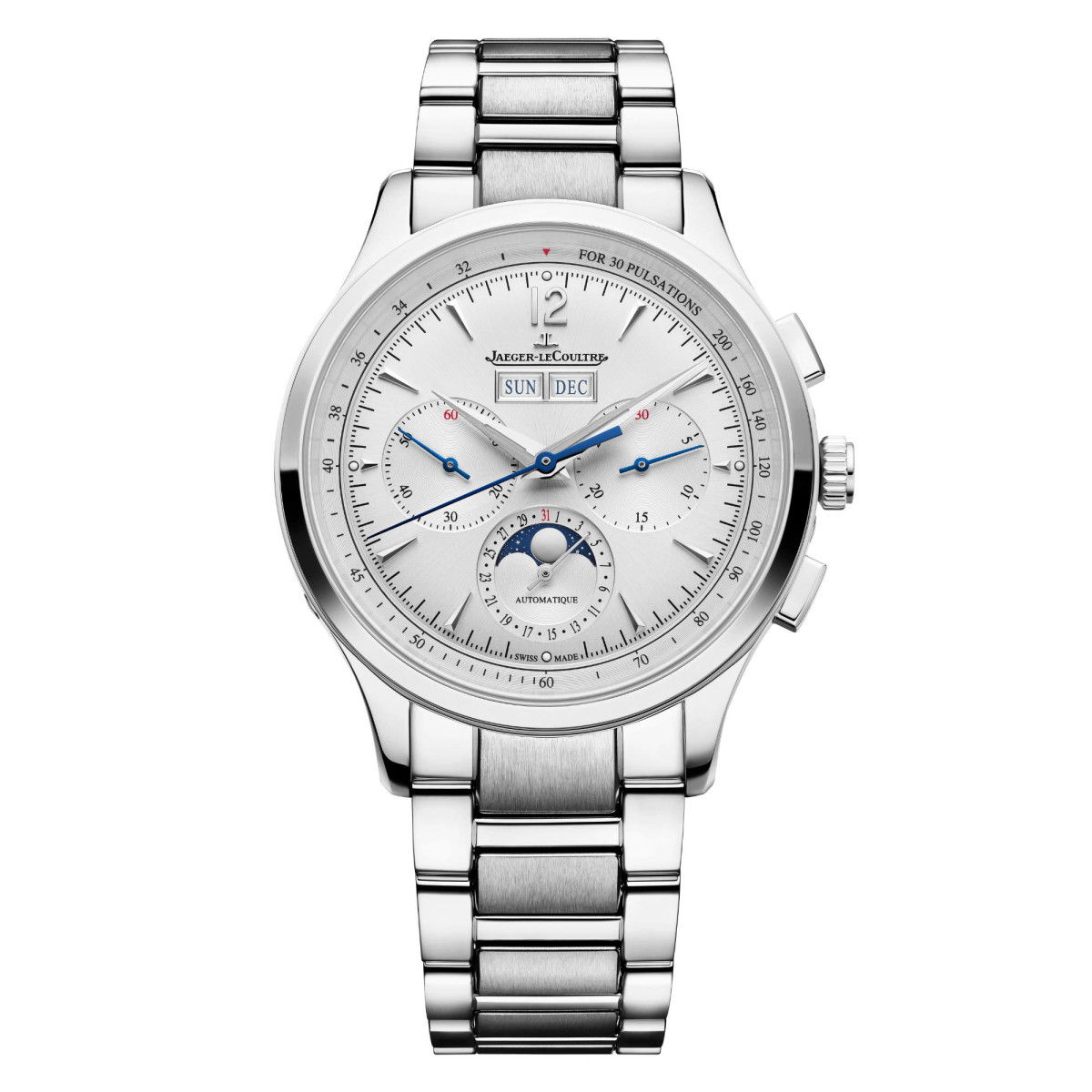
A grande complication is a watch combining at least three classic complications, such as a perpetual calendar, chronograph and minute repeater. Jaeger-LeCoultre first combined the chronograph and minute repeater in 1891 and later built astonishing pieces like the 2009 Hybris Mechanica a Grande Sonnerie with 26 complications. It is this command of complexity that places the brand at the summit of watchmaking.
When is the best time to buy a Jaeger-LeCoultre?+
Because JLC trades on horological substance rather than seasonal hype, there is no single right moment, so the better question is which model suits you. The Reverso Classique is often singled out as strong value at the entry level, while the pre-owned market is worth watching for stability. Buy the watch you will actually wear, and prioritise condition and provenance over timing.