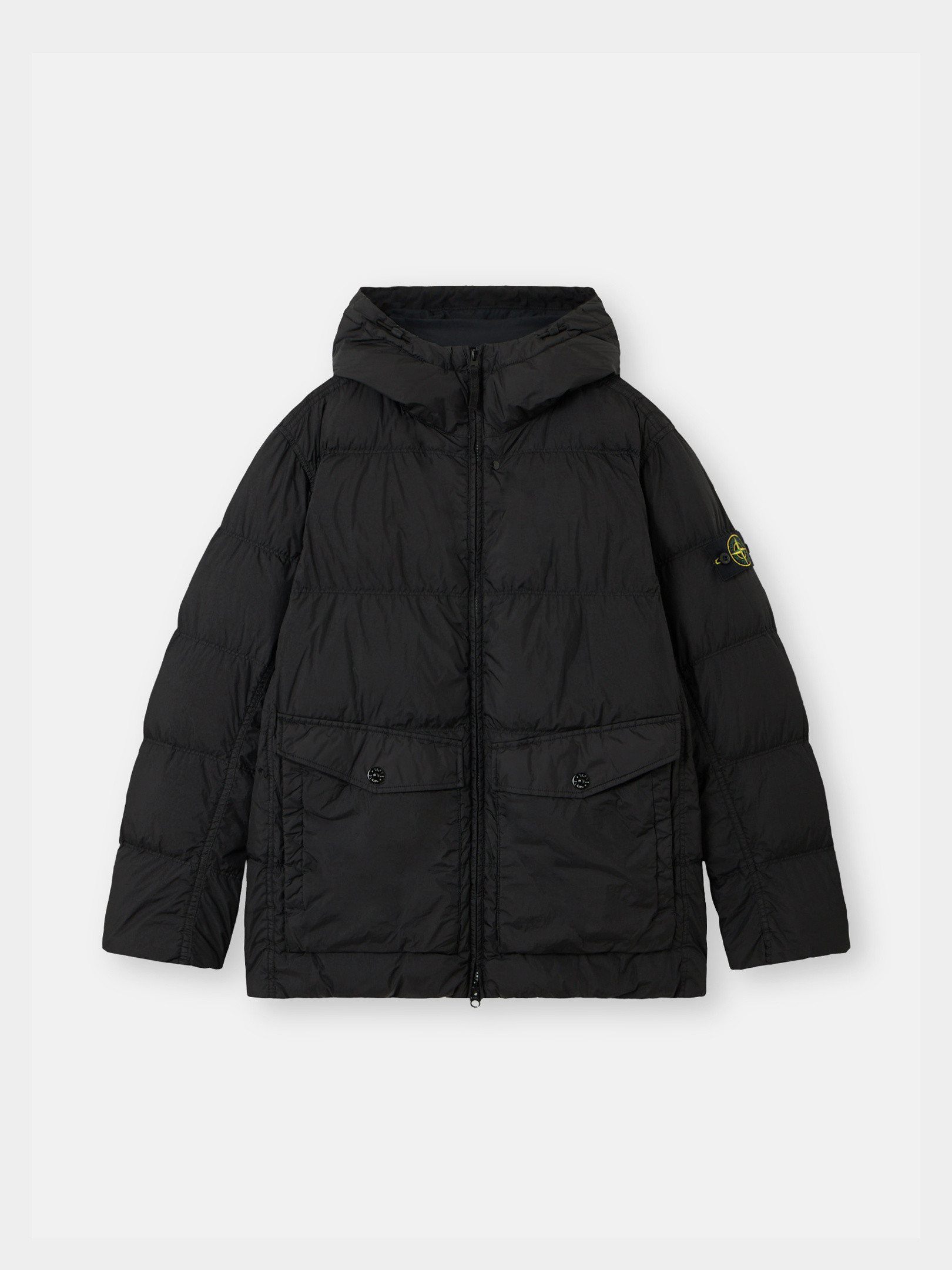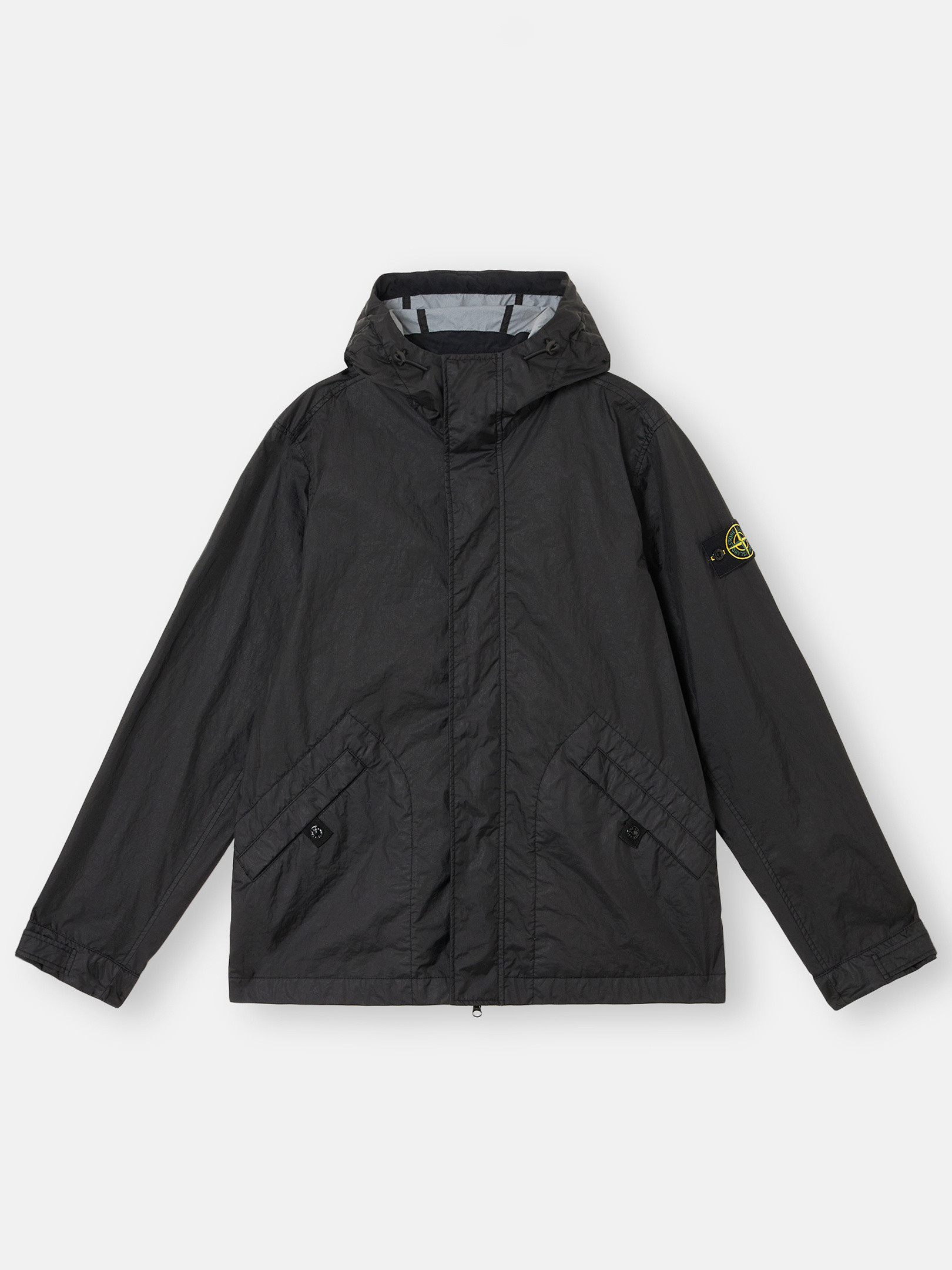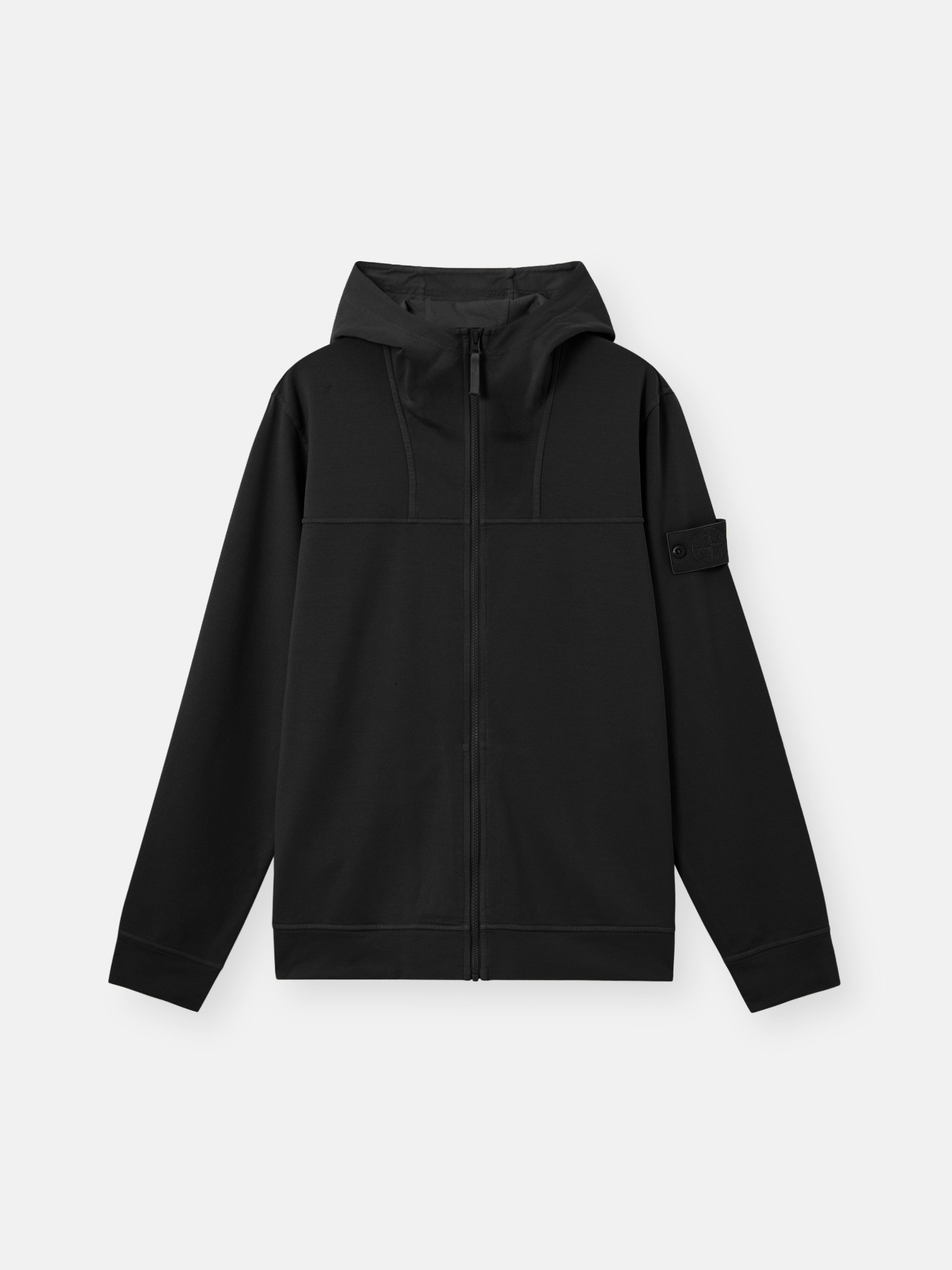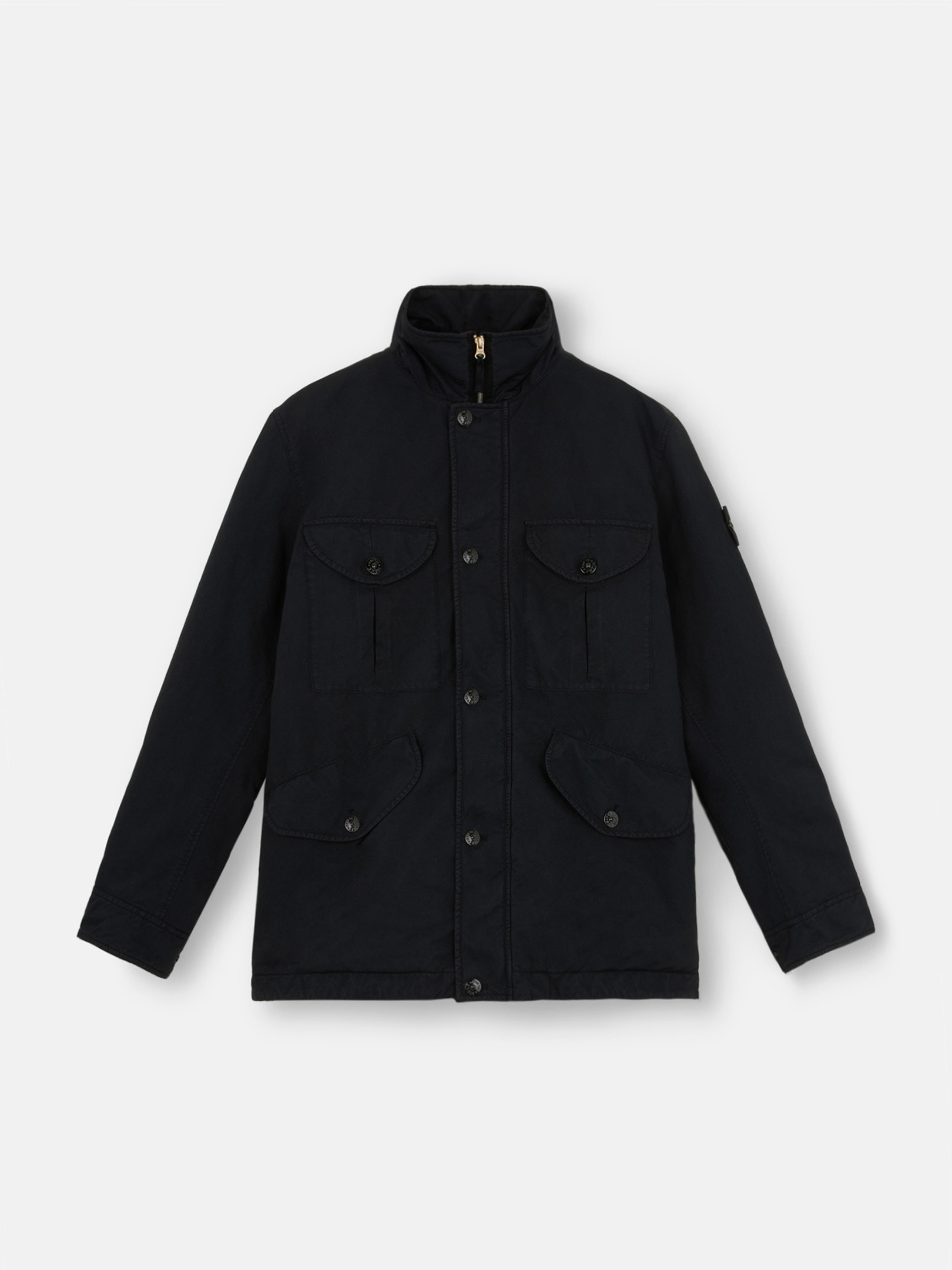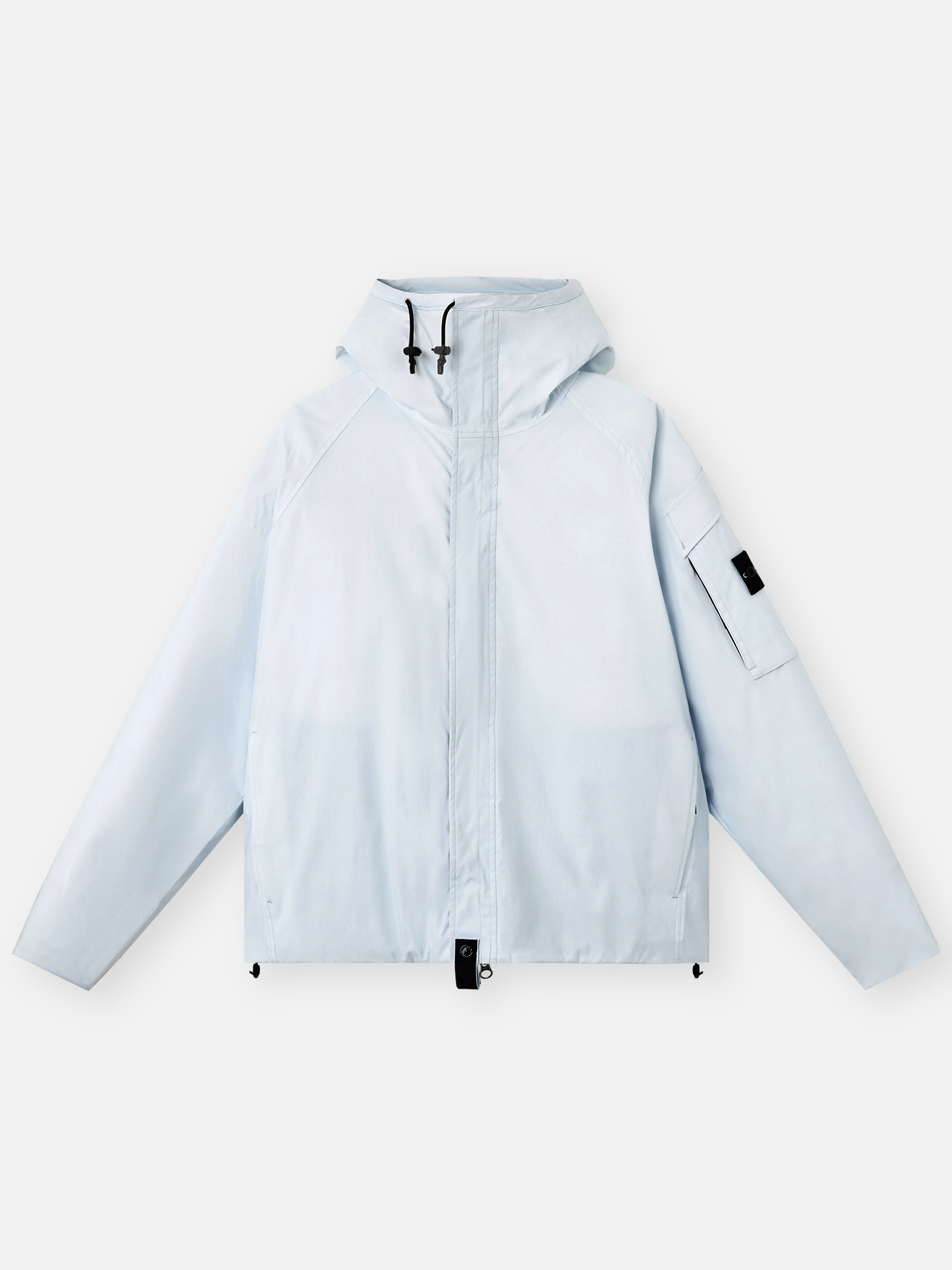
Ice Jacket Thermosensitive
The heat-reactive jacket that changes colour with temperature — Stone Island's 1980s thermosensitive innovation, still in the line.
Story & heritage
The Ice Jacket is the purest demonstration of Stone Island as a laboratory in clothing form. The brand introduced a thermosensitive fabric in 1987 whose coating reacts to temperature, so the garment changes colour as the air around it warms and cools. It became one of the label's most famous innovations — a jacket that is never quite the same colour twice — and was key to the brand's spread to the UK.
The piece sits within a long catalogue of textile firsts: alongside the thermosensitive coating, Stone Island developed Raso Gommato in 1983, rubber wool in 1987 and reflective fabric in 1991. The modern Ice Jacket carries that heat-reactive idea forward in current materials, the original 1980s experiment kept alive as a permanent part of the collection.
Materials & craft
The Ice Jacket's defining feature is a thermochromic coating — micro-pigments in the surface that shift colour with temperature, darkening in the cold and lightening as it warms (or the reverse), so the colour visibly moves as conditions change. Beneath the reactive surface it is a functional hooded jacket with a wind- and water-resistant shell, finished with the compass badge on the left arm. The neutral, pale state seen on a clean packshot is the fabric at rest.
How to choose & style
The Ice Jacket is a conversation piece as much as a garment — the colour shifts in real time, so it never reads as flat. It is the choice for anyone who wants the most overt expression of Stone Island's fabric science. Wear it as the hero layer over plain sweats and let the temperature do the styling; the effect is the point.