The color desk
How to Build a Tonal Outfit Without Letting It Fall Flat
Stop trying to match every piece. A convincing tonal outfit needs a color family, a light-to-dark route, and enough material contrast to make each layer legible.
 By Claire Ashford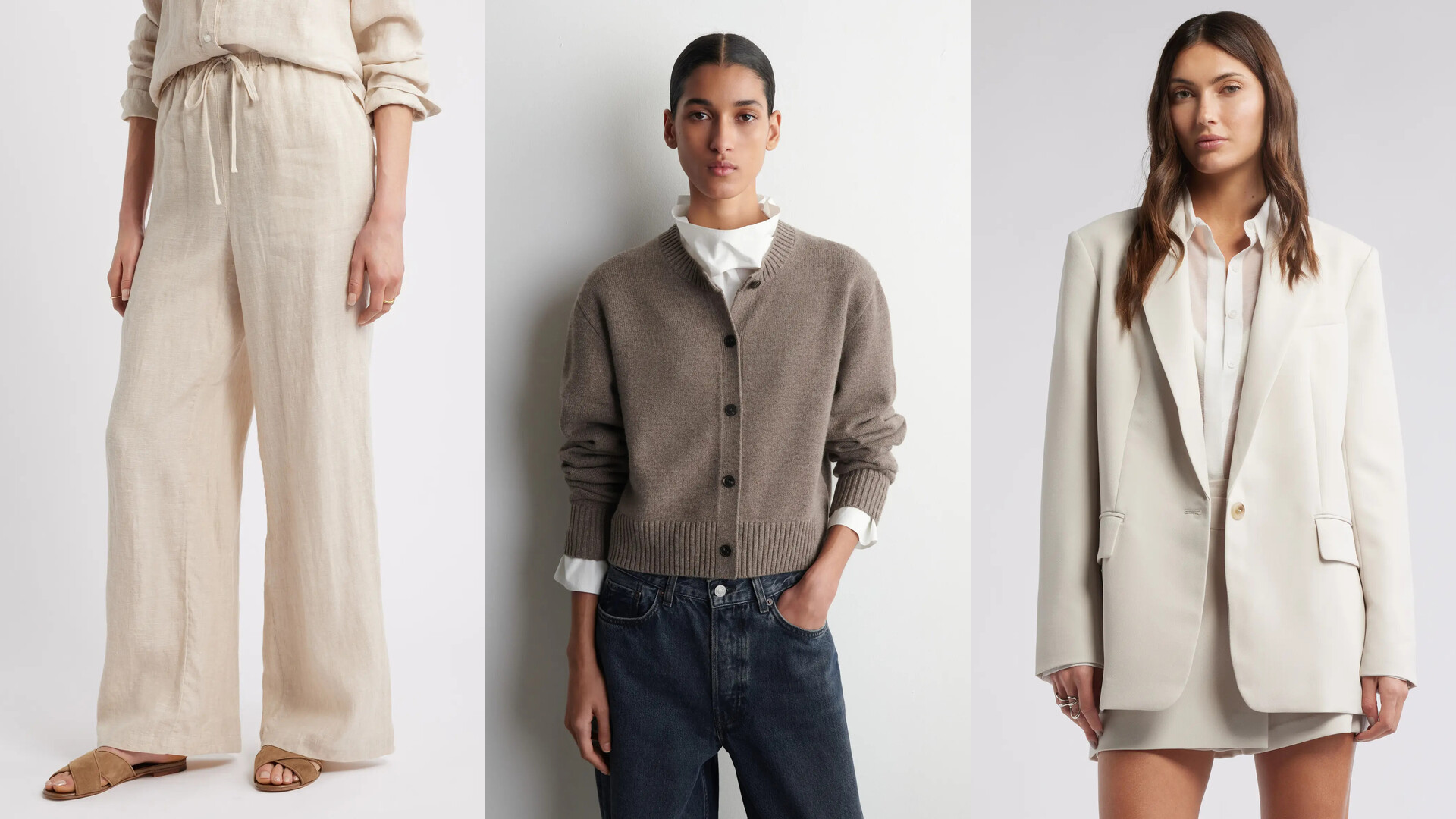
What makes an outfit tonal instead of accidental?
A tonal outfit repeats one color family across several pieces. It does not require an exact dye match. A jacket and trouser that nearly match can resemble a broken suit; a deliberate light-to-dark spread looks clearer.
This approach works especially well for work layers, travel capsules, quiet evening clothes, and weekends when a full outfit needs to come together quickly. Choose camel, gray, blue, brown, cream, olive, or another family with enough range. Then build the outfit in three passes.
Value
Use at least two clearly different levels of lightness. Three are even easier: pale top, mid-tone layer, dark shoe.
Texture
Put a crisp, brushed, ribbed, matte, or lustrous surface beside something unlike it. This creates edges inside one color family.
Weight
Decide where the outfit feels heaviest. A dark trouser grounds the bottom; a dark coat frames the entire column.
Adobe defines a monochromatic palette as colors derived from one base. Diana Walker, visual content designer with Adobe Express, says color should support hierarchy, clarity, and cohesion. Adobe published that guidance May 28, 2026. Build visible differences inside one family.
Step 1: Choose a base with room to move
Begin with the piece that occupies the most area: coat, suit, dress, or wide trouser. Call that your mid-point. Find one lighter and one darker relative. You are building a short scale, not collecting five items with the same retail label.
Cream to camel
Start with ecru, add oatmeal or biscuit, then ground the look with camel, tobacco, or chocolate. If the palette turns yellow, replace one warm piece with mushroom or stone.
Silver to charcoal
Use pearl gray, heather, and charcoal. Keep the undertones consistently blue or green, or make one warmer gray deliberately separate through texture.
Chambray to navy
Light-blue cotton, washed denim, slate wool, and navy leather form an easy sequence. Avoid a nearly black navy that erases the color indoors.
Sage to deep olive
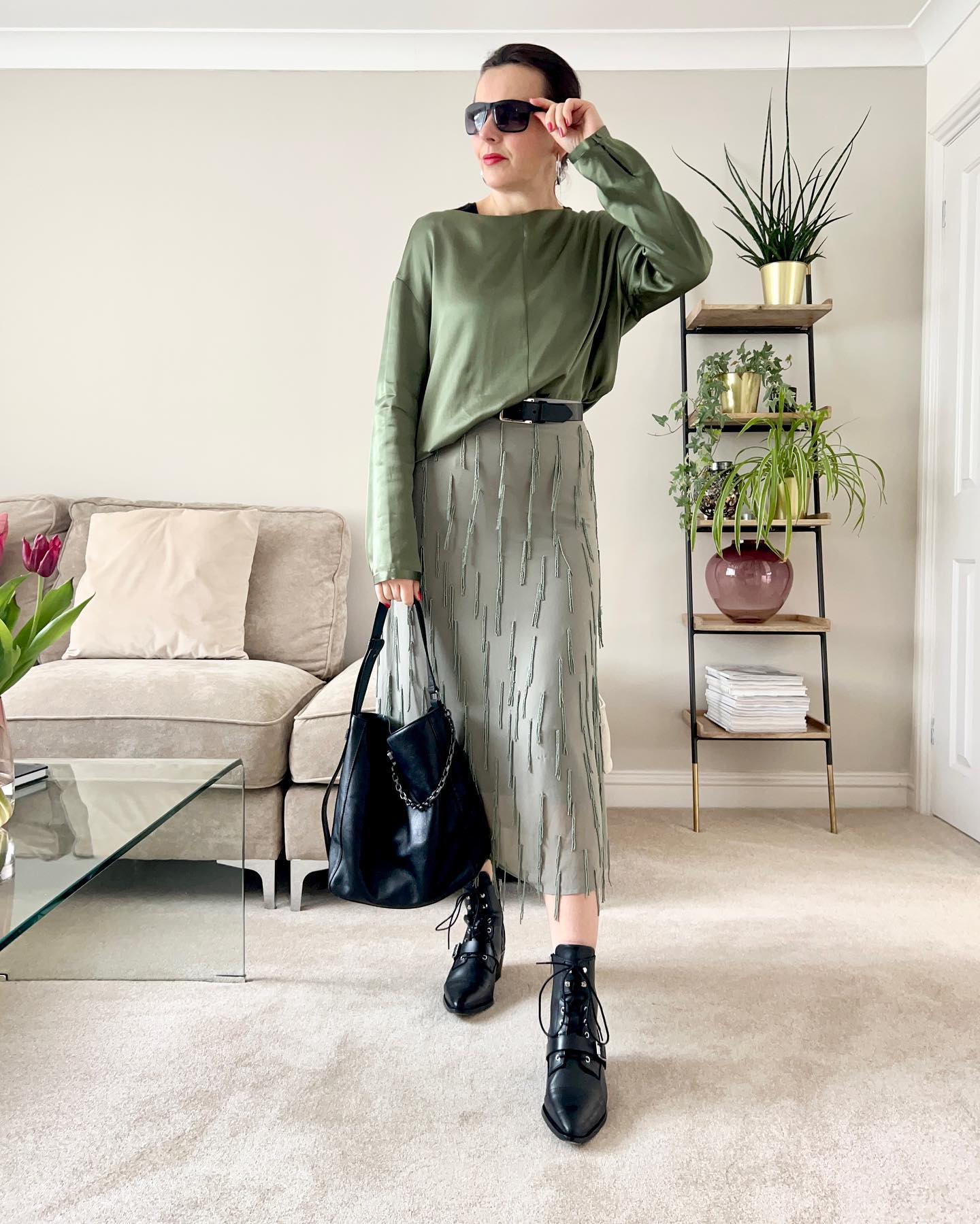
Sage, khaki, olive, and forest can live together when their values separate. Keep brown-green beside a warm neutral; use gray-green with charcoal or cool stone.
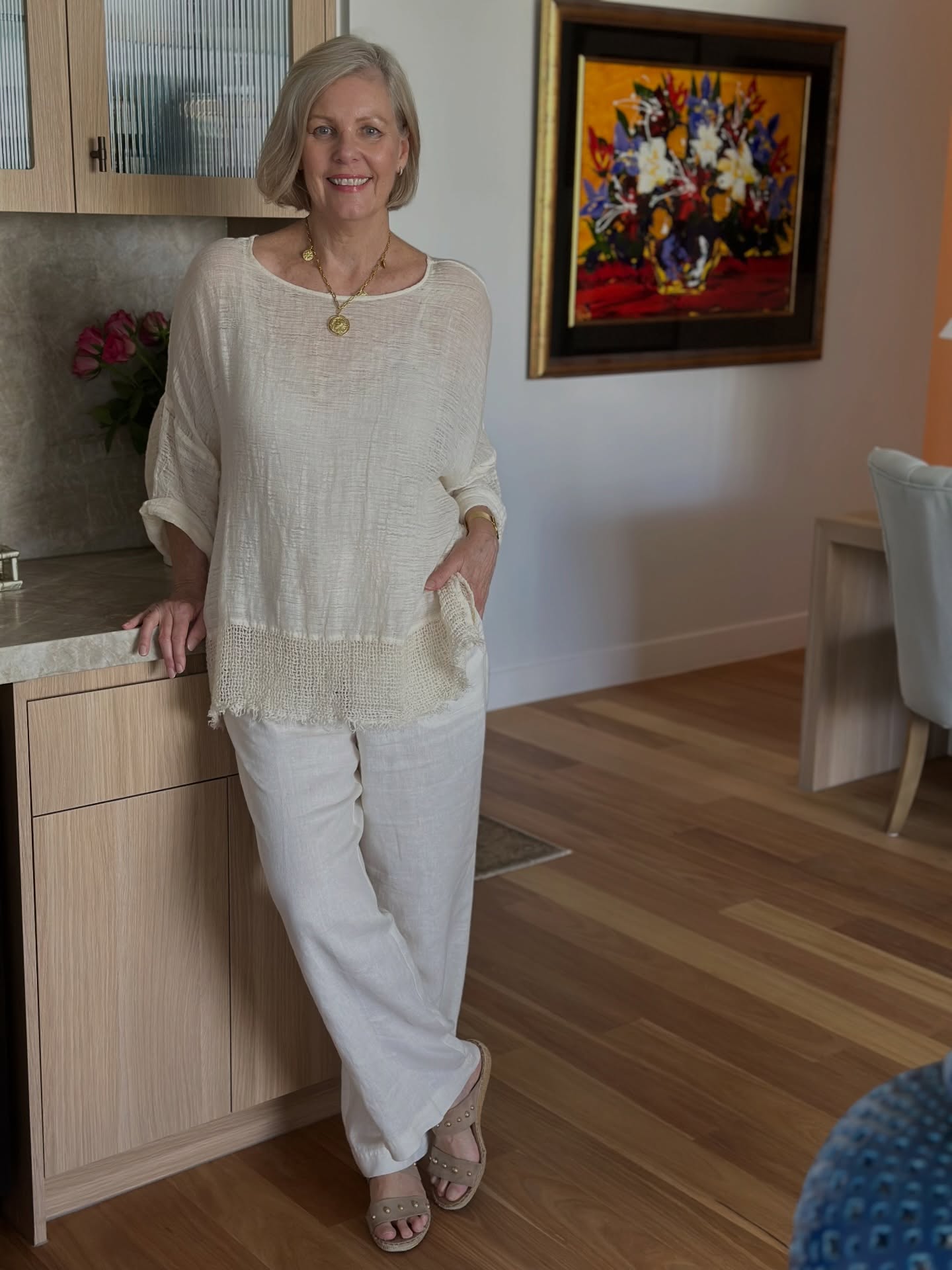
Make a palette before making a purchase
Adobe Color’s FAQ, updated August 25, 2025, explains how to select a base, apply a harmony rule, and adjust swatches. Use a digital scale to clarify direction, then verify the real textiles together. A screen cannot predict fiber, finish, or changing light.
Current retail pages illustrate how wide one “neutral” family can be. Our editors selected the examples independently and checked the exact product pages July 14, 2026. The listed prices reflect Nordstrom’s Taiwan-region view and do not include currency conversion; price, color, and stock can change.
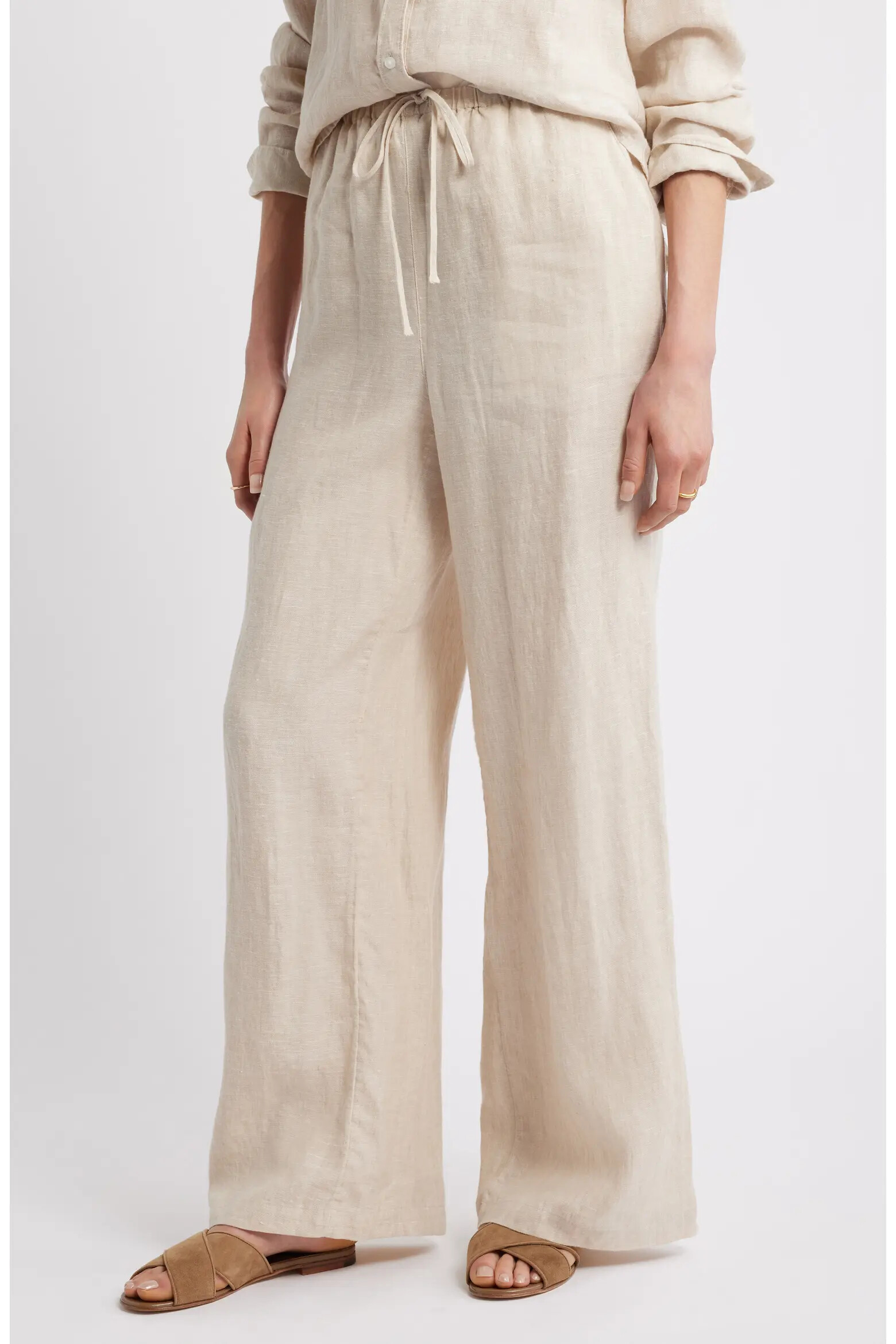
Caslon Easy Wide Leg Linen Pants
NT$1,315.33, previously NT$2,630.66, in Nordstrom’s Taiwan-region view on July 14, 2026.
The Flax pull-on pants are 100% linen with an elastic drawstring waist and front slant pockets. Use their pale, softly textured field as the light end of a cream-to-taupe sequence.
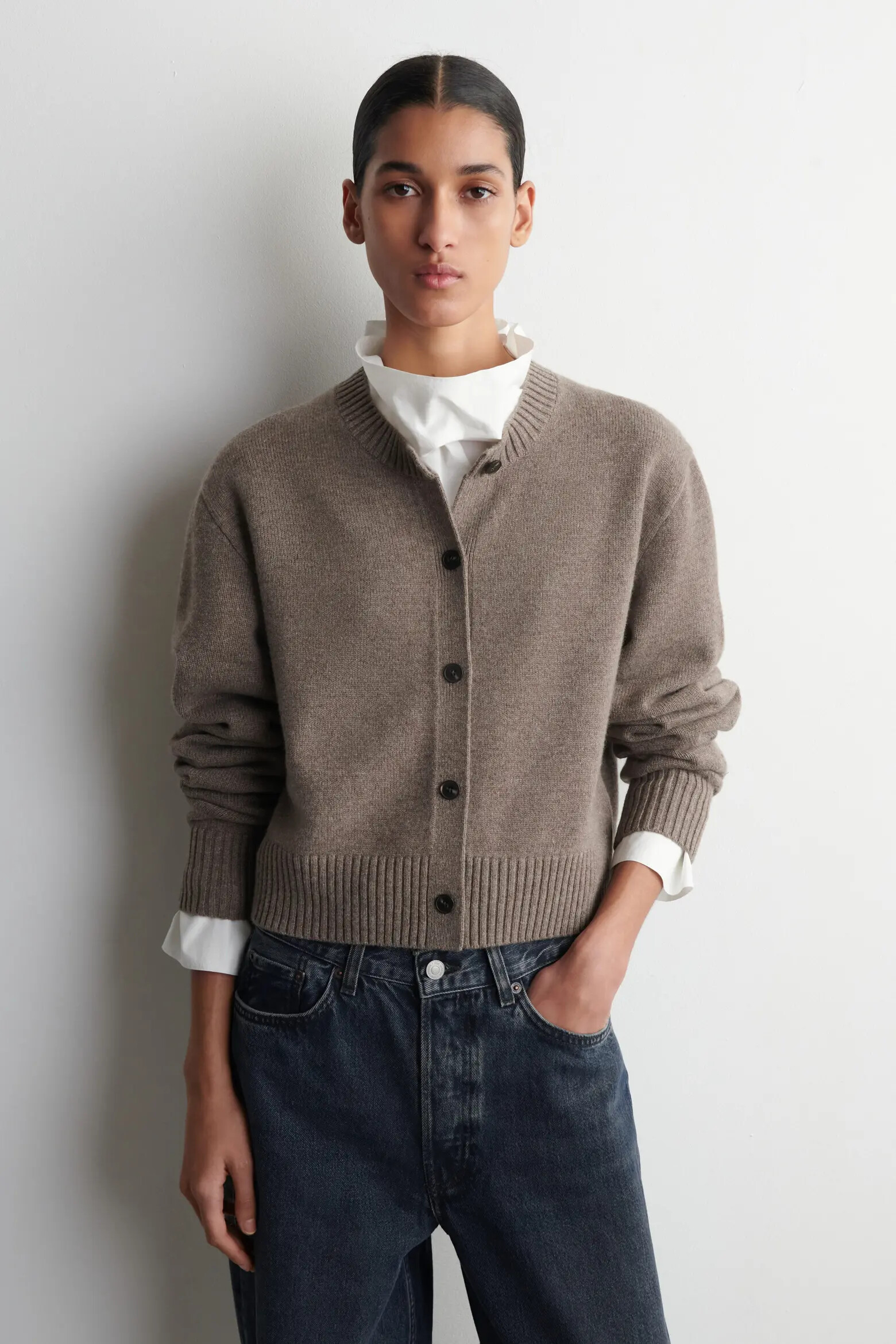
View at NordstromCOS Merino Wool Sweater
NT$4,599.52 in Nordstrom’s Taiwan-region view on July 14, 2026.
The Beige Melange button-front knit is 100% merino wool with rounded sleeves and ribbed trims. Its cooler, darker taupe can provide the middle value above a pale trouser.
View at NordstromOpen Edit The Icon Relaxed Blazer
NT$1,646.23–NT$3,292.46, previously NT$3,292.46, in Nordstrom’s Taiwan-region view on July 14, 2026.
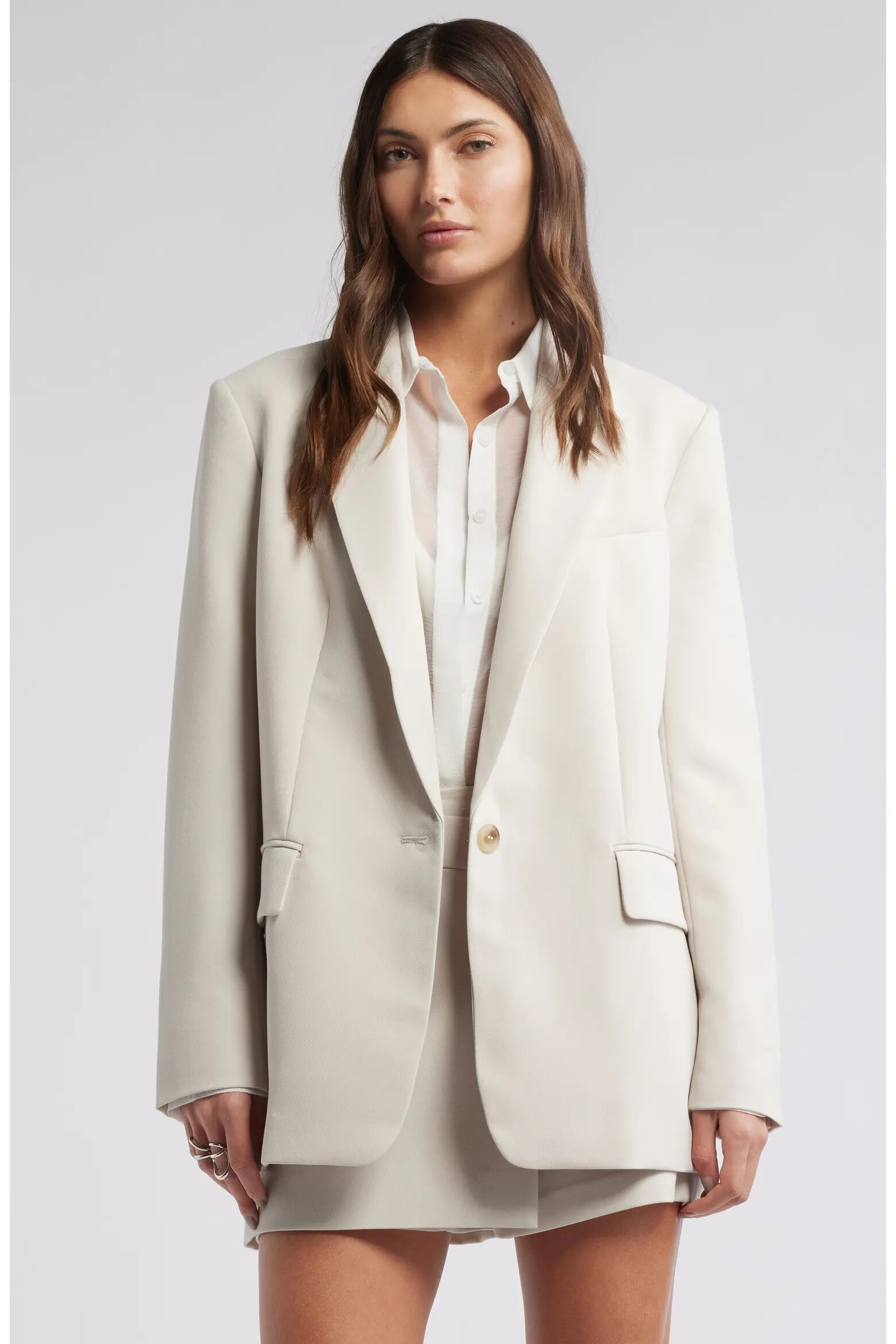
The Beige Pumice blazer has a boxy one-button cut, peaked lapels, patch and flap pockets, and a back vent. Its structured surface separates it from soft linen or wool even when the values are close.
View at NordstromExact product-page snapshot — July 14, 2026
- Nordstrom, July 14, 2026: Caslon Easy Wide Leg Linen Pants, item #10906855: Flax, 100% linen, 31-inch inseam, elastic drawstring waist, front slant pockets.
- Nordstrom, July 14, 2026: COS Merino Wool Sweater, item #11466778: Beige Melange, 100% merino wool, rounded sleeves, ribbed trims.
- Nordstrom, July 14, 2026: Open Edit The Icon Relaxed Blazer, item #10442203: Beige Pumice, 79% polyester, 15% rayon, 6% spandex, one-button closure, peaked lapels, back vent.
At the July check, Nordstrom listed Caslon’s Flax linen trouser, COS’s Beige Melange wool knit, and Open Edit’s Beige Pumice polyester-rayon-spandex blazer as three distinct neutrals. Their retail labels are less useful than the visible light, middle, and structured roles they can play.
Step 2: Add one controlled interruption
A tonal look does not collapse when a second color appears. It gets clearer when the interruption has a job. Keep it small, repeat it once at most, and choose whether it separates layers or creates a focal point.
- White or ivoryShow it at a collar, cuff, sock, or narrow hem. It creates a crisp boundary between two close values.
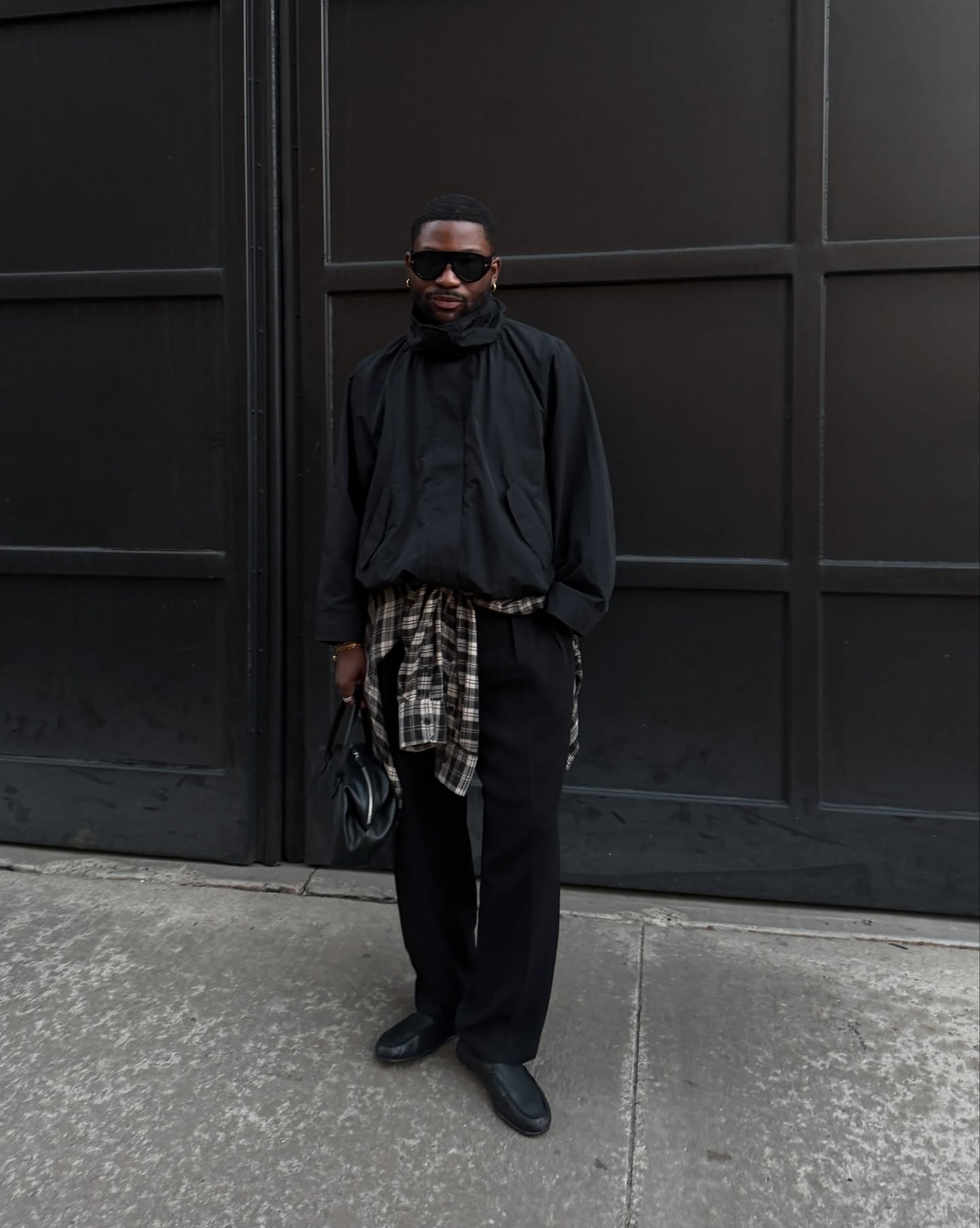
- Black or charcoalUse it at the shoe, belt, or eyewear. Avoid a large black bag when it becomes heavier than the intended tonal column.
- MetalGold warms camel and olive; silver cools gray and blue. One hardware family is enough.
- Opposing colorTry oxblood with olive, rust with blue, or pale blue with brown. Keep the contrast to roughly ten percent of the visible outfit.
A J.Crew shirt can provide a crisp ivory edge; an Aritzia trouser can set the darkest value. Beyond Yoga separates can make a tonal travel base, then a structured coat changes the visual weight. Brand is less important than the sequence of light, middle, and dark.
Four complete tonal outfit formulas
Soft neutrals with a firm base
Ivory poplin shirt + oatmeal ribbed knit + camel wool trouser + chocolate loafer. The shirt creates the lightest boundary; the trouser carries the middle; the shoe grounds it. Substitute mushroom for camel if yellow undertones dominate.
Office layers without a broken-suit effect
Pearl-gray tee + heather flannel trouser + charcoal blazer + pewter flat. Keep jacket and trouser at clearly different values. If both are mid-gray, use a visible texture difference such as twill against brushed wool.
Weekend denim, made deliberate
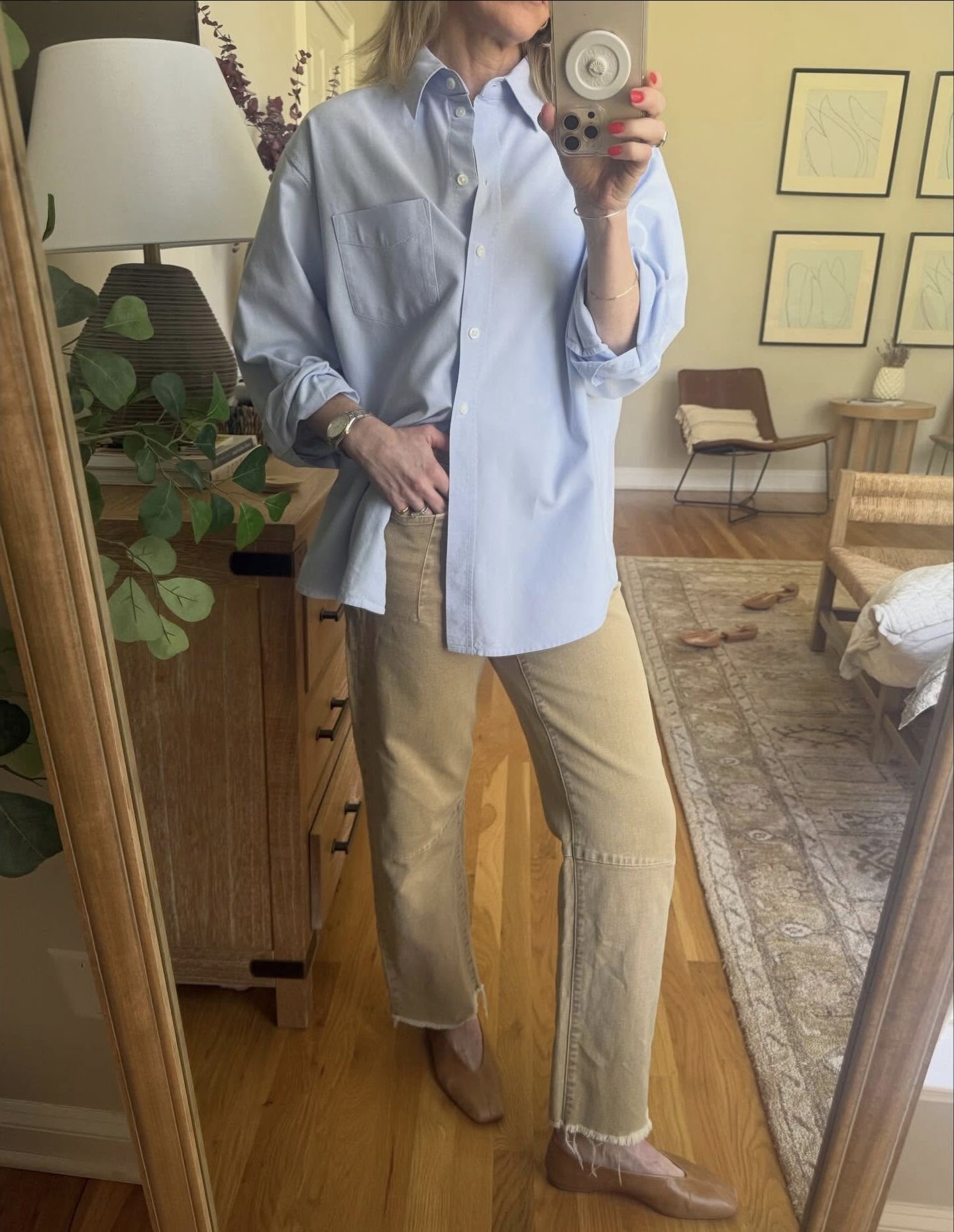
Chambray shirt + medium-wash straight jean + navy cotton jacket + dark-blue sneaker. Open the shirt over a white tank when the blues begin to merge. A brown belt would interrupt the system; navy leather keeps it tonal.
Evening depth without all black
Cocoa satin skirt + espresso knit + tobacco suede pump + dark-chocolate coat. Satin supplies the light-catching surface. Keep the other pieces matte. In warm weather, replace the coat with a biscuit linen jacket.
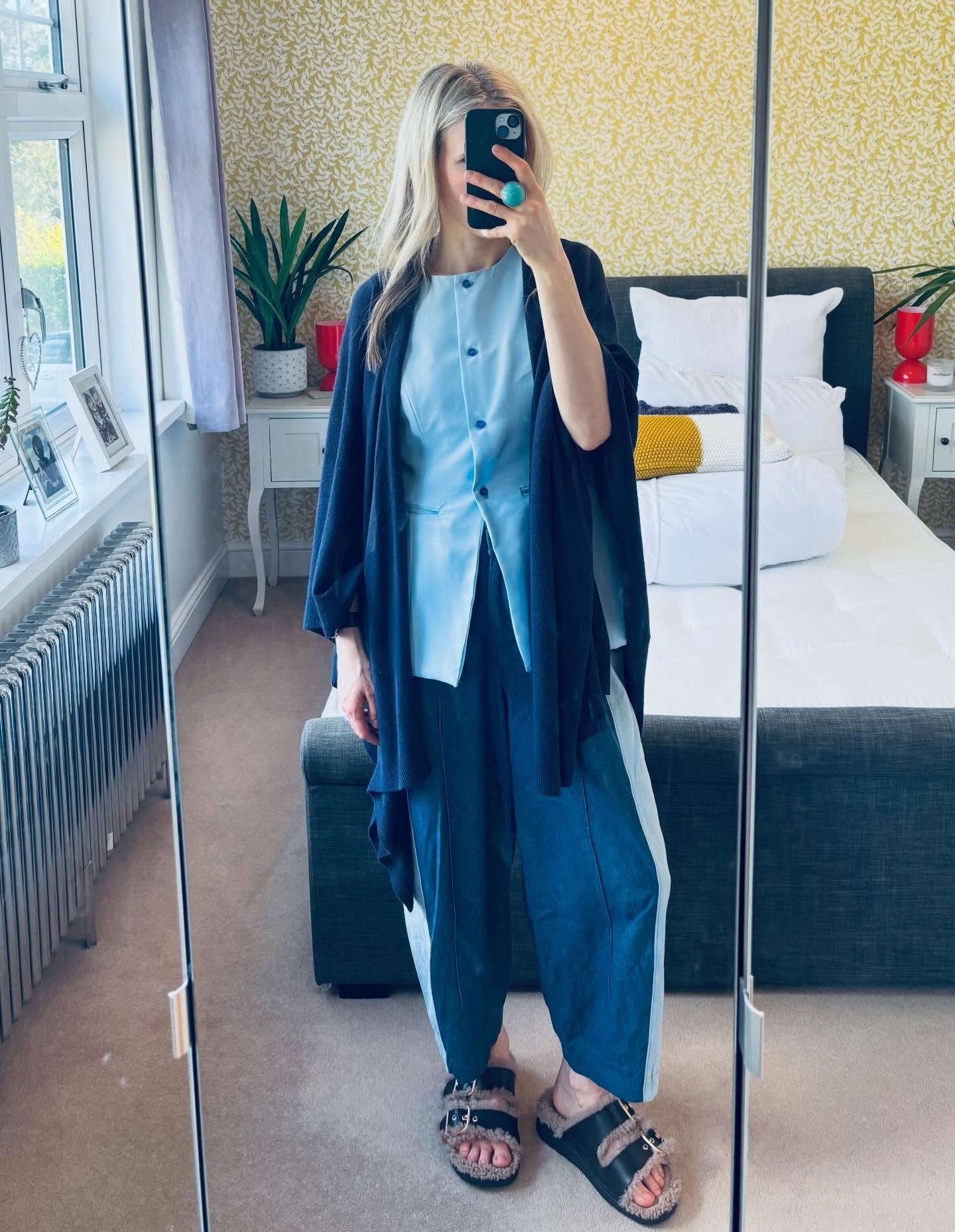
Step 3: Let fabric, light, and season do some work
Texture is the quiet contrast inside a tonal outfit. Ribbing makes a knit look darker at its grooves. Satin can appear lighter where it reflects. Suede absorbs light; polished leather throws it back. A Flax linen trouser, Beige Melange merino knit, and Beige Pumice stretch blazer may all sit in one retail filter while behaving very differently beside one another.
According to a report from X-Rite, metamerism can make materials match in one light and separate in another. Keep in mind that cotton, linen, wool, cashmere, silk, satin, suede, leather, denim, jersey, twill, and poplin reflect or absorb light differently. Compare linen, wool, and leather under the destination light.
For spring and summer, build with linen, poplin, cotton, raffia, and open space at the neck or ankle. Use lighter values as the largest field. For fall and winter, wool, cashmere, brushed cotton, suede, and leather make texture more visible. Let the darkest value sit in the coat, boot, or trouser.
Common mistakes—and the fastest substitutions
- Everything is the same mid-tone. Replace one piece with a version two steps lighter or darker.
- Two pieces almost match. Separate them with a white shirt hem, belt, or clearly different texture.
- Every surface is soft. Swap one fuzzy knit for poplin, leather, denim, or a pressed trouser.
- The darkest accessory is too large. Replace a black tote with a smaller charcoal bag or a bag inside the chosen color family.
- Retail names drive the palette. Ignore “oat,” “sand,” and “stone.” Compare the real pieces in the same light.
- The outfit feels costume-like. Remove one same-color accessory and leave the system slightly incomplete.
Thirty-second mirror check
Can you identify the lightest, middle, and darkest areas immediately? Are at least two materials visibly different? Is the accent doing one job? If yes, the outfit has enough dimension.
The bottom-line tonal system
- Choose one family with a wide value range.
- Set a middle using the largest garment.
- Add light and dark in clearly separate steps.
- Change texture before adding more color.
- Use one interruption for separation or focus.
- Check the real light before calling it finished.
The goal is relation, not replication. Related shades with visible differences look intentional.
ChicAire editors independently research and select products. If you buy through our links, we may earn a commission.