The shape clinic
How to Make Oversized Clothes Look Intentional, Not Swallow You
Choose the dominant volume, then show one boundary at the cuff, neckline, waist, hem, or shoe.
 By Erin Vale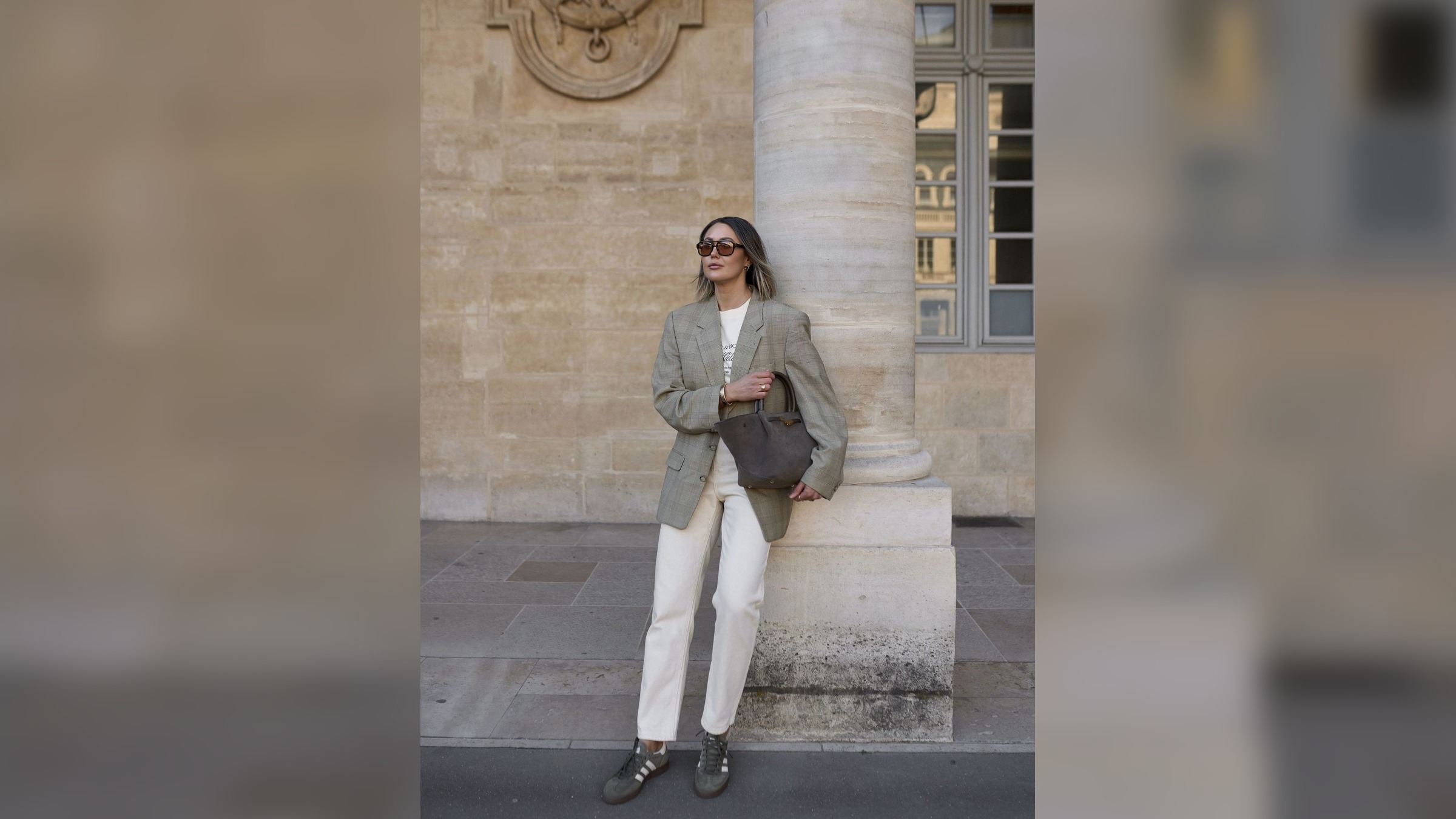
Oversized clothing reads deliberately when the cut has a job and the outfit shows where one shape ends.
This is proportion, not body correction. Read the dropped shoulder, wide leg, long hem, deep armhole, or broad lapel.
1. Diagnose why the volume feels unresolved
Separate an engineered oversized cut from indiscriminate sizing up. A designed shirt may coordinate its dropped shoulder, wide body, long sleeve, and shirttail; a larger conventional size may move each point differently.
Cotton poplin, denim, wool, and canvas tend to hold a clearer edge. Linen, jersey, rayon, viscose, silk, and satin fall more softly. Leather, suede, shearling, fleece, and velvet can add visual weight at a shoe, coat, or bag. Polyester and nylon behavior depends on weave and construction; fiber alone does not determine drape.
Manglien Gangte's June 12, 2026 Vogue India report defines proportion through length, fit, and shape, and starts with the longest line. It is editorial guidance, not a fit study.
2. Choose one dominant volume and one visible boundary
Let the shirt, blazer, trouser, skirt, or coat make the largest shape. Then expose a cuff, neckline, waist placement, hem, or defined shoe.
According to a report by Christian Allaire, senior fashion and style writer at Vogue, stylist Zadrian Smith advises one oversized element at a time. Thomas Christos Kikis says baggy jeans should remain large through the leg while working at the waist.
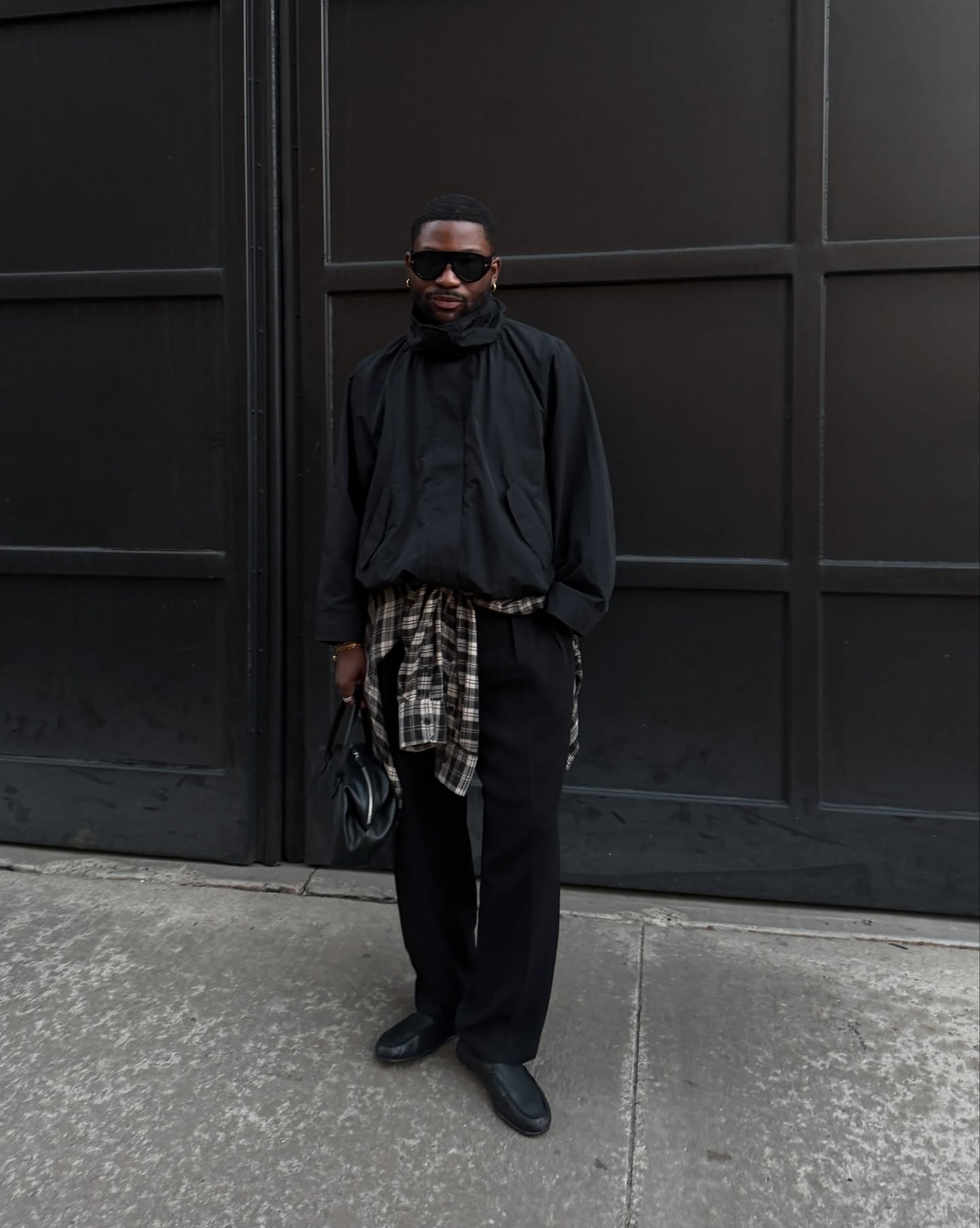
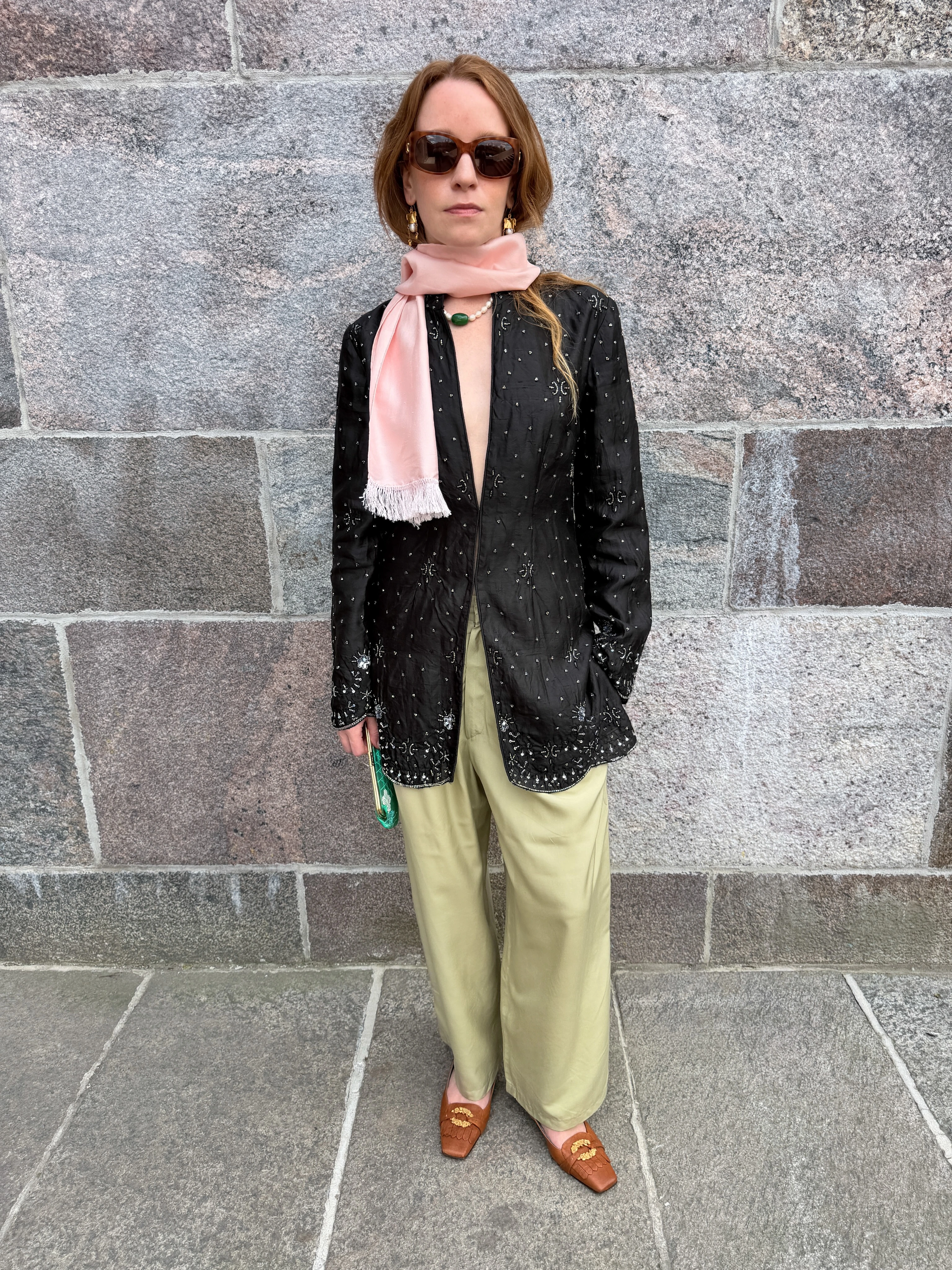
Full volume can still work. Preserve a break through a cuff, neckline, waist placement, layer length, or shoe.
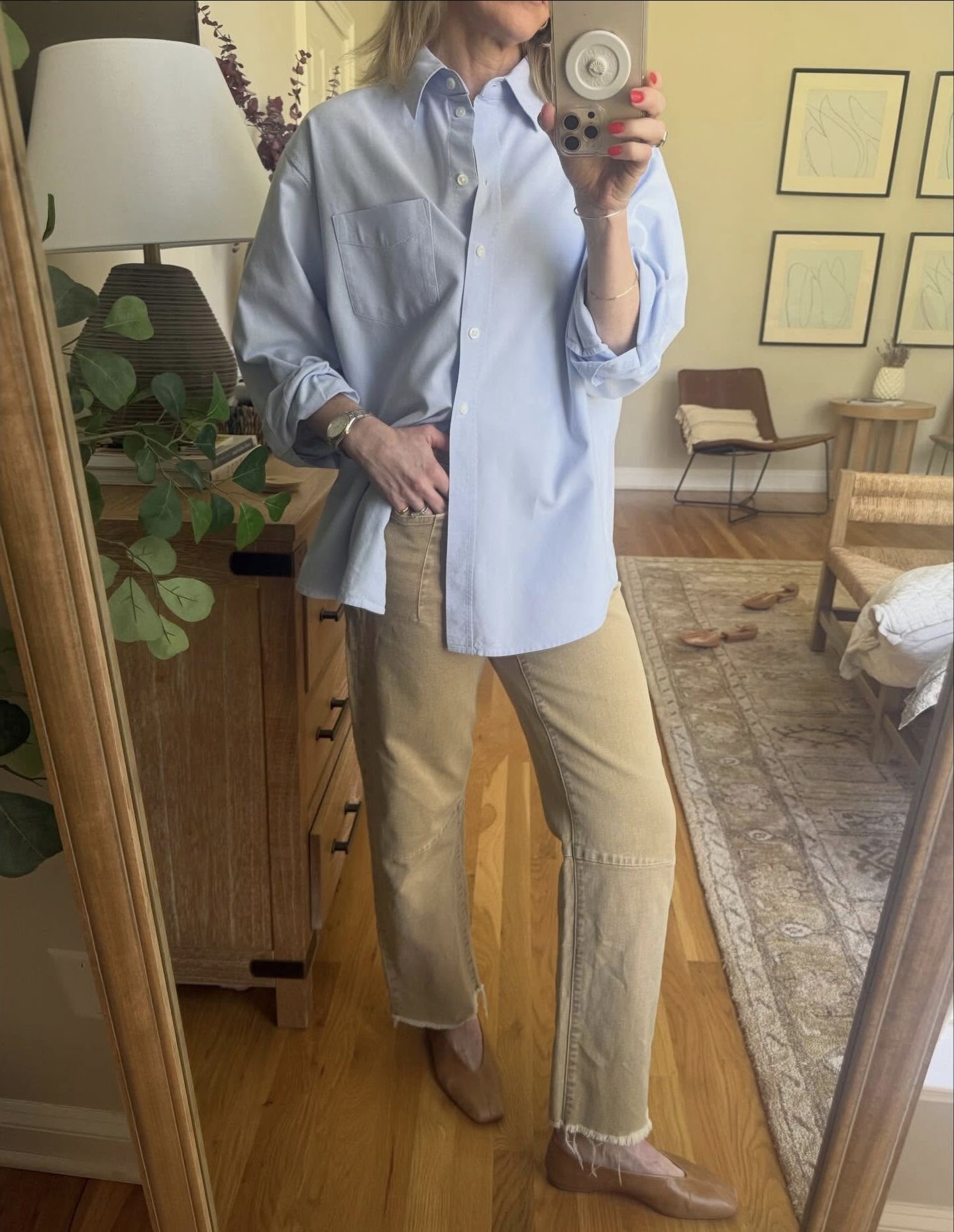
3. Apply the rule to four complete outfits
Oversized shirt
Oxford shirt + straight ankle trouser + loafer + compact bag.
Let the shirt own the length. Roll the sleeves and open the collar. Use a partial tuck only when the cotton falls cleanly.
Baggy jeans
Wide jean + straight knit tank + cropped jacket + substantial flat.
Secure the waist and show the rise with the shorter jacket. A straight tee can replace a close tank.
Oversized blazer
Broad blazer + crew-neck tee + column skirt or straight trouser + sneaker.
Let the shoulder and lapel lead. Roll sleeves only when lining and cuff permit it.
Full volume, on purpose
Boxy shirt + wide trouser + open neck + rolled cuff + defined shoe.
Separate lengths and fabrics. Crisp cropped poplin over fluid twill creates a clean break.
Christian Allaire, writer at Vogue, documented large shapes from Balenciaga, Peter Do, Marc Jacobs, and Prada on July 20, 2022. They are dated references, not requirements.
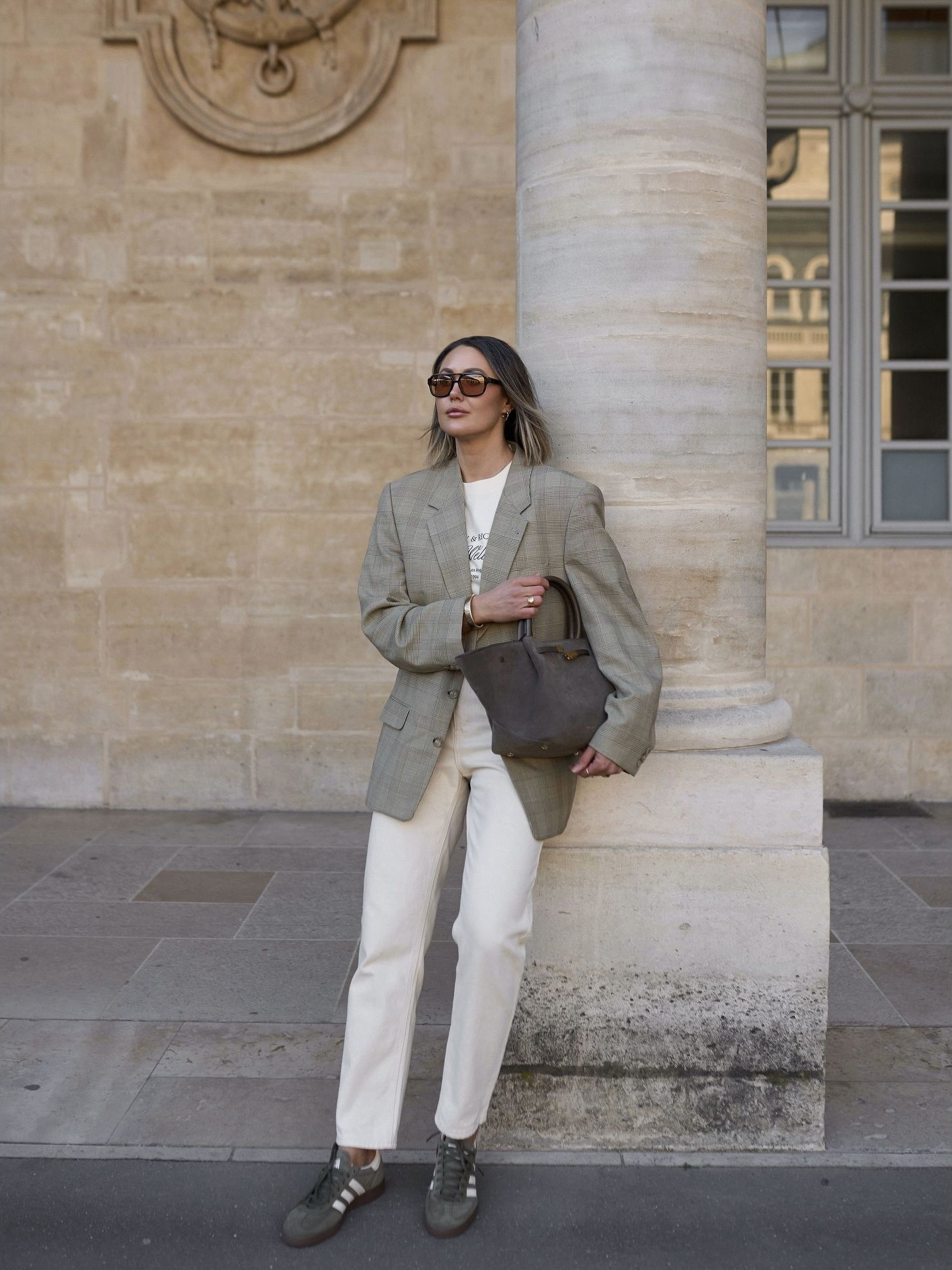
4. Let hems, cuffs, shoes, and bags finish the shape
Move the cuff, shorten a pooling hem, define the shoe, or reposition a strap before replacing the outfit.
Compare body and sleeve length, shoulder, rise, inseam, and hem width. A shirttail, slit, vent, dart, pleat, drop shoulder, or raglan sleeve explains the volume; it does not establish personal fit.
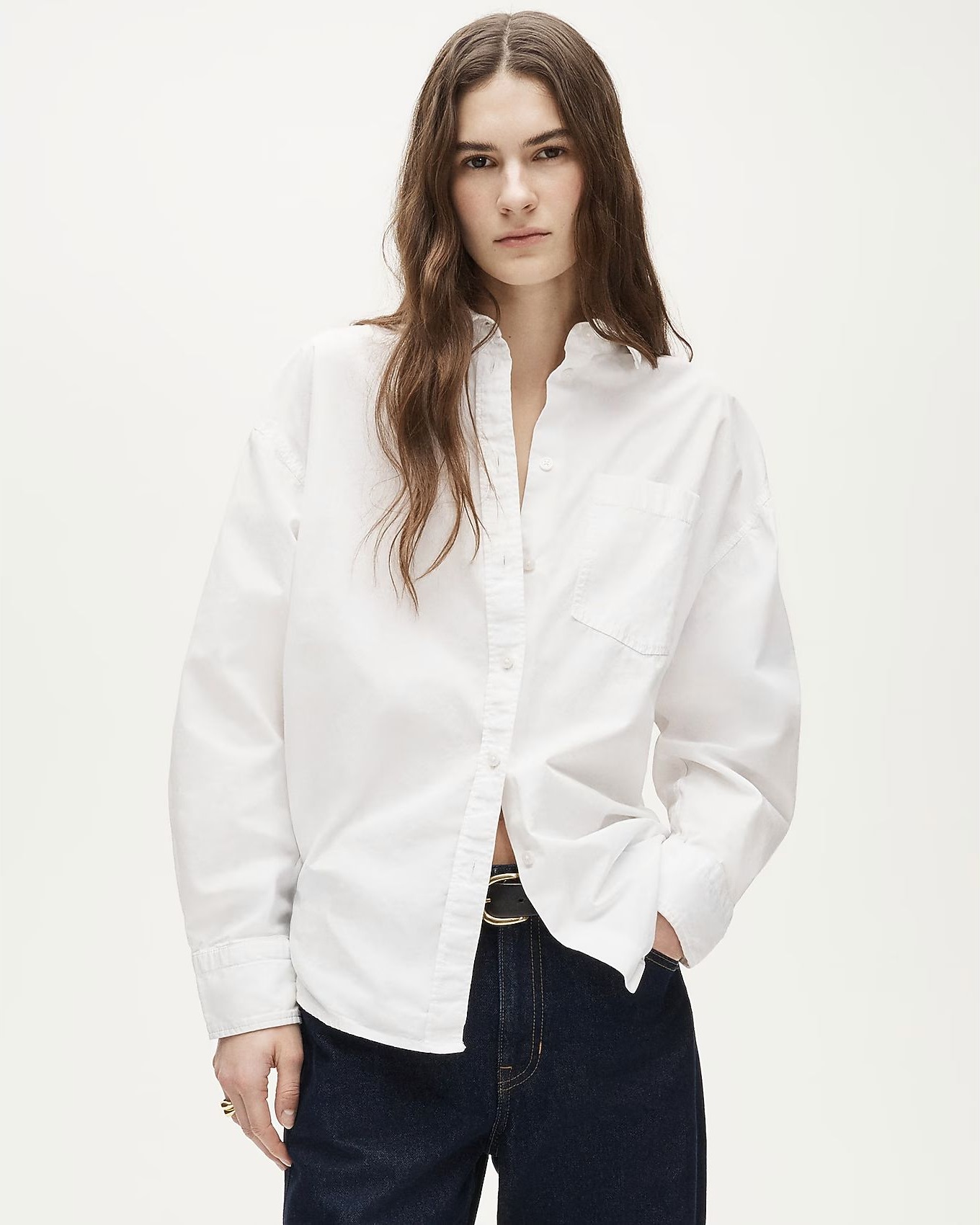
J.Crew Étienne Oversized Shirt in Lightweight Oxford
$89.50 sale · $128 regular on July 14, 2026
J.Crew calls it intentionally oversized and suggests sizing down for a slimmer fit. The lightweight oxford cloth is 100% cotton and machine washable, with a high-low hem, classic and petite options, and 29.5-inch classic length.
Prices varied by official variant. Automated review text is excluded.
A structured bag can be the countershape. Match its capacity to the day rather than forcing a tiny scale.
5. Adjust for weather, setting, and garment length
| Situation | Keep the volume | Create the boundary |
|---|---|---|
| Hot | Boxy linen shirt or wide trouser. | Open neck, rolled sleeve, ankle hem. |
| Cold | Roomy wool coat and broad trouser. | Visible collar, cuff, or boot. |
| Professional | Oversized blazer or tailored trouser. | Clean base, hem, shoe, and bag. |
| Long tunic | Let it own the vertical line. | Show slit, cuff, and shoe. |
| Any size range | Choose intended ease. | Compare sleeve, rise, and inseam. |
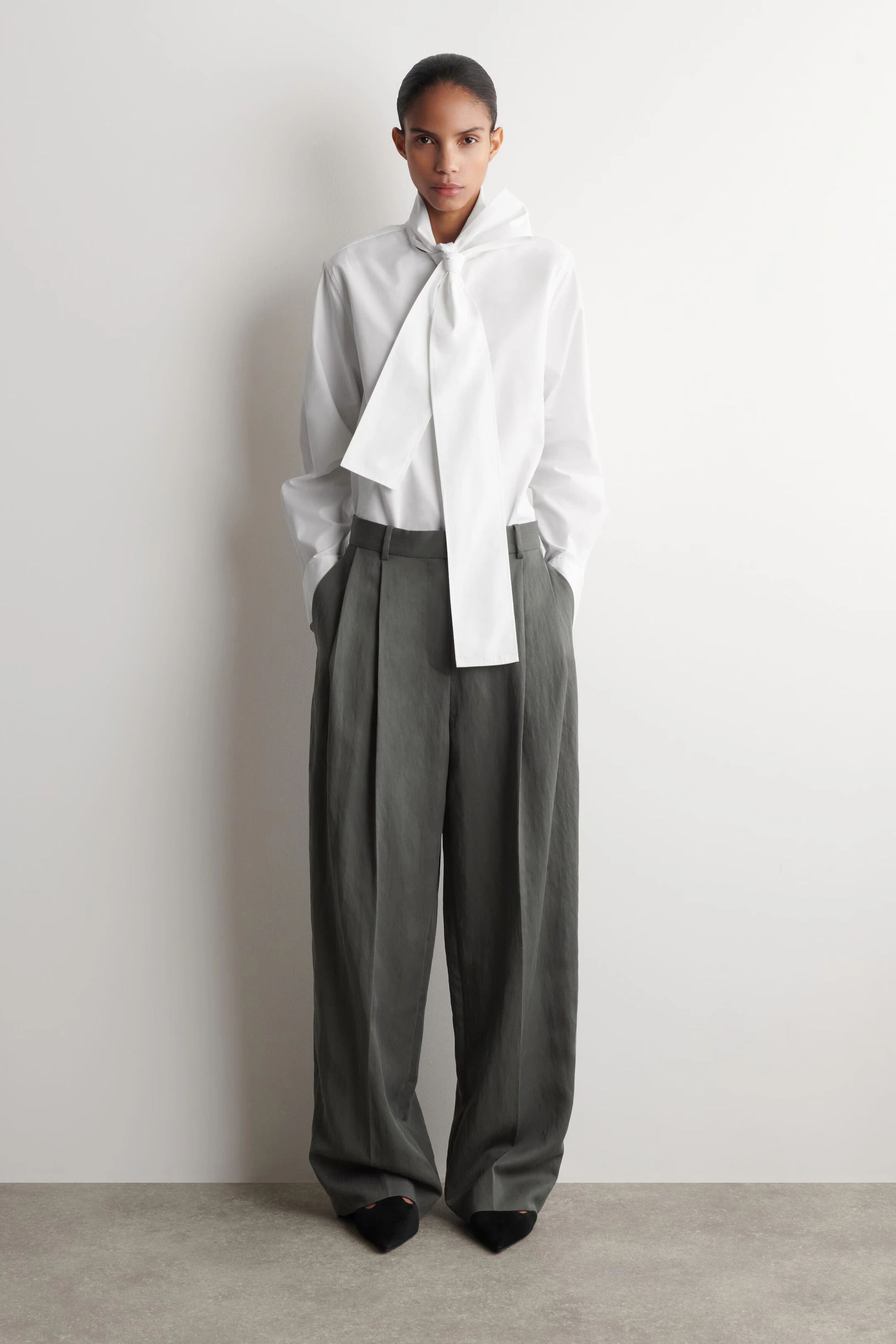
Body labels are not proportion rules. Ask where the shoulder, waist, rise, cuff, and hem land.
Alterations can preserve the intended ease while correcting one point. A tailor may shorten a sleeve or hem without narrowing the body, but vents, cuffs, pockets, lining, and original stitching can limit the change. Ask before purchase.
In rain or snow, use the protective coat and shoe. Restore the boundary indoors.
6. Replace the fixes that make volume look accidental
7. The rule to remember
One dominant volume. One visible boundary. Read fit, length, fabric, and color. Adjust the cuff, neckline, waist, hem, or shoe, never the body.
Pricing note: listed prices reflect official pages checked July 14, 2026; stock can change. Caveat: specifications do not predict fit. Our editorial team selects products independently; ChicAire may earn a commission.