Fall 2026 · Runway to real life
How to Tone Down Fall 2026’s Power Shoulders for Everyday Wear
Keep one deliberate shoulder line. Quiet the neckline, waist, and lower half before changing the jacket.
 By Rina Patel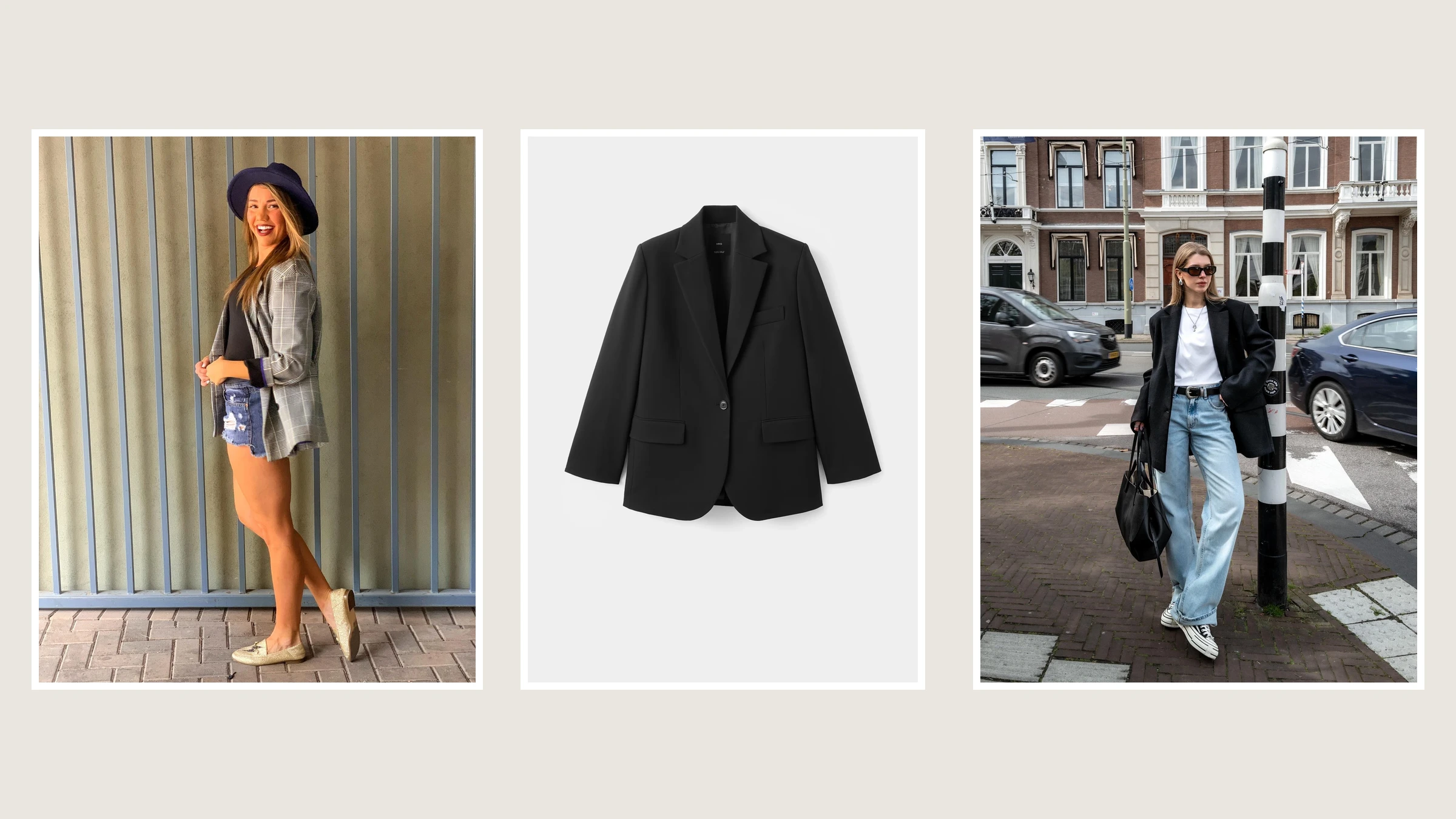
The useful part of Fall 2026’s power shoulder is not maximum width. It is a clean outer line that makes an ordinary shirt, trouser, or skirt look intentional.
The everyday edit is subtraction: one structured shoulder, one calm base, one unbroken lower line.
1. The runway signal has three different shoulder shapes
Tina Isaac-Goizé’s March 7 Vogue Runway review described Miguel Castro Freitas’s Mugler collection through triangle, square, and trapeze geometry. A leather overcoat used jutting shoulders; the review also questioned whether the most boxy constructions would translate to the street.
Luke Leitch, author of Vogue’s March 4 Balmain review, recorded a different version: Antonin Tron, designer of the Balmain collection, repeated rounded, structured shoulders with gathered waists, pencil skirts, and fitted sleeves. The reference was 1940s film noir, not a single 1980s template.
Nicole Phelps, author of Vogue’s March 6 Givenchy review, supplies the control. The collection relaxed an earlier hourglass template across pinstripes, curvaceous cuts, peplum hips, and a razor-sharp evening coat. Givenchy shows that precision can carry the idea without the farthest shoulder extension.
According to data reported on February 9 by Lucy Maguire, features director at Vogue Business, EDITED measured European in-store shoulder-pad arrivals up 29% during Fall 2025. The same forecast pointed to sharp shoulders at Anne Sofie Madsen, Taus, and Caro Editions during Copenhagen’s Fall 2026 shows; Karis Munday, retail analyst at Edited (officially EDITED), also identified softer rounded and cocoon volume. That prior-season arrival figure does not prove Fall 2026 sales or adoption.
2. Preserve the shoulder; reduce the adjacent signals
Jack Moss, features director at Wallpaper, summarized the March 2026 season through wide shoulders, narrow waists, and fluid construction. Everyday wear does not need all three signals at full strength. A separate March report from Marie Claire UK described Givenchy jackets following the natural shoulder line while retaining movement—support for treating a natural shoulder as the low-volume end of this spectrum, not as a rejection of the trend.
| Runway code | Keep | Turn down |
|---|---|---|
| Extended shoulder | One smooth, intentional edge. | Skip a second padded layer. |
| High or rigid neckline | A plain crew neck, shirt collar, or open V. | Remove the scarf, plastron, or stacked collar. |
| Cinched waist | One button, seam, or back belt. | Skip an extra corset belt. |
| Sculptural lower half | Straight jeans, fluid trousers, or a clean skirt. | Leave panniers, extreme bubbles, and multiple peplums to the runway. |
Construction controls intensity. A padded set-in sleeve or drop shoulder creates a firmer ledge than a raglan sleeve; dart placement, interfacing, and topstitching change the read too. Dense wool, leather, denim, or twill holds shape; linen, viscose, silk, satin, jersey, and poplin soften it. A flat shirt placket avoids bulk under the jacket.
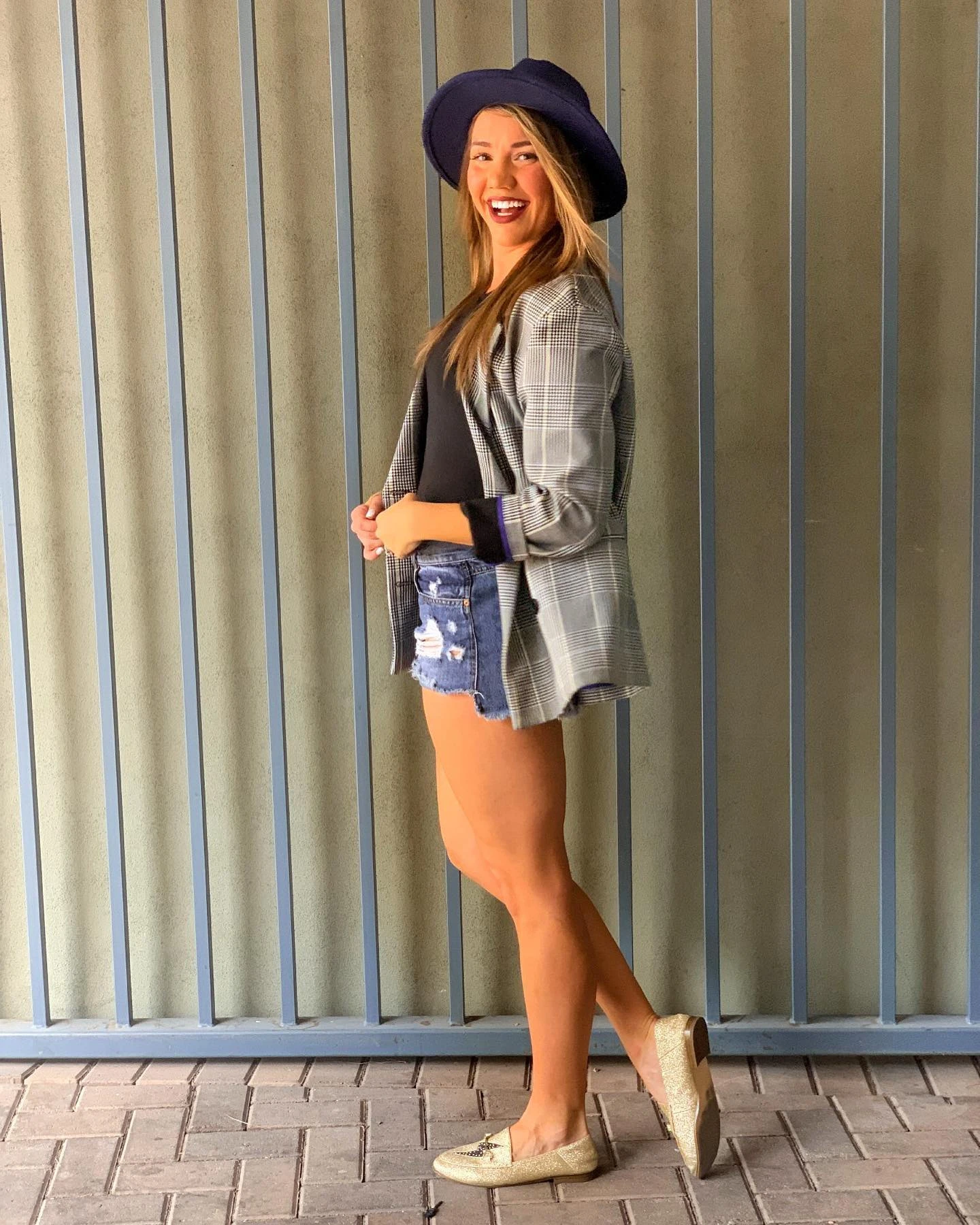
3. Use four controls before blaming the blazer
A shoulder can read larger when hair, scarf, collar, lapel, and bag strap all crowd the same zone. Move one accessory away before deciding the jacket is unwearable. A hand-carried bag or lower crossbody strap keeps the shoulder edge visible.
Color can do the same work. Black, navy, charcoal, taupe, and brown keep the silhouette legible; a bright shoulder is still workable when the base stays tonal. Print adds another signal, so a checked blazer benefits from a solid shirt and trouser.
4. Four outfits take the volume down one notch
Structured blazer + fine crew neck + straight trouser + loafer.
Button once or leave open. Skip the statement belt and let the shoulder be the only hard edge.
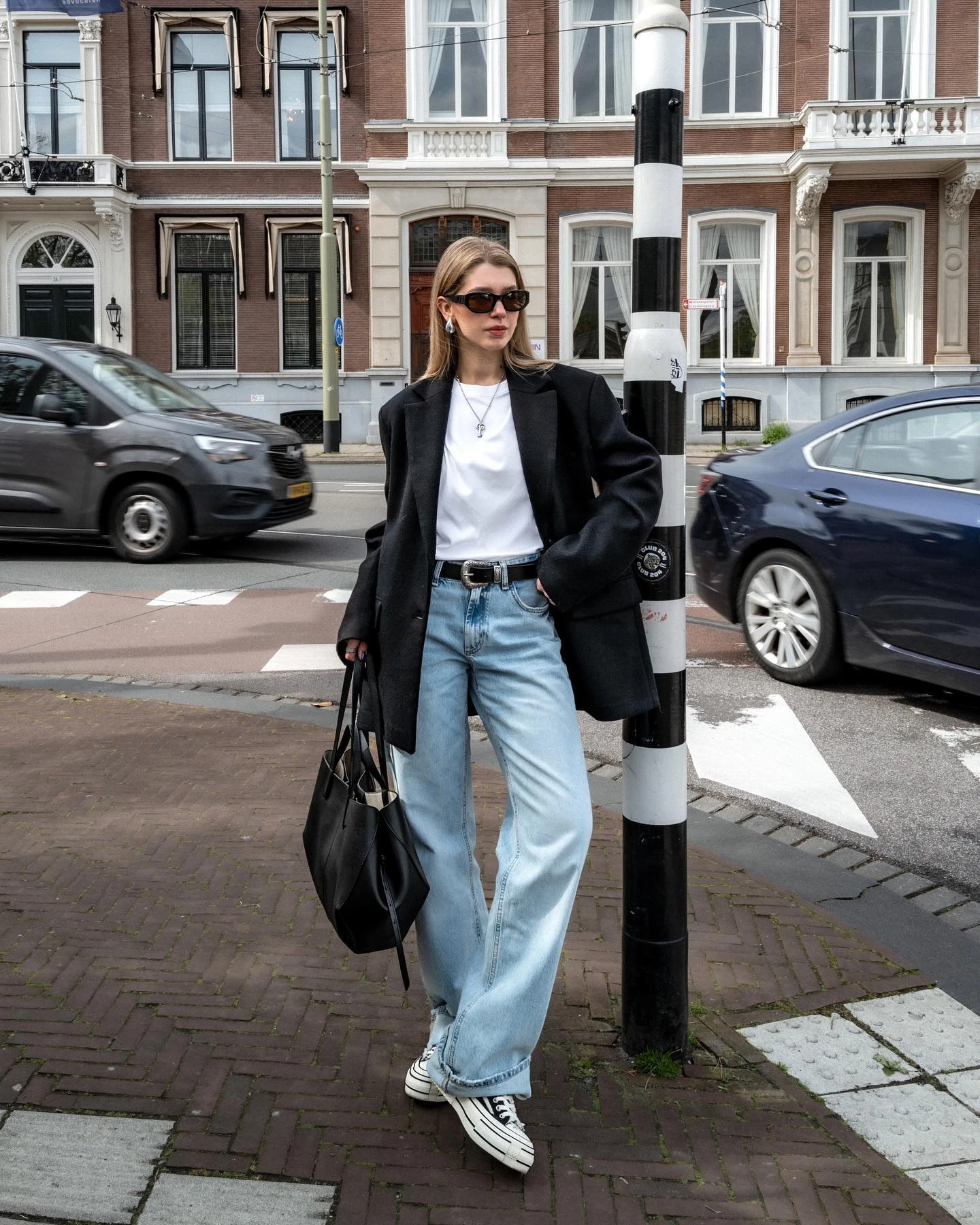
Wide-shoulder blazer + white tee + straight jean + slim sneaker.
Push up sleeves only when the cuff and lining allow it; a visible wrist breaks the block.
Rounded-shoulder jacket + column dress + small top-handle bag.
Choose one sheen. If the jacket is leather or satin, keep the dress matte.
Strong-shoulder coat + thin knit + fluid trouser + low boot.
Avoid another blazer underneath. The coat needs room to sit without two pads competing.
These are garment formulas, not body-shape instructions. Shoulder width, mobility, coverage, dress code, and sensory preference decide which version works.
5. Three current jackets show the volume ladder
This is a dated market check, not a three-jacket shopping list. Start with the lowest level that changes the silhouette enough.
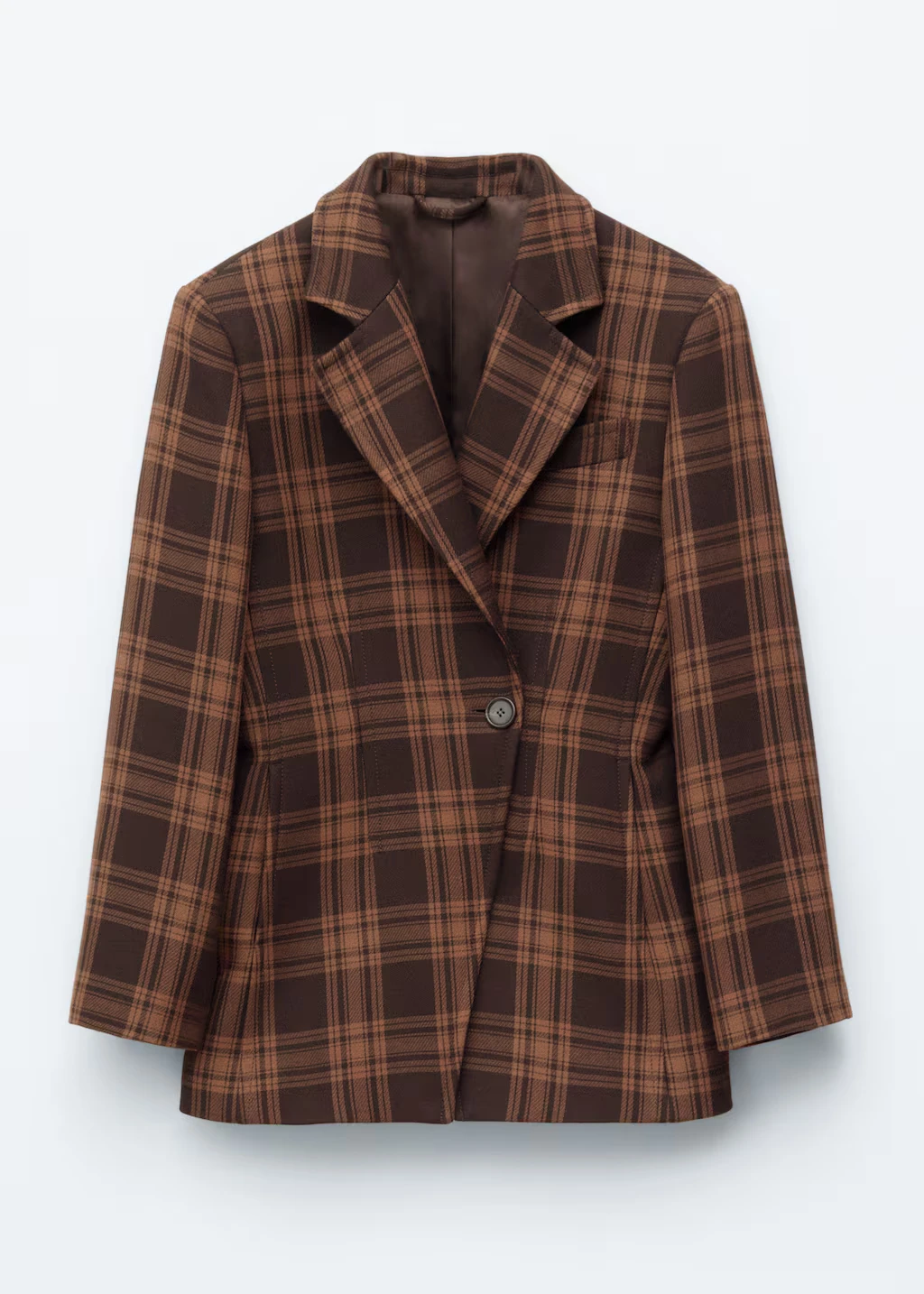
& Other Stories Fitted Shoulder-Pad Blazer
$149 final sale · $259 previous
High commitment: oversized padded shoulders plus a cinched waist. The brown checked shell is 64% rayon, 25% cotton, and 7% polyester; the listed length is 29.6 inches.
Shop at & Other StoriesCOS Structured Wool-Blend Blazer
$124.50 final sale · $249 previous · 50% off
Medium commitment: structured shoulders, sharp lapels, and a back-cinching belt. The shell is 47% wool, 41% recycled polyester, and 12% linen; back length is 29.53 inches.
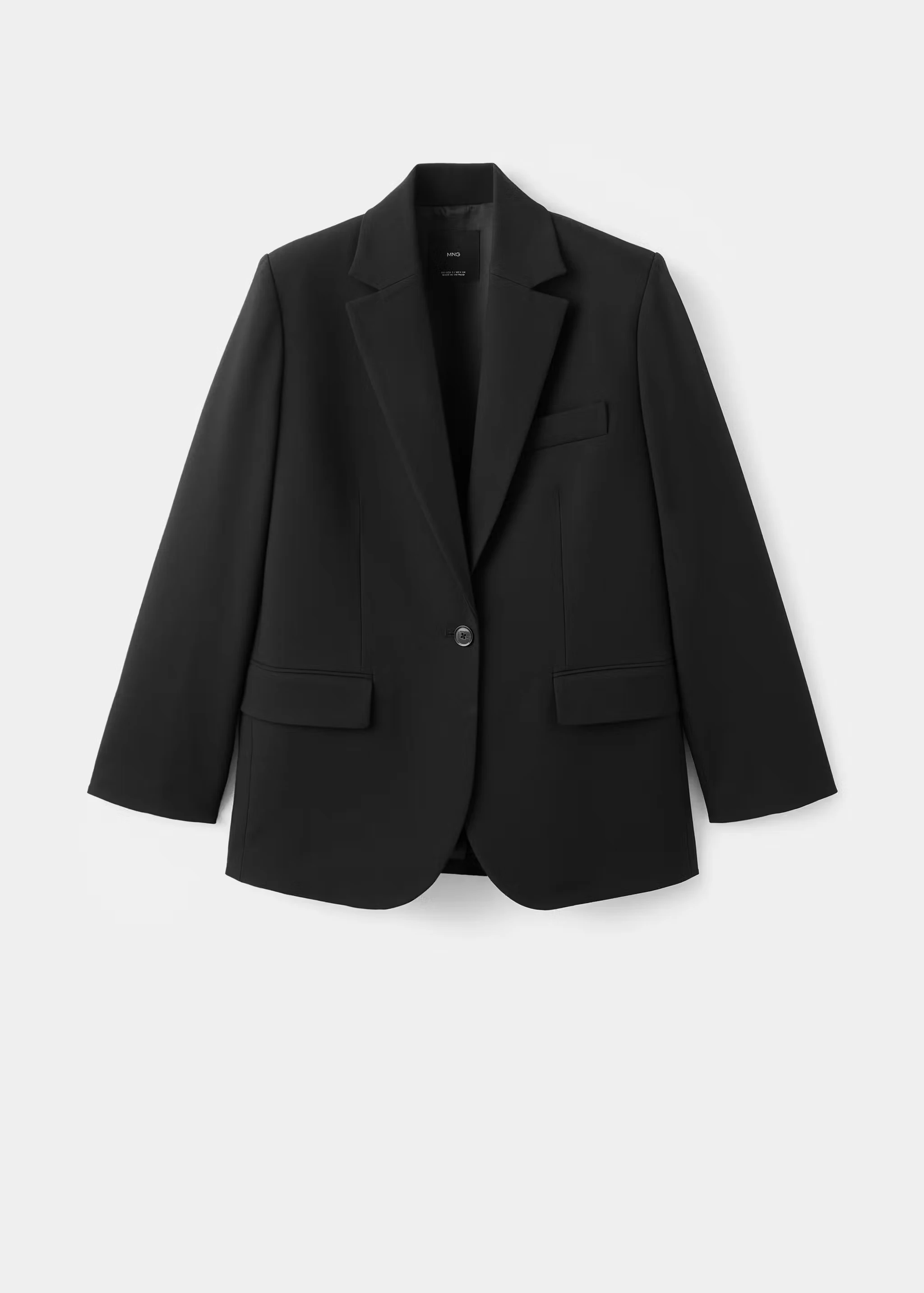
Shop at COSMango Straight Suit Jacket With Lapel Pockets
$69.99 sale · $139.99 previous · 50% off
Lower commitment: a straight structured line without an explicit oversized-pad claim. Mango lists notch lapels, lining, standard length, a chest welt pocket, two flap pockets, and plus sizing.
Shop at Mango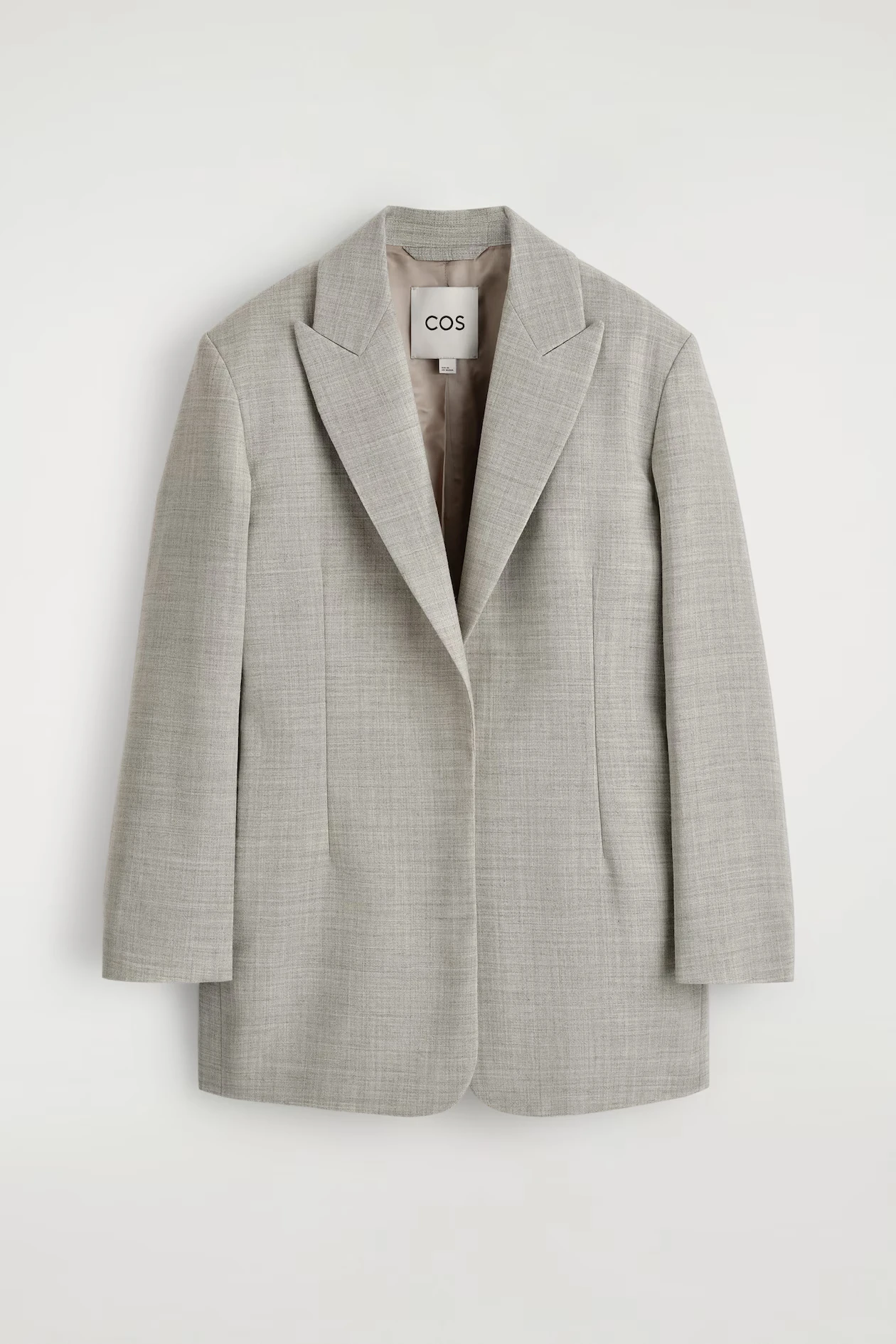
Prices reflect official U.S. pages checked July 15, 2026; stock, sizes, promotions, and prices can change. The first two are final sale, which raises the cost of a fit mistake.
6. The fit test is smooth structure, not minimum width
Proper Cloth’s conventional tailoring guide places a jacket about 0.5 inch wider than the shoulder bones in total—roughly 0.25 inch per side—with a smooth sleeve-head transition. An intentionally extended womenswear shoulder may go farther; the useful check is still clean construction without collapse.
The catch: shoulder alterations are connected to the armhole, sleeve head, chest, padding, and lining. Proper Cloth calls them difficult. Do not buy a final-sale blazer on the assumption that removing the pad will fix it; ask a qualified tailor to assess the complete construction first.
7. Choose the smallest shoulder intervention that works
Start with one clean extension. Keep the neckline plain, the underlayer thin, and the lower half straight or fluid. If the outfit still feels theatrical, move down the volume ladder—from oversized pad, to structured shoulder, to natural shoulder—rather than adding more styling fixes.
Skip the trend when the jacket restricts movement, fights the dress code, requires risky alteration, or cannot work with at least three existing bottoms. The shoulder is the decision; everything else should make that decision easier.
Caveat: this is research-based styling analysis, not personal wear or fit testing. Runway and product photographs do not establish comfort, mobility, care performance, or suitability for an individual body or setting. Our editorial team selects products independently; ChicAire may earn a commission.