The pattern clinic
How to Mix Prints When You Don’t Trust Your Eye
Give one pattern the lead. Make the second quieter through scale, area, contrast, or color.
 By Celeste Avery
Print mixing is easier when you stop asking whether two motifs “go” and decide which one should be noticed first.
1. Name the problem before changing the outfit
Two prints compete when scale, area, and contrast are equal. Make the dress, trouser, shirt, or coat the lead; give the second pattern less area, softer contrast, or a different scale.
Maximalism can still have order. Givenchy’s Fall 2026 report documents pinstripes and leopard shearling. Chanel’s report records printed chainmail and trompe-l’oeil tweed.
2. Diagnose scale, area, fabric, and color
According to a report from Diana Walker, visual content designer at Adobe Express, color can organize hierarchy, clarity, and cohesion. Applied cautiously to clothing, that supports a simple test: identify the shared color, the dominant color, and the accent.
X-Rite notes that materials can align under one light and diverge under another. Compare both prints in daylight and destination lighting.
3. Make one adjustment: change the pecking order
Keep the lead print unchanged. Then alter the supporting print on one axis. Choose a smaller motif, show less of it, reduce its contrast, or repeat one color from the lead.
Change one control. Pair a bold stripe with tiny flowers through repeated color, or a large floral with a broad low-contrast stripe. If covering part of one print solves the outfit, area was the problem.
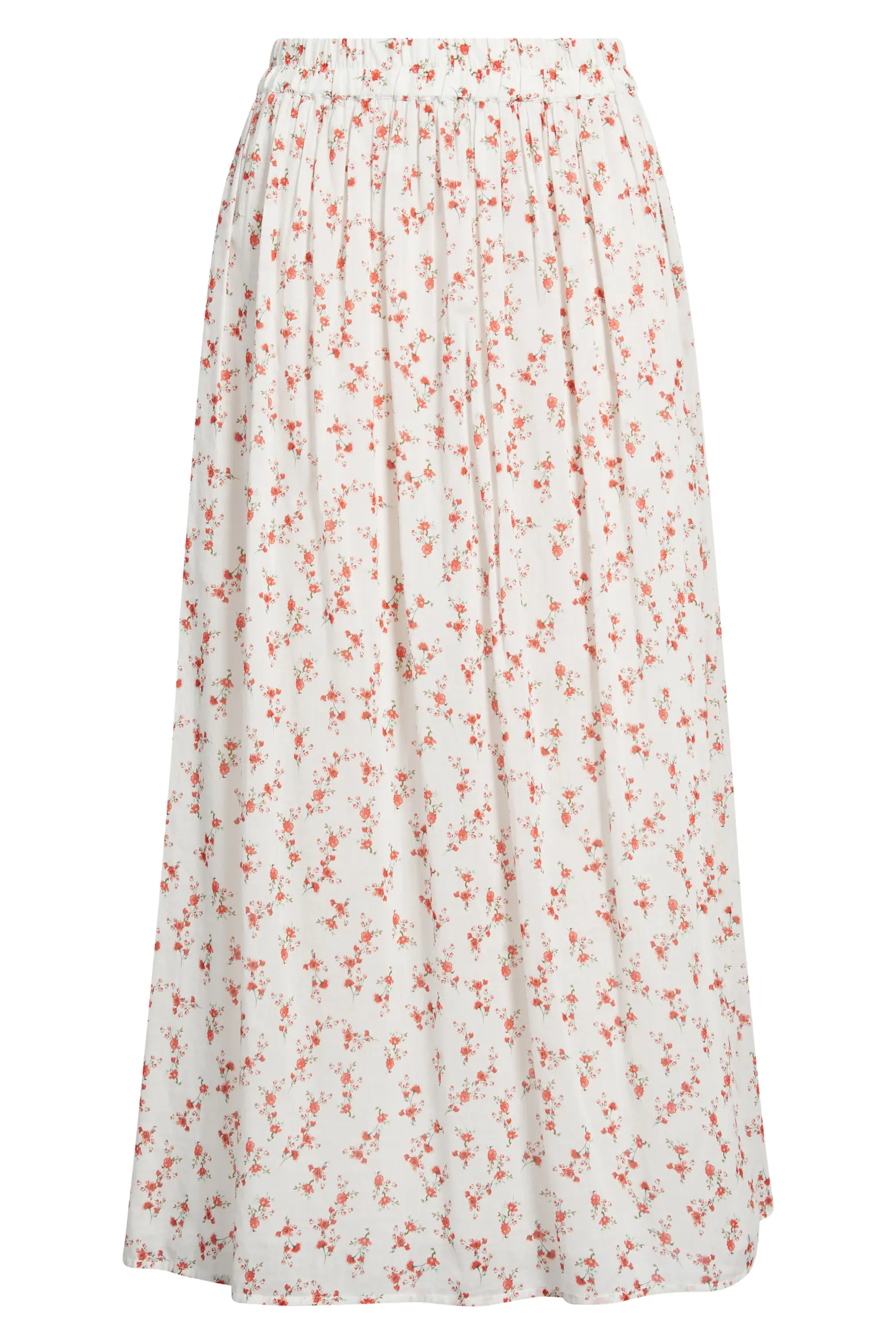
4. Use four complete outfit formulas
Stripe + floral
Broad striped shirt + small floral midi skirt + solid loafer + plain bag.
Repeat one stripe color in the floral; let the skirt own more area.
Stripe + animal pattern
Fine striped knit + solid trouser + leopard belt or flat + quiet tote.
The animal pattern occupies the smallest field. Brown, black, or tan can link the accessory to the base.
Check + dot
Windowpane blazer + tiny-dot blouse + straight jean + single-color shoe.
Open the blazer so compact dots remain a narrow center panel.
Print + patterned accessory
Printed dress + striped scarf + plain jacket + defined sandal.
Tie the scarf at the bag or neck, not both. Its smaller area makes the pairing easier to read.
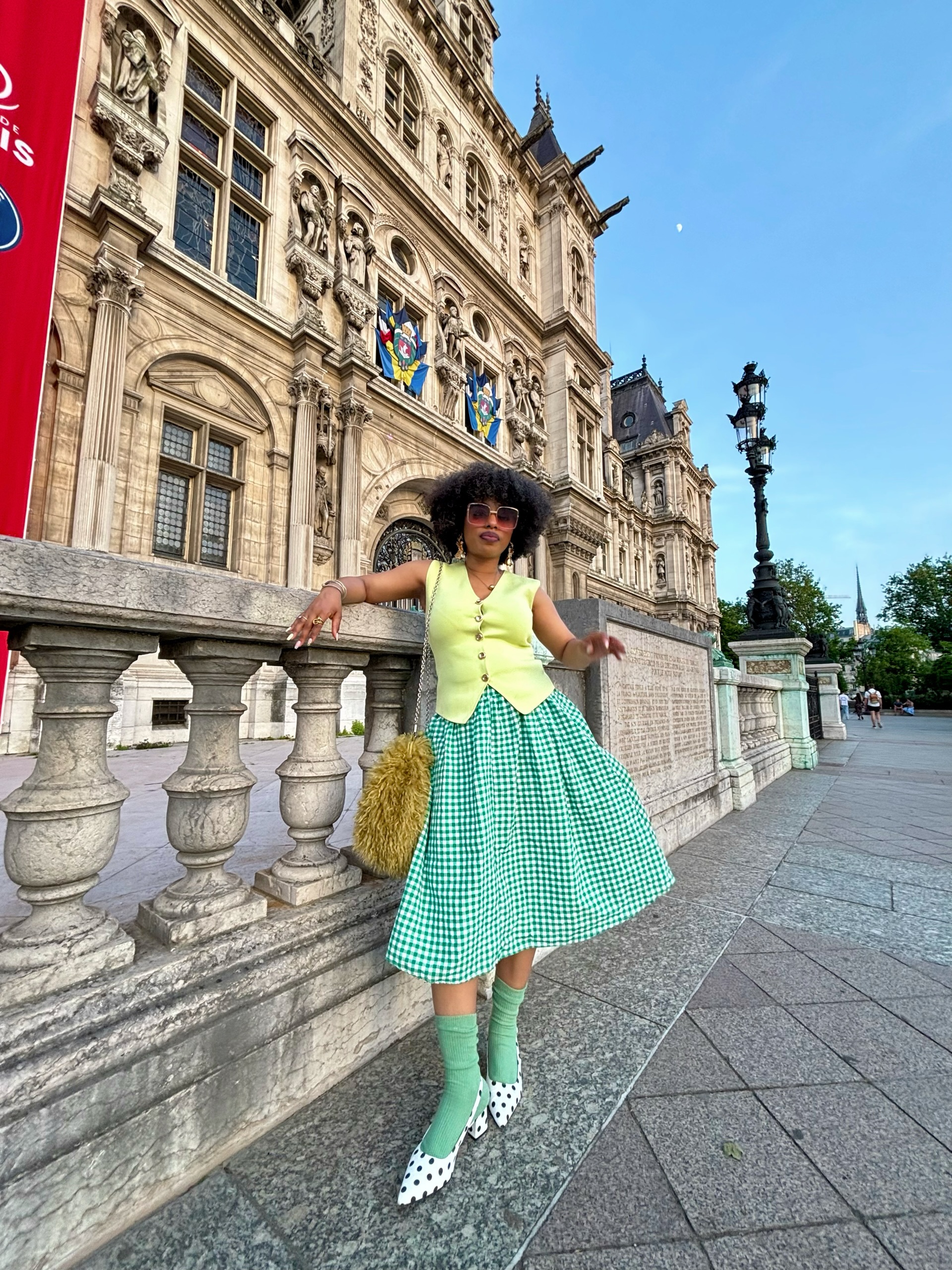
Christopher John Rogers’s Fall 2026 report documents gradient dots. A Vogue Pre-Fall 2026 synthesis records stripes and plaid across Gucci, Dior, and Valentino. These are dated references, not templates.
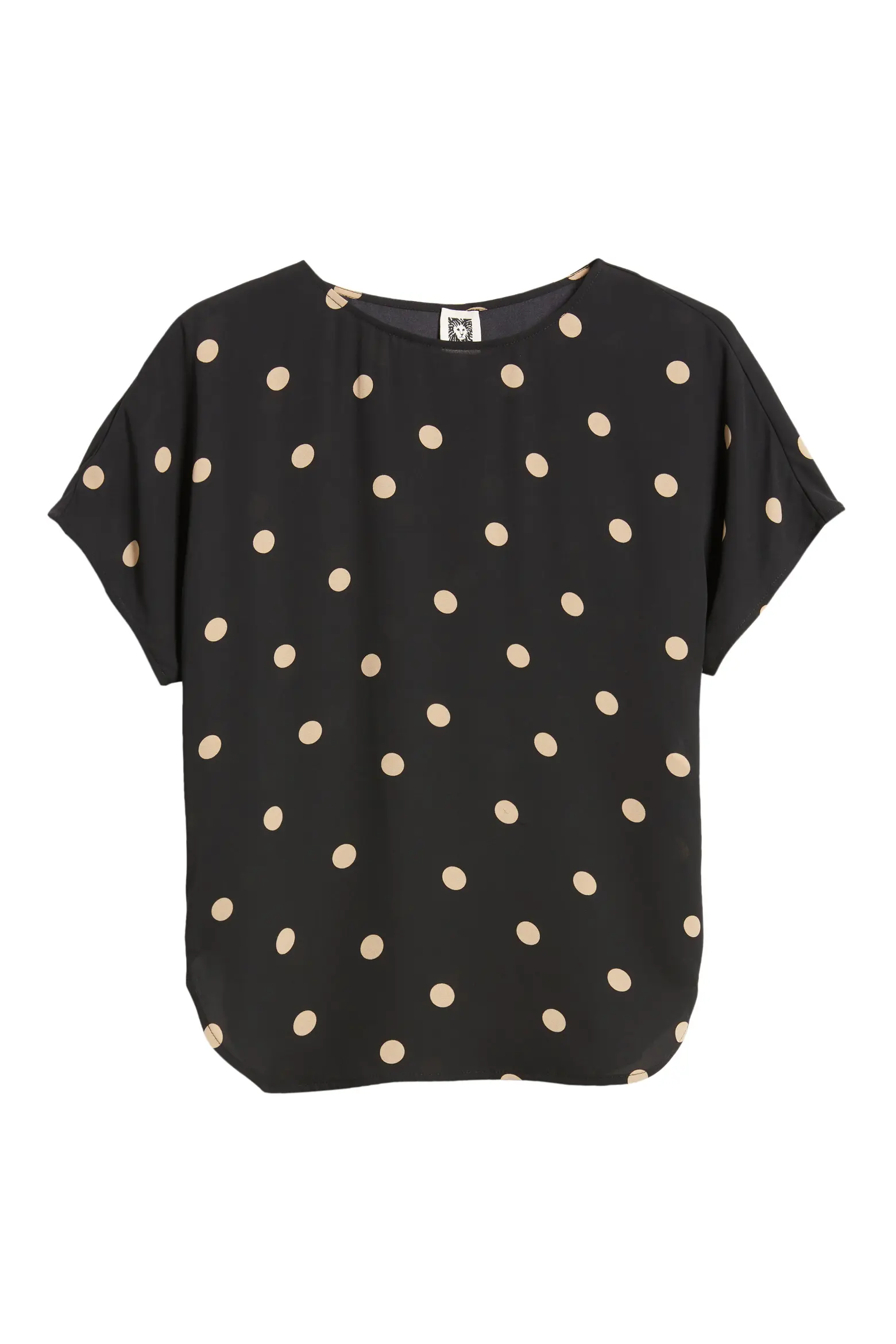
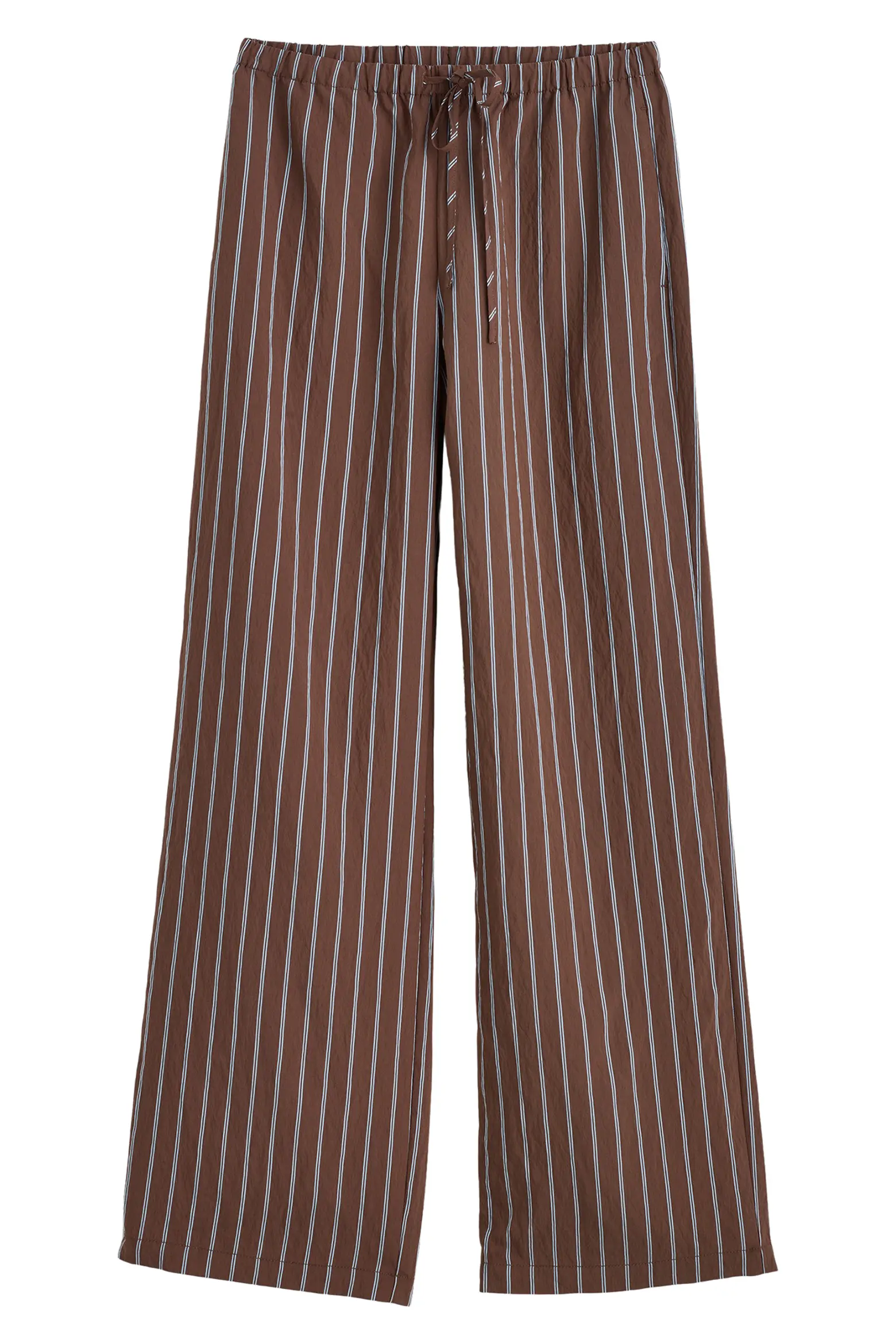
Madewell Stripe Pull-On Pants
$98 in the July 14 retail snapshot
Check live stripe colors, price, fabric details, size, and stock before pairing.
Evidence check: dates, surfaces, and solid buffers
- May 28, 2026: Diana Walker, visual content designer at Adobe Express, connected color with hierarchy and cohesion.
- July 13, 2026: Vogue documented Givenchy pinstripes with leopard shearling, Chanel printed chainmail and tweed, and Christopher John Rogers gradient dots.
- Pre-Fall 2026: Vogue recorded rugby stripes and plaid across Gucci, Dior, and Valentino.
- July 14, 2026: a Nordstrom snapshot listed a Madewell cotton tee at $48, Vince wool-blend sweater at $149, Madewell poplin shirt at $88, Reformation knit top at $98, and COS silk tee at $79. These are color-buffer references, not required purchases.
- July 14, 2026: Nordstrom also listed a COS cotton-modal tee at $29, Open Edit linen-blend top at $49.50, Reformation knit top at $35, Eileen Fisher cotton shirt dress at $198, and Beyond Yoga linen pants at $128.
- Current-source range: Madewell stripe pants were $98; cited solid buffers ran from the $29 COS tee to the $198 Eileen Fisher shirt dress.
5. Adjust the formula for real constraints
| Constraint | Keep | Change |
|---|---|---|
| Conservative office | Pinstripe or windowpane lead. | Limit the second print to a blouse, scarf, or sock under policy. |
| Hot weather | Two light fabrics and one repeated color. | Use open space in one motif so the outfit feels less dense. |
| Cold weather | Printed knit or coat as the lead. | Let the second pattern show at a cuff, collar, or bag. |
| Low-contrast preference | Different scales. | Choose related browns, blues, grays, or creams. |
| Bold setting | Two saturated prints. | Keep the shoe and bag inside colors already present. |
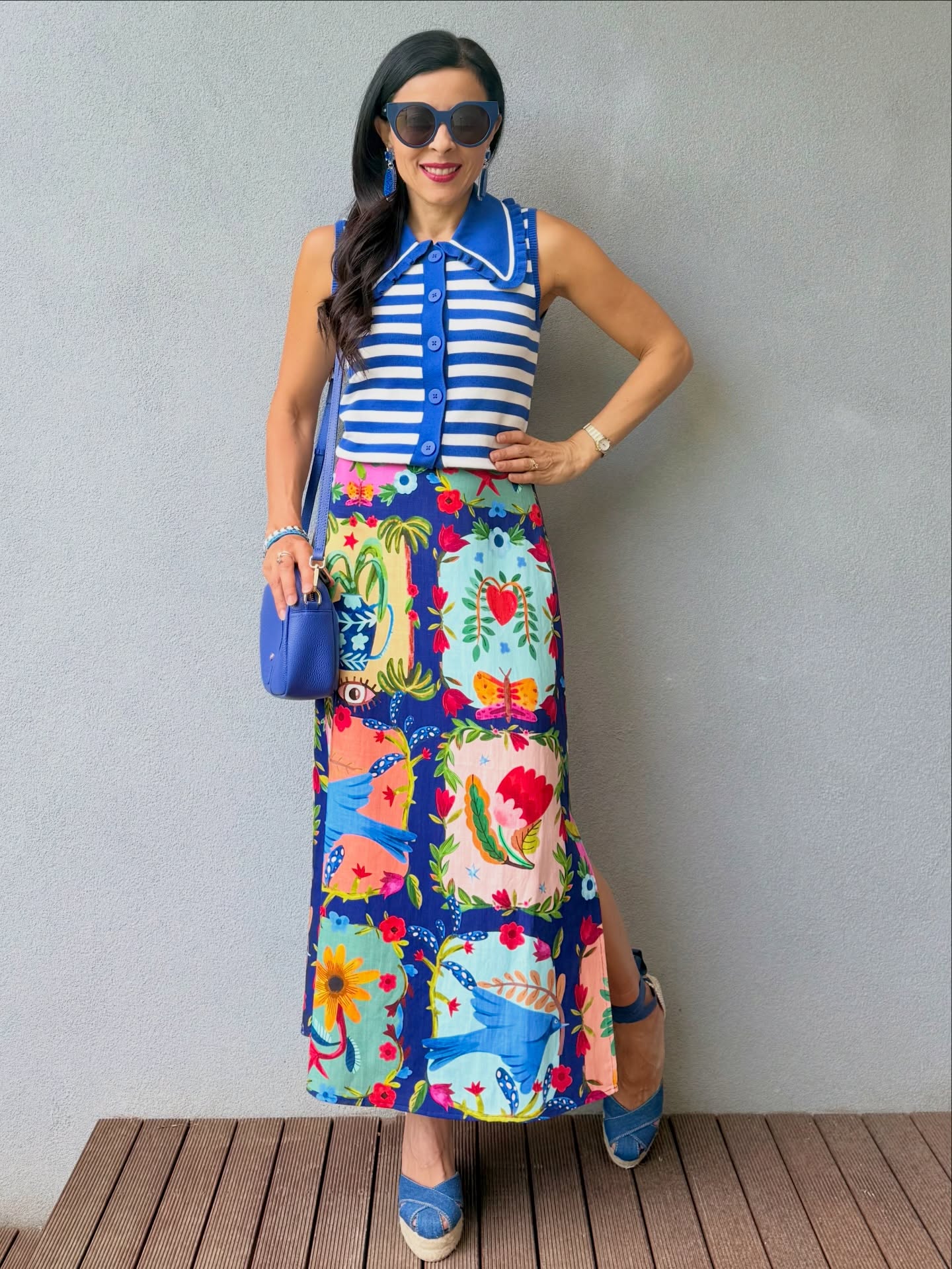
Body labels do not set motif placement. A small print can dominate a full coat; a large one can recede on a scarf. Distortion at a seam, pocket, or joint calls for another cut, size, or motif placement.
6. Replace the fixes that create more noise
Two saturated prints at the same scale may resist hierarchy. Wearing one alone can be sharper.
7. The rule to remember
One lead print, one supporting print, one bridge. Change scale, visible area, contrast, or repeated color until the pecking order is obvious. If neither print will yield, separate them.
Pricing note: listed prices reflect retailer snapshots checked July 14, 2026; price, color, size, and stock can change. ChicAire’s editorial team selected these references from the cited pages.
ChicAire editors independently research and select products. If you buy through our links, we may earn a commission.