The couture shape file
What Fall 2026 couture says about fashion's coming silhouette
Corsets returned, volume moved away from the body, and technical materials made structure look light. The useful signal is not one dramatic gown. It is the tension between control and release.
 By Celeste Avery
Couture rarely transfers to an everyday wardrobe stitch for stitch. It does, however, establish which proportions designers are willing to push, repeat, and develop.
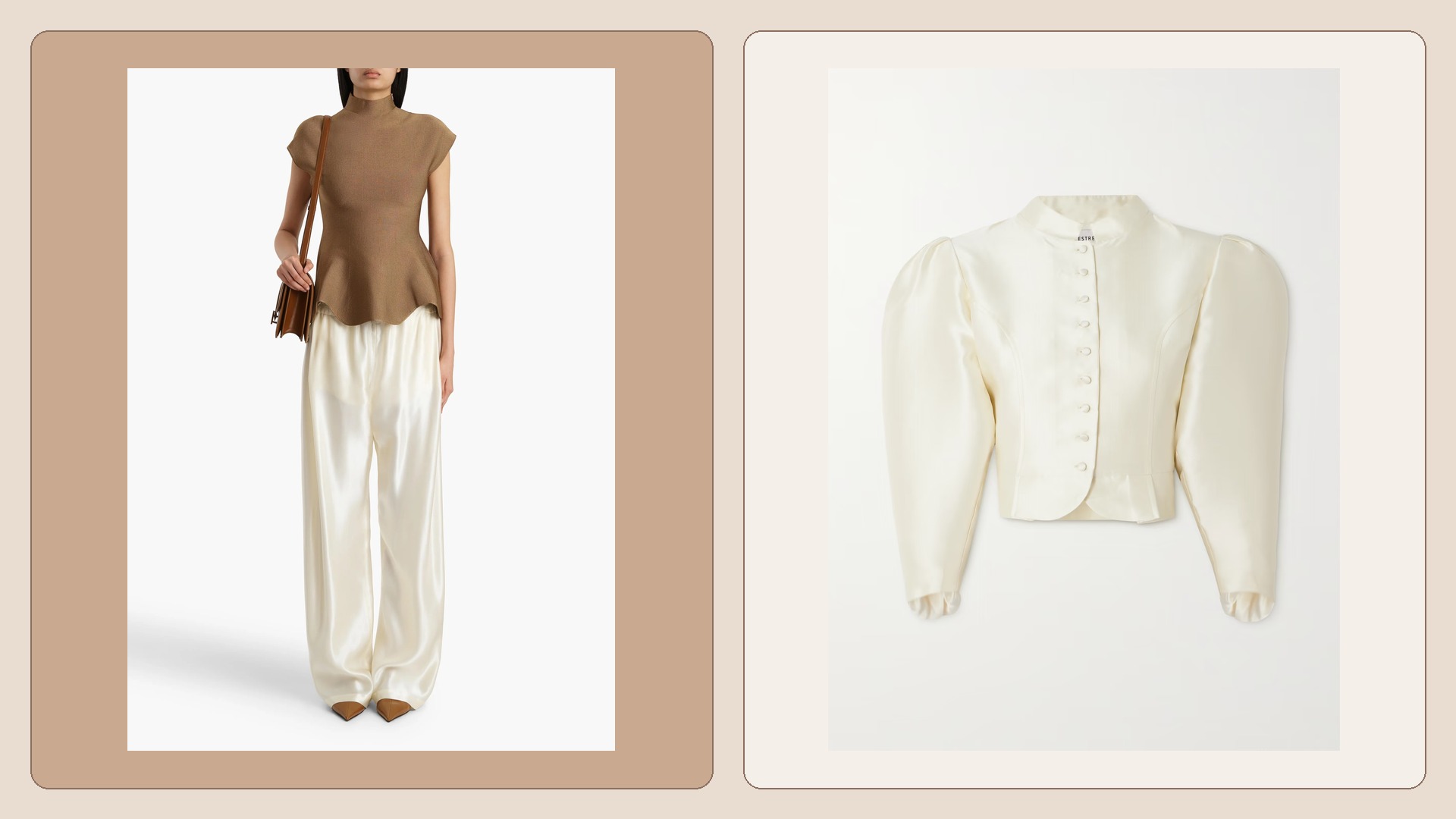
The signal: shape is doing the talking again
The question after the Fall 2026 couture shows is not whether corsets are “back.” Corsetry, drape, and large volume never disappeared from couture. The sharper question is where designers placed that structure and what they allowed to remain free.
According to a report published by Vogue on July 10, 2026, extreme corsetry, bubble forms, pleating, openwork textiles, wrap constructions, and airy materials recurred across the week. That breadth clears a useful evidence threshold: the idea appeared at multiple houses and through several techniques, rather than as one isolated costume.
This report covers the July 2026 collections and treats repetition as a runway signal, not a sales forecast. Couture offers direction at its most amplified. Ready-to-wear usually edits the scale, price, and engineering before an idea reaches a wider market.
Control
Hard corsets, molded torso pieces, and engineered waists redraw the center of the body.
Release
Bubble skirts, capes, trains, and side volume create distance between cloth and frame.
Light
Organza, pleats, transparency, and new materials reduce the visual weight of construction.
The runway evidence is unusually specific
The repetition becomes clearer when the evidence is separated by date, maker, material, and construction. Each line below comes from a collection page or the cross-show Vogue report in the research ledger.
- July 6 · Schiaparelli
Daniel Roseberry formed silicone into satin-like sheets, boleros, and hard corsets. - July 6 · Schiaparelli
Vogue Runway recorded luminous breastplates, hand-applied feathers, and molded body contours. - July 6 · Schiaparelli
The Abyss paired future-facing silicone with freeze-dried hydrangea embroidery. - July 6 · Dior
Jonathan Anderson, creative director at Dior, responded to Lynda Benglis's sculpture. - July 8 · Dior
LVMH identified pleating, knotting, draping, and embellishment that resembled paper or plaster. - July 8 · Dior
Metallic fabric, beading, rock crystal, and antique chintz gave sculpture a decorative surface. - July 6 · Iris Van Herpen
Helix Nebula combined plasma, glass tubes, illusion tulle, and 30,000 hand-blown spheres. - July 6 · Iris Van Herpen
A second technical piece held a Lichtenberg figure inside an acrylic dress form. - July 6 · Iris Van Herpen
Metallic organza, fine pleating, and laser-cut velvet created lighter surrounding shapes. - July 7 · Chanel
The official Fall Winter 2026 Haute Couture sequence contains 63 complete looks. - July 7 · Chanel
Associated Press documented Matthieu Blazy's second couture show at the Grand Palais. - July 8 · Balenciaga
Pierpaolo Piccioli paired flowing fabric and transparency with an architectural upper body. - July 8 · Balenciaga
Neo-Gazar worked as outer cloth and internal support while limiting conventional reinforcement. - July 8 · Balenciaga
Cashmere garments began with 3D body scans and individualized leather working forms. - July 8 · Balenciaga
Wool, silk, feathers, crystal mesh, Amsilk, and Neo-Gazar broadened the material register. - July 8 · Jean Paul Gaultier
Duran Lantink rebuilt a 3D-scanned torso with internal corsetry and displaced structure. - July 8 · Jean Paul Gaultier
Satin and feather-covered tubes sent tulle away from the body in two directions. - July 8 · Jean Paul Gaultier
Pink micro-pleating and a millefeuille coat showed quieter control beside the torso experiments. - July 10 · Vogue
Alexis Mabille presented convertible clothes; Viktor & Rolf contrasted plain and ornate states. - July 10 · Vogue
Armani Privé, Standing Ground, Rahul Mishra, and ArdAzAei widened the cross-show sample.
Read together, these observations separate three systems: torso control, volume placed away from the frame, and cloth engineered to appear light. No single house owns the direction, and no single technique explains it.
Three versions will matter beyond couture
The first is the defined center. This does not require a rigid waist trainer. A curved jacket seam, basque panel, peplum, or contrast belt can create the same visual punctuation. The transferable idea is a clear center with less restriction.
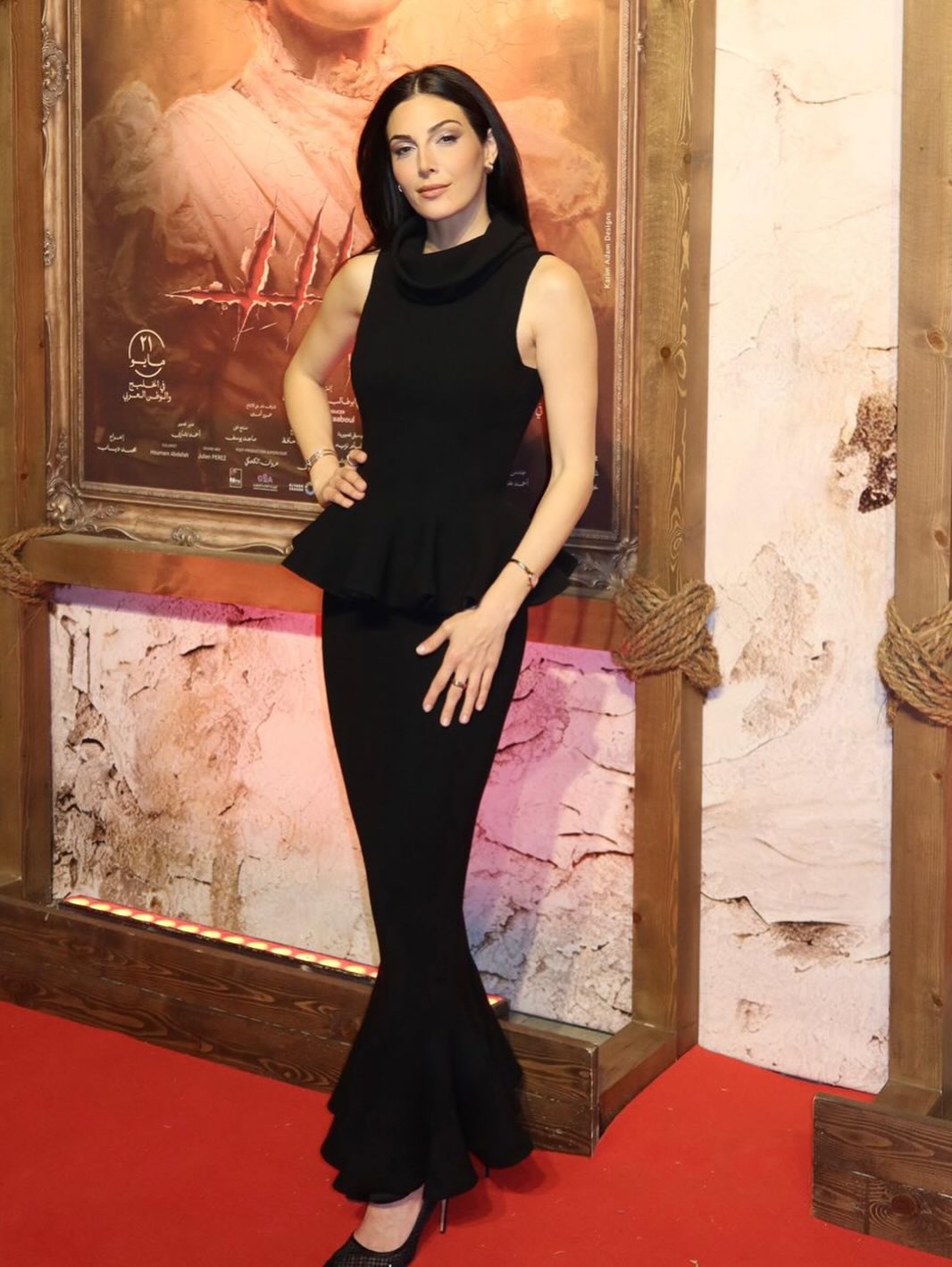
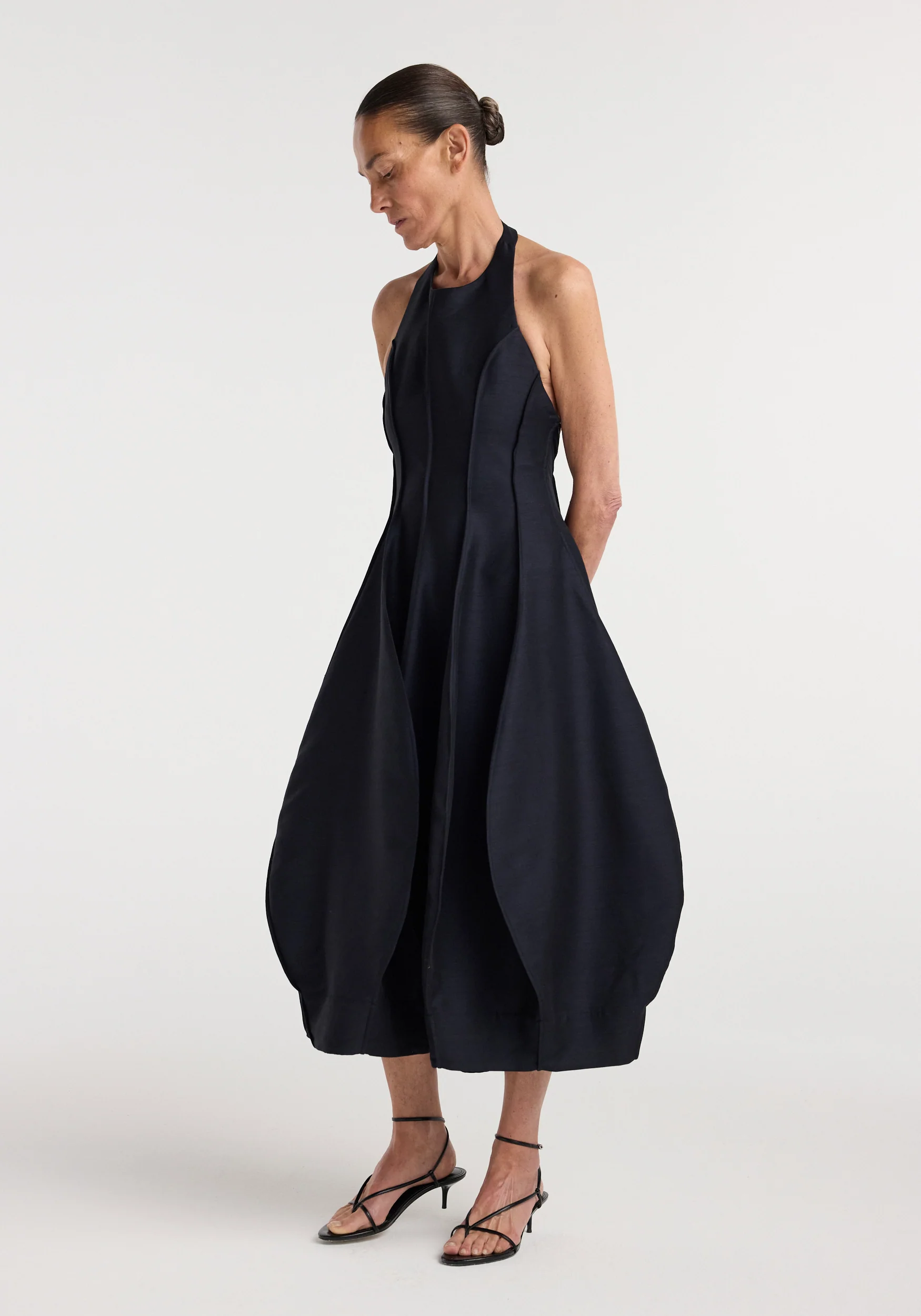
The second is volume with an exit route. Fall's bubbles and large skirts look theatrical on a couture runway, but the commercial version can be a rounded sleeve, a cocoon back, or trousers with volume at the side seam. The important distinction is placement. Volume concentrated in one zone reads deliberate; volume everywhere can swallow the person inside it.
The third is visible lightness. Fine pleats, openwork layers, transparent panels, and cloth that holds a curve without looking dense offer a way to make occasion dressing feel less fixed. This may prove more influential than literal corsetry because it works across blouses, skirts, jackets, and evening pieces.
The new silhouette is not simply bigger or tighter. It is engineered at one point and released at another.
How to translate it for different wardrobes
A minimal wardrobe needs one altered proportion, not a full character change. Start with a jacket that curves at the waist over straight trousers, or a clean column dress with a rounded sleeve. Keep the palette narrow so the construction remains legible.
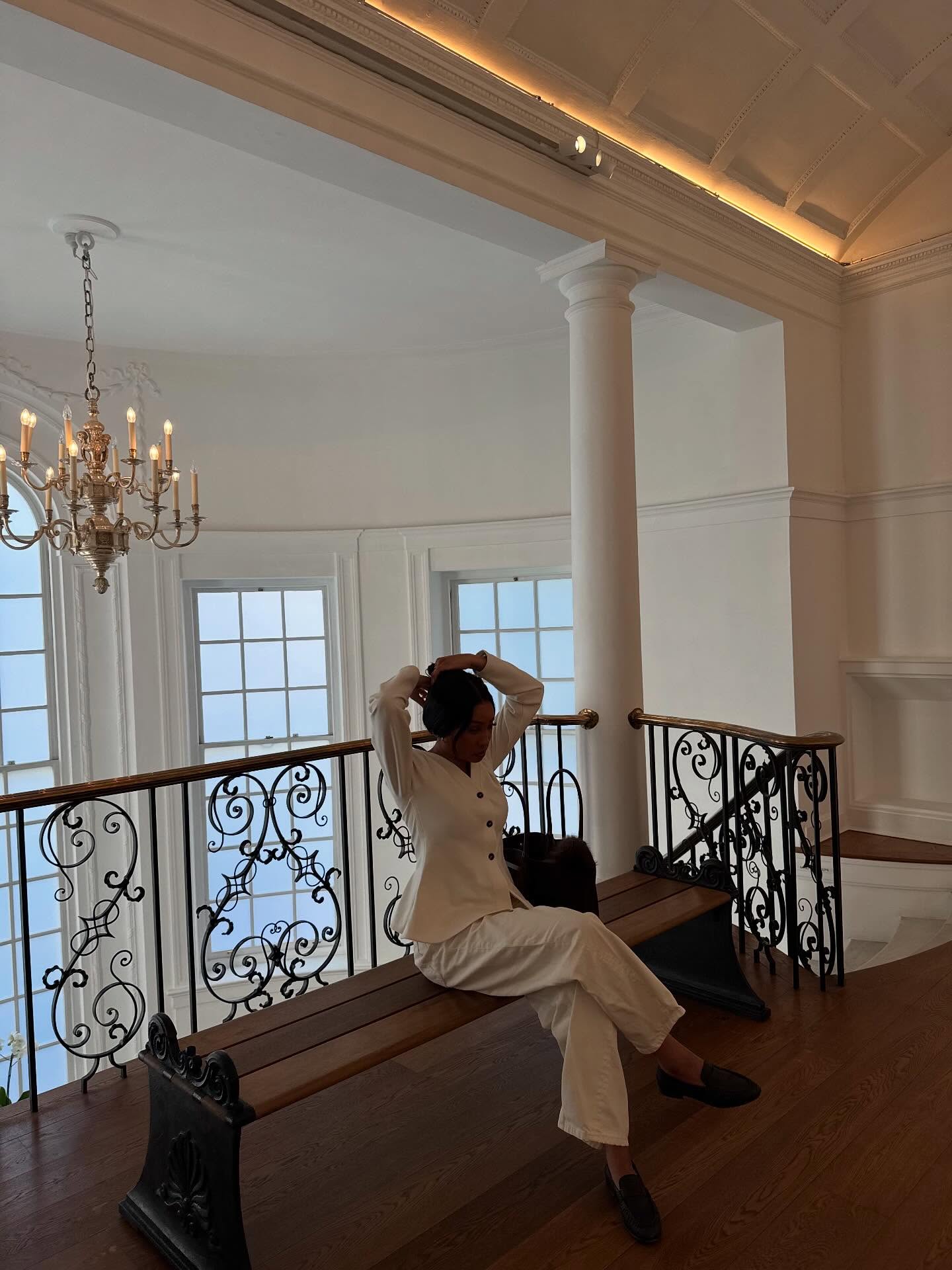
A romantic wardrobe can work with pleats, sheer overlays, and a soft basque. Pair a fuller skirt with a compact knit rather than another floating layer. That contrast preserves the couture logic without copying a gown.
A tailoring-led wardrobe has the clearest route. Look for shaped side panels, a higher button position, or a coat with volume released from the back. Denim can carry the same idea through a curved leg or exaggerated side seam, a path already explored by couturiers who treated humble blue cloth as a technical material.
For evening, choose between the corset signal and the featherweight signal. Combining a hard bodice, bubble skirt, feathers, and luminous finish can turn reference into costume. One strong construction decision usually makes a more durable purchase.
Where to invest, and where to keep the experiment small
Investment makes sense when the shape comes from pattern cutting: a jacket with a controlled waist, a coat with a stable cocoon back, or trousers whose side volume is built into the seam. Those features are harder to reproduce with styling alone and can remain useful after the most dramatic runway versions recede.
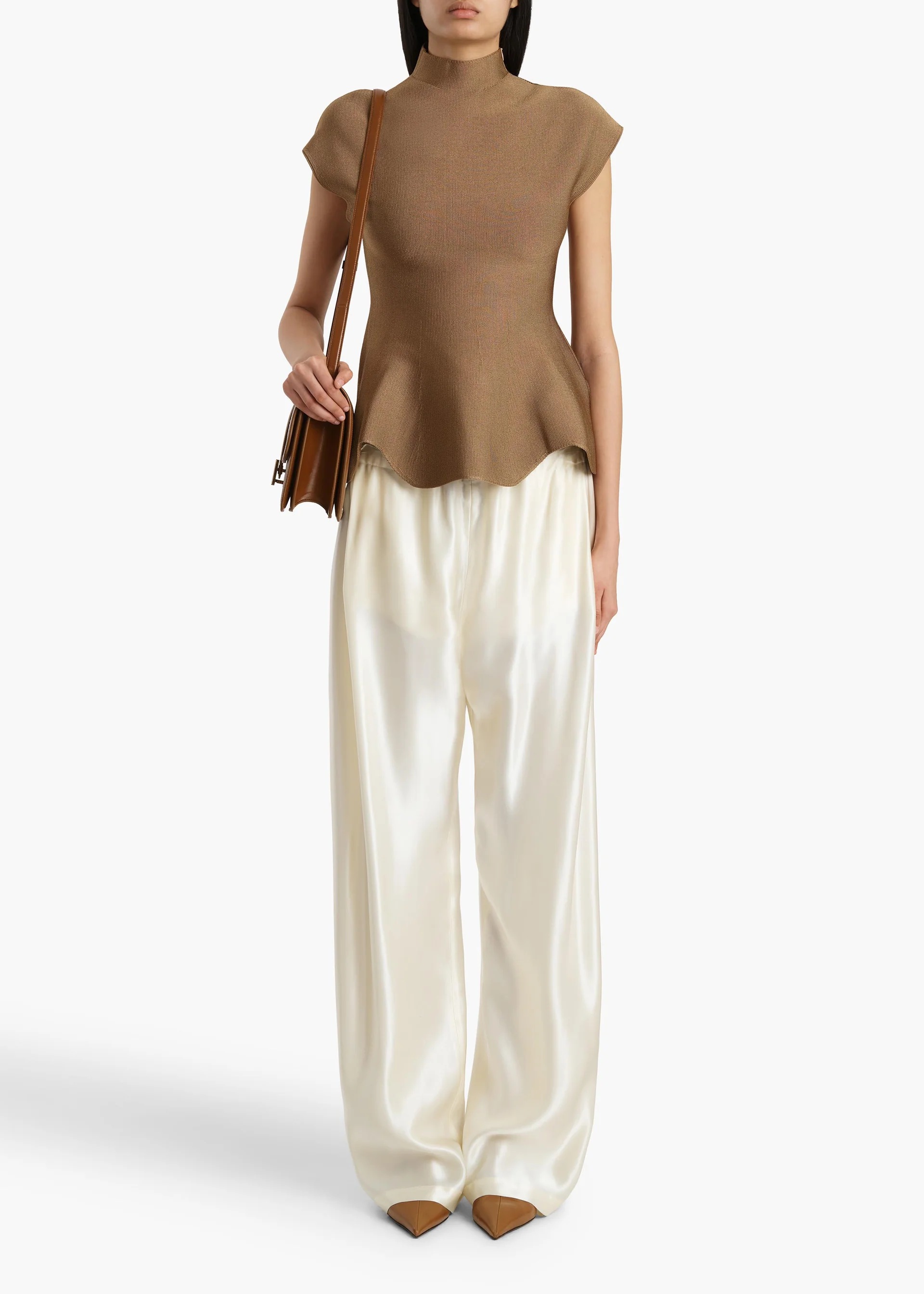
Experiment cheaply with detachable belts, a tulle underskirt, pleated accessories, or a secondhand blouse with a shaped hem. These deliver the silhouette cue without asking an entire wardrobe to orbit one proportion.
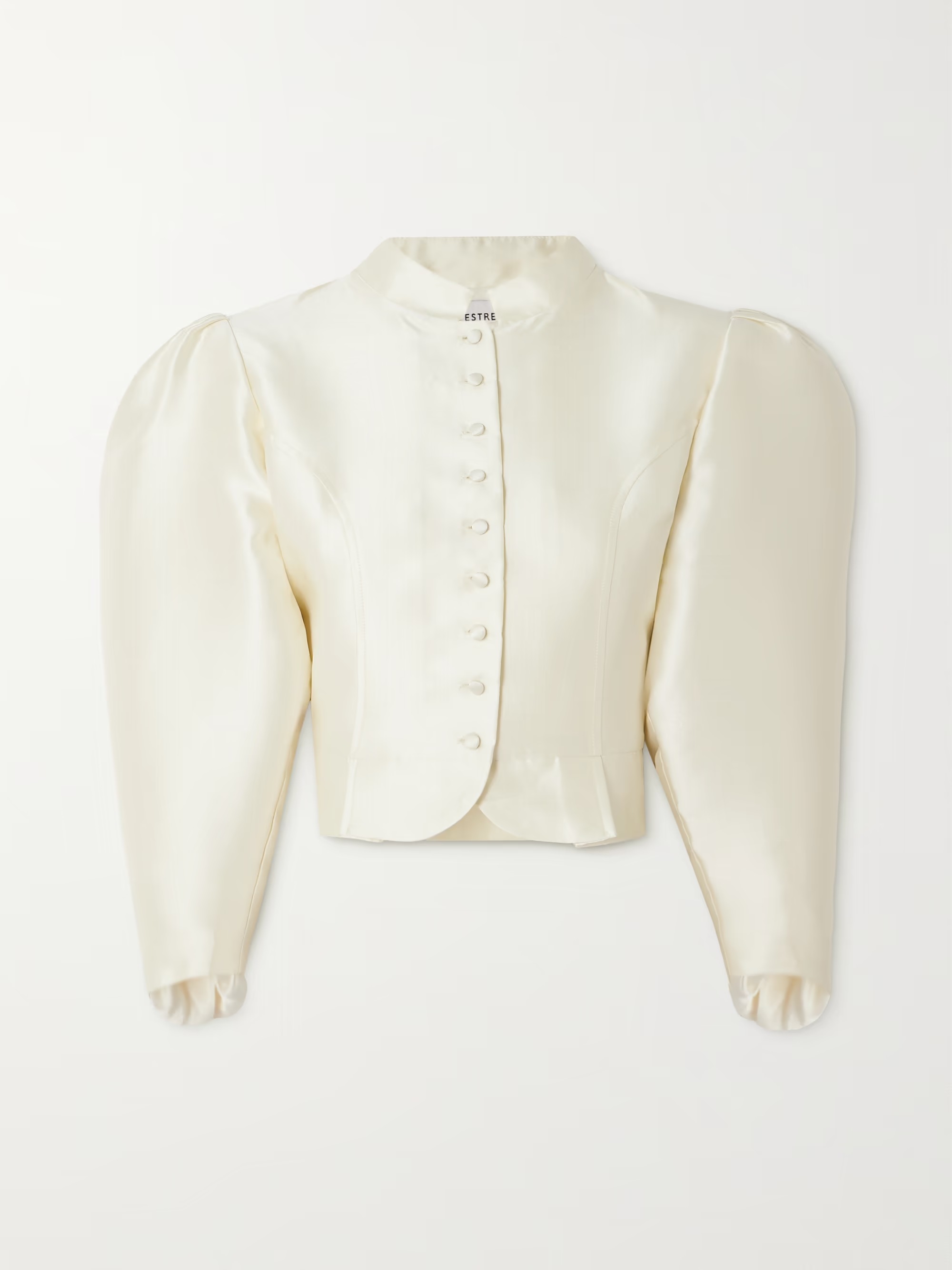
A July 13 Vogue retail edit shows how the same ideas are already being simplified. The comparison spans shaped jackets, waist emphasis, rounded dresses, and expanded trousers at several price levels:
- July 13 · Khaite Andra top · $1,880 at Khaite
- July 13 · Destree Amoako faille jacket · $610 at Net-a-Porter
- July 13 · Róhe tulip dress · $1,245 at Róhe
- July 13 · Aflalo Elena pants · $1,100 at Aflalo
- July 13 · Heirlome Marianne asymmetric top · $1,290 at Net-a-Porter
- July 13 · Ashlyn Suzu sweater skirt · $1,080 at Nordstrom
- July 13 · Balenciaga Hourglass jacket · $3,550 at Balenciaga
- July 13 · Dior cropped jacket · $7,200 at Dior
- July 13 · Kallmeyer James jacket · $1,190 at Kallmeyer
- July 13 · Dior pleated miniskirt · $4,200 at Dior
The July price range is broad but not inexpensive: Destree $610, Ashlyn $1,080, Aflalo $1,100, Kallmeyer $1,190, Róhe $1,245, Heirlome $1,290, Khaite $1,880, Balenciaga $3,550, Dior $4,200, and Dior $7,200. That spread favors studying construction before treating any runway echo as an automatic investment.
Khaite Andra top
A retail-scale peplum proposition that concentrates the season's shape around the waist.
$1,880 at Vogue's July 13 snapshot
Visit KhaiteDestree Amoako cropped faille jacket
A compact, shaped jacket that makes the defined center legible without couture-scale volume.
$610 at Vogue's July 13 snapshot
View current Destree jacketsPrice note: listed prices reflect Vogue's July 13, 2026 snapshot and may change. These are comparison points, not fit or quality recommendations, and no cost-per-wear claim follows from runway evidence.
The catch: spectacle can hide the usable idea
The downside of a silhouette season is obvious. Extreme shaping photographs well, but it can reduce bodies to props or make movement secondary to an image. Fall 2026's molded torsos and giant volumes invite that criticism, particularly when the body is treated as something to correct.
There is also a saturation risk. Cheap copies may reproduce only the peplum, bubble, or corset outline while losing the light construction that made the couture examples interesting. If every top gains a flared hem by spring, the most literal version will date first.
Lightness offers the stronger longevity case. Dior's fold-based sculpture, Balenciaga's material-led support, Iris van Herpen's fine pleating, and the season's wrap constructions all point toward clothes that create shape while allowing space. That principle can survive after a specific bubble skirt fades.
The bottom-line forecast
Expect a defined waist, curved side volume, and airy structure to move into Fall 2026 occasionwear first, then into jackets, blouses, and denim. Corsets will remain the loudest headline, but the more useful development is selective engineering: hold one point, release the rest.
Watch the subsequent two ready-to-wear seasons for shaped seams, compact tops over broad skirts, and outerwear built away from the back. Repetition there would turn couture's July experiment into a wider silhouette cycle. Until then, treat this as a strong design signal with an unmeasured retail outcome.
ChicAire editors independently research and select products. If you buy through our links, we may earn a commission.