Brand · German watchmaking, Schramberg, est. 1861

Junghans

Once the largest watch factory in the world — and forever the home of Max Bill's Bauhaus-clean dials.

Junghans
Re-checked daily
Erhard Junghans founded the firm in Schramberg in 1861, and by 1903 it had grown into the largest watch and clock factory in the world, with over 3,000 employees.

American production techniques — learned by Erhard's son Arthur in the United States — let Junghans make affordable, popular timepieces for the German public, and the eight-pointed star it adopted as a gear-wheel symbol is still in use. By 1956 it was the third-largest chronometer manufacturer in the world, behind only Rolex and Omega.

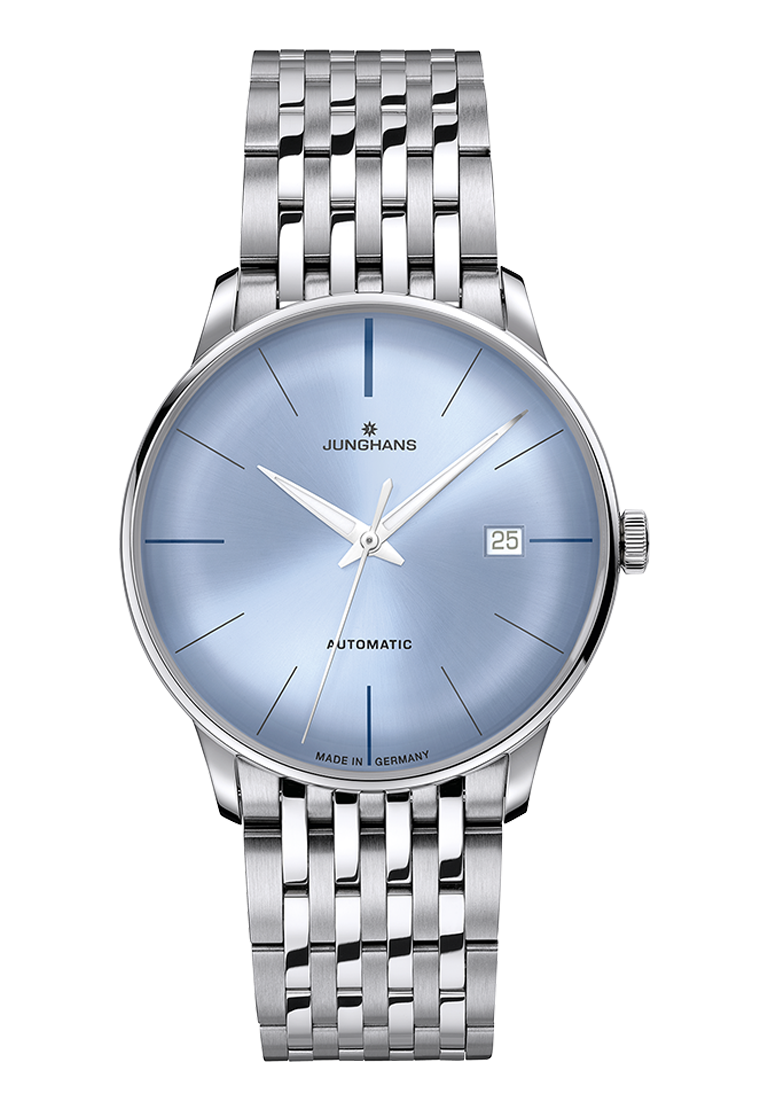
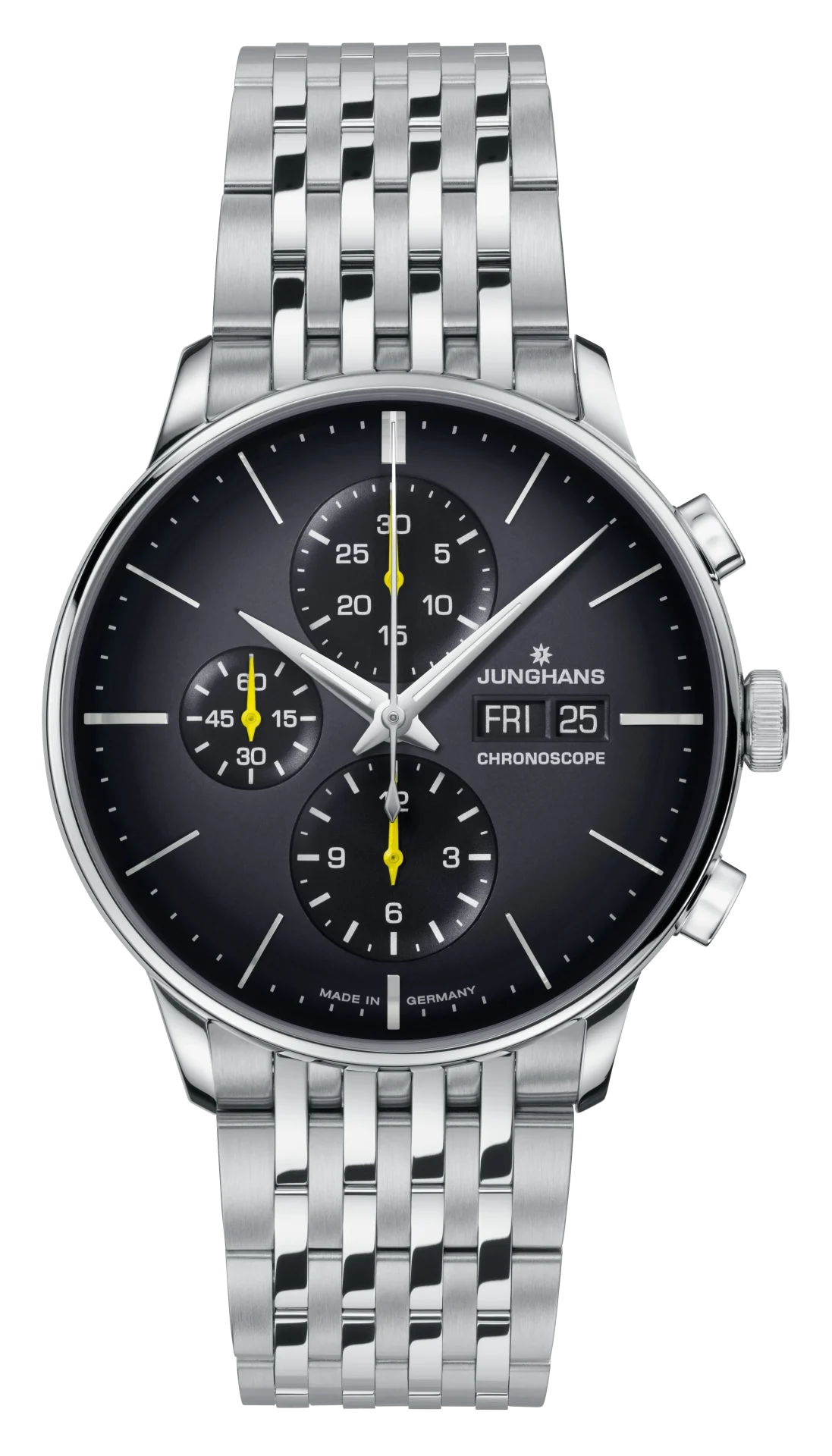
Its defining chapter began in the 1950s, when Bauhaus-trained designer Max Bill created products for the firm — the teardrop Kitchen Clock now in the Museum of Modern Art, and a series of watches first launched in 1961. Many of Junghans's best-selling watches today are still based on his work. The company served as official timekeeper of the 1972 Munich Olympics and is owned by businessman Hans-Jochem Stein.
Junghans shopping FAQ

Is the Junghans Max Bill worth it?+

The Max Bill is the watch that defines Junghans today, and many of the brand's best-selling models are still based on the designs the Bauhaus-trained Max Bill created for the firm. Worth, here, is mostly about whether the clean Bauhaus aesthetic speaks to you, because that minimalism is the whole point. If you love understated, design-led German watches with real pedigree, it delivers.

Is Junghans a good quality watch?+

Junghans has deep credentials: in 1903 it was the largest watch and clock factory in the world, and by 1956 it ranked as the third largest chronometer manufacturer, behind only Rolex and Omega. That heritage of scale and precision still informs the brand. Made in Schramberg in southwest Germany, its watches are respected for reliable timekeeping and disciplined design.

How does the Junghans Max Bill compare to Nomos?+

Both are touchstones of Bauhaus-inspired German watchmaking, so the comparison is natural. The Max Bill's appeal rests on genuine design heritage: it descends from the work the Bauhaus-trained Max Bill did for Junghans starting in the 1950s, with his first watch launching in 1961. Choose the Max Bill if that authentic design lineage and a more attainable price matter most to you.

Who was Max Bill and why does Junghans bear his name?+

Max Bill was a Bauhaus-trained designer who began creating products for Junghans in the 1950s. He first made the teardrop-shaped "Kitchen Clock with Timer," now in the collection of The Museum of Modern Art, then a series of watches beginning in 1961. His long relationship with the firm shaped its identity so deeply that many of Junghans' best-sellers today are still based on his designs.

Where are Junghans watches made?+

Junghans is based in the town of Schramberg, in the district of Rottweil in Baden-Württemberg, southwest Germany. The company has been rooted there since its founding in 1861. That long-standing home is part of its identity as a maker of fine German watches and clocks.

Who founded Junghans and when?+

Erhard Junghans created the company on 15 April 1861 in Schramberg, founding it as Junghans und Tobler with his brother-in-law Jakob Zeller-Tobler. The first Junghans watches appeared in 1866. After Erhard's death his wife Luise took over, followed by their sons Erhard Jr. and Arthur, the latter of whom brought back American production techniques that made the firm's timepieces affordable and popular.

What does the Junghans star logo mean?+

The United States inspired Junghans to first adopt a five-pointed star as its logo, a nod to Arthur Junghans' time learning American manufacturing methods. That was soon replaced by the eight-pointed star, intended to symbolize a gear wheel, which the brand still uses today. It is one of the more quietly meaningful marks in watchmaking.

What is Junghans best known for?+

Beyond the Bauhaus Max Bill line, Junghans has a strong record of innovation. It was the official timekeeper for the 1972 Summer Olympics in Munich, introduced the world's first radio-controlled table clock in the late 1980s, and in 1990 released the first radio-controlled wristwatch, the MEGA 1, designed by Hartmut Esslinger's firm Frog Design. In 1995 it even presented a solar-powered watch with a ceramic case.

Who owns Junghans now?+

Junghans is owned by the businessman and CDU politician Hans-Jochem Stein. After its previous owner, Egana Goldpfeil of Hong Kong, went bankrupt in 2008 along with Junghans itself, Stein acquired the company and its remaining 85 employees. Local ownership has kept the brand anchored in Schramberg.

Did Junghans make more than just watches?+

Yes. Junghans has a long history in clocks as well as watches, and it built timepieces for both the civilian market and the German air force over the decades. There is also a defence side: Junghans Microtec, spun out as a separate entity in 1999, produces fuze technology, a reminder of how broad the company's engineering reach became. The wristwatches remain the heart of the brand for collectors.