Brand · German watchmaking, Frankfurt, est. 1961

Sinn

Founded by a Luftwaffe pilot, proven in space and at 2,000 metres — instrument watches with no use for decoration.

Sinn
Re-checked daily
Sinn was founded in Frankfurt am Main in 1961 by flight instructor and Luftwaffe pilot Helmut Sinn (1916–2018), under the name Helmut Sinn Spezialuhren.

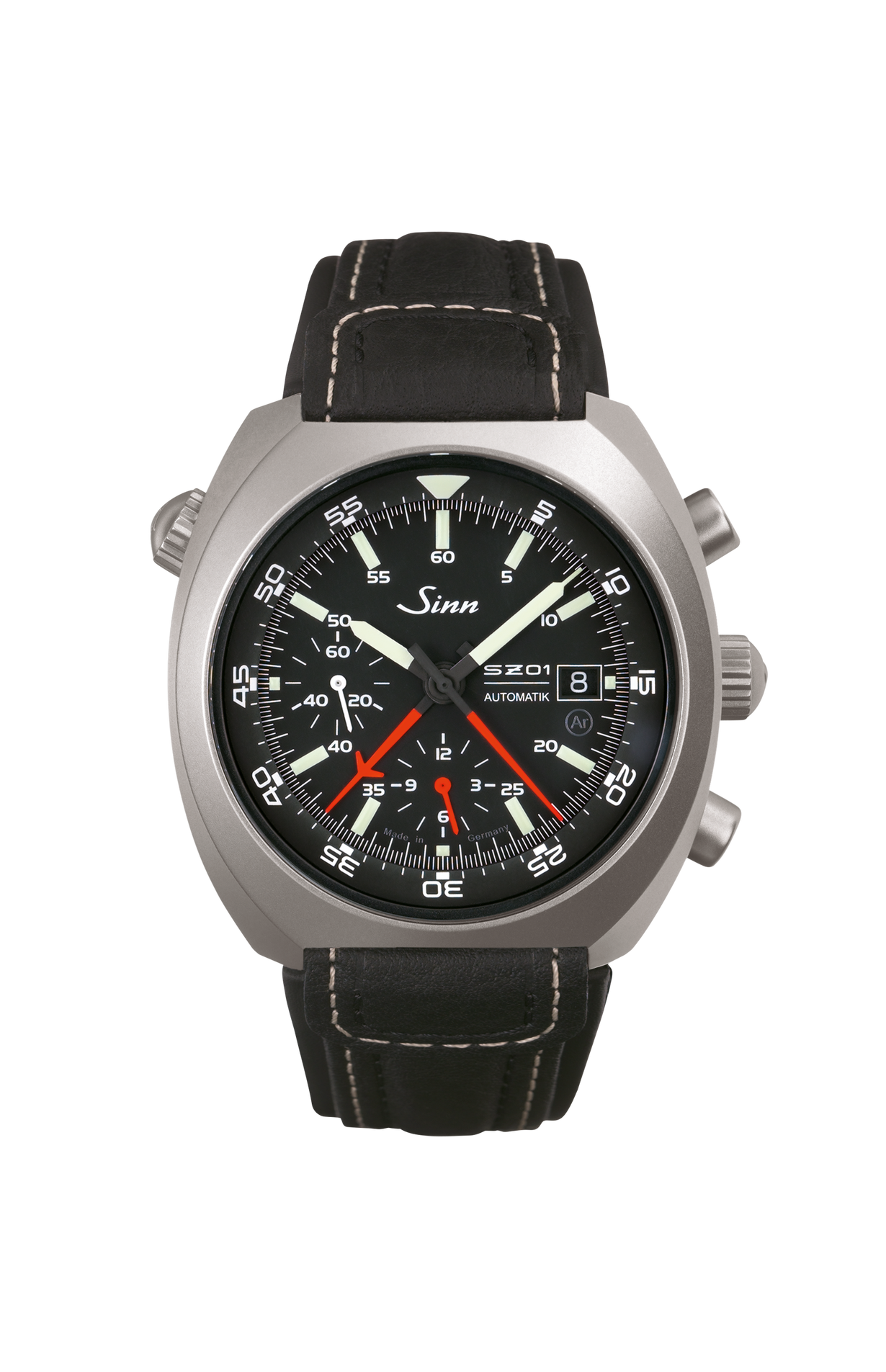
From the start the company built navigation cockpit clocks and pilot chronographs to Helmut Sinn's own specifications, and sold them directly — bypassing retailers to keep prices honest. In 1985 the Sinn 140 S chronograph was among the first automatic chronographs used in space, worn by physicist-astronaut Reinhard Furrer on the Spacelab D1 mission.

Helmut Sinn sold the company to Lothar Schmidt in 1994, who pushed the engineering further into mission timers for professionals — special forces, divers, pilots, and the German federal police unit GSG 9. The watches are defined by hard specs, not flourishes: pressure resistance past 20 bar, anti-magnetism to DIN 8309, German submarine steel and reliable function from minus 45 to plus 80 degrees Celsius.
The Sinn pieces worth knowing

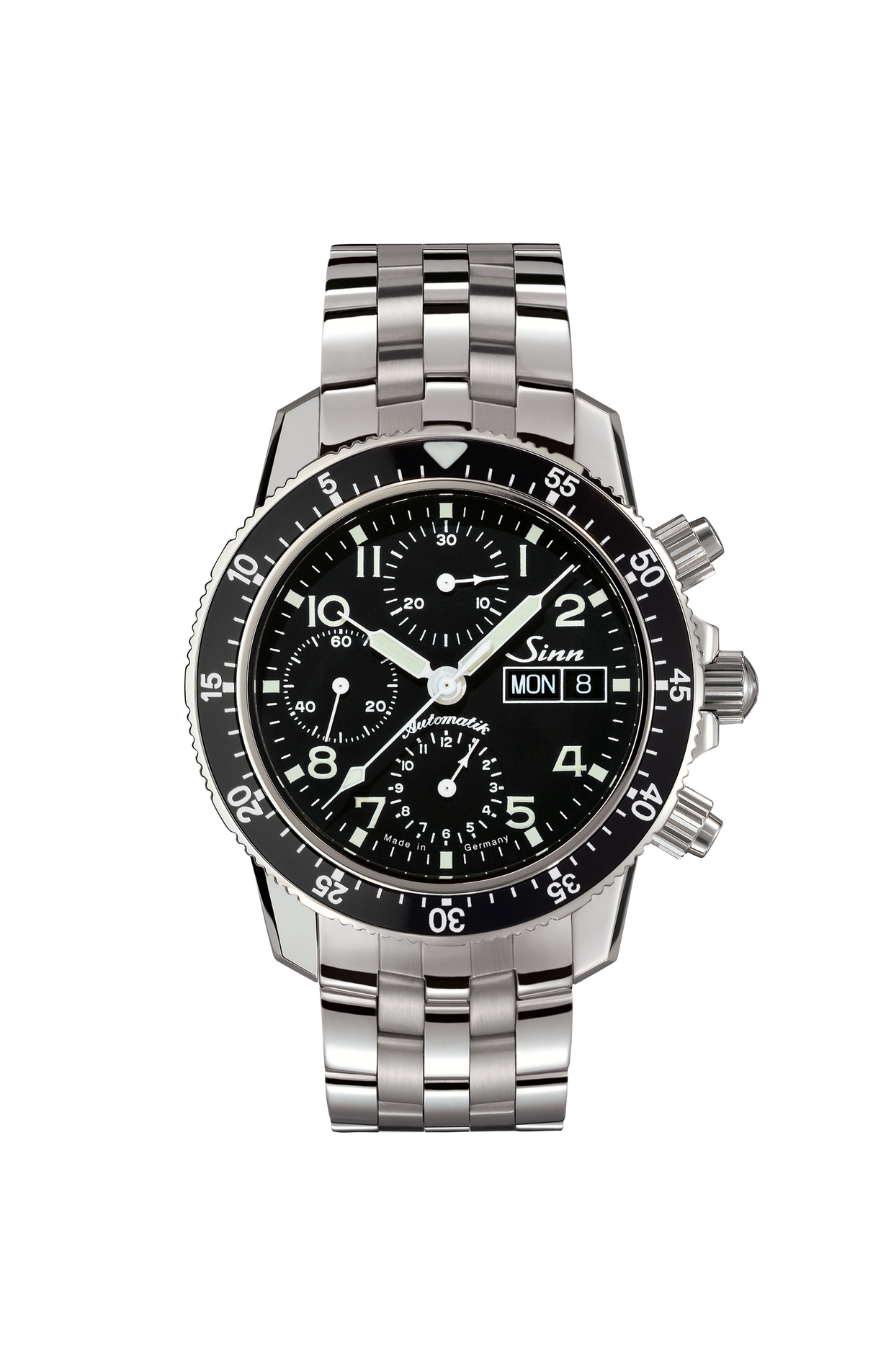
103 St Sa
Pilot chronograph
103 St Sa
The domed pilot chronograph that keeps Sinn’s cockpit-clock origin in plain view.
$3,380 at WatchBuys
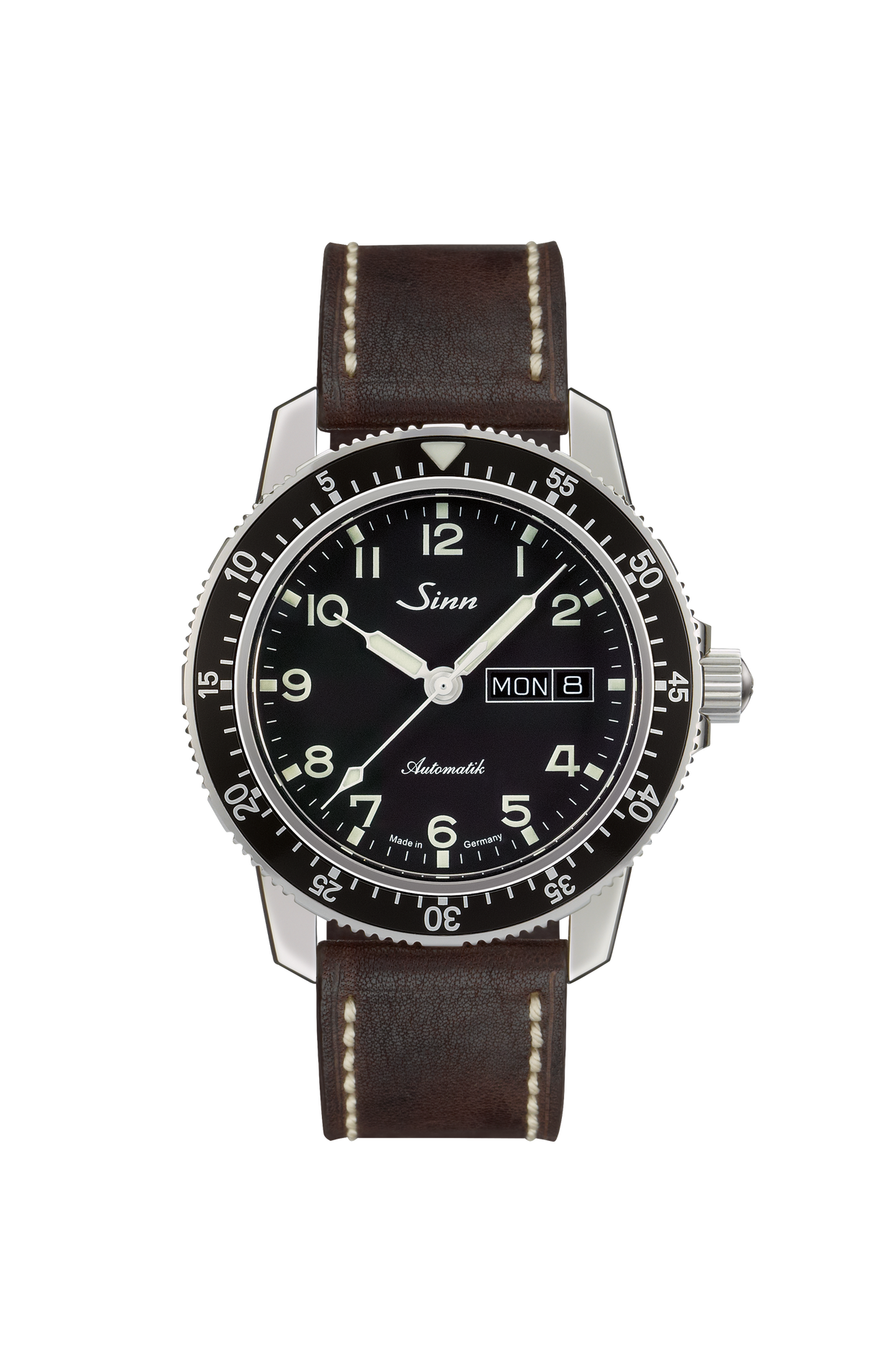
104 St Sa
Modern pilot classic
104 St Sa
The everyday Sinn: pilot clarity, rotating bezel, and a case that never shouts.
$1,860 at WatchBuys
140 St
Space chronograph
140 St
The zero-gravity Sinn — a chronograph with a spaceflight proof point.
$5,460 at WatchBuys
144 St Sa
Integrated chronograph
144 St Sa
A compact chronograph with the blunt, purposeful geometry collectors associate with Sinn.
$3,590 at WatchBuys
356 Sa Pilot
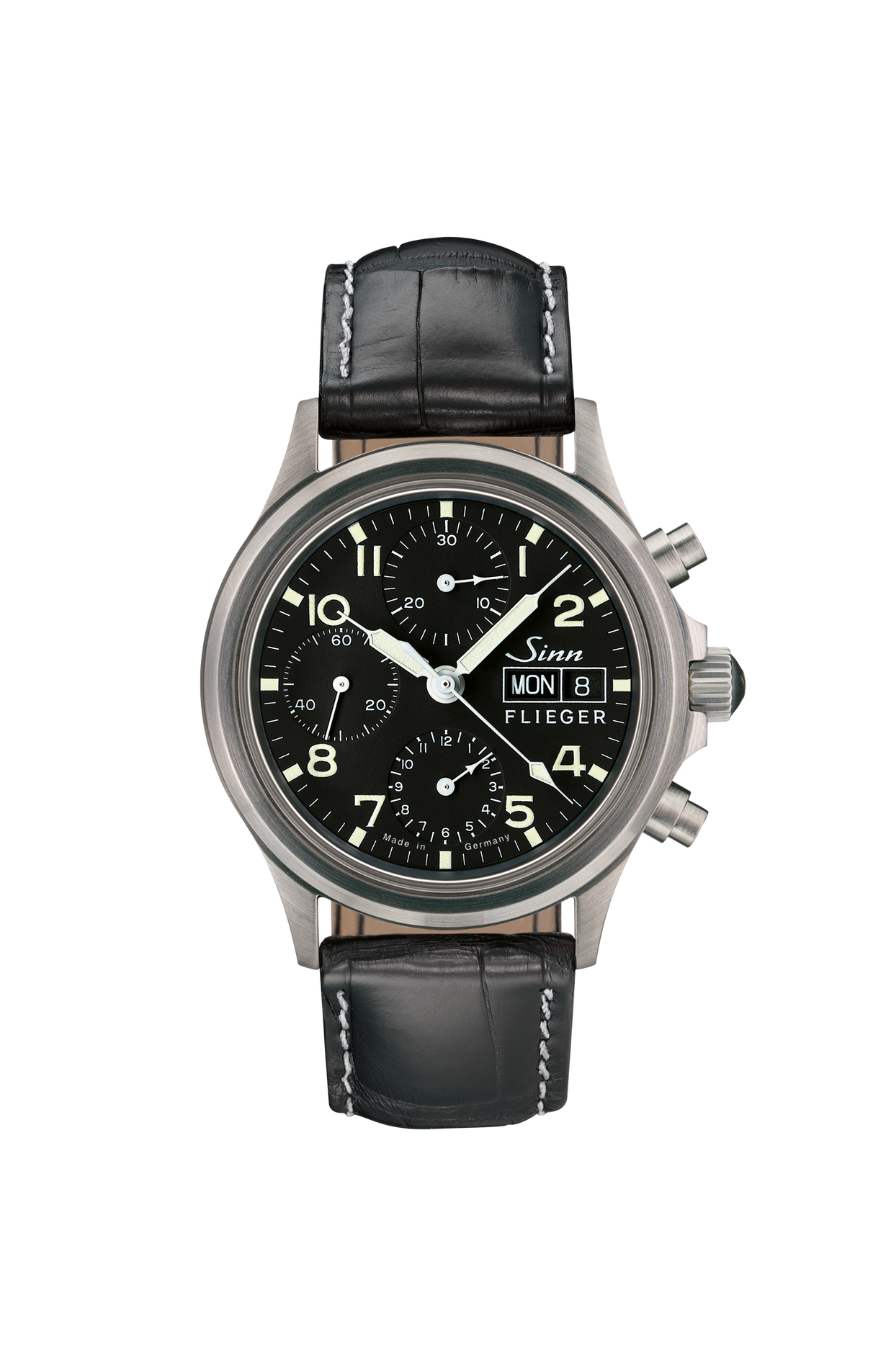
Flieger chronograph
356 Sa Pilot
The rounded flieger chronograph that softens Sinn’s tool-watch severity without losing utility.
$3,290 at WatchBuys
556 I
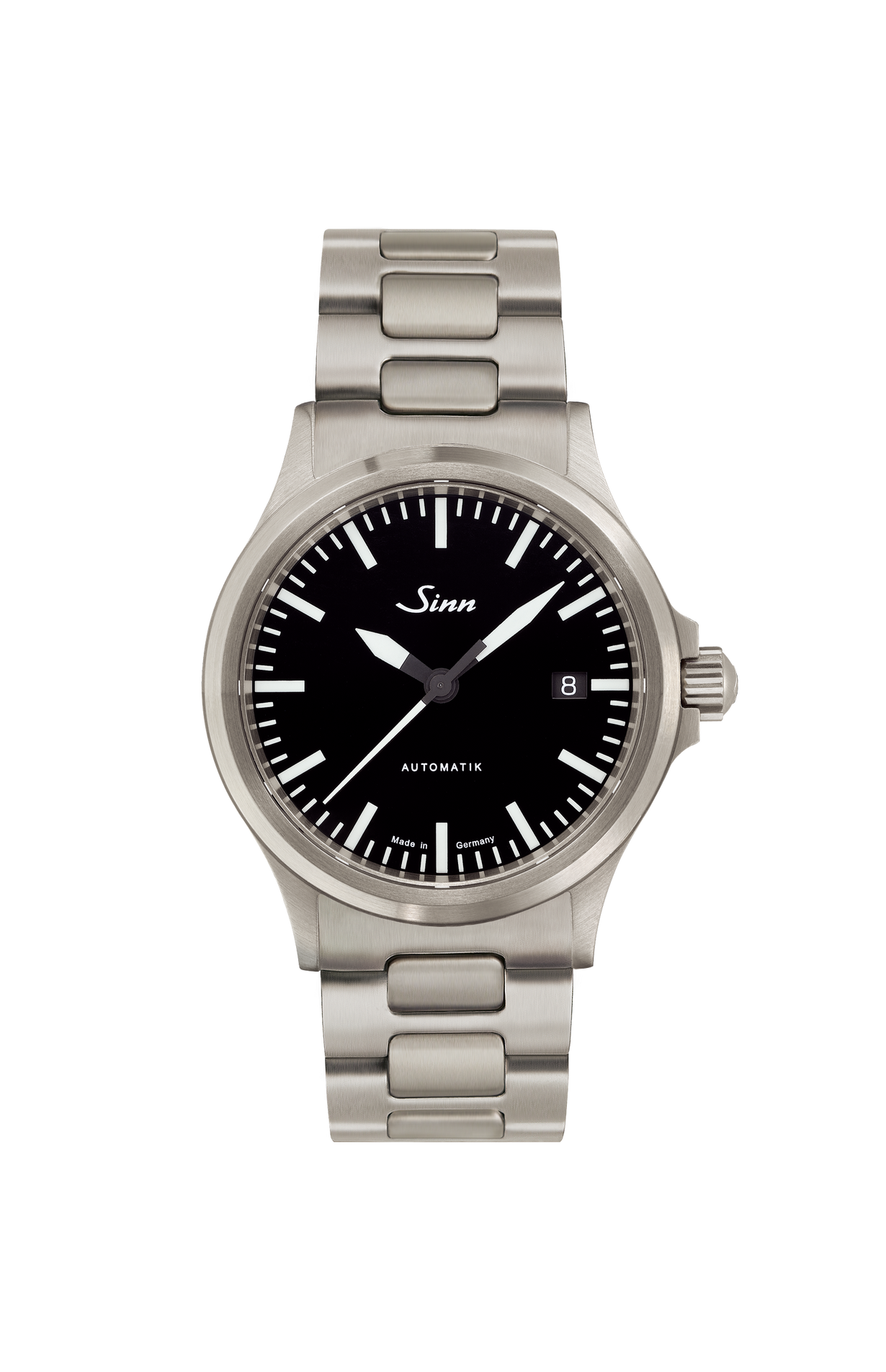
Minimal pilot
556 I
The stripped-back Sinn that turns cockpit legibility into a daily uniform.
$1,840 at WatchBuys
857 UTC
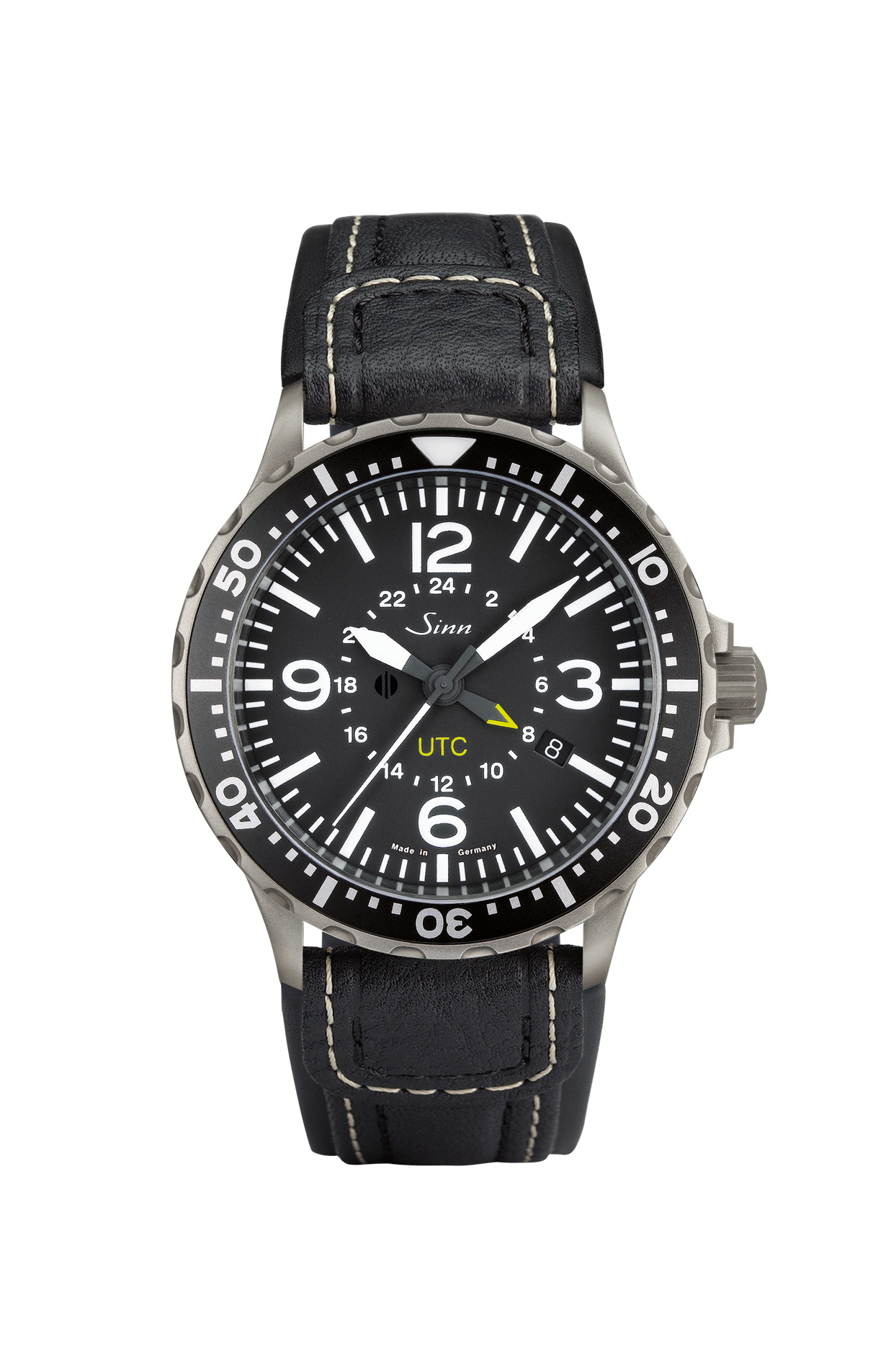
Tegimented traveller
857 UTC
A hardened pilot watch built around the useful second time zone, not travel glamour.
$3,160 at WatchBuys
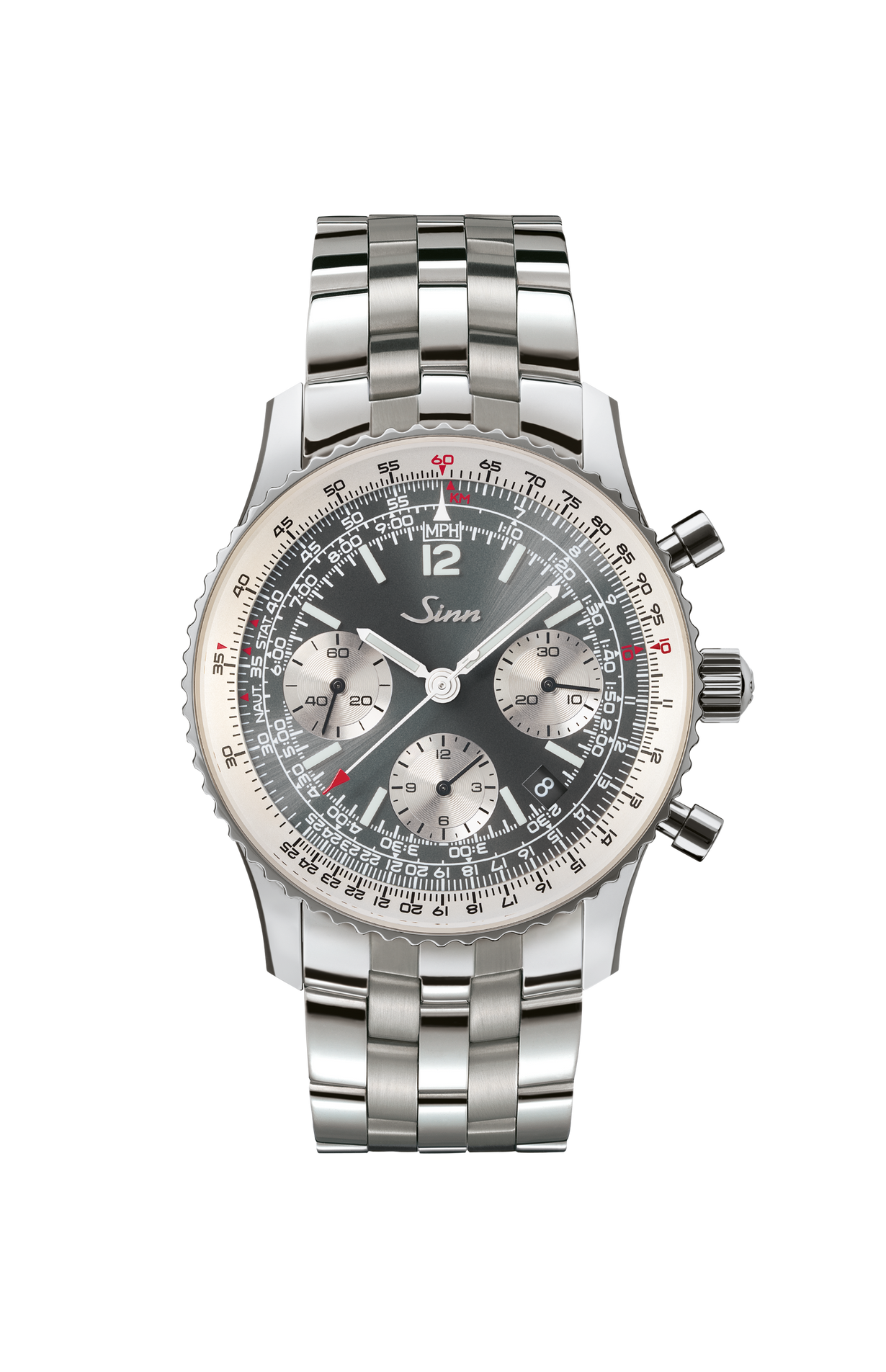
903 St II
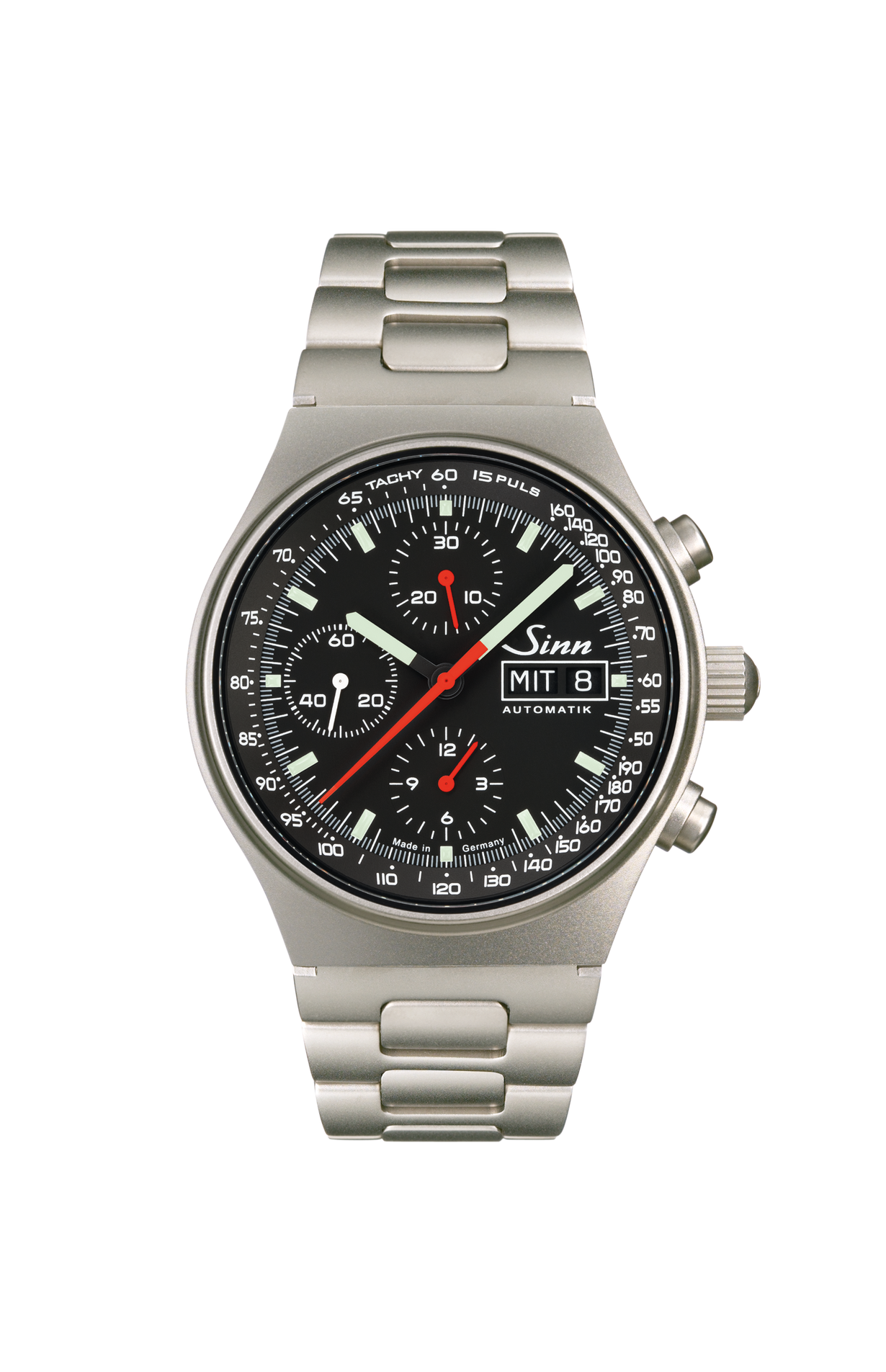
Navigation chronograph
903 St II
The calculation-bezel Sinn — dense, technical, and unapologetically old-school.
$4,260 at WatchBuys
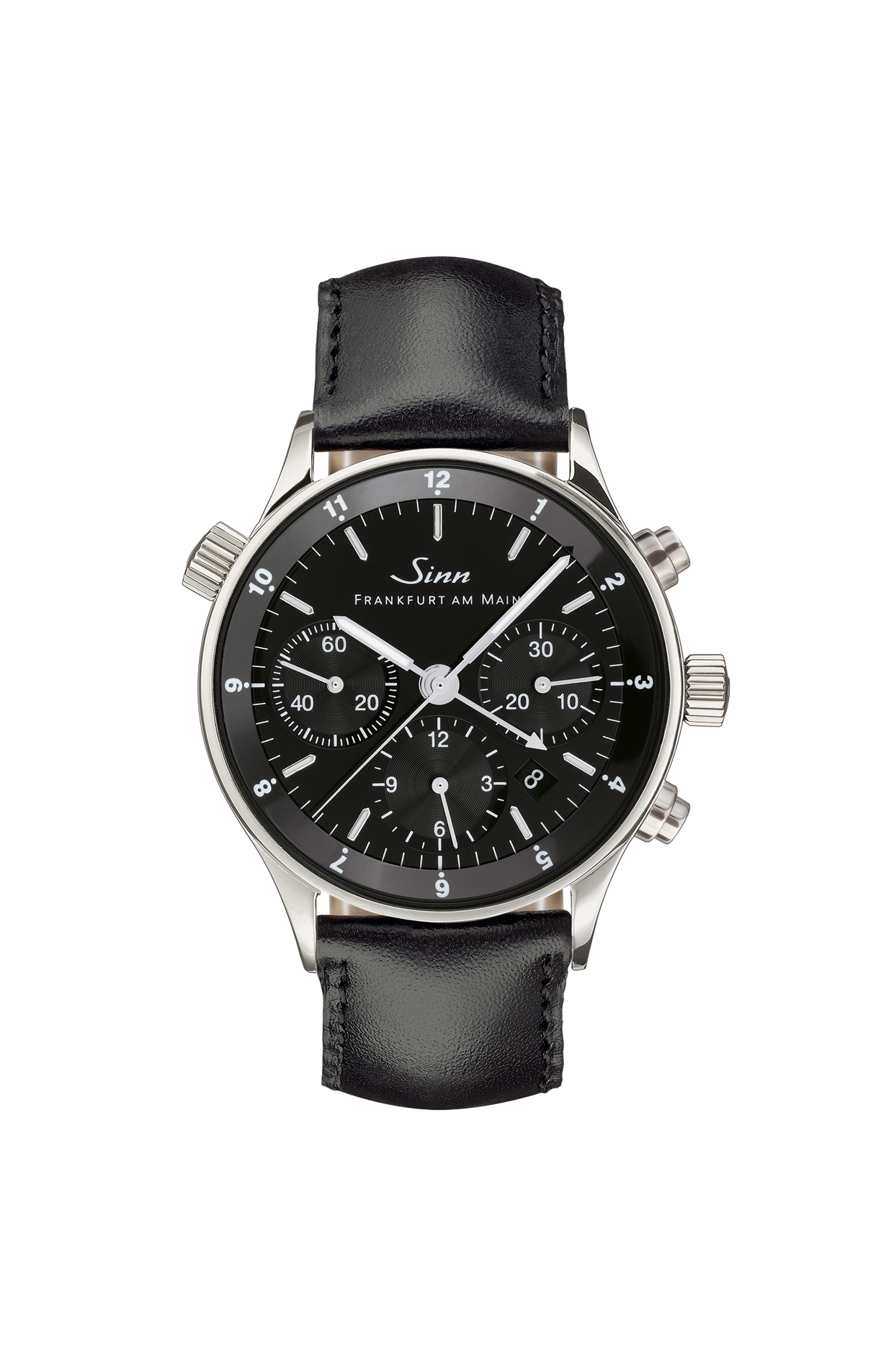
6000 Frankfurt Financial District Watch
Frankfurt chronograph
6000 Frankfurt Financial District Watch
The Frankfurt dress-chronograph that turns Sinn’s hometown into a complication.
$5,580 at WatchBuys
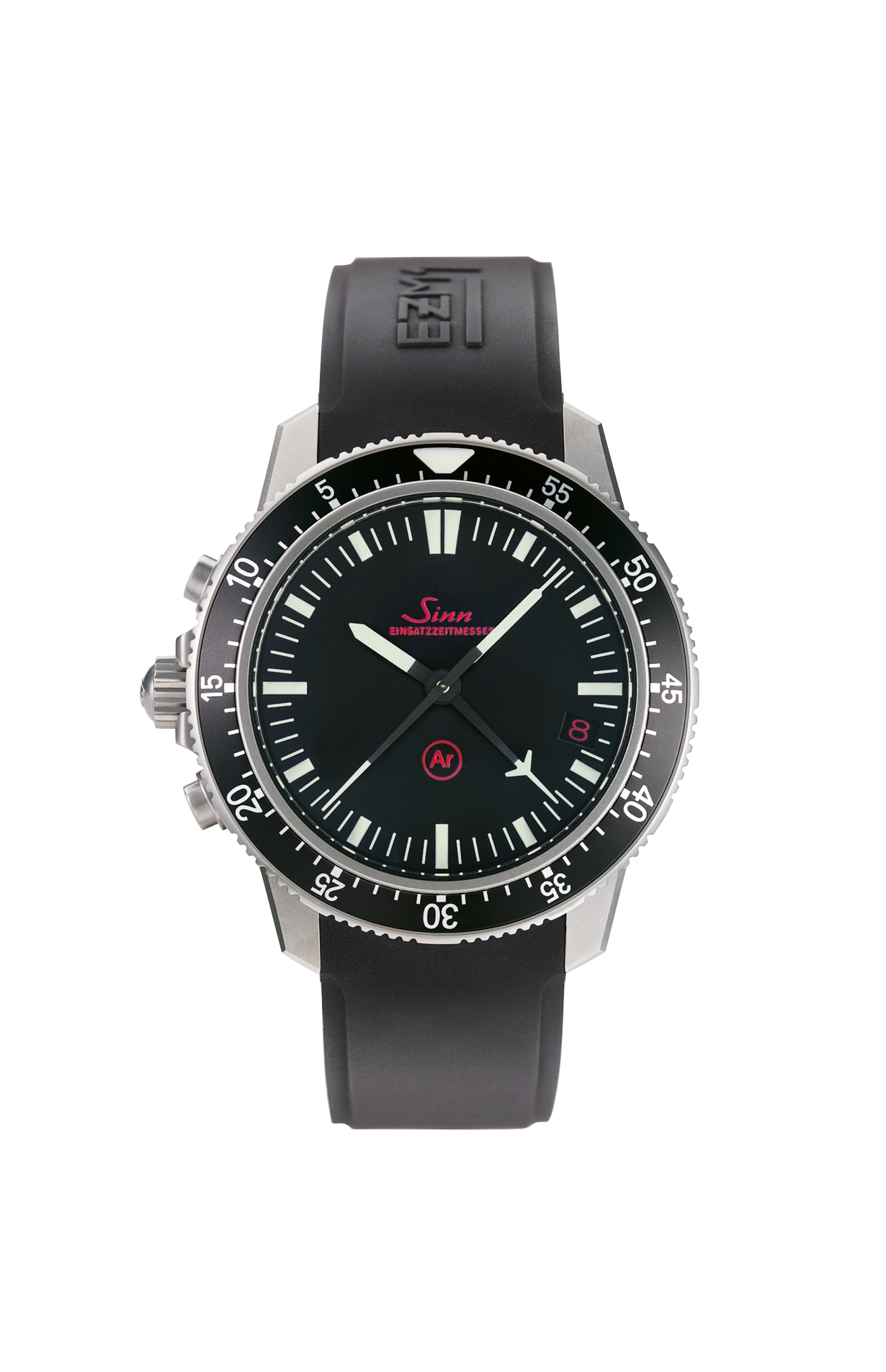
EZM 1
Original mission timer
EZM 1
The original Einsatzzeitmesser: sparse, left-sided, and made for a job before collectors discovered it.
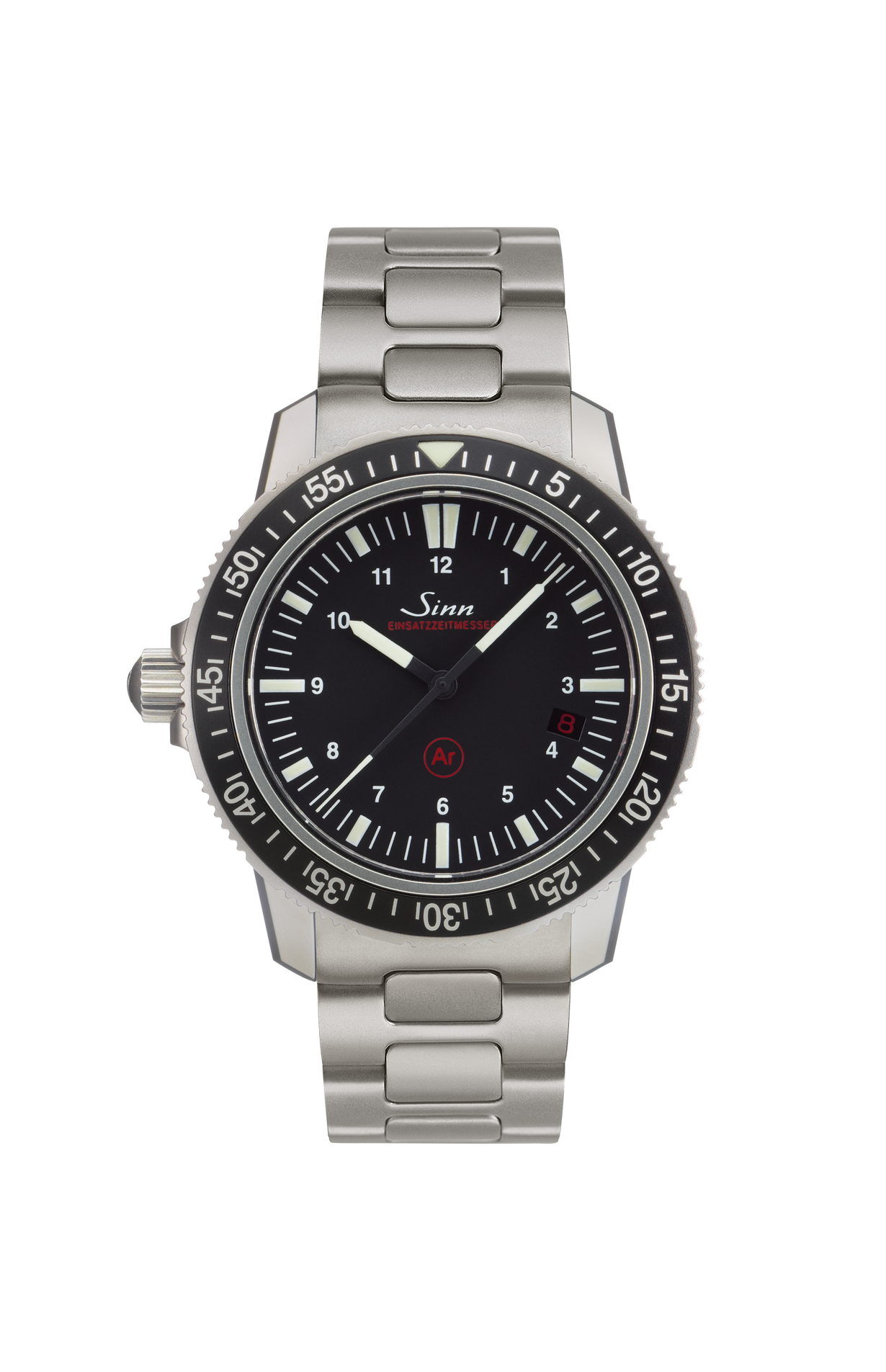
EZM 3
Dive mission timer
EZM 3
A left-crown diver that makes the mission-timer idea affordable and brutally legible.
$2,260 at WatchBuys
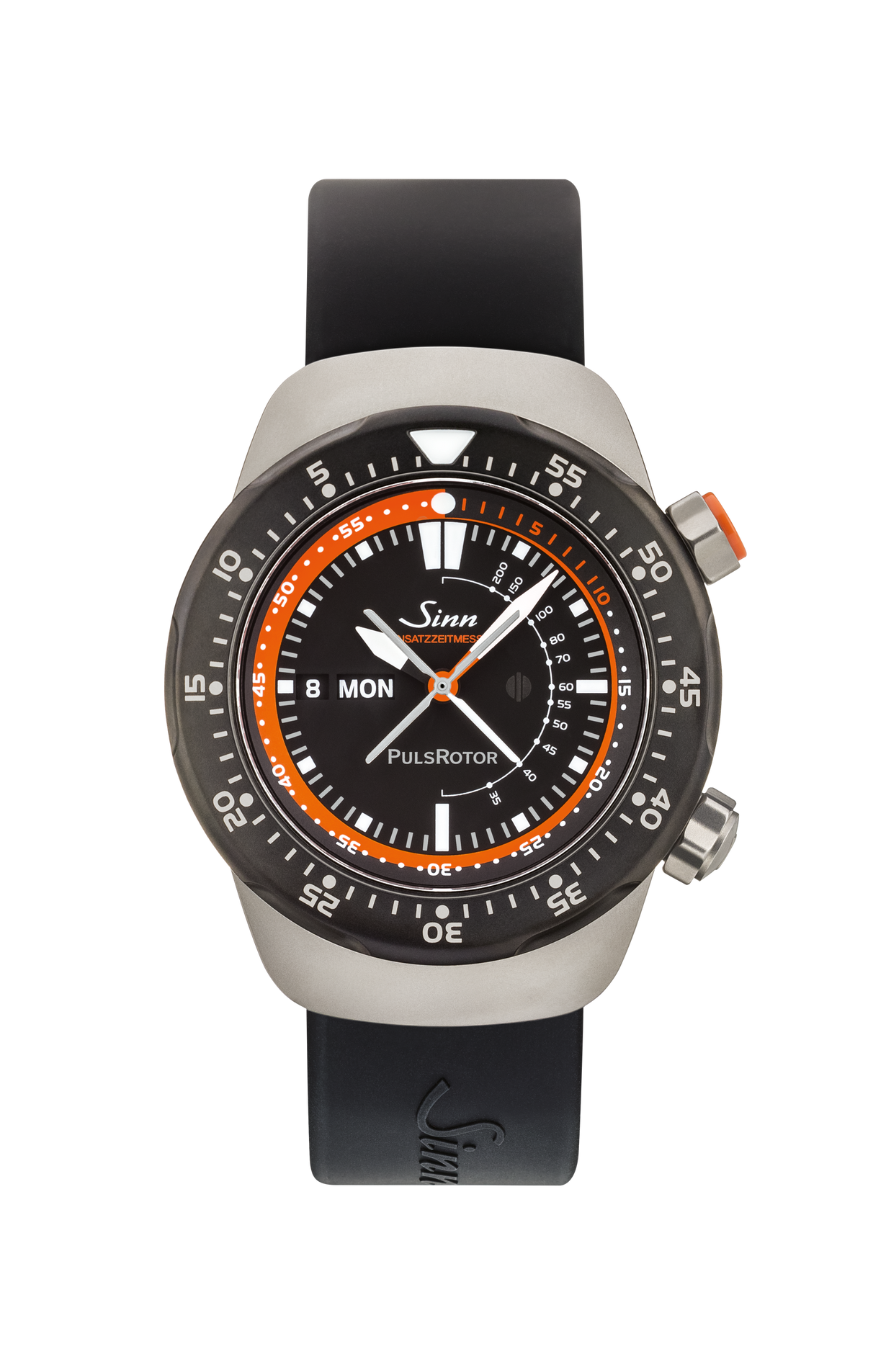
EZM 12
Air-rescue timer
EZM 12
A medical mission timer whose bezel and pulse scale are built around emergency work.
$4,680 at WatchBuys
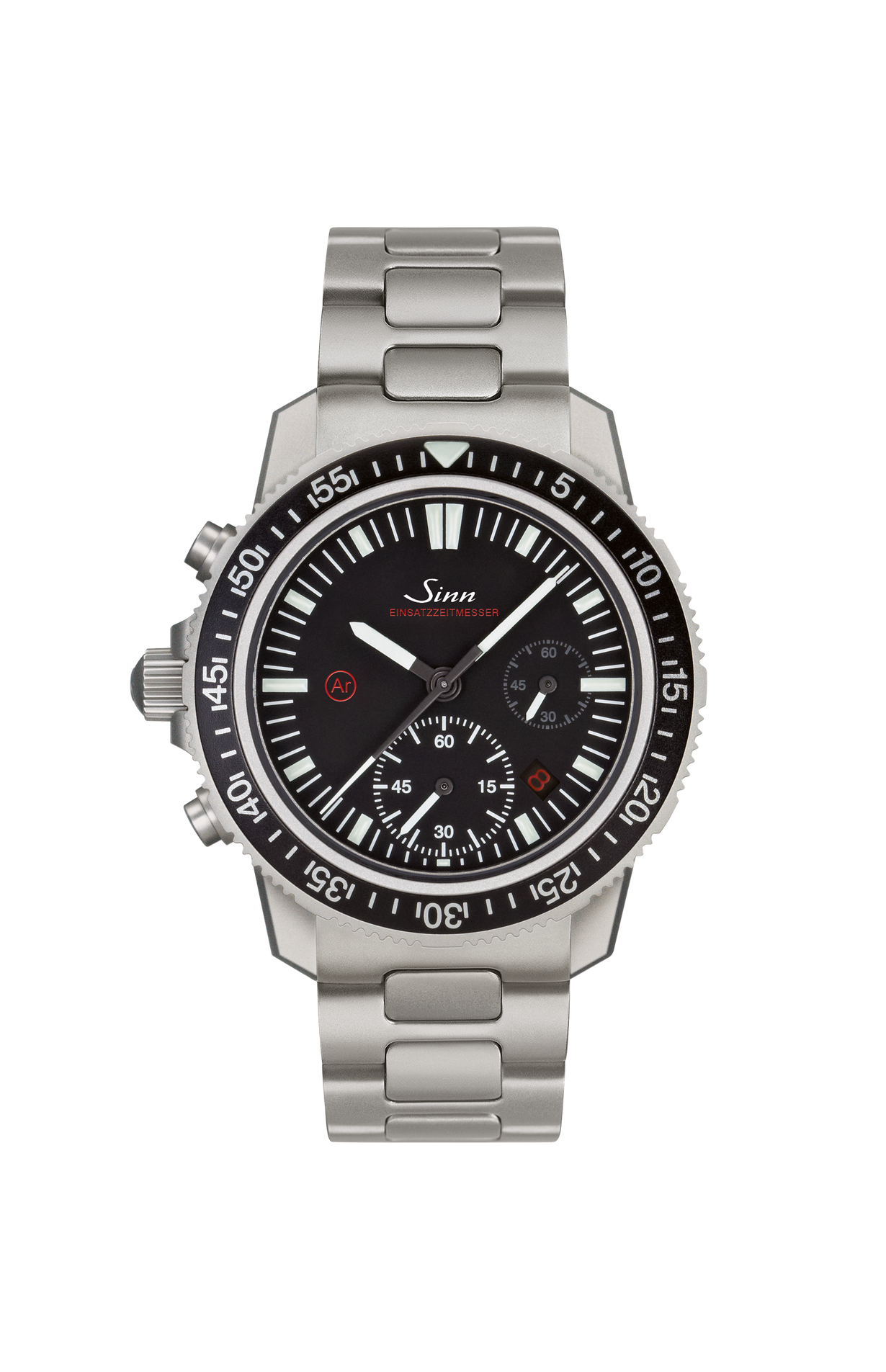
EZM 13.1
Diver chronograph
EZM 13.1
The mission-timer chronograph for divers: left-crown layout, central elapsed minutes, real depth rating.
$4,170 at WatchBuys
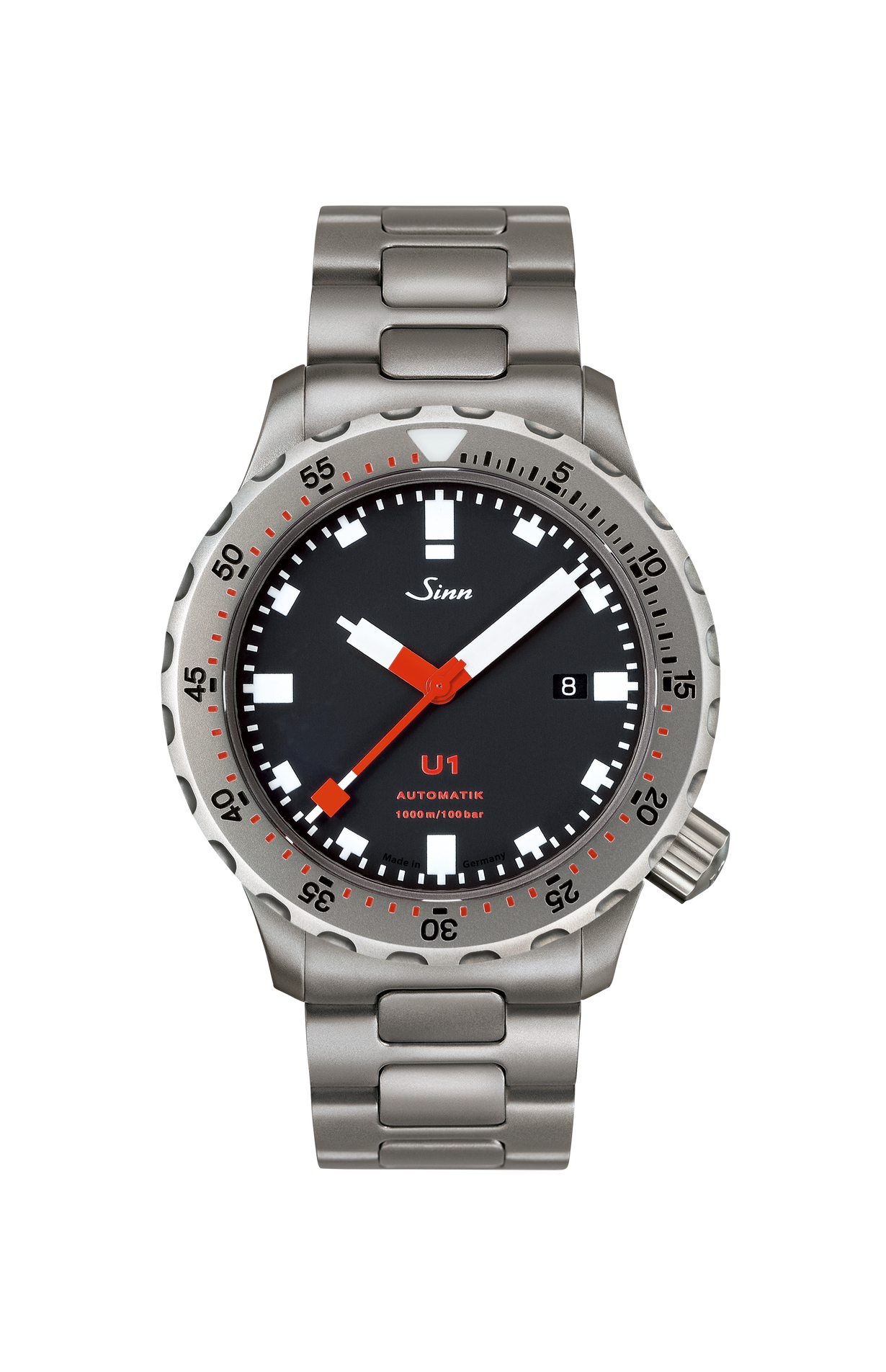
U1
Submarine-steel diver
U1
The square-marker diver that made German submarine steel visually unmistakable.
$3,260 at WatchBuys
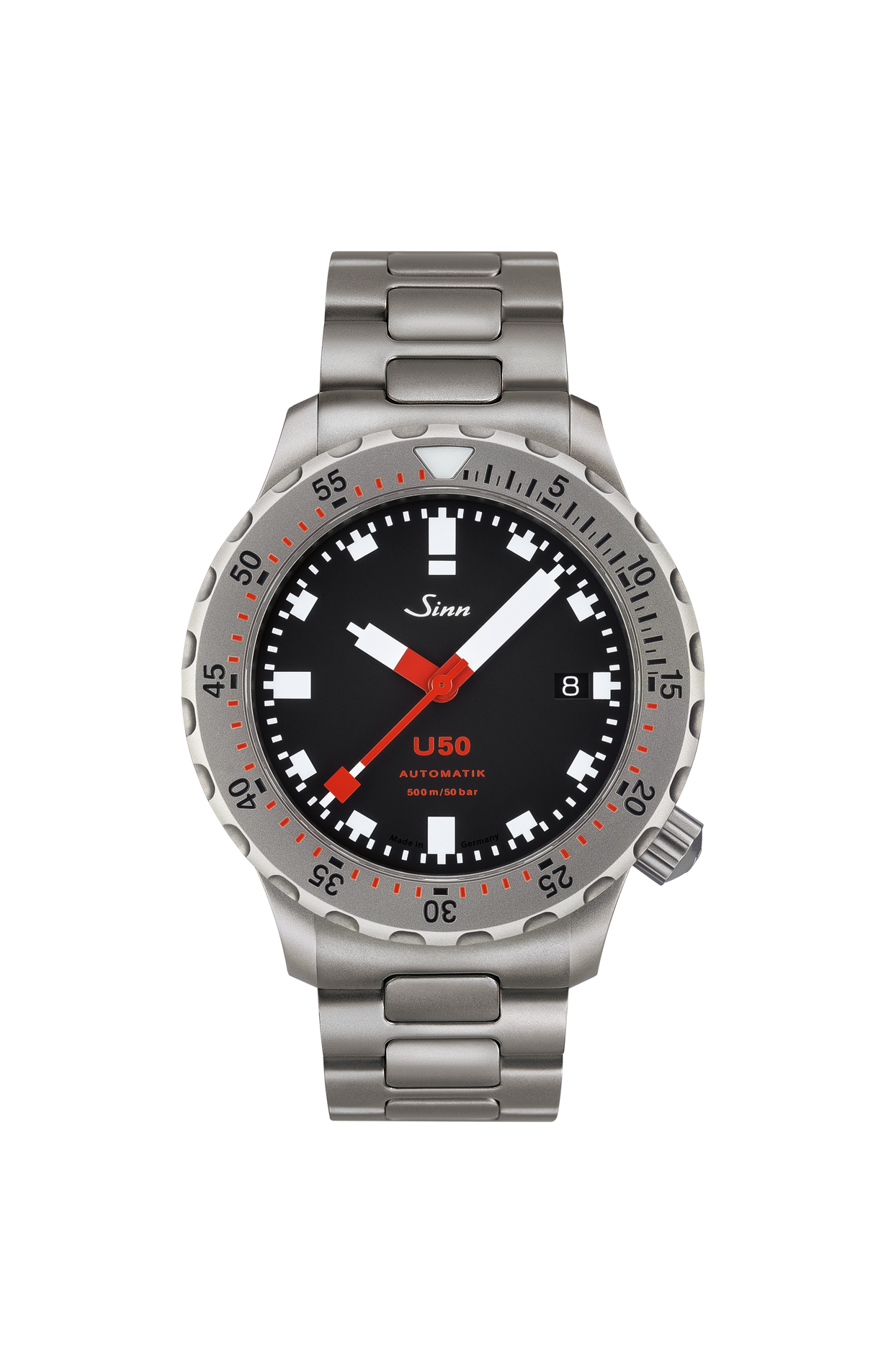
U50
Slim U-series
U50
The U-series idea trimmed down: submarine steel, 500 meters, and a case that wears easily.
$3,240 at WatchBuys
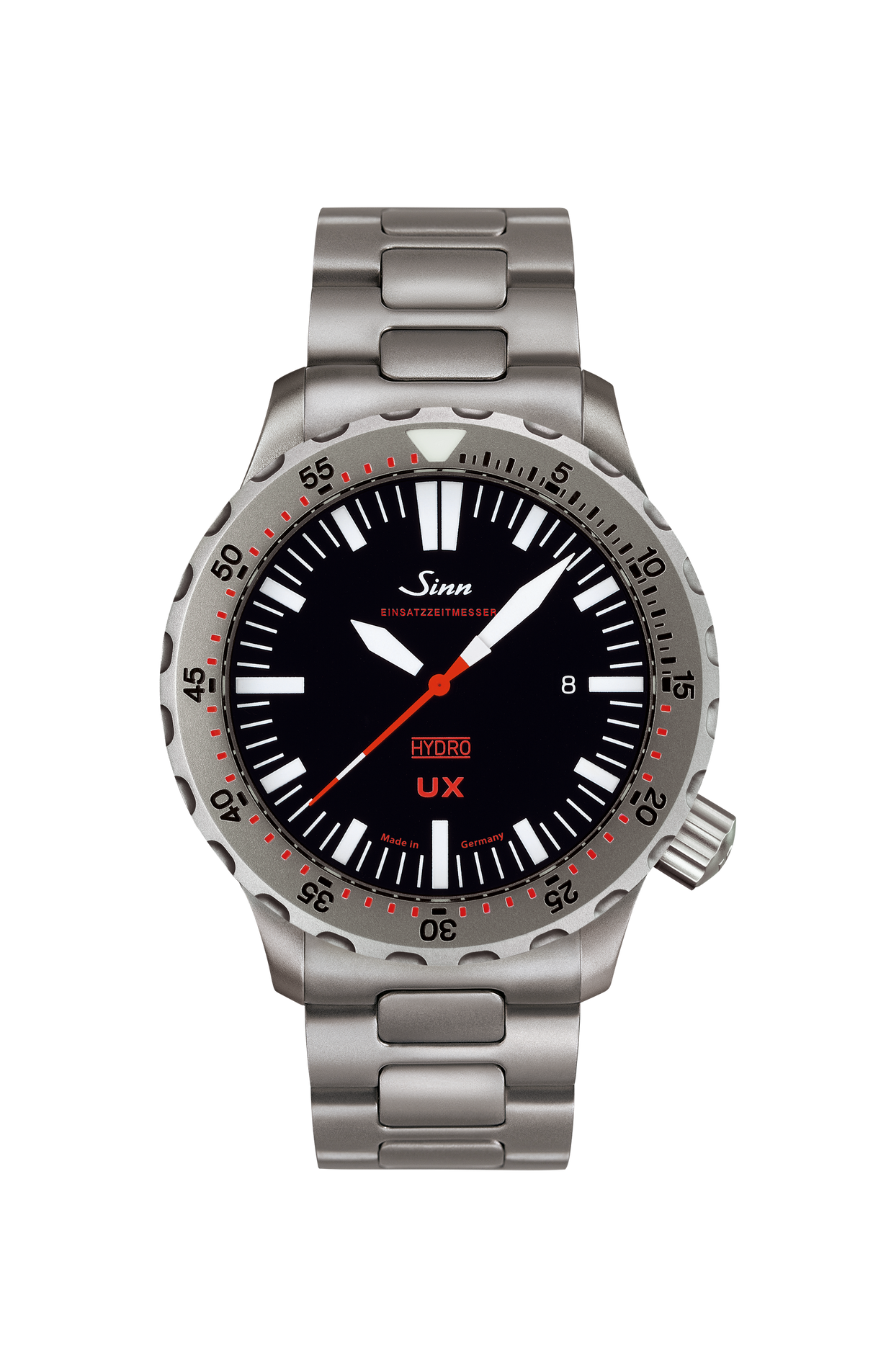
UX (EZM 2B)
Oil-filled diver
UX (EZM 2B)
The oil-filled Sinn: a quartz diver whose dial stays readable at impossible angles.
$3,260 at WatchBuys
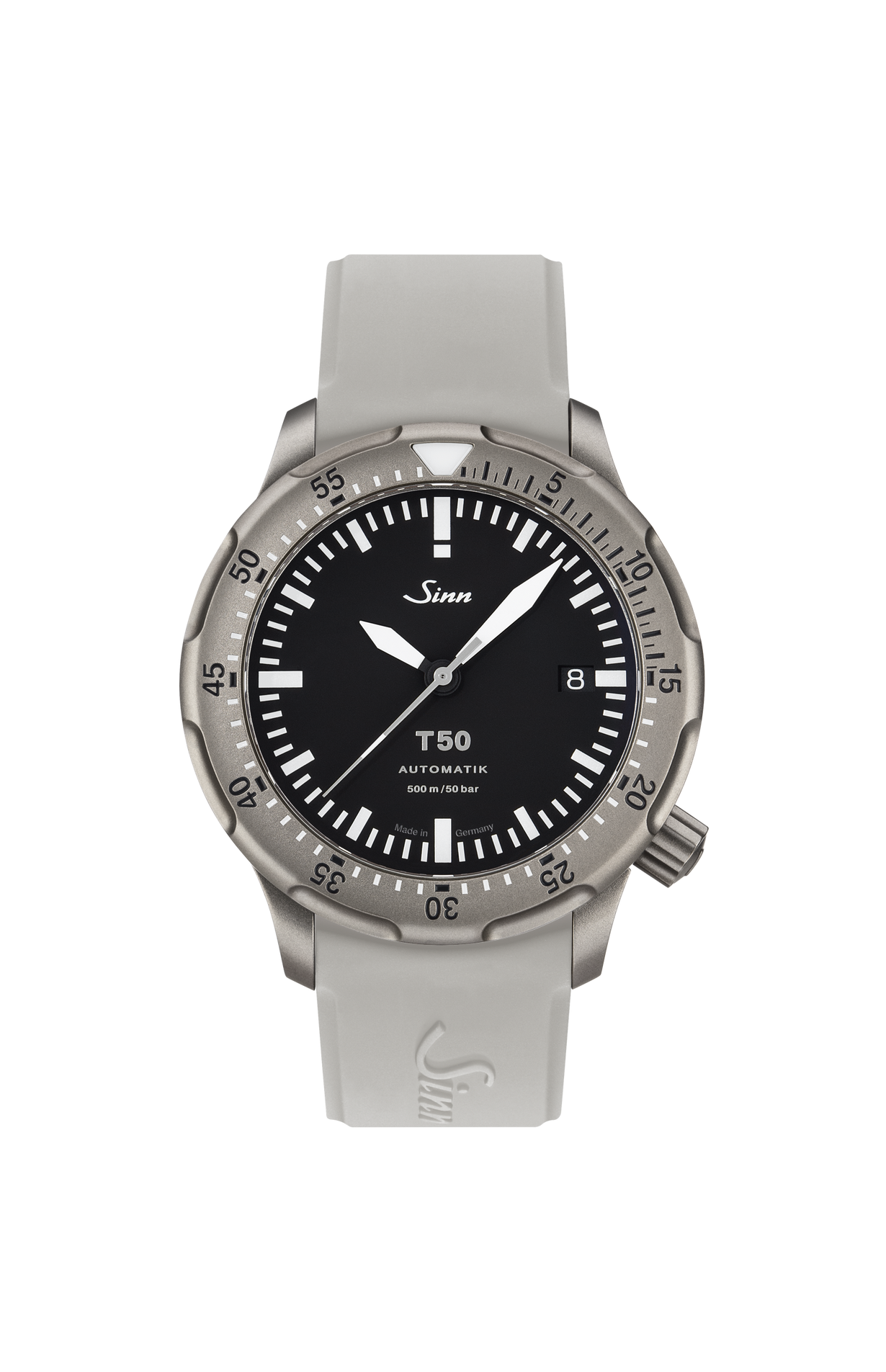
T50
Titanium diver
T50
A modern titanium Sinn diver with serious depth rating and a lighter wrist feel.
$4,330 at WatchBuys

Sinn shopping FAQ

Are Sinn watches worth the money?+

Sinn built its name as a maker of genuine tool watches, and most owners feel they get serious engineering for the price. The brand earns its keep on hardware rather than ornament: pressure resistance, anti-magnetic protection and its own surface-hardening work. If you value a watch designed to be used hard over polished dress-watch flourishes, Sinn makes a strong case.

What is Sinn's Tegiment hardening and why does it matter?+

Tegiment is Sinn's signature surface treatment that hardens the outer layer of the steel before any coating goes on, which is what makes its tegimented cases so resistant to everyday knocks and scratches. It is one of the clearest reasons collectors single Sinn out from other makers at similar prices. The point is simple: a case that keeps looking new even after years of real wear.

How does the Sinn U1 compare with the Omega Seamaster?+

The U1 sits in Sinn's U-series and is built around toughness, while the Omega Seamaster leans more luxurious and refined. Both are capable divers, so the choice tends to come down to character: pick the Sinn if you want an unapologetic tool watch with a utilitarian feel, and the Omega if you want a more dressed-up all-rounder. Neither is the wrong answer; they simply chase different ideals.

What makes the Sinn U-series submarine-steel cases special?+

The U-series diving watches, such as the U2, are made from high-strength, seawater-resistant German submarine steel. That choice of material is the heart of the line's identity, paired with sapphire crystal and reliable function across a punishing temperature range. It is the kind of detail that explains why divers and professional users gravitate to these models.

Where are Sinn watches made and where is the company based?+

Sinn is a German manufacturer of mechanical and quartz wristwatches based in Frankfurt am Main. The Frankfurt roots run deep enough that one of its models is even named after the city's financial district. That German engineering culture is central to how the brand presents itself.

Who founded Sinn and when?+

Sinn was founded in 1961 by flight instructor and Luftwaffe pilot Helmut Sinn under the name Helmut Sinn Spezialuhren. From the start the company focused on navigation cockpit clocks and pilot chronographs, selling directly to customers and bypassing retailers. That aviation origin still shapes the brand's instrument-watch DNA today.

Have Sinn watches really been to space?+

Yes, and it is one of the brand's proudest claims. In 1985 the Sinn 140 S chronograph was among the first automatic chronographs used in space, worn by astronaut Reinhard Furrer on the Spacelab D1 mission to prove a mechanical automatic watch works in zero gravity. Later models flew on the Mir '92 and 1993 Columbia D2 missions too.

Who owns Sinn now after Helmut Sinn?+

Helmut Sinn sold the company to Lothar Schmidt in 1994. Helmut went on to other watchmaking ventures and later acted as an advisor before his death at 102 in 2018. The Schmidt era is when much of Sinn's modern reputation for technical innovation, including its hardening and sealing technologies, took shape.

Which Sinn should be my first watch?+

Many newcomers start with a classic pilot chronograph such as the 103, since the Sinn Pilot Chronograph 103 is one of the brand's standard models and captures its aviation heritage cleanly. If diving toughness appeals more, the U-series is the natural entry to its submarine-steel tool watches. Either way, choose the one whose purpose matches how you actually live.

What kinds of professionals actually use Sinn watches?+

Sinn makes mission timers for real working environments, and they are worn by groups like the German federal police special unit GSG 9, as well as divers, pilots and the fire service. The GSG 9 maritime forces use the Sinn UX, for instance. That professional credibility is a big part of why enthusiasts trust the brand.

How do I care for a tegimented Sinn watch?+

The tegimented cases are designed to resist scratches and impacts, so day-to-day they need far less babying than ordinary steel. Standard sense still applies: rinse after seawater on the U-series divers, and have the movement serviced on schedule by a watchmaker who knows Sinn's technologies. Treated well, these are watches built to outlast hard use, not just survive it.