Are Aigle wellies actually worth the money?+
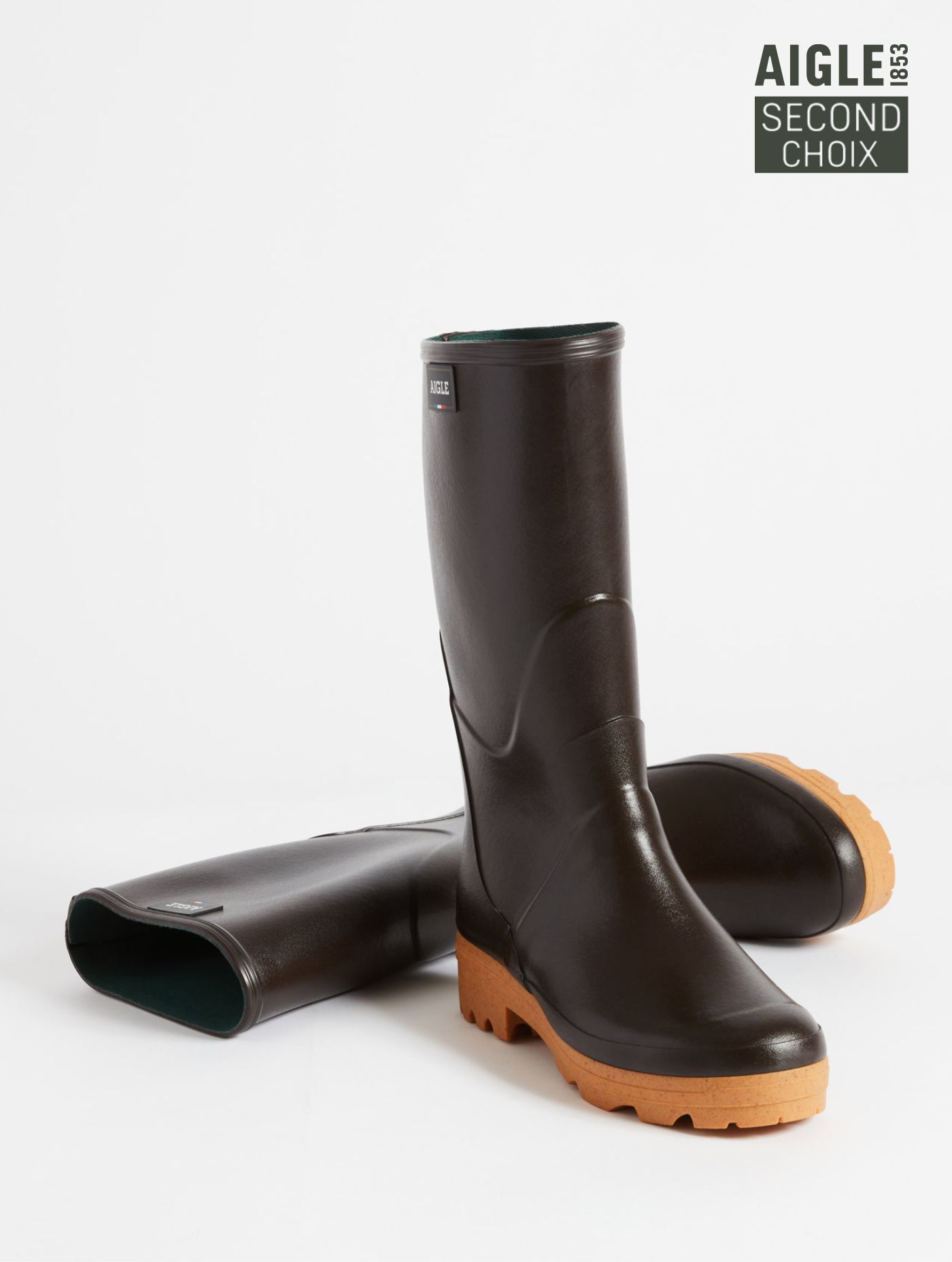
For wearers who spend real time outdoors, Aigle's natural-rubber boots tend to justify the spend through comfort and longevity rather than fashion. Many owners report years of hard country use before a pair shows its age, and the brand has built its reputation on rubber since 1853. The flip side is a premium price and the occasional report of a pair leaking early, so it is worth inspecting and testing a new pair promptly.
Which Aigle boot should I buy first?+
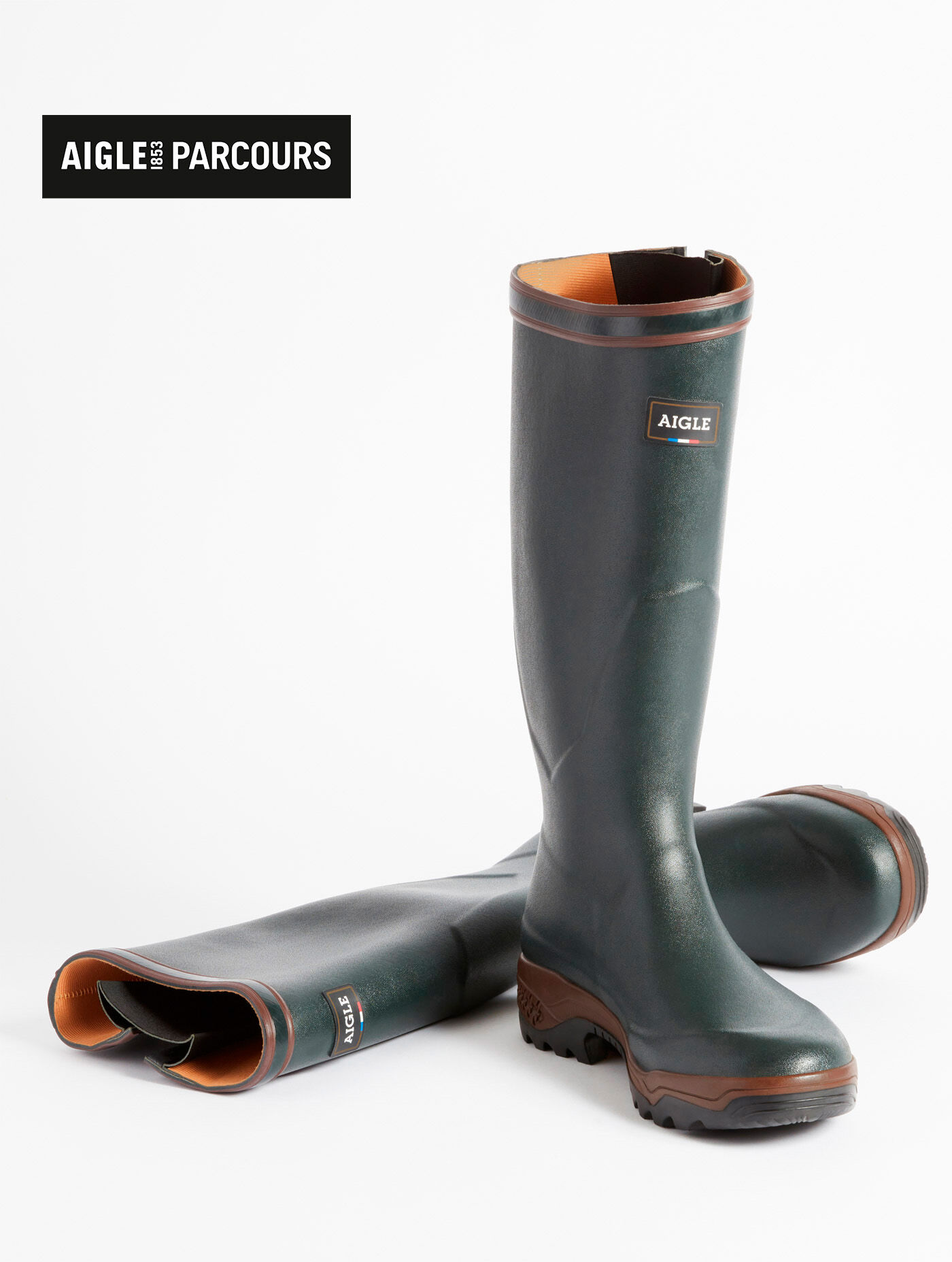
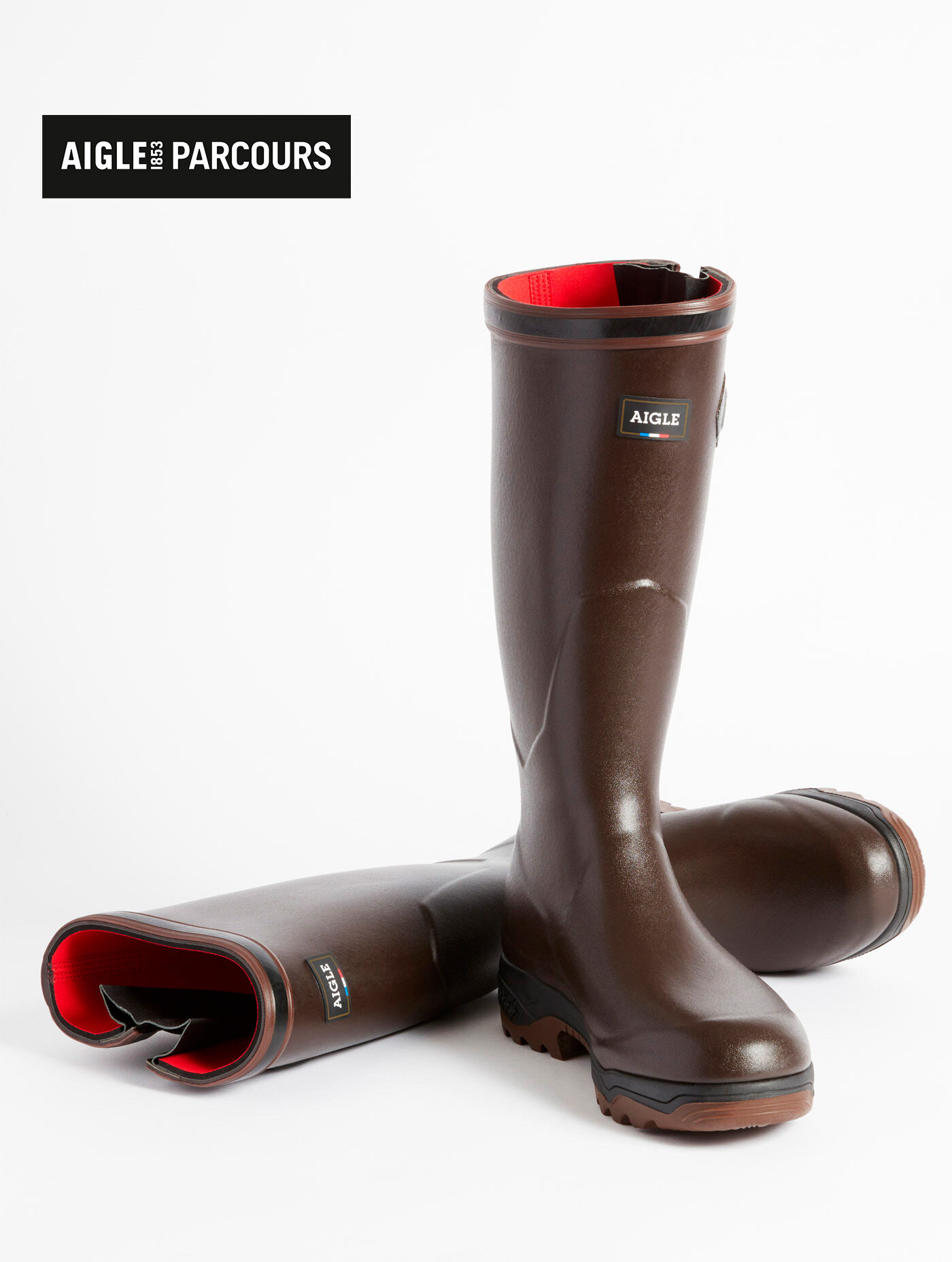
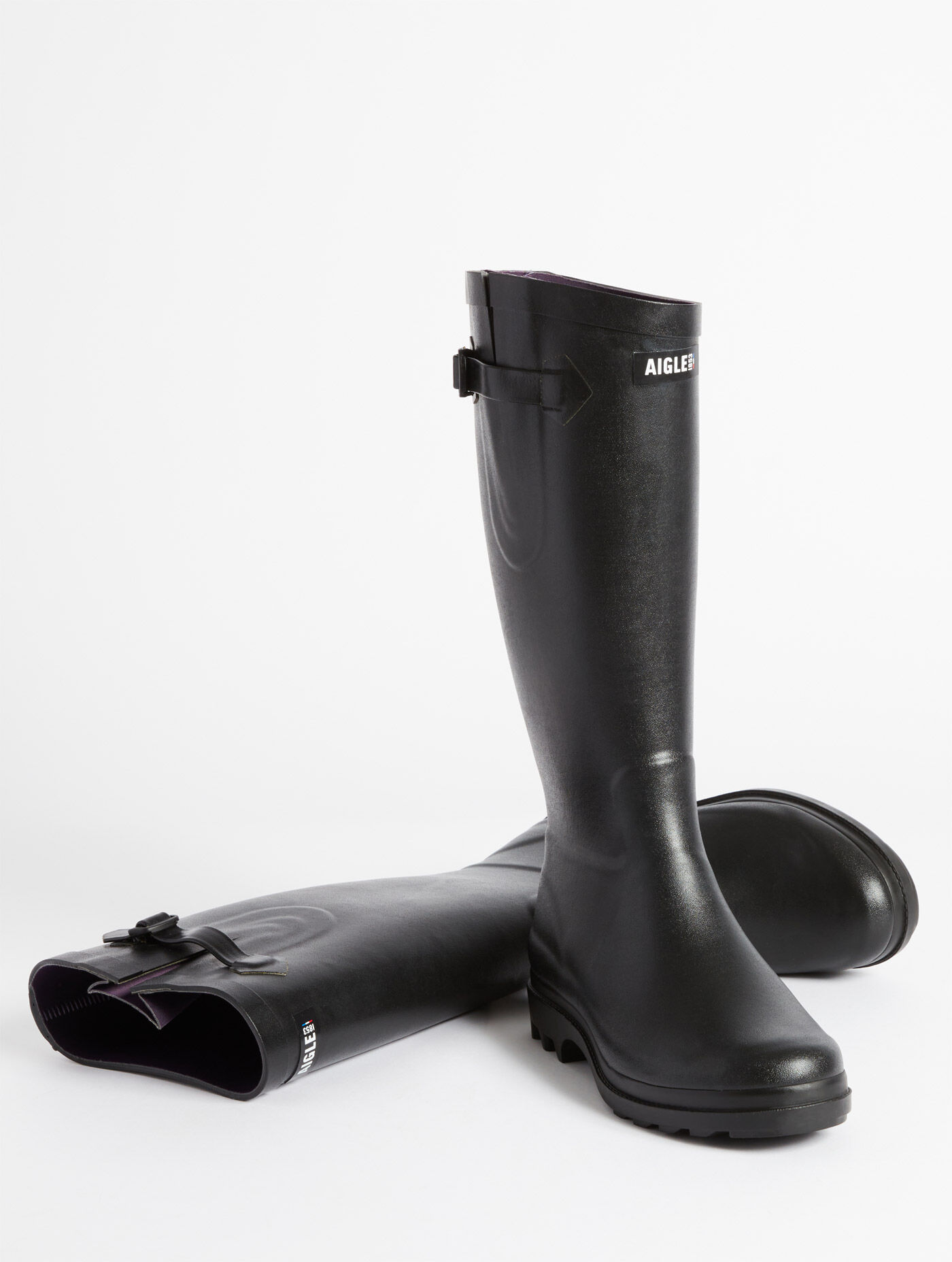
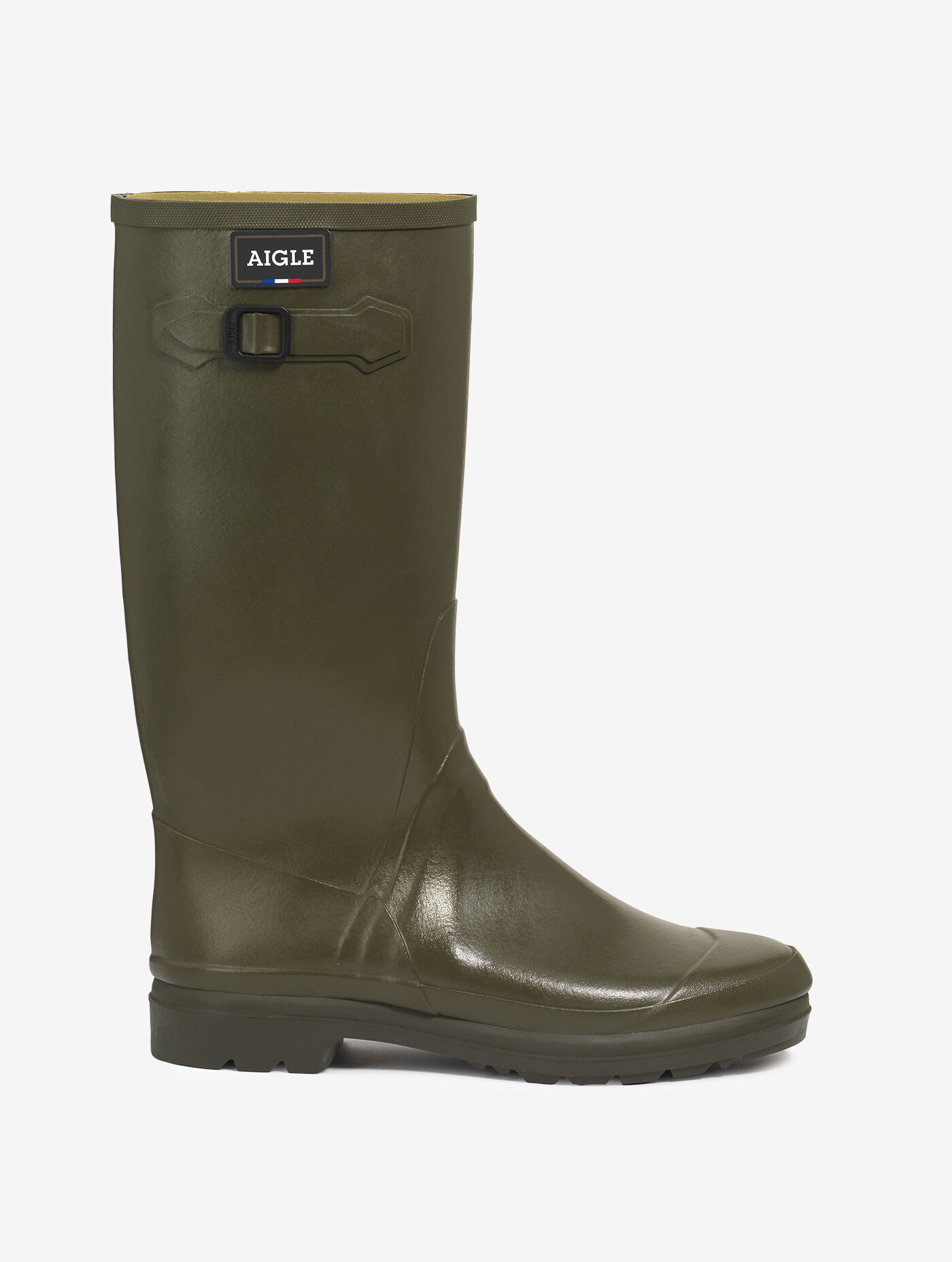
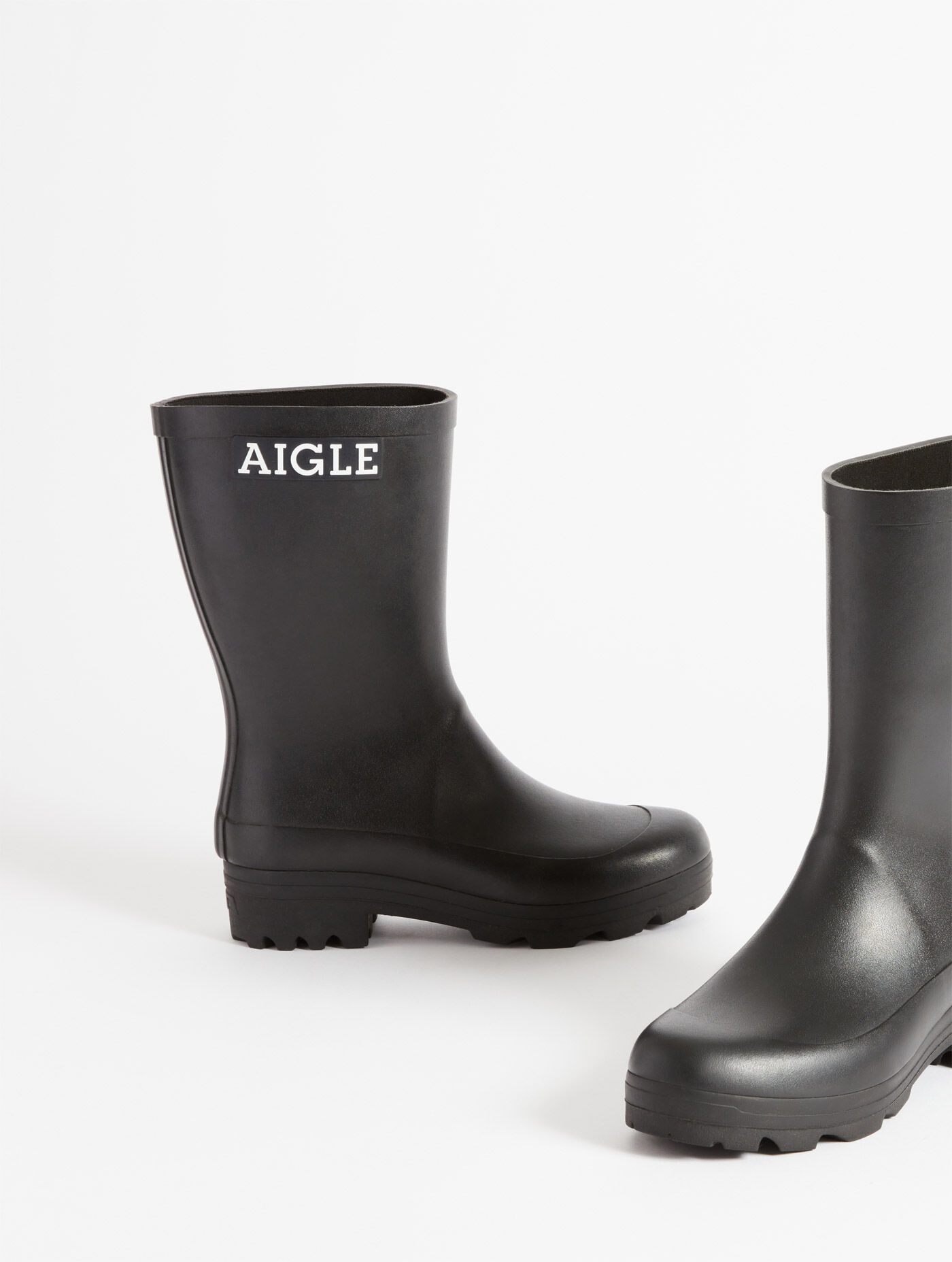
If you want the boot Aigle is best known for, start with the Parcours line — its anti-fatigue sole is designed for long walks and full days on your feet, making it the most versatile first pair. If you mainly need a lighter everyday rain boot rather than a country workhorse, the slimmer styles like the Aiglentine or Miss Juliette are the gentler entry point. Choose based on how much walking and mud you actually expect.
Where are Aigle boots made?+
Aigle's rubber boots are made in France at its factory in Ingrandes, near Châtellerault, where the company moved manufacturing in 1967 onto a 30-hectare site. Roughly 10,000 pairs are produced there each year, much of it by hand. That French production is a large part of why the boots carry a premium over mass-market rivals.
Why are Aigle boots made from natural rubber, and does it matter?+
The company began in 1853 as the Compagnie du Caoutchouc Souple — the Flexible Rubber Company — and rubber has been its craft ever since. Natural rubber stays supple in cold weather and tends to flex rather than crack, which is why owners can wear a pair in sub-zero conditions over ordinary socks. It also avoids the strong synthetic smell that cheaper boots can have.
Aigle vs Hunter — which wellington should I choose?+
Think of it as workhorse versus style icon. Aigle's Parcours boots are built for serious walking and countryside graft, with a fatigue-reducing sole and hand-made French natural rubber, whereas Hunter leans toward lightweight, fashion-led rain boots. If you want a genuine outdoor boot for long days, lean Aigle; if you want a recognisable colour for city showers, Hunter makes more sense. Aigle and Le Chameau are the closer head-to-head if durability is your priority.
How do I clean and care for my Aigle rubber boots?+
Wipe them with clear, slightly soapy water and a sponge, then let them air-dry away from any direct heat — never on a radiator or in strong sun, which dries out natural rubber and invites cracking. Skip the washing machine entirely. Store them upright in a cool, dry spot, and an occasional rubber-care spray every few months helps keep the surface from drying out.
How does Aigle sizing run, and how should the boots fit?+
Aigle rubber boots are generally offered in whole sizes only, and several styles run slightly small, so sizing up is often the safer call if you are between sizes. You want room across your toes and enough space to wear thicker socks in winter. A slight heel-lift when you walk is normal; what you do not want is the boot threatening to slip off entirely.
Who owns Aigle now?+
Since 2005, majority ownership of Aigle has been held by the Swiss group Maus Frères. Before that the company had grown from a 19th-century French rubber firm into an international outdoor and lifestyle label. The Maus Frères backing sits behind Aigle's continued investment in its French boot-making.
Who founded Aigle and why is it a French brand despite an American founder?+
Aigle was founded in 1853 in Montargis, France, by the American businessman Hiram Hutchinson. He had obtained a licence in 1850 to use his compatriot Charles Goodyear's vulcanization process, then emigrated to France and applied it to making Wellington boots and raincoats. So while the founder was American, the company was French from day one — which is why it is still described as a French house today.
Does Aigle make anything besides wellington boots?+
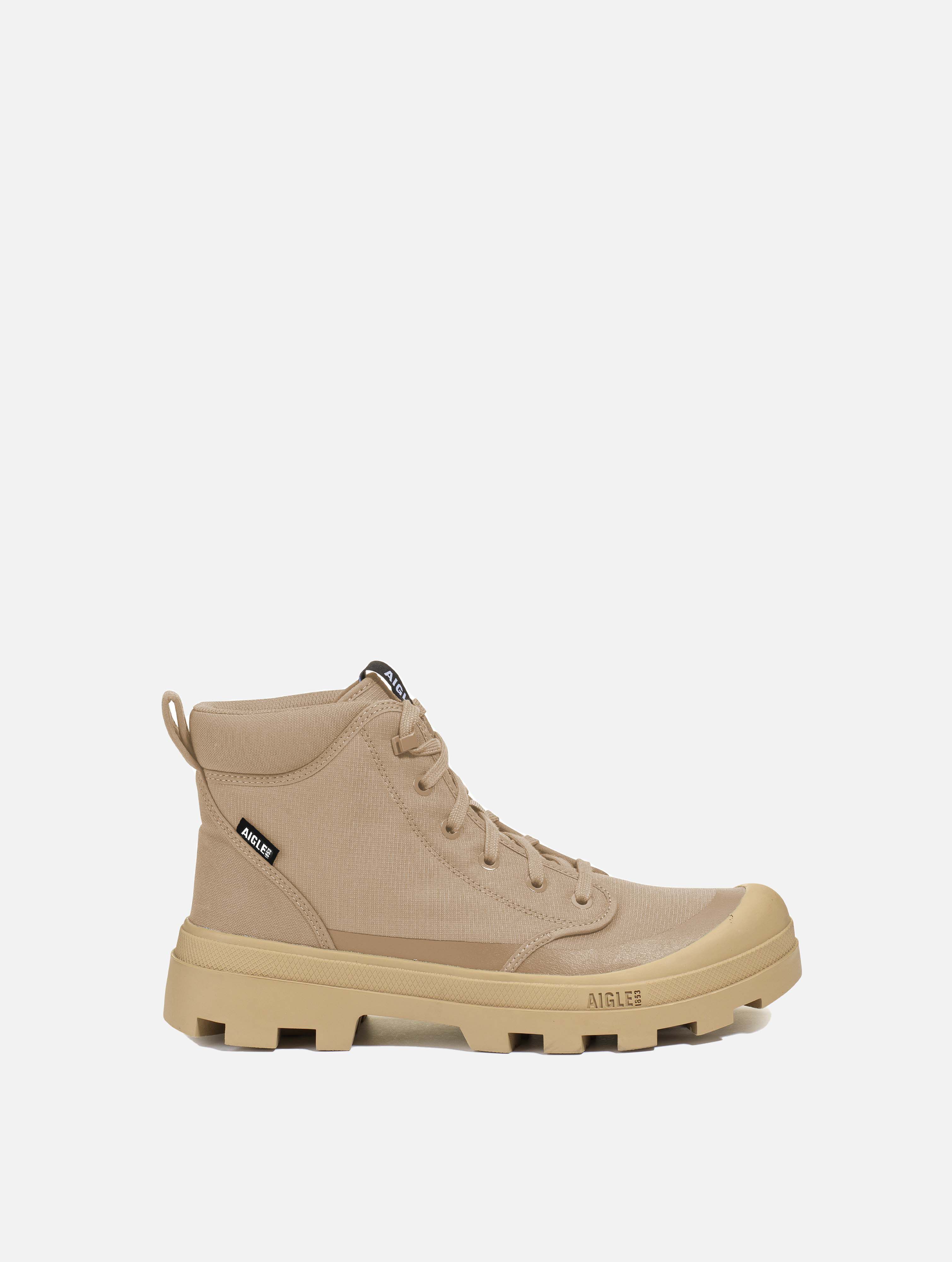
Yes — Aigle is a footwear and textile company, and from raincoats onward it has always been more than boots. Hutchinson applied his rubber process to raincoats early on, the firm later branched into accessories for the motor industry, and from the 1950s it added sports shoes. Today its range spans outerwear and country-lifestyle apparel alongside the boots it is famous for.
What does the name Aigle mean?+
Aigle is the French word for eagle, which is why the brand's emblem is an eagle. The company adopted the name after its early years as the Compagnie du Caoutchouc Souple, and it has carried the eagle as its motif ever since. It is a fitting symbol for a brand built around the outdoors.
When is the best time to buy Aigle boots?+
Because Aigle boots are a long-term outdoor investment rather than a seasonal trend, the smart move is to buy when you actually need them and to size carefully rather than chase a sale. Retailers tend to thin out stock at the change of seasons, so end-of-season is often when colours and sizes are easiest to find. Whenever you buy, test a new pair for watertightness early so any fault can be sorted under warranty.