Are IWC watches worth it?+
For buyers who value engineering over flash, IWC makes a strong case. The brand is built on durable, precise watches and accepts all its own pieces for service no matter how old, so a Schaffhausen watch is genuinely meant to last. Value retention varies by model rather than being guaranteed, but as a thing to own and wear for decades, IWC is well regarded in its price bracket.
Is IWC good quality?+
Yes, it sits among the major Swiss manufacturers and is known for quality, durability and precision. IWC has pioneered material competence such as the use of ceramic and titanium in watchmaking, and its track record runs from the robust Caliber 89 movement to the efficient Pellaton winding system introduced in 1950. The build philosophy is engineering-first, which is exactly why pilots and professionals gravitated to it.
Should I buy the Pilot's Watch or the Portugieser first?+
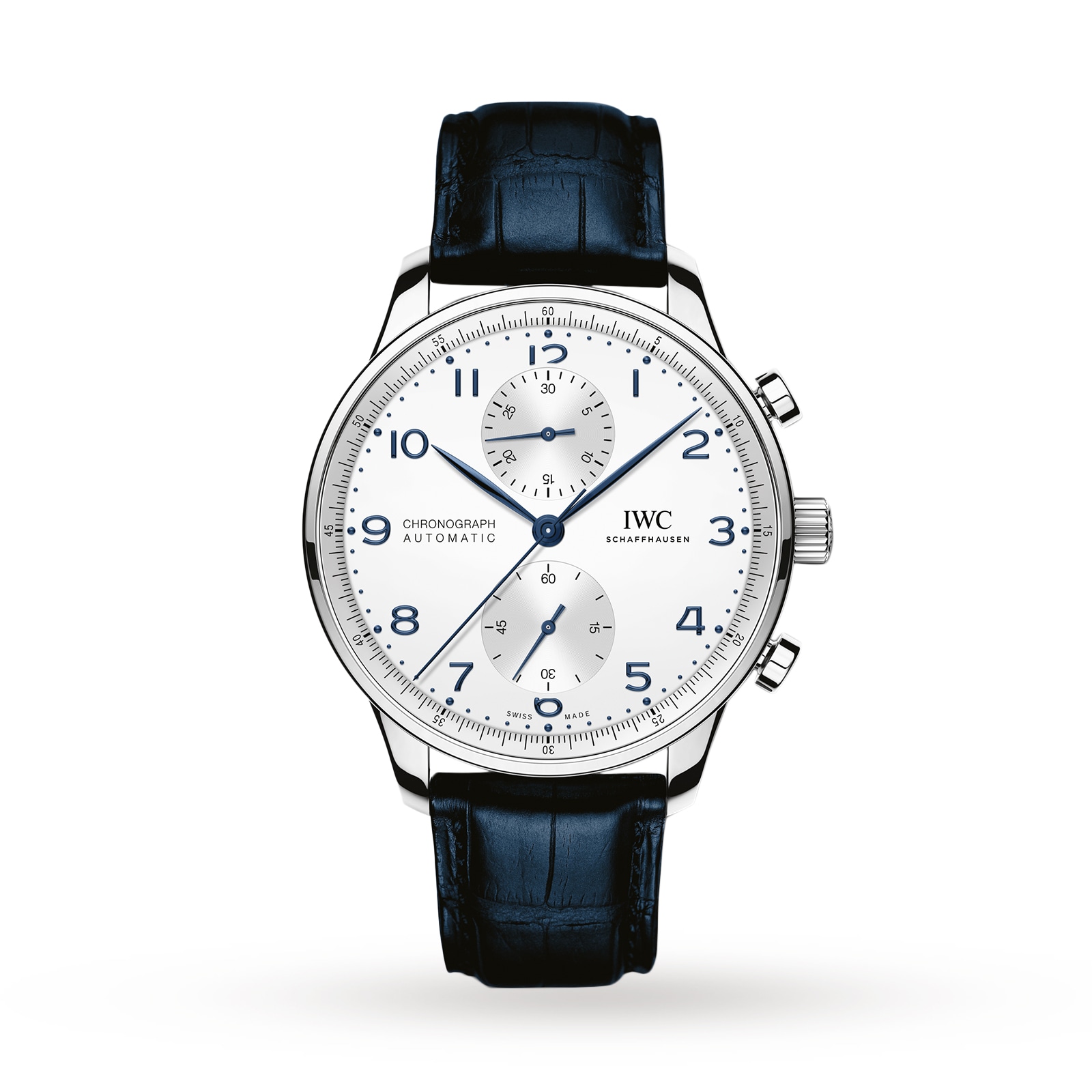
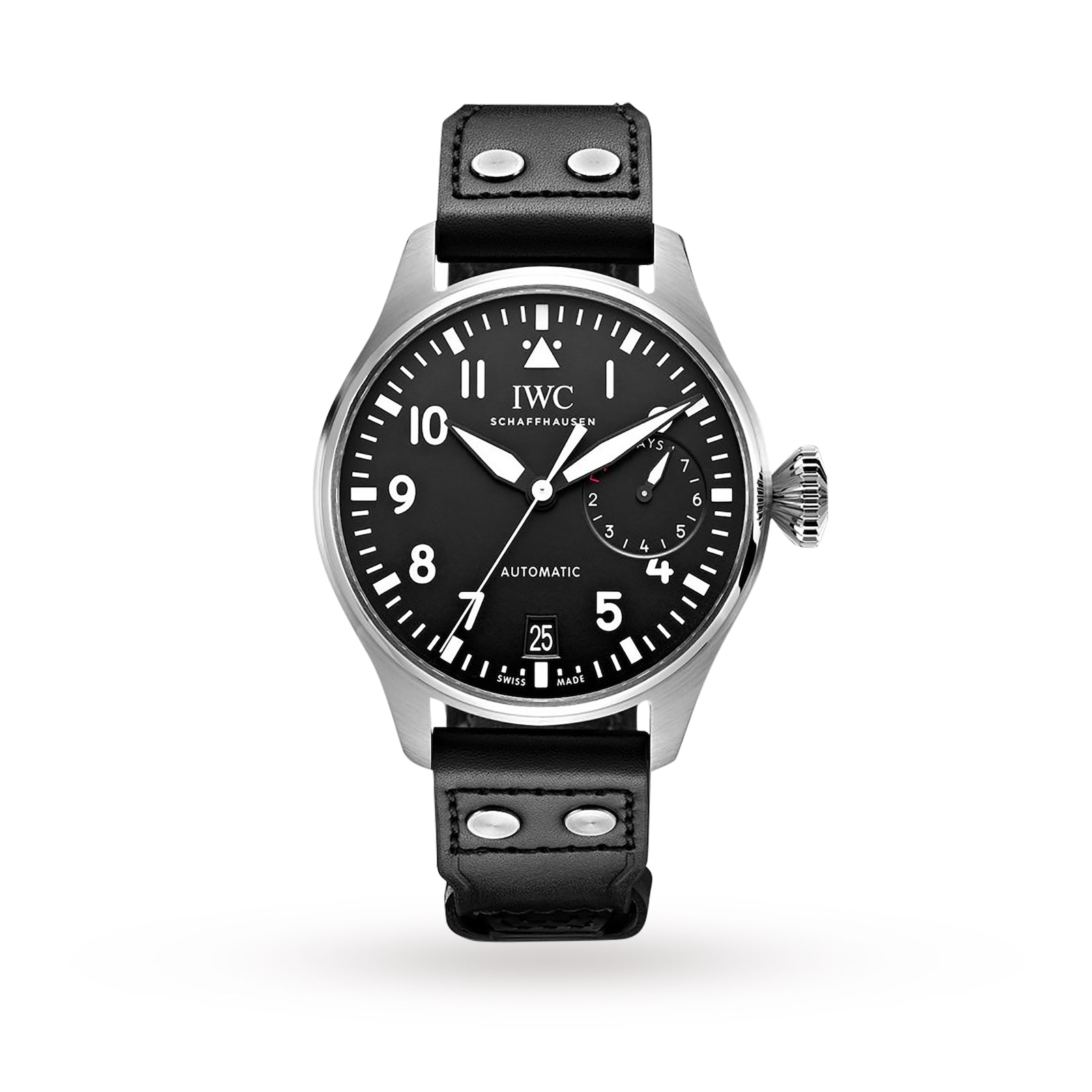
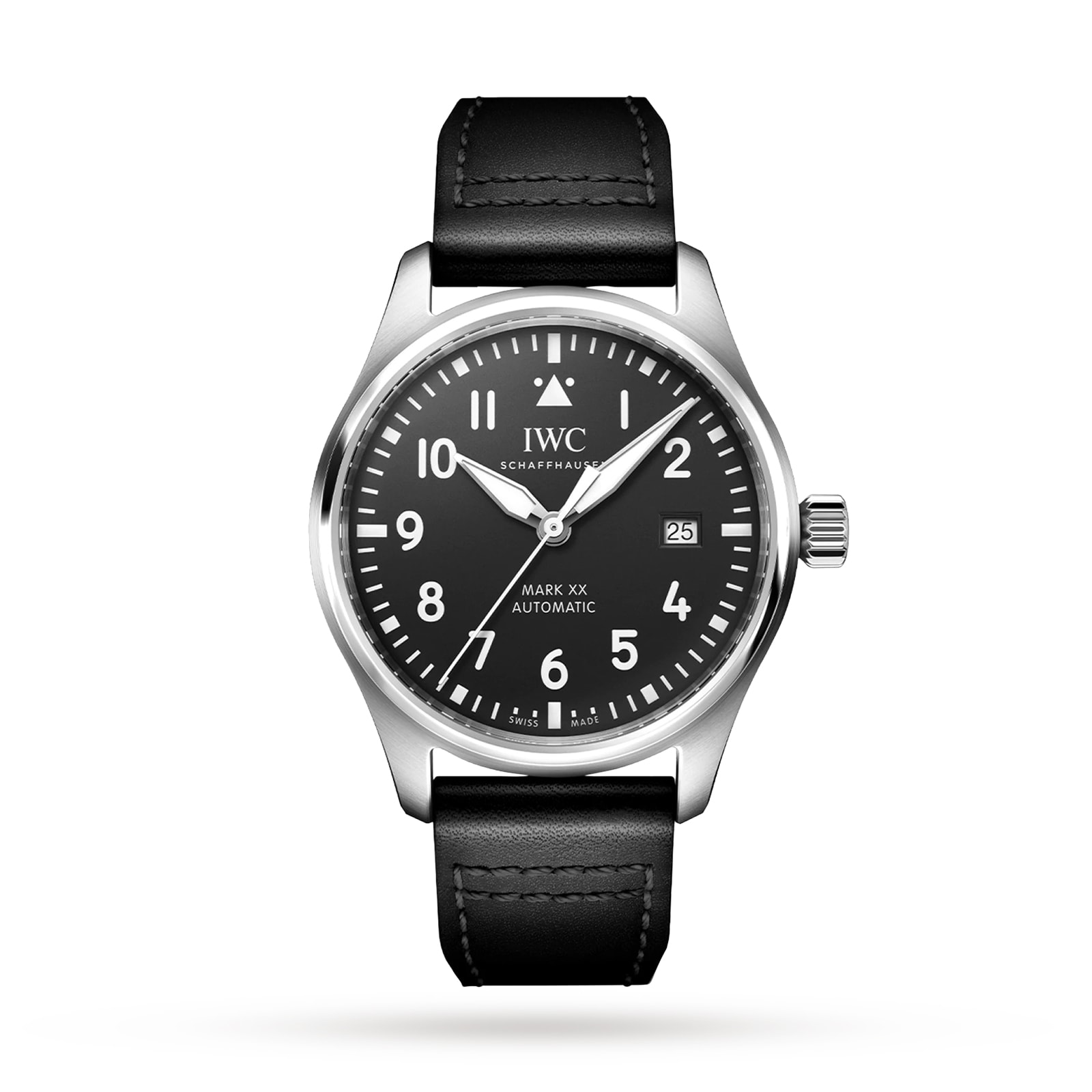
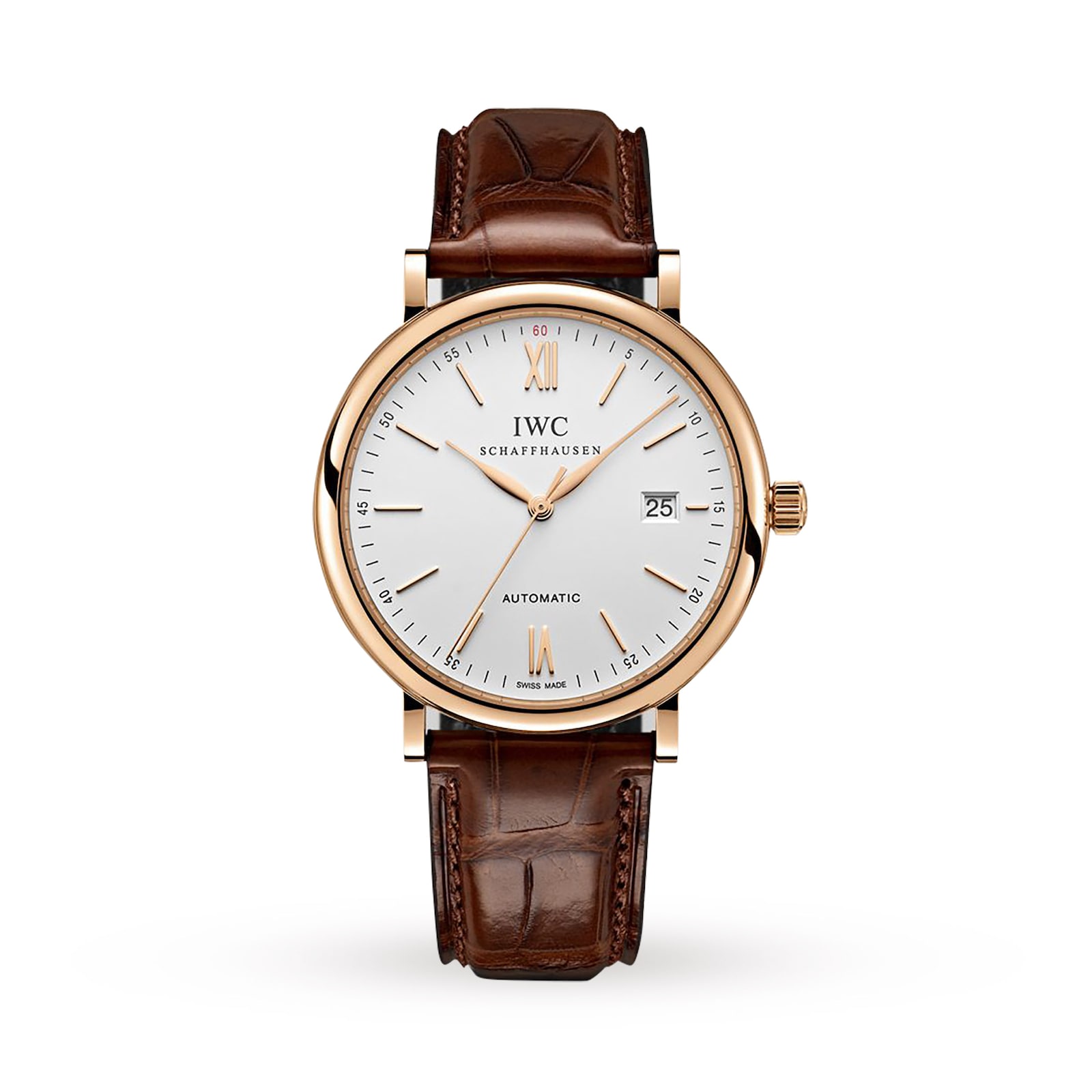
It depends on the look you want. The Pilot's line is IWC's rugged, legible aviation heritage, traced back to the 1936 Special Pilot's Watch and the 1940 Big Pilot's Watch built for military pilots. The Portugieser, born in 1939, is the more elegant, large-cased classic originally notable for housing a pocket-watch movement. Choose Pilot for tool-watch character, Portugieser for refined presence.
How does IWC compare to Omega?+
Both are serious Swiss brands with distinct personalities. IWC excels in aviation-inspired pilot watches and refined dress pieces such as the Portugieser, while Omega is broader and bolder, anchored by the Seamaster diver and the Speedmaster. They overlap in quality and material innovation, so the decision often comes down to whether you are drawn to IWC's cockpit-rooted restraint or Omega's adventure-and-space story.
Who owns IWC today?+
IWC has been a subsidiary of the Swiss Richemont Group since 2000. Before that, it spent four generations in the hands of the Rauschenbach family, who took over in 1880 after the company's early bankruptcy. So the brand combines deep family-run history with the resources of a modern luxury group.
Where is IWC made, and why Schaffhausen?+
In Schaffhausen, in north-eastern Switzerland, which is unusual for a Swiss watchmaker. Founder Florentine Ariosto Jones met industrialist Heinrich Moser there, and Moser's hydroelectric power on the Rhine helped make the location viable, laying the foundations for the only watch manufacturer in that part of Switzerland. The town has been part of IWC's identity ever since, hence the name IWC Schaffhausen.
Who founded IWC, and when?+
American watchmaker and engineer Florentine Ariosto Jones, who had been a director of E. Howard & Co. in Boston, founded the International Watch Company in Switzerland in 1868. His plan was to assemble watches in Switzerland, where there was skilled labour, and sell them in the United States. American roots and a Swiss home have been part of the IWC story from the very start.
What is IWC's connection to aviation?+
It runs deep. IWC is best known for its luxury pilot and aviation watches, a legacy marked by the 1936 Special Pilot's Watch (Ref. 436), the 1940 Big Pilot's Watch (Ref. 52 T.S.C.) and the highly influential 1948 Mark 11, which set a new standard for precision and anti-magnetic protection in pilot's watches. That cockpit heritage is the core of the brand's identity today.
Is IWC environmentally responsible?+
It has earned recognition for its efforts. In 2018 IWC was acknowledged by the WWF for its environmental work and received an "Ambitious" rating, placing first among fifteen other Swiss watchmakers in that report. For a buyer who weighs sustainability alongside craft, that is a notable distinction in the Swiss watch world.
What was IWC's most important recent achievement?+
IWC won the Aiguille d'Or at the 2024 GPHG, the overall best-watch-of-the-year award, for the Portugieser Eternal Calendar. It features a groundbreaking secular perpetual calendar that accounts for Gregorian calendar exceptions, plus a Double Moon display said to be accurate to one day in over 45 million years. It is a striking demonstration that the brand still pushes the technical frontier.
Does the Ingenieur have a notable design history?+
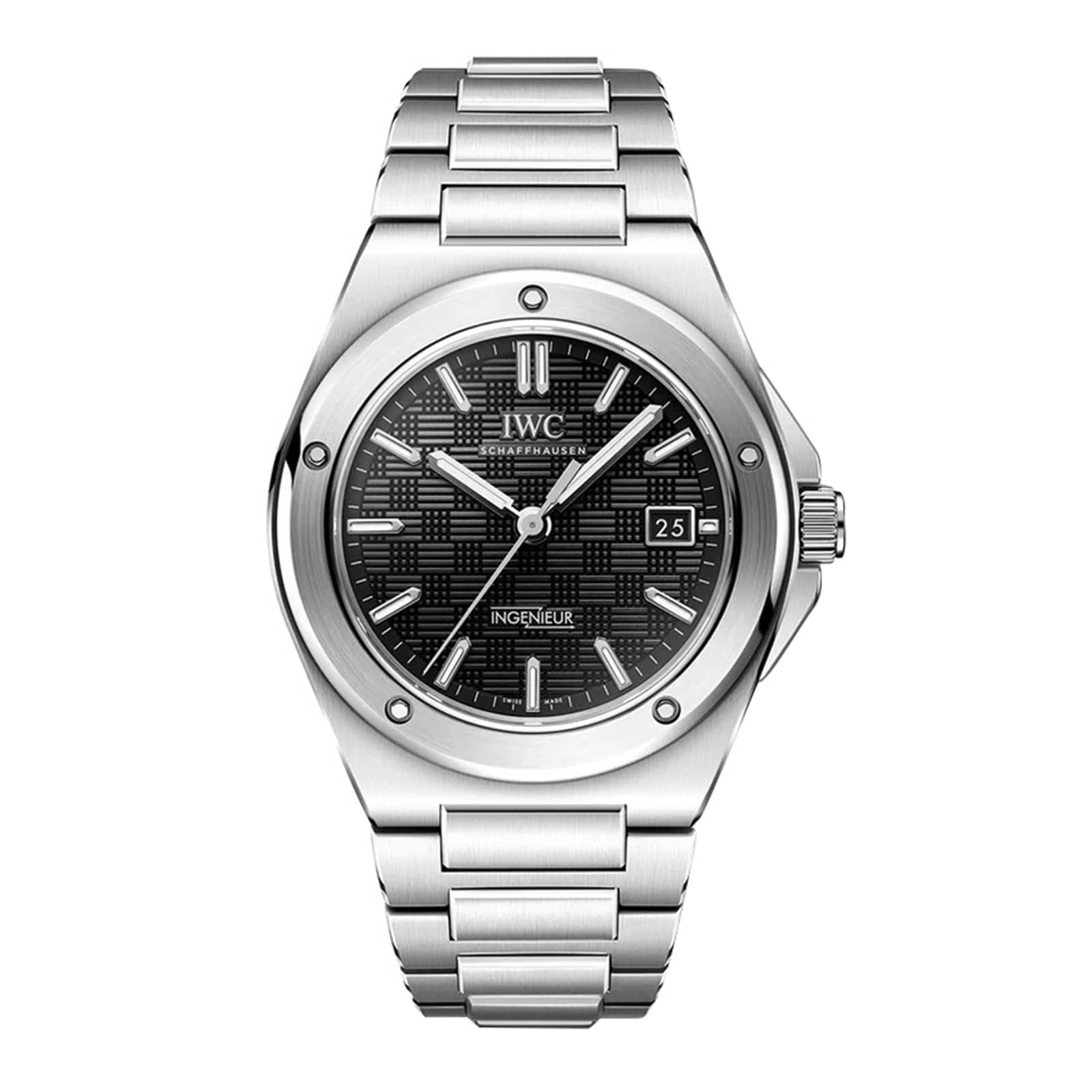
Yes. The first Ingenieur (Ref. 666) arrived in 1955 as a watch for professionals, built with strong anti-magnetic protection and a robust, functional aesthetic. The line is also tied to designer Gérald Genta, whose Ingenieur Ref. 1832 is one of IWC's celebrated designs. It is the brand's blend of technical purpose and considered styling in one collection.