The proportion desk
Full Tuck, French Tuck, or No Tuck? A Proportion Guide
The right choice depends on the shirt hem, fabric bulk, waistband, rise, and line the outfit needs.
 By Laurel Hayes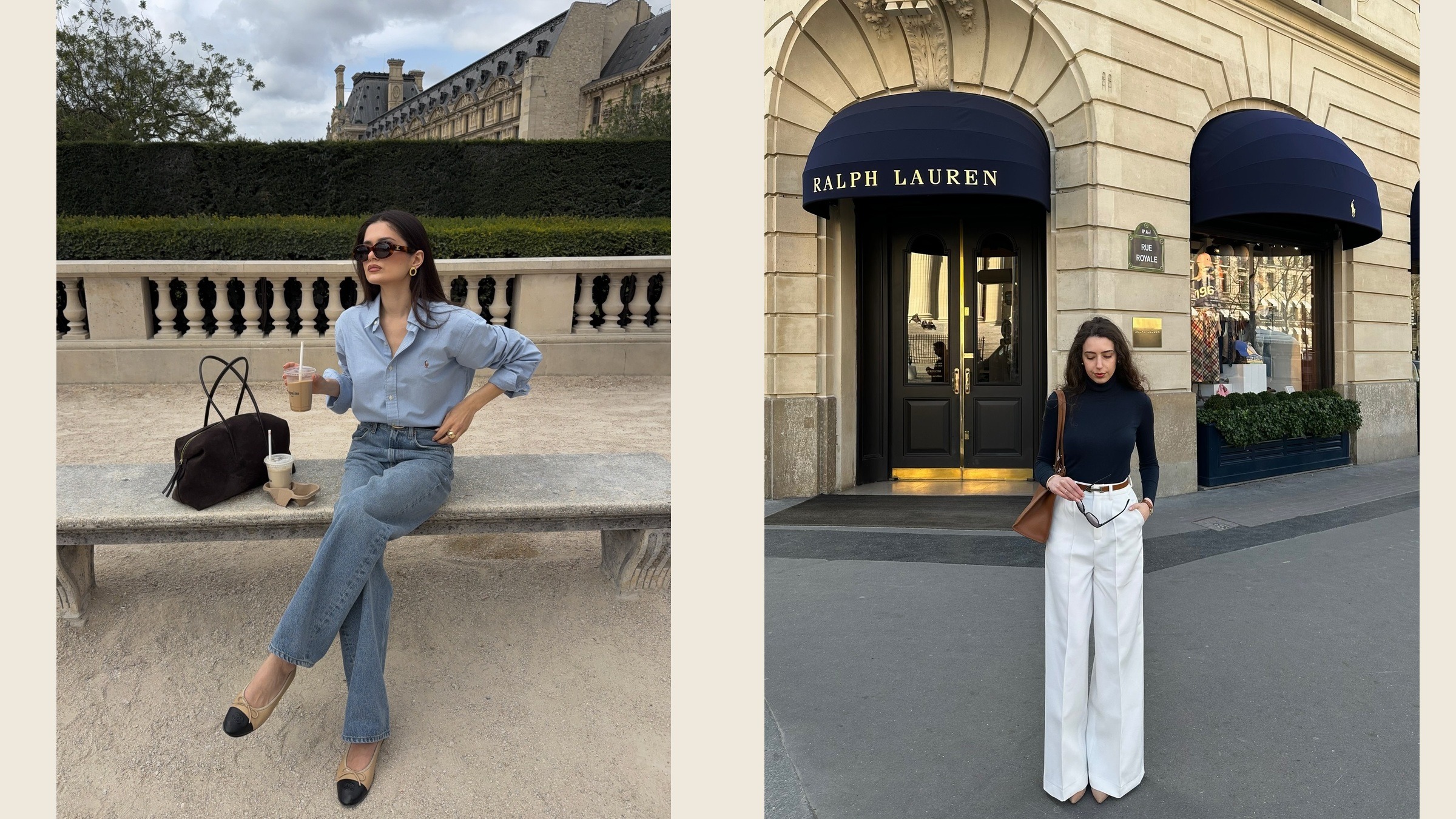
A tuck works when it reveals the edge that organizes the outfit. It fails when it asks the fabric or waistband to do a job it was not built to do.
Full tuck, partial front tuck, and no tuck are construction choices. None is a body-correction rule.
1. Start with the shirt and waistband conflict
Curved and straight hems create different lines. Stiff poplin holds folds; fine jersey compresses. A full tuck can bunch, a partial tuck can pull a curved hem sideways, and no tuck can hide the rise.
Manglien Gangte’s June 2026 Vogue India report frames proportion through length, fit, and shape, starting with the longest line.
2. Diagnose hem, bulk, rise, and contrast
Read the hem flat, then inspect the rise. A longer-back shirttail can stay out; a short straight hem can finish the outfit; a soft front can tuck partially. Elastic, loops, pleats, tabs, pockets, and closures determine where bulk can sit.
3. Choose which edge the outfit should show
Choose the visible edge. Full tuck needs stable containment; partial tuck needs a clean drape; no tuck needs an intentional hem or structured outer layer.
According to a report from Christian Allaire, senior fashion and style writer at Vogue, stylist Zadrian Smith advises one oversized element. Thomas Christos Kikis says generous jeans still need to work at the waist.
4. Apply the decision to four complete outfits
Full tuck: clear rise
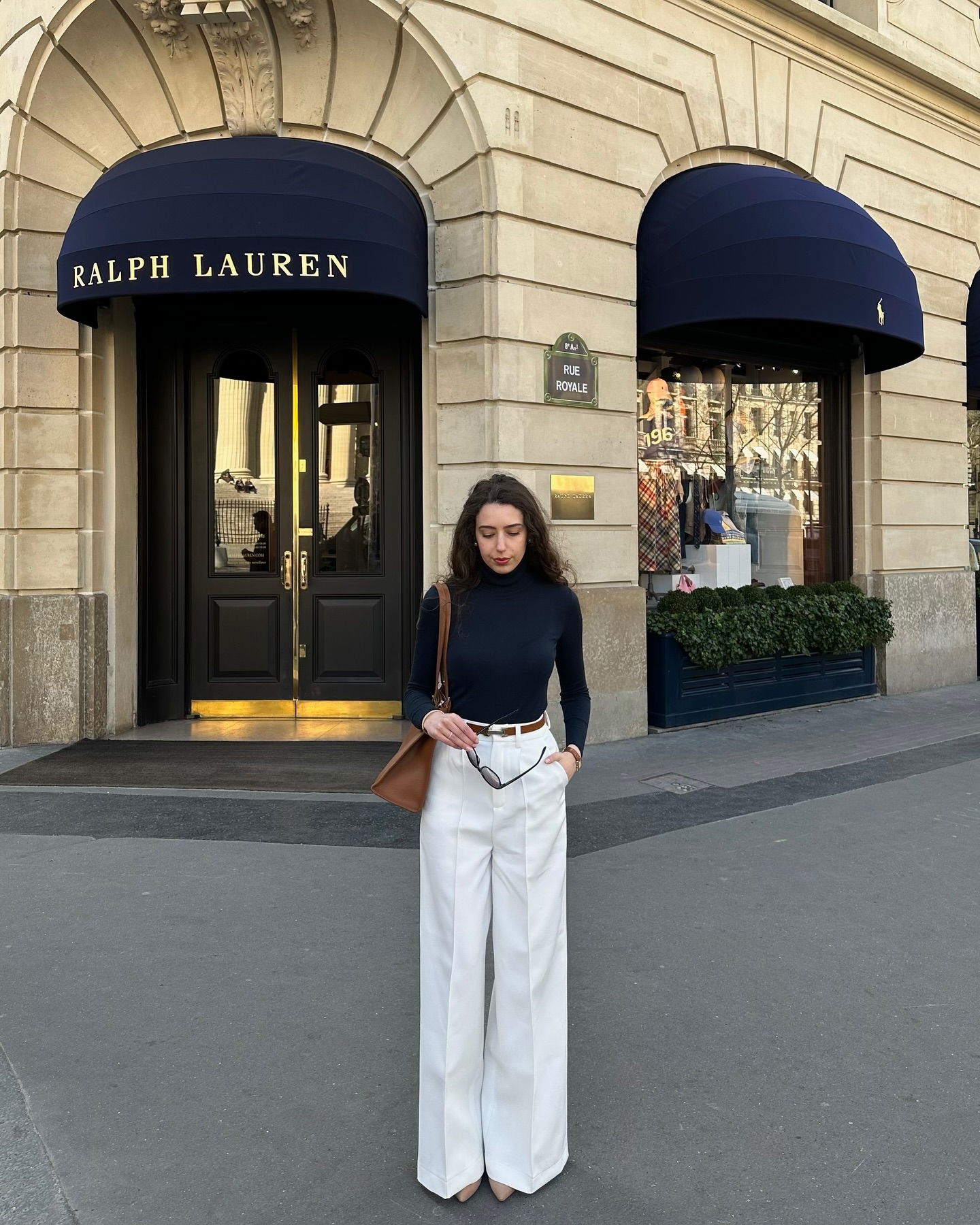
Fine poplin shirt + tailored trouser + narrow belt + loafer + structured bag.
Distribute fabric around the waistband; keep the outer layer open.
Partial tuck: one opening
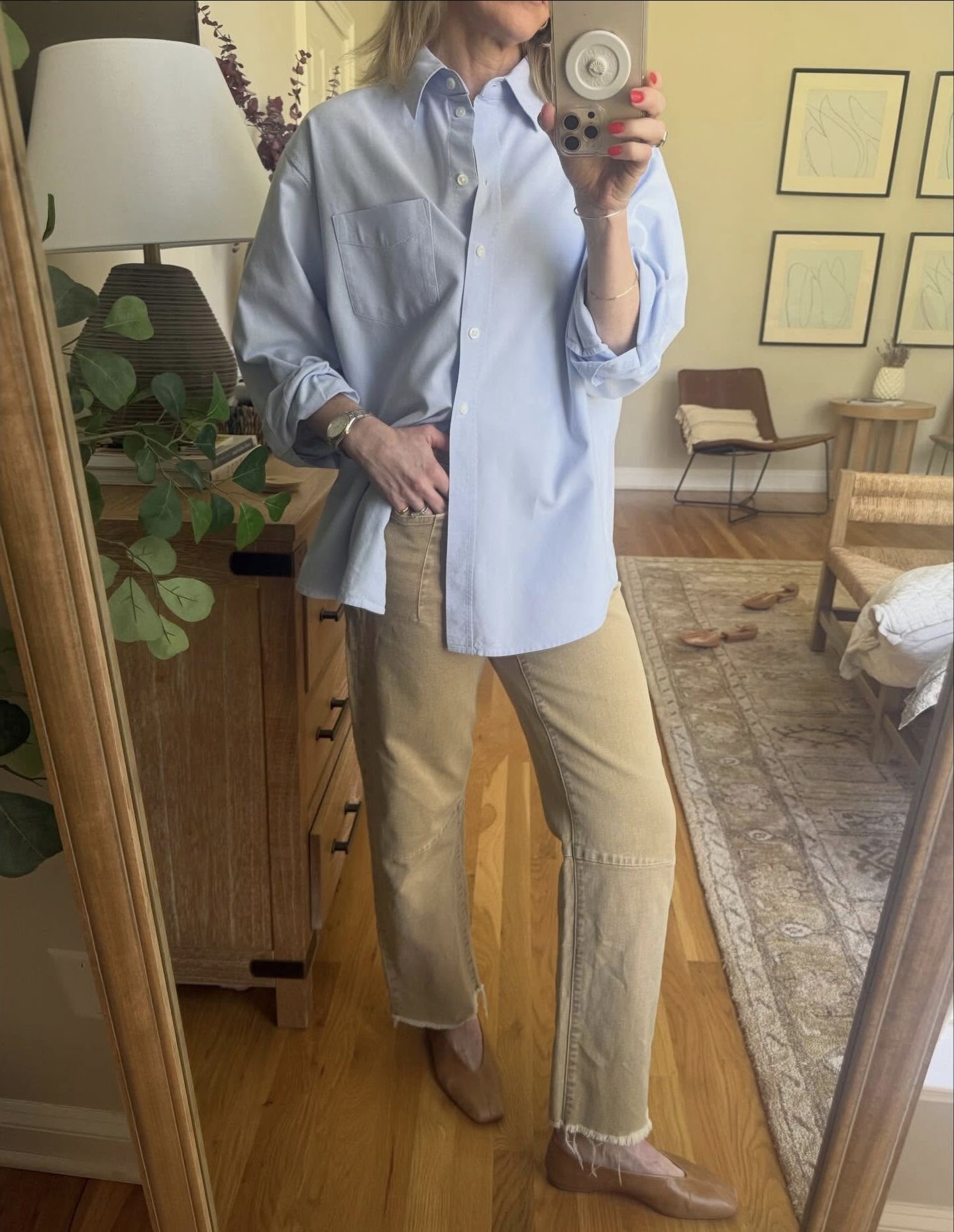
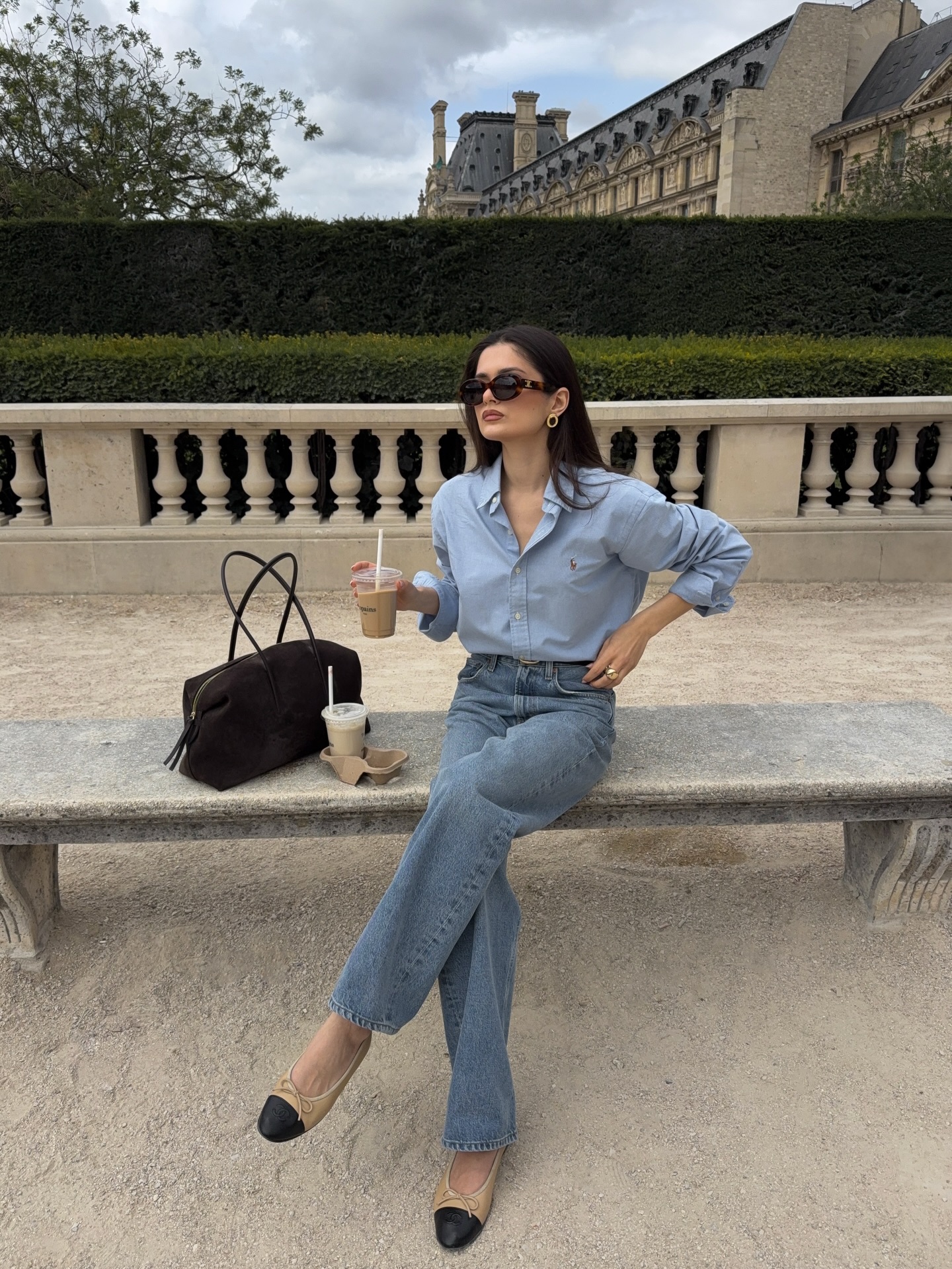
Soft button-down + straight jean + low-profile flat + shoulder bag.
Tuck a short front section. Stop if the placket twists.
No tuck: long vertical
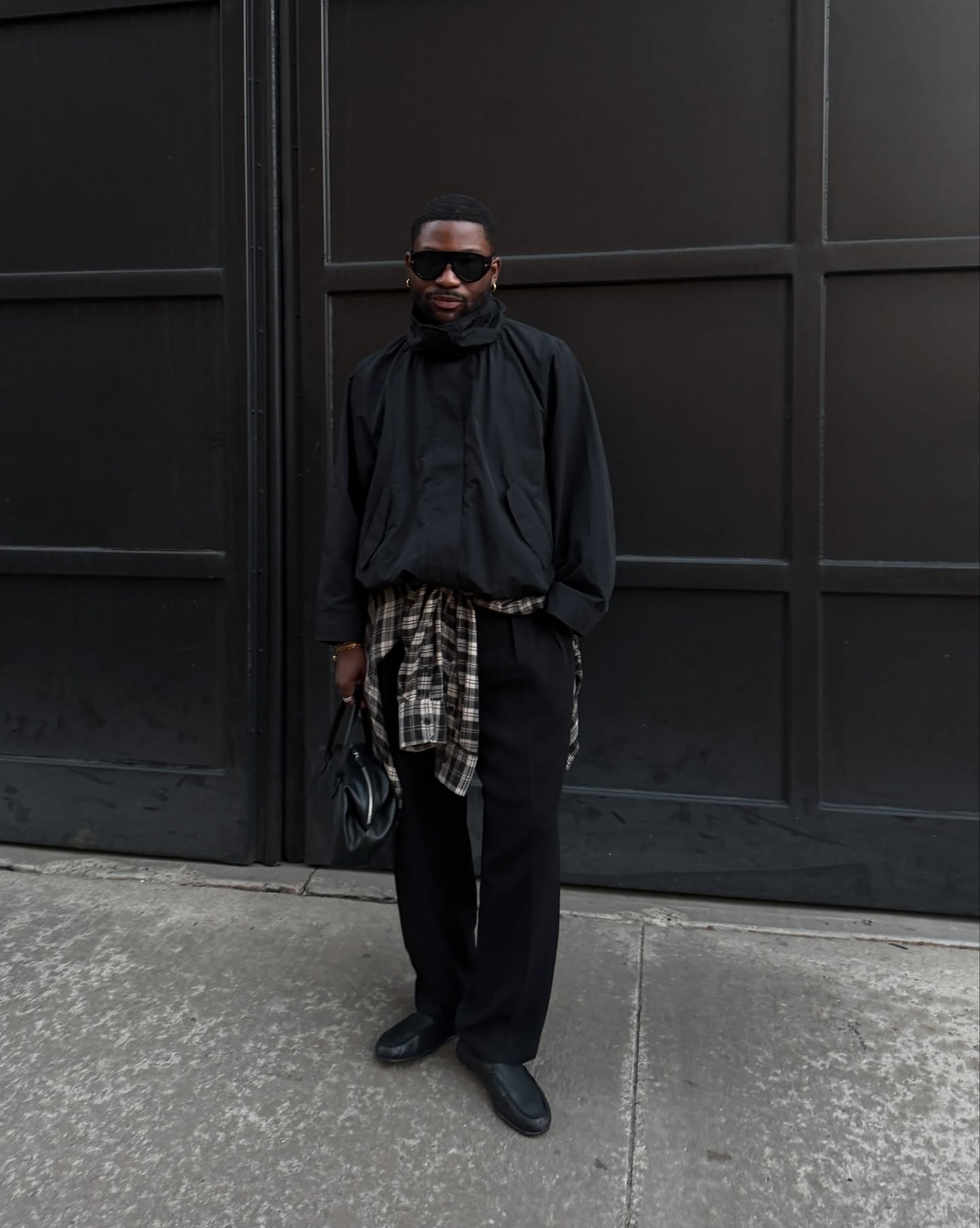
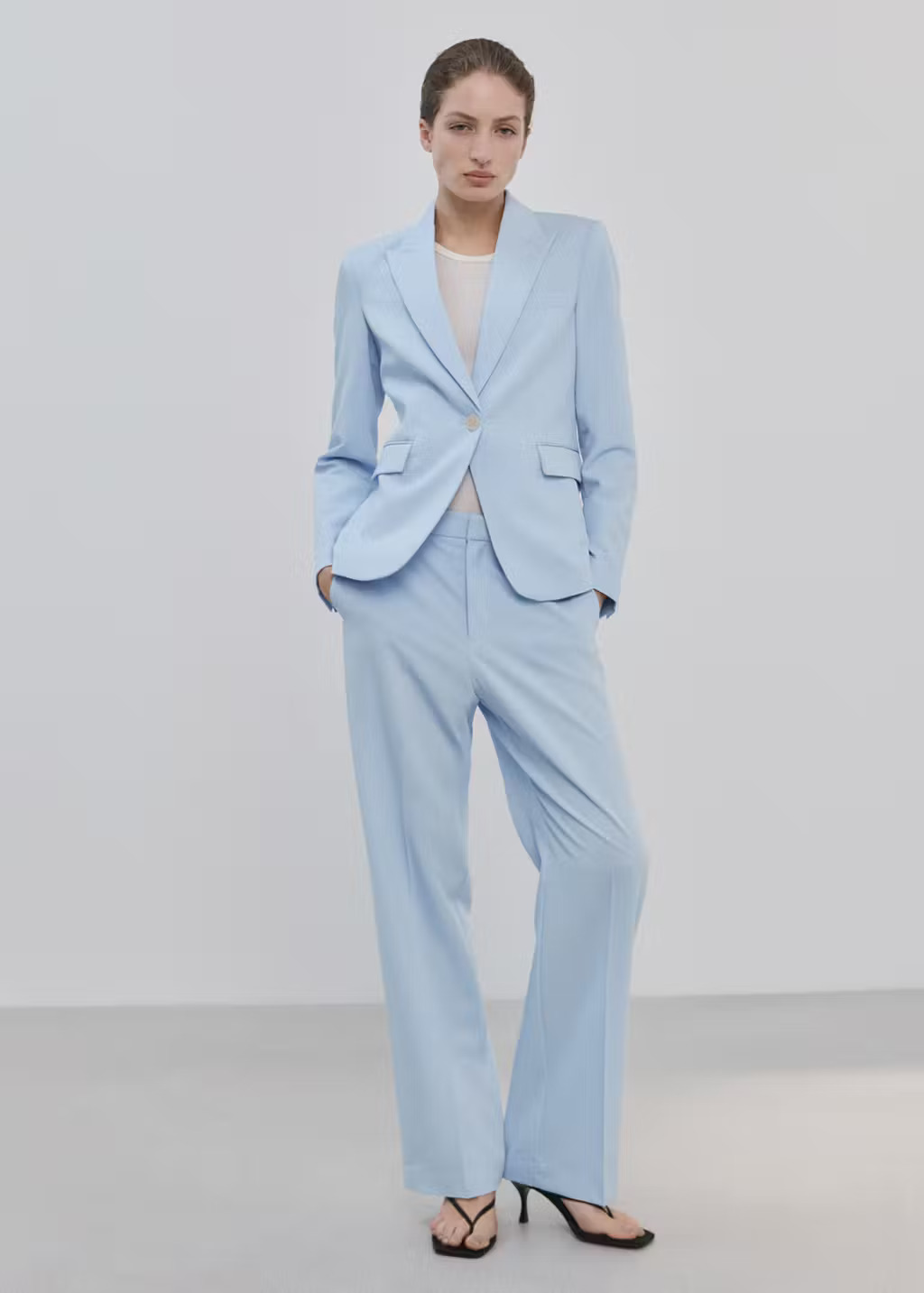
Long shirttail shirt + straight trouser + open fitted blazer + pointed flat.
The jacket creates two vertical edges. The shirt remains a complete layer rather than a loose remainder.
No tuck: short clean hem
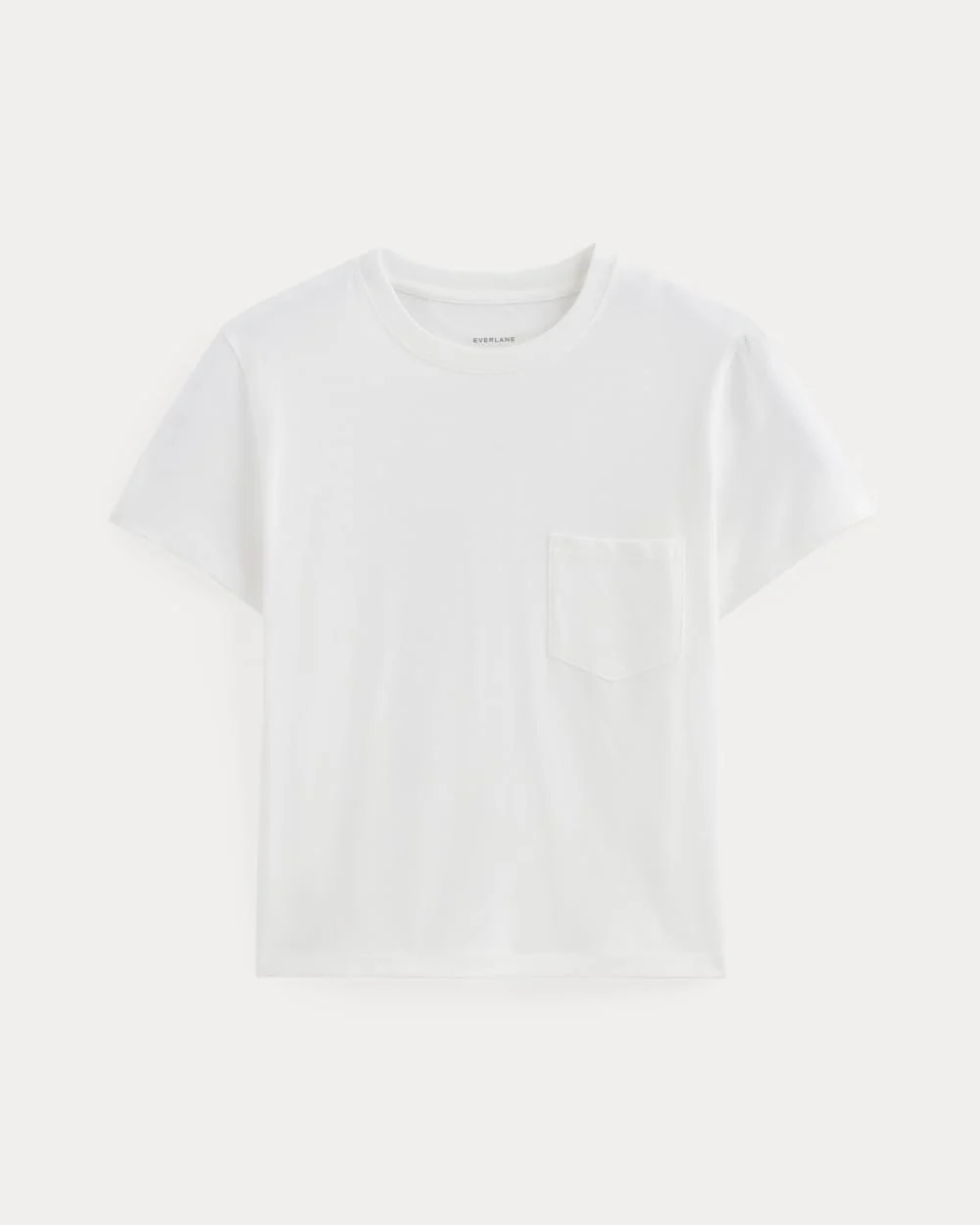
Box-cut tee + wide trouser + cropped cardigan + defined sneaker.
A straight hem reveals the rise without entering it.
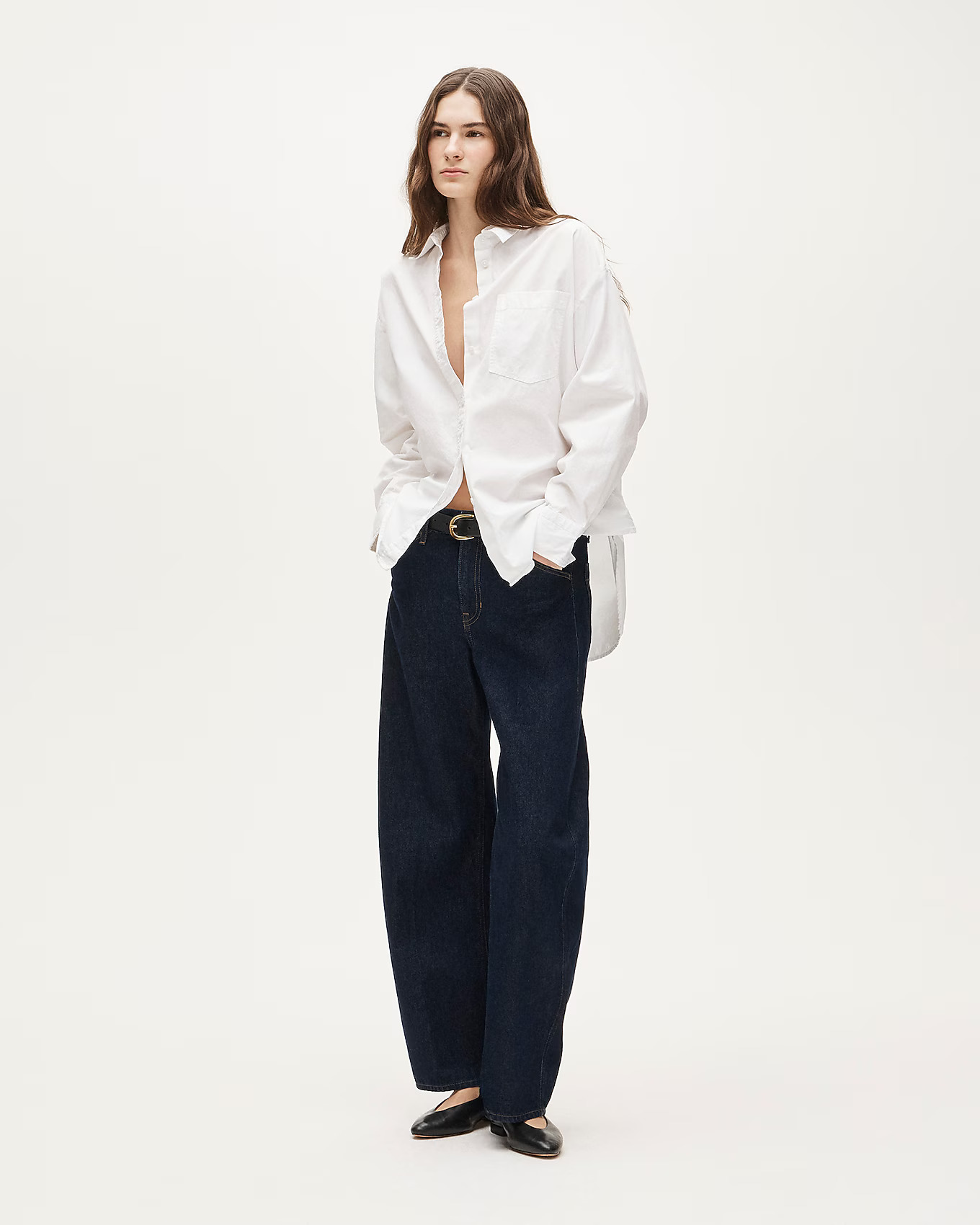
J.Crew Étienne Oversized Shirt in Lightweight Oxford
$89.50 observed sale · $128 regular on July 14
The page lists 100% cotton, a longer-back shirttail, classic and petite options, and 29.5-inch classic length. Specifications do not predict fit.
July 14, 2026 construction check
- J.Crew: Étienne shirt, $89.50 observed sale and $128 regular, 100% cotton, 29.5-inch classic length.
- COS: Clean Cut T-Shirt at $45, cotton shirt at $89, and fluid pants at $139 in indexed assortments.
- Everlane: Box-Cut Tee at $38, 100% organic cotton, relaxed fit, and slightly cropped length.
- Mango: Fitted Suit Blazer at $89.99, with notched lapels, lining, pockets, and a back vent.
- July 2022 Vogue report: Balenciaga volume and a Prada blazer provide dated outer-layer references.
- July 14, 2026: Uniqlo listed a cardigan at $29.90; Mango listed leather moccasins at $65.99 from $99.99; Quince listed a leather flat at $68.
- Current-source range: Everlane cotton tee $38; Uniqlo cardigan $29.90; Mango leather moccasins $65.99 from $99.99; Quince leather flat $68 with a 0.3-inch heel.
5. Adjust for weather, movement, and dress code
| Constraint | Likely starting point | Reason |
|---|---|---|
| Hot weather | No tuck or small front tuck. | Leaves less fabric compressed at the waistband; use a breathable garment rather than assuming comfort. |
| Cold layers | Full tuck for the base, no tuck for the overshirt. | Keeps each layer’s hem readable. |
| Formal workplace | Full tuck or structured no tuck. | Follow the local policy; a sharp jacket can organize an untucked layer. |
| Long seated period | No tuck or low-bulk full tuck. | Reduce fabric trapped under a rigid waistband. |
| Changing rise | Reassess every bottom. | The same shirt exposes a different amount of fabric with raised, middle, and low-rise trousers. |
Recheck the chosen edge after sitting, reaching, and adding a jacket. Movement can redistribute fabric even when the standing line is clean.
Georgia Tech lists shirts, slacks, jackets, cardigans, loafers, and flats as business-casual components. Employer policy and safety rules come first.
Allaire’s report documents broad Balenciaga shapes and a Prada blazer over narrower bases. The tuck should serve that layer relationship.
6. Replace the fixes that fight the garments
A partial tuck is not always the middle answer. Stiff, long, or sharply curved hems may work better left out.
7. The rule to remember
Choose the edge that should be visible. Show the full waistband, one front section, or the complete shirt hem. Let construction, bulk, rise, and setting make the decision.
Pricing note: listed prices reflect official or indexed pages checked July 14, 2026; prices, variants, sizes, and stock can change. ChicAire’s editorial team selected these references from the cited pages.
ChicAire editors independently research and select products. If you buy through our links, we may earn a commission.