Bamboo 1947
A top-handle born of postwar scarcity, defined by a curl of heat-bent bamboo.
Prices are a snapshot from when this page was built — confirm on the retailer's site.
Story & heritage
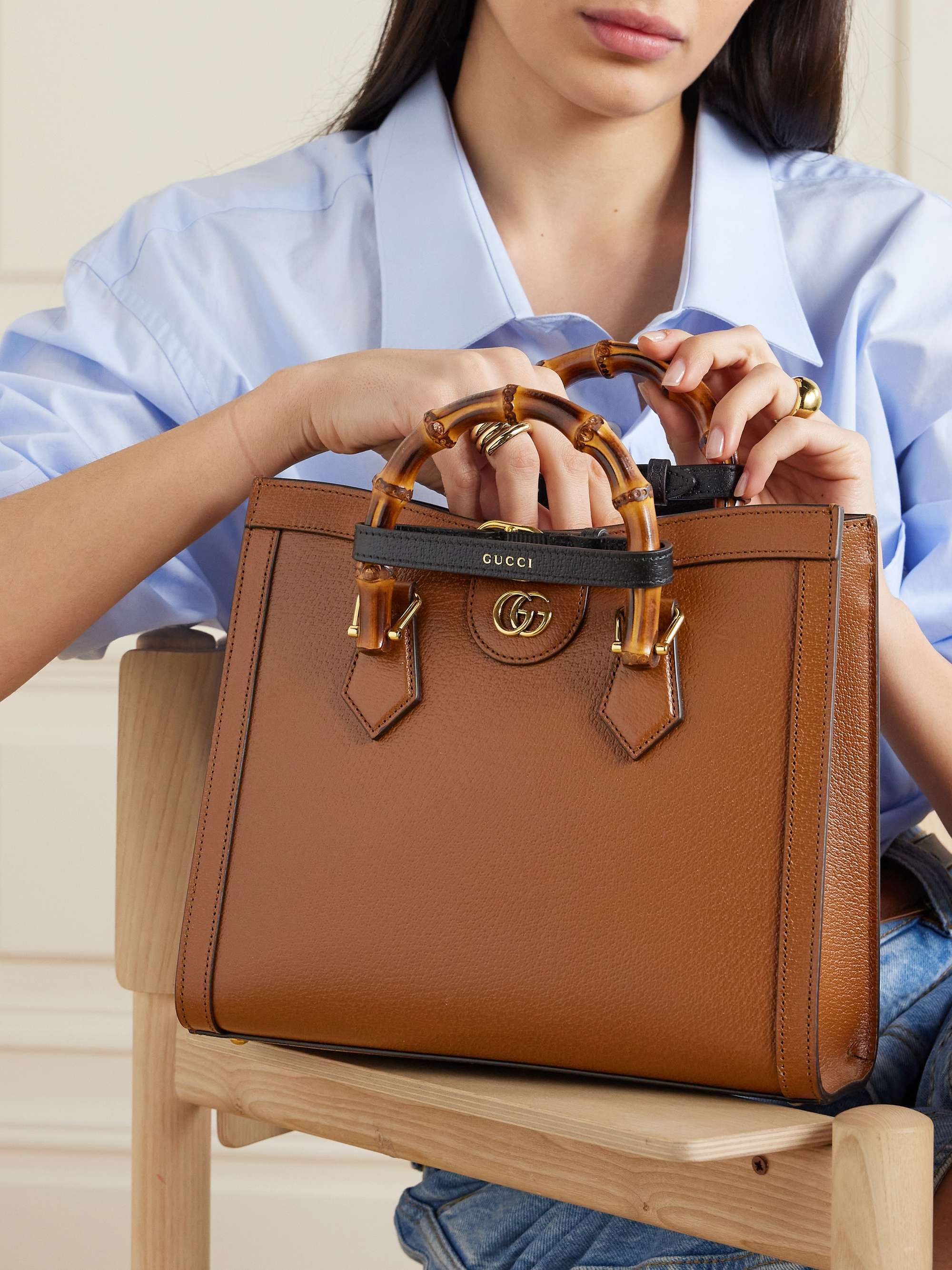
The Bamboo bag dates to 1947, when postwar material shortages pushed Gucci's craftsmen to improvise. Unable to source enough metal and leather, they turned to bamboo imported from Japan, heating and bending the canes into a curved top handle. The result — a structured top-handle with a glowing, lacquered handle — became one of the house's earliest signatures.
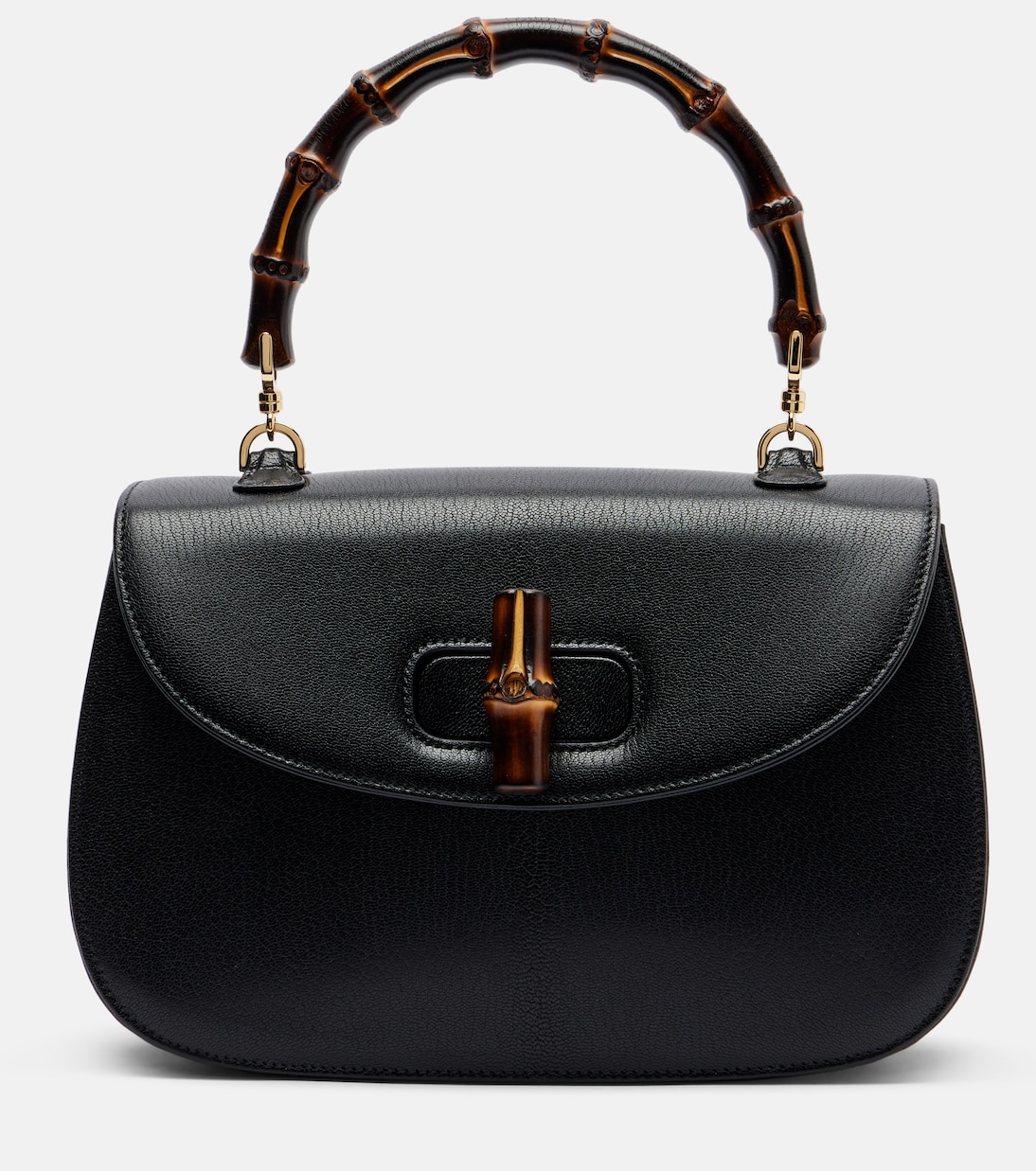
The Bamboo 1947 is the modern continuation of that original, named for its founding year. Its turn-lock closure, also rendered in bamboo, and its trapezoidal body remain almost unchanged from the 1940s design, making it one of the longest-running silhouettes in luxury.
Materials & craft
Each bamboo handle is shaped by hand: a single cane is scorched over a flame to make it pliable, bent into the bag's signature curve, then lacquered. No two are identical. The body is cut from structured calf leather, and the bamboo turn-lock that fastens the flap is the same heat-treated material as the handle — a detail that has anchored the design since 1947.
How to choose & style
The Bamboo 1947 is a dressed silhouette — its rigid body and lacquered handle lean formal, carried in the hand rather than slung. Black leather is the most versatile; the detachable shoulder strap turns it from a daytime top-handle into something you can wear hands-free. It pairs naturally with tailoring and with the house's own heritage codes.