Is a Hublot Big Bang worth it?+
It depends on what you want from a watch. The Big Bang is built around bold proportions and unconventional materials rather than quiet, traditional horology, so if you love a statement on the wrist it delivers exactly that. If your idea of value is heritage and restraint, you may find it polarising. Buy it because the look and the engineering speak to you, not as a sure-fire investment.
Why is Hublot so expensive?+
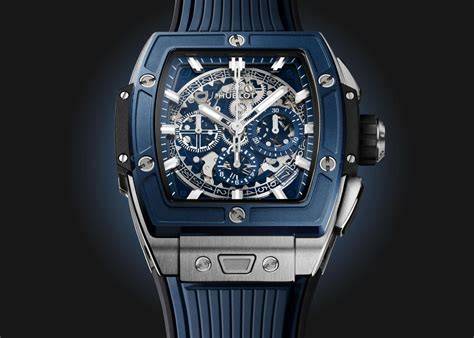
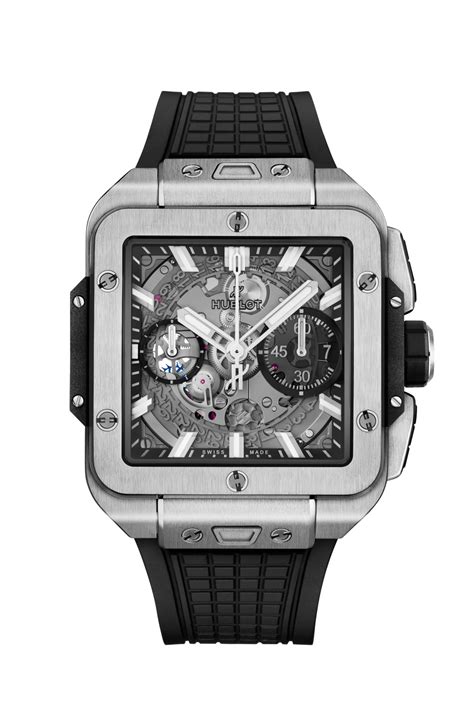
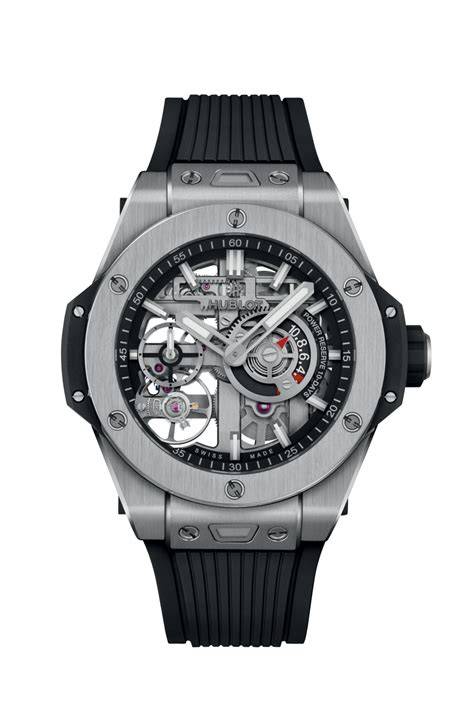
Much of it comes down to materials and movements. Hublot pioneers things like Magic Gold, a scratch-resistant gold-and-ceramic alloy, alongside ceramic and sapphire cases, and it develops in-house calibres such as the Unico chronograph and the Meca-10. That kind of material science and movement engineering is costly, and the brand's positioning within the LVMH portfolio keeps it firmly in luxury territory.
How does Hublot compare to Rolex?+
They sit at opposite ends of the same luxury street. Rolex dates to 1905 and trades on timeless, understated design and famously strong resale; Hublot, founded in 1980, is the newcomer that built its name on avant-garde, often divisive watches. If you want a watch that whispers, look at Rolex; if you want one that announces itself through the Art of Fusion, Hublot is the bolder choice.
Do Hublot watches hold their value?+
Not as reliably as the most traditional icons. As with most luxury watches, a typical Hublot will soften on the pre-owned market after purchase. The exceptions tend to be pieces with the in-house Unico movement or rare materials, and sought-after limited editions, which can stay genuinely desirable. Treat value retention as a bonus rather than the reason you buy.
What is Hublot's signature watch?+
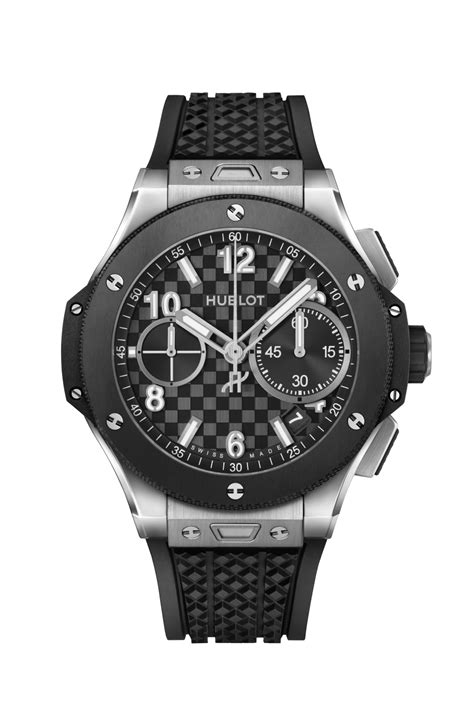
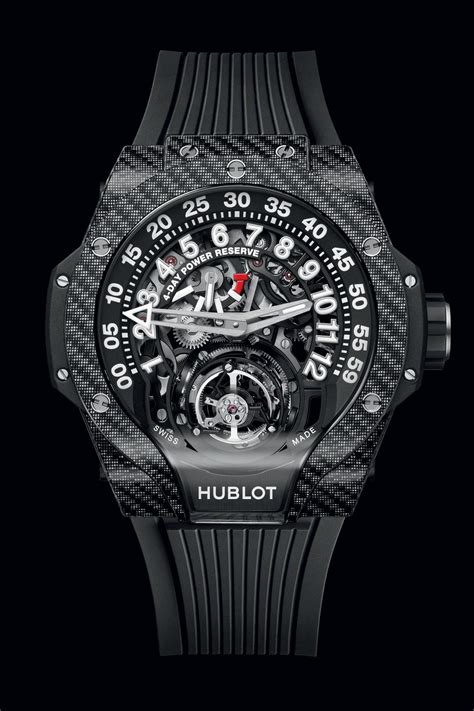
The Big Bang chronograph, unveiled in Basel in April 2005 under CEO Jean-Claude Biver. It was an instant success, tripling orders within a year and winning the Design Prize at the Geneva Watchmaking Grand Prix that November. It remains the model most people picture when they hear the name Hublot.
What is Hublot's 'Art of Fusion' all about?+
Fusion is the idea that runs through the whole brand: combining materials that traditional watchmaking kept apart. It started with the very first Hublot in 1980, which paired a precious-metal case with a natural rubber strap, a then-radical pairing. That spirit lives on in collections that mix ceramic, sapphire and Magic Gold, all under the brand's motto, be the first, be unique, be different.
Where did the name Hublot come from?+
It is French for porthole. Founder Carlo Crocco named the watch after the porthole when he designed it in Switzerland, a nod to its round, bezel-bolted case. That first watch debuted at the 1980 Basel Watch Fair and generated more than two million dollars in sales in its first year.
Who founded Hublot and who owns it now?+
Hublot was founded in 1980 by the Italian designer Carlo Crocco, a member of the family behind Italy's Binda Group, who moved to Switzerland and set up MDM Genève. Today the brand is a wholly owned subsidiary of the French luxury conglomerate LVMH, which acquired it from Crocco in April 2008.
Are Hublot watches made in Switzerland?+
Yes. Hublot is a Swiss watchmaker, and its first manufacture opened in 2009 in Nyon, near Geneva. The brand uses its production there to build the in-house calibres and material innovations it is known for, so a modern Hublot is very much a Swiss-made watch.
What is the difference between the Big Bang and the Classic Fusion?+
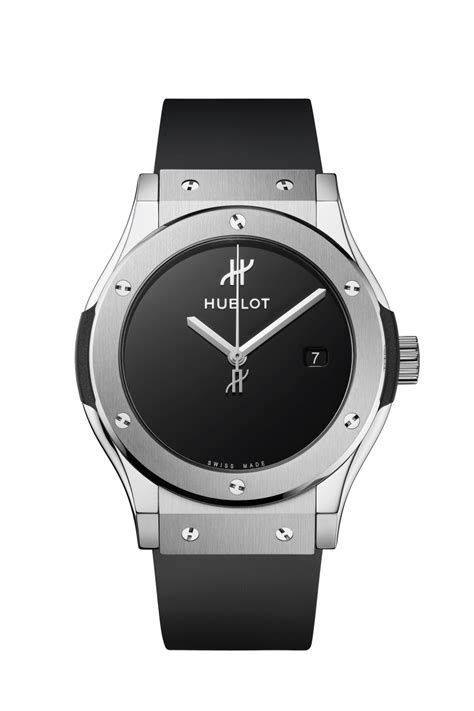
The Big Bang is the bold, sport-luxury flagship, offered in materials from ceramic to sapphire to Magic Gold and known for its layered, oversized case. The Classic Fusion is the slimmer, more pared-back line, available in both three-hand and chronograph versions. If you want maximum presence go Big Bang; if you want something a little dressier, Classic Fusion.
Can a Hublot be checked for authenticity?+
Yes. At BaselWorld 2009 Hublot introduced a smart-card system that authenticates a watch against the brand's own servers, going live in August 2009. When buying pre-owned, lean on that and on official channels, and be wary of unusually low prices on a brand whose materials and movements are genuinely expensive to make.
Why does Hublot show up so much in sport?+
Sponsorship is central to how Hublot raised its profile. It has been an official timekeeper across multiple FIFA World Cups, the UEFA Champions League and Formula 1, and has tied its name to clubs and ambassadors in football, tennis and beyond. So if you keep spotting the logo at major events, that is the brand strategy working as intended.